compared-to-what

These are the three most important words in all of audio, as we hope you will come to see after reading these dozen or so commentarires centered around the proposition.

Letter of the Week – “…so much more engaging and rich than I was used to.”

Hot Stamper Pressings of the Music of Charles Mingus Available Now

This posting on an audiophile forum was made by our good customer ab_ba who authorized me to print it here. (It started out on Hoffman’s forum but was quickly taken down as the subject of Hot Stampers is verboten. I have added some bolding and italics.)

The title is the author’s.

Better Records Hot Stampers: Or, how I learned to stop collecting and love listening

We are witnessing an absolute explosion in vinyl. It’s thrilling, but it has also become frankly overwhelming.

What matters? The experience of listening, of course. But, how do we know, I mean, how do we really know, what listening experiences are going to be sublime?

Too often, collectability becomes our proxy for listening. We’ve all done it – chasing a near mint early pressing, a Japanese or German pressing, a re-press from a label we trust. We all end up with multiple copies of our favorite records, but only listen to one or two of them. And whether we sell them or not, it brings us some comfort to see their going rates on Discogs continue to climb. For me at least, FOMO was a strange driver of my buying habits. I regretted records I didn’t purchase, far more often than I regretted purchases I did make, even as I have about a year’s worth of listening in records still sealed on the shelf. I’m even afraid to open some of them because I can see their value is rising. Isn’t that silly?

My Philosophy Was Off-Base

I love records. Listening to them, curating a collection, is a joyful hobby. It gets at some need I can’t quite name. But, of course, records shouldn’t be only for collecting. They are for the pleasure of listening. My philosophy was pretty off-base. I didn’t even perceive it that way, and here’s what got me to realize it, and get out of it.

Last summer, I came across an original mono pressing of Mingus Ah Um in one of my local shops. It was labelled as a “top copy” and the surface looked pretty good. The price was a little absurd, and considering I had the [MoFi] OneStep and the Classic Records pressings, I wasn’t sure I needed it. But, this is an album I loved, even as a kid, even on digital, and a first pressing held a lot of allure. I took some time to think about it, do some online comparison shopping, and by the time I got back to the shop, it was gone.

In a fit of pique, I bought the copy Better Records was selling.

It was listed as a Super Hot Stamper, and it was slightly cheaper than the copy the shop was selling. With a 30-day no-questions-asked return policy, it seemed a safe bet.

An Initially Disappointing Hot Stamper Reissue Pressing

Well, you can imagine my disappointment when it arrived a few days later. Nicely boxed for shipping, I unsleeved what was clearly a later pressing. My disappointment magnified when the needle dropped and the first thing I heard was surface noise. I’ve been conditioned by the heavy vinyl renaissance to equate surface noise with a bad-sounding record.

But then, the instruments kicked in, and from the first notes I could tell I was listening to something really different.

It was clear, forward, and dynamic. Nothing harsh, even in the horns, but so much more engaging and rich than I was used to. It was the drum solo partway through the first track that convinced me I was hearing something special in this pressing. I sat and listened to the entire record without doing anything else, and for me, something that holds my attention to where I don’t want to grab my phone or a book is part of what defines a peak listening experience.
(more…)

How Good Are the UK Original Unboxed Deccas of Satanic Majesties?

Hot Stamper Pressings of the Music of The Rolling Stones Available Now

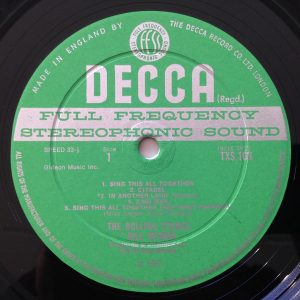
How good are the original Unboxed Deccas on Satanic Majesties?

They can be very good.

But they are never as good as the right later pressings with the Decca in a box label, the ones produced from about 1970 on.

The Unboxed Decca pressing earned a Super Hot Stamper grade (A++). The later pressing, with the right stamper, showed us just how good the album can sound.

Since the originals are pricey and hard to find, and, as a rule, noisier than the later pressings, we don’t pick them up unless we find them for cheap, which rarely happens. They have not won any shootouts, and that is very unlikely to change.

There is one set of stampers for this album that always wins, and those stampers are not found on the early label.

(more…)

Frames of Reference, Carefully Conducted Shootouts and Critical Listening

Hot Stamper Pressings of Decca Recordings Available Now

The sound we were hearing on this pressing of the Beethoven Septet (CS 6132) during a recent shootout was both rich and sweet, with easily recognized, unerringly correct timbres for all seven of the instruments heard in the work.

The legendary 1959 Decca tree microphone setup had worked its magic once again.

And, as good as it was, we were surprised to discover that side two was actually even better!

The sound was more spacious and more transparent. We asked ourselves, how is this even possible?

Hard to believe, but side two had the sound that was TRULY hard to fault.

This is precisely what careful shootouts and critical listening are all about.

Shootouts are the only way to answer the most important question in all of audio: “compared to what?

Without shootouts, how can you begin to know what are the strengths and weaknesses of the copies you own?

The vast majority of our Shootout Winning pressings fall short in one way or another on one side, something we have lately been making more of an effort to highlight on the blog.

Now, if you are a fan in general of modern Heavy Vinyl pressings, what exactly is your frame of reference? How many good early pressings of those same titles could you possibly own, and how were they cleaned?

Without the best pressings around to compare, Heavy Vinyl might sound fine.

It’s only when you have something better to play that its faults come into clearer focus.

And if you have any of these titles and they sound fine to you, this is a situation that requires your immediate attention!

(more…)

Letter of the Week – “I just figured this was just a bad recording…”

Hot Stamper Pressings of the Music of Steely Dan Available Now

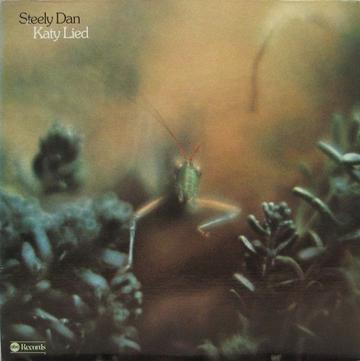
This week’s letter is from our good friend Roger, who, like us, is a GIANT Steely Dan fan. Apparently he had tried every copy of Katy Lied he could get his hands on and practically had given up on the album — until he decided to shell out the princely sum of Three Hundred Clams ($300, probably not the last piaster he could borrow, but a pretty hefty chunk of dough for a fairly common used LP from 1975) to Better Records, with the hope that we might actually find a way to put him in touch with the real Dr. Wu.

Let’s just say it seems that Roger got his money’s worth — and maybe a little more.

The title of his letter is: 

Katy Lied? Are you sure?

I tried your Hot Stamper Steely Dan Katy Lied. You gotta be kidding me. Are you sure this is the same recording? I remember your saying that this one is your favorite SD record and I could never understand why, at least until I heard this secret recording. Other than the HS copy you basically had a choice between the dull and lifeless bland US pressing, or the Mobile Fidelity version, which has those indescribable phasey, disembodied instruments and voices that sound unmusical to me.

I even tried British and Japanese pressings with no luck. I just figured this was just a bad recording, which made sense in light of all the press about the problems during the recording and mixing sessions, and I don’t think I bothered to listen to it again for at least the past 5 years.

But wow, this is clearly in another league. The voices and instruments are in three dimensions, the bass and dynamics are far far better, the saxes are up-front and breathy. I couldn’t believe how good Daddy Don’t Live in that New York City No More and Chain Lightning sounded. Even my subwoofer that I roll off at 30Hz got a good workout. It sounds like live music. So how did you sneak your tape recorder into the studio sessions, anyway?

Roger, we’re so happy to know that your love for Katy Lied has finally been requited after all these years. The reason we go on for days about the sound of practically every track on the album is that we love it just as much as you do.

We struggled ourselves from one bad pressing to another. Eventually, with better cleaning fluids, better equipment and tons of pressings at our disposal, we broke through the Bad ABC Pressing Barrier and discovered the copies that had the real Katy Lied Magic.

We Are Heartened

Everything you said was true. We are especially heartened by the fact that you cited Chain Lightning as a high point of the album we sent you. Your copy, earning a grade of A+ for side two, was a couple of steps down from the best — but it still sounds great! You don’t have to buy the Ultimate Copy to get sound that beats the pants off any “audiophile” pressing, any import, any anything, man.

It’s Not About The Money

You and I both know it’s not about the three hundred bucks. It’s about some of the best music these guys ever made. It’s about their ambitious yet problem-plagued recording surviving the record label’s mass-production-on-the-cheap, opting to stamp the sound on a slice of not-particularly-good vinyl. It’s about the search for that rare pressing with the kind of sound that conveys the richness and sophistication of Becker and Fagen’s music, music that I’ve been listening to since 1975 and do not expect to tire of any time soon (so far so good: as of 2013 this is still my favorite Dan album). [Still true as of 2022.]

So what if it took thirty years to finally get hold of a good one? With a little luck we’ll both be listening to this album for another thirty years, and that works out to the very un-princely sum of ten bucks a year.

I wish I could have sneaked a tape recorder into the studio. I sure wouldn’t have gone in for that crazy DBX Noise Reduction system they used. That alone would have saved us all a decade or two of suffering (unless you like the sound of two trash can lids crashing into each other).

(more…)

Letter of the Week – “I really thought that was a nice repress until I heard yours.”

Hot Stamper Pressinsg of the Music of Jennifer Warnes Available Now

One of our good customers had this to say about some Hot Stampers he purchased recently:

  Hey Tom,   

So that Jennifer Warnes blew the repress away, absolutely wiped the floor with it. I couldn’t believe the difference, sigh. I really thought that was a nice repress until I heard yours.

Bloody Hell. Lol.  

Thanks as always.

T.

T.,

Some Heavy Vinyl records sound good enough to fool you.

Up against a properly-mastered, properly-pressed LP — our handy name for such an animal is “Hot Stamper” — the differences become much more obvious.

That’s why we say that the only way to find a Hot Stamper pressing is through the shootout process.

Any record can sound good, but up against five or ten others? That’s a test that only the best pressings can pass.

(more…)

How Wide and Tall Is Your Copy of Little Queen? Compared to What?

Hot Stamper Pressings of the Music of Heart Available Now

Little Queen is yet another recording that only truly comes alive when you turn up your volume.

On the right system, this is a classic rock Demo Disc to beat practically anything you could ever throw at it.

Love Alive and Barracuda on this copy will deliver the full rock and roll power your system is capable of.

If you’ve got The Big Sound, this is the record that will show you just how big it is.

You get huge meaty guitars, big bass, a smooth top end, full-bodied vocals, powerful rock energy and dynamics, loads of richness and incredible transparency.

Wide and Tall

A key quality we look for in Hot Stamper copies of Little Queen is wide and tall presentation.

What exactly does that mean you ask? The best copies, the ones that really jump out of the speakers, tend to present some (usually high frequency) information higher and more forward than others. This is not hard to miss.

When you’re playing ten or fifteen copies of the same side of the same album and suddenly a cymbal crashes higher and more clearly than the others did in the part of the track you are testing, you can’t help but notice it. Wow! How did that get there?

Once you hear it you start to listen for it, and sure enough the next copy won’t do it, nor will the next. Maybe the one after that gets about halfway there: the cymbal crashes are higher than most, but not as high as the one that really showed you how high is up.

This is why we do shootouts, and why you must do them too, if owning the highest quality pressings is important to you.

Progress in Audio

And of course it all ties in with our revolutionary changes in audio commentary. If you’ve been making steady improvements to your system, or have better cleaning technologies, or better room treatments, or cleaner electricity, maybe ALL the Little Queen pressings do it now. They might ALL do something they never did before, and in fact they SHOULD be doing most things better now. 

Our last shootout was a while back. Since then many, many parts of the chain have undergone improvement. During this shootout we heard things in the recording we’d never heard before. This is the point of all this audio fooling around. It pays off, if you do it right. You have musical information waiting to be unlocked in your favorite recordings. It isn’t going to free itself. You have to do the work to set it free. Do it our way or do it some other way, but do it. You, more than anyone else, will be the one to get the benefit.

Problems Noted More Recently

(more…)

In 2016 We Had to Raise the Bar for Wings at the Speed of Sound

Hot Stamper Pressings of the Music of Paul McCartney Available Now

Okay, we’re not too proud to admit it.

We was wrong about Wings at the Speed of Sound as a recording.

Yes, that kind of thing happens when you regularly play thousands and thousands of records year after year.

The right pressing can show you that your understanding of a given recording is, shall we say, incomplete.

The great thing about our business is that, whenever we have new data that serves to correct a past mistaken judgment, the result is that we are then able to offer even better sounding pressings to our customers.

That way everybody wins. We’ve never pretended to know it all, and there’s no reason for us to start now.

Back to Wings at the Speed of Sound. Previously we had written:

I can’t even begin to convey to you what a rough shootout this was. Copy after copy bored us to tears and most of them were too noisy. It was one of those shootouts that almost defeated us, but we persevered and managed to find a few Hot Stampers. They didn’t do miracles and turn Speed Of Sound into a stunning Demo Disc, but they sounded musical, correct and enjoyable, and that seems to be all you can ask for on this album. 

This is not true.

We played a copy that earned our very special grade of Four Pluses (on one side, two sides would have been too much to ask for) because it showed us an At the Speed of Sound that we had no idea could possibly exist, this after having played dozens of imports and domestic pressings over the previous twenty years or so.

It was DRAMATICALLY bigger and more transparent, with no sacrifice in richness or smoothness.

Here was a very different Wings at the Speed of Sound. Why did it take us so long to find it?

We had never managed to clean and play a copy with the right stampers that could show us the brilliance of the sound that must be on the master tape. We needed to do more research and development, which of course we are in the habit of doing regularly with Classic Rock records, our bread and butter and the heart of our business.

Before we did this shootout, we had no idea how high to set the bar. Which leads us to:

This Key Takeaway 

In that respect we were in exactly the same place as every record loving audiophile on the face of the Earth.

How good can the record sound? How high is up?

We discussed this all-too-common mystery [1] in a listing we wrote for an amazing sounding copy of Heart’s Little Queen album we discovered many years ago, linked here.

In our old listing, we noted: Now that we know what stampers to look for, future pressings are likely to be very, very good sounding, if everything goes the way we hope it will.

[Things did go our way, with plenty of Shootout Winning White Hot copies having been found since we made that breakthrough all the way back in 2016. The right stampers are about five times more rare than the wrong ones, but they can be found. You just have to know what to look for.] 

(more…)

The Reissues Consistently Beat the Originals on this Mercury

Hot Stamper Pressings of Mercury Classical Records Available Now

For Mercury classical and orchestral recordings, the original FR pressings on the plum label are the way to go, right? 

In some cases, yes. We talk about how much better the FR pressings for The Firebird are compared to the much more common, and still quite good, M2 reissue pressings here.

The stamper numbers you see below belong to a different album.

The notes for the FR original pressings we played read:

  • Less spacious, more bright and flat.

They’re not bad sounding, they’re just not as good sounding as the RFR reissues, which, incidentally, won the shootout.

We’ve lately been giving out much more stamper information than we used to, but we make it a point to never give out the stamper information for our shootout winners, as finding those very special pressings has been the work of a lifetime and is certainly not something that should be given away for free.

Rules of Thumb

It’s just another one of a number of rules of thumb collectors use (“A method or procedure derived entirely from practice or experience, without any basis in scientific knowledge; a roughly practical method”), one that will sometimes lead you astray if what you are trying to find are not just good sounding pressings of albums, but the best sounding pressings of albums.

Same with reissue versus original. Nice rule of thumb, but it only works, to the extent that it works at all, if you have enough copies of the title to know that you’re not just assuming the original is better. You actually have the data — gathered from the other LPs you have played — to back it up.

Who Knew?

Who knew the recording would sound so much better on the right reissue pressings?

Certainly not us, not until we had done the shootout.

The difference between the way we do things and the way others do them boils down to this: We assumed that the original could be the best, and then we tested that assumption and found out we were wrong.

But the right reissues of this Mercury — again not the ones you see pictured — is indeed an exceptionally good sounding record.

This is why we do shootouts, and why you must do them too, assuming that owning the highest quality pressings is important to you.

(more…)

60s 360 Vs. 70s Red Label on Je m’appelle Barbra

More Titles that (Potentially) Sound Their Best on the Right Reissue

For Barbra Streisand’s early albums, the original pressings on the 360 label just have to be better, right? 

Not in this case. It’s just another rule of thumb, one that will sometimes lead you astray if what you are trying to find are not just good sounding pressings of albums, but the best sounding pressings of albums.

Same with reissue versus original. Nice rule of thumb but only if you have enough copies of the title to know that you’re not just assuming the original is better. You actually have the data — gathered from the other LPs you have played — to back it up.

The best of the 360 pressings in our shootout did well, just not as well.

A classic case of compared to what? Who knew the recording would sound better on the Red Label Columbia reissue pressing from the ’70s? Certainly not us, not until we had done the shootout.

This is why we do shootouts, and why you must do them too, if owning the highest quality pressings is important to you.

Our good later label pressings had all the richness and Tubey Magic of the 360s — one really couldn’t tell which pressing was on the turntable by the sound — but had a bit more space, clarity and freedom from artificiality.

Watch your levels because she really gets loud on some of this material. The best copies, such as this side one, hold up. The lesser copies get congested, shrill and crude at their loudest, and of course get marked down dramatically when that happens.

Side two as very rich and smooth, yet clear and breathy – this is the right sound for ol’ Babs. The first track has tons of Tubey Magical reverb – check it out!

(more…)

The Said and the Unsaid – The Firebird on Mercury

Hot Stamper Pressings of the Music of Igor Stravinsky Available Now

For our shootout years ago of The Firebird we had three minty, potentially hot copies of the Mercury with Dorati, as well as our noisy ref. (We have a noisy reference copy for just about every major title now. We have been doing these shootouts for a very long time. After thirty years in the record business we have accumulated a World Class collection of great sounding records that are just too noisy to sell.)


UPDATE 2024 

This is no longer true. Our customers seem to be able to put up with surface noise on the records we offer if the price is low enough. Not actually low, just low enough. We have a section for records with condition issues, and there are 175 entries in it as of today, which turns out to be more than a quarter of all the Hot Stamper pressings on the site as a matter of fact.


We had one FR pressing and two of the later pressings with the lighter label, the ones that most often come with Philips M2 stampers. This is how we described the winner:

So clear and ALIVE. Transparent, with huge hall space extending wall to wall and floor to ceiling. Zero compression.

Lifelike, immediate, front row center sound like few records you have ever heard.

Rich, sweet strings, especially for a Mercury. This side really gets quiet in places, a sure sign that all the dynamics of the master tape were protected in the mastering of this copy.

What we didn’t say — and what we never say in the listings — is what the second tier copies didn’t do as well as the shootout winner.

We used to. When you read the older entries, most of the time they mention the shortcomings that caused one side or another to be downgraded by some amount, usually something like a half to a full plus.

Not all the top end, not all the bass, not as present, slightly smeary, slightly congested — the list of potential faults for any given pressing is long indeed. These are all the problems we listen for and it’s the rare copy that doesn’t suffer from one or more of them.

We decided years ago that it was better just to let you hear the two sides of the record for yourself and make your own judgments about the sound, rather than make clear to you what areas we felt needed improvement.

Consider this example. If on our system the bass was lacking compared to the very best, perhaps on your system the bass was fine, not an issue, good enough. Without the top copy to compare yours to, how would you know how much better the bass could possibly be?

A classic case of “compared to what?

Shootouts are the only way to answer that question, which, as we never tire of saying, is THE most important question in all of audio. This is why we do shootouts, and why you must do them too, if owning the highest quality pressings is important to you.

Click on the following link to see more records for which we’ve detailed the strengths and weaknesses of a specific copy.

What We Heard on The Firebird

With all that in mind, only the Triple Plus (A+++) copy, as described above, did everything right.

There were two Double Plus (A++) copies, and each of them fell short in different ways.

(more…)