compared-to-what

These are the three most important words in all of audio, as we hope you will come to see after reading these dozen or so commentarires centered around the proposition.

The Said and the Unsaid – The Firebird on Mercury

Hot Stamper Pressings of the Music of Igor Stravinsky Available Now

For our shootout years ago of The Firebird we had three minty, potentially hot copies of the Mercury with Dorati, as well as our noisy ref. (We have a noisy reference copy for just about every major title now. We have been doing these shootouts for a very long time. After thirty years in the record business we have accumulated a World Class collection of great sounding records that are just too noisy to sell.)


UPDATE 2024 

This is no longer true. Our customers seem to be able to put up with surface noise on the records we offer if the price is low enough. Not actually low, just low enough. We have a section for records with condition issues, and there are 175 entries in it as of today, which turns out to be more than a quarter of all the Hot Stamper pressings on the site as a matter of fact.


We had one FR pressing and two of the later pressings with the lighter label, the ones that most often come with Philips M2 stampers. This is how we described the winner:

So clear and ALIVE. Transparent, with huge hall space extending wall to wall and floor to ceiling. Zero compression.

Lifelike, immediate, front row center sound like few records you have ever heard.

Rich, sweet strings, especially for a Mercury. This side really gets quiet in places, a sure sign that all the dynamics of the master tape were protected in the mastering of this copy.

What we didn’t say — and what we never say in the listings — is what the second tier copies didn’t do as well as the shootout winner.

We used to. When you read the older entries, most of the time they mention the shortcomings that caused one side or another to be downgraded by some amount, usually something like a half to a full plus.

Not all the top end, not all the bass, not as present, slightly smeary, slightly congested — the list of potential faults for any given pressing is long indeed. These are all the problems we listen for and it’s the rare copy that doesn’t suffer from one or more of them.

We decided years ago that it was better just to let you hear the two sides of the record for yourself and make your own judgments about the sound, rather than make clear to you what areas we felt needed improvement.

Consider this example. If on our system the bass was lacking compared to the very best, perhaps on your system the bass was fine, not an issue, good enough. Without the top copy to compare yours to, how would you know how much better the bass could possibly be?

A classic case of “compared to what?

Shootouts are the only way to answer that question, which, as we never tire of saying, is THE most important question in all of audio. This is why we do shootouts, and why you must do them too, if owning the highest quality pressings is important to you.

Click on the following link to see more records for which we’ve detailed the strengths and weaknesses of a specific copy.

What We Heard on The Firebird

With all that in mind, only the Triple Plus (A+++) copy, as described above, did everything right.

There were two Double Plus (A++) copies, and each of them fell short in different ways.

(more…)

The Warm Moods – The Reissue Is So Good, How Can the Original Be Better?

Our review from years ago for the Discovery reissue of The Warm Moods can be found below.

We loved the sound, so much so that we found it hard to fault.

Imagine our surprise when we discoverd that that the original was clearly better.

Much better. At least a full grade better.

When we did the shootout again, a rare (in stereo anyway) original Reprise showed us just how wrong we were.

The best original pressing we found took the sound of The Warm Moods to another level, and a pretty high one at that.

It’s yet another example in which the most important question in all of audio had been overlooked: compared to what?

Who knew the recording could sound any better than the wonderful Discovery pressing we’d played?

(more…)

How Novel Patterns Emerge During Shootouts

Hot Stamper Pressings of the Music of Ambrosia Available Now

When you sit down to play ten or twelve copies of an album, one right after the other, patterns in the sound are going to emerge from that experience, patterns which would be very likely to pass unnoticed when playing one copy against another or two over the course of the twenty or thirty minutes it would take to do it.

In the case of this album, the pattern we perceived was simply this: About one or two out of that dozen or so will have punchy, solid, rich, deep bass. (There is a huge amount of bass on the recording, so recognizing those special copies is not the least bit difficult if you have a full-range speaker and a properly treated room.)

About one or two copies really get the top end right, which is easily heard when the cymbals splash dynamically, with their harmonics intact, and they extend high about the rest of the soundfield (precisely the way they do in live music).

(Fewer copies have an extended top end compared to those with tight punchy bass by the way.)

Like so many Mastering Lab tube-mastered records from the era, most copies tend to be somewhat smooth.

Only one copy had both the best bass and the best highs.

All the other copies fell short in one or both of these areas.

Think about it: if you do your home shootouts with three or four or even five copies of an album, what are the chances that:

1. You will detect this pattern? Or,
2. That you will run into the one copy that does it all?

This is precisely the reason we have taken the concept of doing comparisons between pressings to an entirely new level.

It’s the only way to find the outliers in the group, the “thin tails” as the statisticians like to call them. (More on outliers here.)

(more…)

The Original Pressings of The Beatles Albums Are the Best Sounding, Right?

beatles help labelHot Stamper Pressings of the Music of The Beatles Available Now

No, they are most definitely not. At least the ones on the label you see pictured are not (with the exceptions noted below).

We think it’s just another example of mistaken audiophile thinking.

Back in 2005 we compared the MFSL pressing of Help to a British Parlophone copy of the Help album and were — mistakenly, as you may have already surmised — impressed by the MoFi. We wrote:

Mobile Fidelity did a GREAT JOB with Help!. Help! is a famously dull sounding record. I don’t know of a single original pressing that has the top end mastered properly. Mobile Fidelity restored the highs that are missing from most copies.

The source of the error in our commentary above is in this sentence, see if you can spot it:

I don’t know of a single original pressing that has the top end mastered properly.

Did you figure it out? If you’ve spent any time on this blog you did.

Original pressing?

Is that the standard?

Why? Who said so? Where is it written?

(more…)

Letter of the Week – “The overall tonal balance is fantastic. Big, room filling sound.”

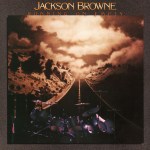
Hot Stamper Pressings of the Music of Jackson Browne Available Now

One of our good customers had this to say about some Hot Stampers he purchased recently:

Hey Tom, 

I am taking my time going through all my hot stampers one by one. Still waiting for my cartridge to break in so I know things will only get better!

This album is amazing. I forgot how good it was. Only had the cassette back in the day and loved playing it in the car. The overall tonal balance is fantastic. Big, room filling sound. Jackson’s voice is just so well centered in the mix. I think your rating may have been a bit conservative. Hard to believe it can sound much better. Side 2 is probably my favorite and sounds even better than side 1 to my ears–but it is close. Another winner for sure!

Thanks!

Rob

Rob,

Glad you liked it!

As for the notes about the grades, we don’t keep them around, but we liked two copies better than that one, which just goes to show you can never know how good it can get until it gets that good. That is the only way to know: to hear it for yourself. That is what shootouts are for.

This is what the forum posters fail to understand. They think they have a Hot Stamper when what they actually have (maybe!) is a good sounding record. They don’t know how amazing the record can sound — so much more amazing than the one they own, probably — so they assume they have something good, maybe even the best.

They probably do not, but who really knows? The shootout would supply the data they need to support their conclusions, and since they could not be bothered to conduct one, they have no data to back up their opinions.

The “probably” you see in the above two sentences is there for a good reason. We make a point of being clear about what we can know and we cannot know, and we cannot know what a record sounds like until we play it.

This is obviously true for those of us who try to listen as critically as possible, but we also know that it is just as important to think about records the right way.

Mistaken thinking keeps audiophiles from making progress in this hobby just as much as bad equipment and bad records do.

When it comes to stampers, labels, mastering credits, country of origin and the like, we make a point of revealing very little of this information on the site, for a number of good reasons we discuss here.

The idea that the stampers are entirely responsible for the quality of any given record’s sound is a mistaken idea, and a rather convenient one when you stop to think about it. Audiophiles, like most everybody else on this planet, want answers.

But in the world of records, there aren’t many.

There is only the hard work that it takes to come up with the best answer you can under your present circumstances, and by that we mean: your present equipment, your present tweaks, your present room, your present electrical quality, your present listening skills, your present table setup, et cetera, et cetera.

Not to mention the present condition of your ears.

With every change to your system, the record you used to like the best could turn out to be second-rate compared to the record you used to think was second-rate but has now become first-rate. What changed? Who knows?

This, of course, drives most audiophiles crazy, so they ignore or downplay their own inconvenient findings. Instead they refuse to believe their own two ears!

The Biz

Being in the shootout business means we have no way to avoid such realities, which is why it is so easy for us to accept them.

The amateurs and professionals alike who review records for audiophiles want there to be clear-cut answers for every album they write about. Uncertainty and trade-offs upset them no end.

We recognized twenty years ago that the empirical pursuit of record knowledge, practiced scientifically, must be understood as incomplete, imperfect, and provisional.

That is not going to change no matter how upsetting anyone may find it.

Thanks for writing,

Best, TP

(more…)