I don’t know why I wasted so much time critiquing the sound of this remastered (2009) pressing. Frankly, it really wasn’t worth it.
However, since I listen to records for a living, I figured I might as well listen to this one, head to head with an excellent vintage pressing, of course. What other way to do it is there?
Since we do shootouts for this album regularly, we know just how good the best pressings of After the Gold Rush can sound, and this newly remastered vinyl is missing almost everything that makes the album essential to any right thinking music lover’s collection.
We can summarize the sound of this dreadful record in one word: boring.
Since some of you reading this review are no doubt fans of Chris Bellman, the engineer credited on the album, and a man apparently held in some esteem by a great many audiophiles, perhaps we owe it to his fans to break down the sonic strengths and weaknesses of this pressing in more detail.
What It Does Right
It’s tonally correct. Unlike many modern pressings, it is not overly smooth.
Steve Westman invited me to appear again on his youtube channel chat with the Audiophile Roundtable.
At about the 39 minute mark, we discuss my picks for what I would rate as the Five Best Sounding Records I know of.
I wanted to go with more variety, so I picked two rock records, two jazz records and one classical album.
A rough transcription with corrections and additions follows:
Before I did my top five, I wanted to say something along the lines of, if you want to know where somebody’s coming from in audio, you don’t ask them what their stereo is, you don’t ask them what their room is like, and how their electricity is done, and what their history with audio is, because they’re not going to tell you, and they just don’t want to go down that road.
But you can ask them about music, and that will tell you a lot about where they’re coming from, so here are my questions for people if I wanted to know more about their understanding of records (and, by implication, audio):
One: what are the five best sounding records you’ve ever heard?
Two: what are your five favorite records of all time?
Three: what five famous recordings never sounded good to you?
Four: name five recordings that are much better than most of your friends or audiophiles in general think?
In my world, you would have to tell me what pressing you’re listening to. If you said “I love the new Rhino Cars album,” I think we would be done, but if you told me that you love the original, then I would say yes, I love that record too. I bought it in 1978 and I’ve played it about 5000 times. Never tired of hearing it.
At about the 48 minute mark I reveal the best stampers for Ry Cooder’s Jazz album.
At about the 50 minute mark someone asks about my system. This would be my answer:
All that information is on the blog., I actually do a thing about my stereo where I take it all the way from 1976 to the present, which I’m sure bores people to death, but you know, there was a lot to talk about there.
There were a lot of changes that I went through and I even talk about how my old stereo from the 90s, which I had put together after having been an audiophile for 25 years, was dark and unrevealing compared to the one I have now, so all my opinions from 25 years ago are suspect, and rightly so.
I feel the same thing is going on in the world of audiophiles when you have systems that aren’t very revealing and aren’t tonally accurate, yet are very musical and enjoyable the way Geoff would like, but they’re not good for really knowing what your records sound like because your system is doing all sorts of things to the record that you’re playing in order to keep the bad stuff from bothering you.
All the bad stuff just jumps out of the speakers, and that’s why these heavy vinyl records don’t appeal to us anymore, because we hear all the bad stuff and we don’t like it.
At 1:03 I’m asked if I like any modern mastering engineers, and the only one I can think of is Chris Bellman, because he masterered one of the few Heavy Vinyl pressing I know of that sounds any good, Brothers in Arms, released in 2021. I played it when Edgers brought it by the studio when he first visited me in preparation for his article.
My best copy was clearly better in some important ways, but Bellman’s mostly sounds right, and that surprised me because most of these modern records sound funny and weird and rarely do they sound right.
(Geoff brought over three records that day: Brothers in Arms, the remastered Zep II, and a ridiculously bad sounding Craft pressing of Lush Life, which was mastered by Bernie Grundman, and one which I have not had time to review yet. It was my introduction to the Craft series (in this case the small batch, limited to 1000), and let’s just say we got off on the wrong foot. I told Geoff it sounded like a bad CD, and that’s pretty much all I remember of it. The average price for that pressing on Discogs is roughly $210 these days. The CD is cheaper and there is very little doubt in my mind that it would be better sounding to boot.)
At 1:04 I mention the biggest snake oil salesman in the history of vinyl, the man behind The Electric Recording Company.
Patrick mentions an ERC Love record which he likes, but we played one that sounded about as bad as a bad record could sound. That Love record will never get any love from us. He says he’ll never buy another ERC pressing, but that doesn’t sound like the kind of thing someone who really likes a record would say, does it? I suppose you can ask him in the comments section why that would be.
At some point I talk about the studio we play records in, not exactly spouse-friendly but good for hearing what’s really in the grooves of the records we play:
The reason the sound room is the way it is is because you’re not there to be reading magazines and looking at your phone. You’re just in there to sit in a single chair in front of two speakers, not talking. Nobody else is in there. They have no business being in there. It’s just you and the music and that’s the way I like it.
This next section has been fleshed out quite a bit. I took the question posed and ran with it:
Not one instrument sounds remotely like it should, and that is surely an insult to audiophiles of every stripe.
The problem was that so many self-identified audiophiles did not seem bothered by the execrable sound, certainly not the way we were.
Oh, but it’s on vinyl! That solves all the problems with the recording, doesn’t it?
Yes, the CD was bad, but the vinyl was no better. I had them both and couldn’t tolerate the sound of either of them.
[1] Note that some of our favorite records are on this list. Yes, they are heavily-processed, “unnatural” recordings, but the engineers, producers and artists who worked on these albums were attempting to create a unique sound for the music they were making, not recreate one, and in many cases the results of their efforts are some of the most powerful and enjoyable albums we’ve ever played.
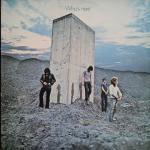
Back when we were carrying a select group of Heavy Vinyl pressings in 2005, Who’s Next on Classic Records was one of the ones we recommended.
We felt the Classic Records pressings of this album and the others mentioned below were a good value for those who had thirty bucks to spend on a record.
By 2007 we had already changed our minds about Who’s Next on Classic — and a whole lot more.
By the time the guitars at the end of the title track fade out you will be ready to take your heavy vinyl Classic Record pressing and ceremoniously drop it in a trashcan. (Actually, the best use for it is to demonstrate to your skeptical audiophile friends that no heavy vinyl pressing can begin to compete with a Hot Stamper from Better Records. Not in a million years.)
We Was Wrong on All Counts
Over the course of the last 25 years we was wrong three ways from Sunday about our down-and-out friend Aqualung here.
We originally liked the MoFi from the early ’80s. Wrong. Proof positive that In the early ’80s I didn’t have good reproduction or know much about records, but I sure thought I did!
When the DCC 180g came along in 1997 we liked that one better. Wrong again. It didn’t have MoFi’s usual midrange suckout and sloppy bass, but it was bad in so many other ways that it is hard for me to believe I ever liked it. But I did, to some degree anyway.
Back then I was a DCC believer, a mistake I would come to recognize once a few more years had passed. See here and here.
And a few years back I was briefly enamored with some original British imports. Wrong for the third time.
After playing more than two dozen pressings of Aqualung in our recent [circa 2010] shootout, it’s pretty clear that the right early Reprise pressings KILL any and all contenders. Forget all the Green Label Chrysalis pressings. Forget the reissues. Forget the imports. It’s original domestic Reprise or nothing when it comes to Aqualung. (more…)