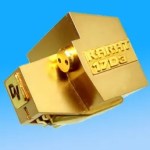
cart-info

Information pertaining to cartridges.

Our Playback System – And Why You Shouldn’t Care

Advice to Help You Make More Audio Progress

Below you will find a list of most of the equipment we have been using over the last twenty years or so to carry out our Hot Stamper pressing evaluations, or “shootouts” as we like to call them.

Naturally the reality of the 80/20 Rule comes into play here — 80% (probably more like 90 or 95%, truth be told) of the sound is what you do with your audio system, 20% (or 10 or 5%) of the sound is the result of the components you own.

We like to say it’s not about the audio you have, it’s about the audio you do: how you set up your system, what you’ve done to treat your room, how good your electricity is and all the rest of it.

  • Our VPI Aries (original, not the latest model) with 
  • Super Platter (no longer made) and
  • TTWeights Carbon Fiber Platter (a big upgrade, no longer made).
  • VPI Synchronous Drive System (as of 2016 now sitting on a Townshend Seismic Sink).
  • Triplanar tonearm.
  • Dynavector 17dx.
  • Aurios (no longer made), which sit on a
  • Townshend Seismic Sink (another big upgrade).
  • EAR 324P and the hundreds of hours we’ve spent setting up and tweaking this beast is at the heart of everything we do around here.
  • We love our modified Legacy Focus speakers.
  • Even more now that they have much improved high frequency extension courtesy of Townshend Super Tweeters.
  • Mix in extensive room treatments, aided inestimably by three pairs of Hallographs (as we like to say, there is practically no Hi-Fi without them), more than thirty years of experience and endless hours of experimentation and you have a system that can separate the winners from the losers like nobody’s business.
  • Exactly like nobody’s business, because nobody does it in this business but us. Having heard hundreds of systems over the years, it’s an open question as to whether anyone else could do what we do even if they tried.

(more…)

Some Stereo Systems Make It Difficult to Find Better Sounding Pressings

Hot Stamper Pressings on Decca & London Available Now

Many London and Decca pressings lack weight down low, resulting in an overall thinning of the sound and lower strings that get washed out.

On some sides of some copies of some titles the strings are dry, lacking Tubey Magic. This is decidedly not our sound, although it can easily be heard on many London pressings, the kind we’ve played by the hundreds over the years.

If you have a rich sounding cartridge, perhaps with that little dip in the upper midrange that so many moving coils have these days, you will not notice this tonality issue nearly as much as we do.

Our 17Dx is ruler flat and quite unforgiving in this regard. It makes our shootouts much easier, but brings out the flaws in all but the best pressings, exactly the job we require it to do.

Here are some other records that are good for testing string tone and texture.

If you have vintage tube equipment, or modern equipment that is trying to mimic the sound of vintage tubes, you never have to worry that the strings on your London orchestral recordings will sound too dry.

You haven’t solved the problem, obviously.  You’ve just made it much more difficult — impossible even — to hear what is really on your records.

Some audiophiles have gone down this road and may not even realize what road they are on, or where it leads. Assuming you want to make progress in this hobby, it is, from our point of view, a dead end.

If you want to find Better Records, you need equipment that can distinguish good records from bad ones.

Vintage tube equipment is good for many things, but helping you find the best sounding records is not one of them.

A rack full of equipment such as the one shown here — I suspect it is full of transistors but it really doesn’t matter whether it is or not — is very good at eliminating the subtleties and nuances that distinguish the best records from the much more common second- and third-rate pressings that often look identical to them.

If you have this kind of audio firepower, Heavy Vinyl pressings and Half-Speed mastered LPs don’t sound nearly as irritating as they do to those of us without the kind of filtering you get from the electronic overkill you see.

In my experience, this much hardware can’t help but create a barrier between you and the music you love.

It may be new and expensive, but the result is the kind of old school stereo sound I have been hearing all my life (and was perfectly happy with myself before the early 2000s.)

(more…)

Letter of the Week – “The Triplanar is bringing out more of the life and energy in the music than any other change I’ve made.”

Check Out Our New Audio Advice Section

When our customers ask for audio advice, we never hesitate to give it to them. (We also give out plenty of advice that nobody asked for.)

We want to help our customers pursue the kind of equipment that we know through decades of experience is probably superior to most of what is available in audiophile salons, regardless of price.

(In 1976, at the tender age of 22, I heard something at an audio salon that rocked my world: tube equipment. Everything changed that year.)

Robert Brook has taken our advice and ended up with much of the same equipment we currently use. He seems very happy with the analog sound he is getting these days, especially from his Triplanar tonearm.

And now Aaron B. has made a great leap forward into better sound. He wrote to tell me all about the differences he is hearing now that he has a system that is designed to reveal what’s actually on his records. His previous system was better at hiding the imperfections and shortcomings of many of the albums he was playing, but he’s decided he doesn’t want to go down that road anymore, and we couldn’t be happier for him. His letter:

I’m feeling another huge dose of gratitude for you, Tom.

I installed the Tri-Planar arm on Friday, and I could tell right away that things are sounding just wonderfully better.

My whole setup is getting really close to your full recommendation. Dynavector 17dx mounted in a Tri-Planar tonearm, mounted on a VPI Aries 1 table, going into an EAR 324, out to a [redacted] amp, driving Legacy speakers.

I managed to buy everything except the cartridge used and in good shape. The total cost for my current system is a hair above $10K, and it is sounding nearly as good as I’ve ever heard vinyl sound, or any recorded music for that matter.

The Triplanar tonearm is a game-changer. This is the most dramatic improvement since I first replaced my B&W bookshelf speakers with the Legacys. I’m frankly stunned by what a difference it makes.

The difference the tonearm makes is evident in nearly every aspect of the sound.

First, the problems I was having previously have cleared up. This includes vocal sibilance, occasional graininess to the sound, and what I mistook for groove wear, even on some hot stampers that otherwise sounded great.

Some that I returned to you, I now wish I could have back.
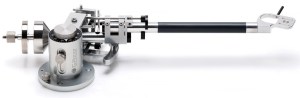
Beyond fixing the last of my playback problems, the Triplanar is bringing out more of the life and energy in the music than any other change I’ve made since you started advising me.

The attack on instruments is arresting. I’ve come to believe that the aspect of live music that’s hardest for any recording to capture is the attack. That’s where the energy of live music is to be found.

I am hearing more details and overtones to the music that I ordinarily needed to turn up the volume to hear. Also, there’s greater depth to the soundstage, even in my small room.

I’ve said this to you before, but it bears repeating. I love the records you sell. I’ve got 15 hot stampers now, and they are the crown jewels of my collection. But, it’s the education you’ve given me that’s truly transformed my music listening experience.

Today, for that, you have my deep gratitude.

Aaron

Aaron,

Thanks for taking the time to write and say all those nice things about our records and the equipment we have recommended you play them with. As you can clearly see now, it takes the right stereo to really bring our records to life. Glad to hear yours is working so well.

I have long held that the best way to do audio is to find a system in someone’s home that sounds amazing and just buy all the same stuff that person has and set it up the same way he did. If a stereo is sounding good, much of it has to be working right. Start there, then make your own improvements based on a proven model of success.

I did this to the extent it was possible back in the 80s, copying my friend George Louis’s system, comprising four 140 watt per channel transistor amps (four times the power I have now), an electronic crossover, two sets of adjustable electrostatic tweeter arrays (RTR for one and Janzen for the other), a large number of woofers in the main cabinet and a couple of dual 10″ subs thrown in for good measure.

(more…)

Letter of the Week – “…it is now a reference or demo if you wish, that lets me know how good my system really is.”

More of the Music of The B-52’s

One of our good customers had this to say about some Hot Stampers he purchased recently: 

Hey Tom, 

Hey guys, before I talk about my very first Hot Stamper let me say this. I have been going to your site for well over two years and was very reluctant to spend the kind of money that you charge for a used record. Come on! Are you kidding??

But I was very intrigued by the description of your system. I had felt that the weakest part of my system may be the cartridge. So I sprung for the 17d3.

WOW! A first class improvement. So I thought “Well if these guys are right about the cartridge, maybe there is something about these used records. After all I can always send it back, right?”

So I ordered the B-52’s first album and played it. And played it. No No No, get up off your knees and stop begging. You can’t have it back. It’s MINE. Although I do not have this album in any format, it is now a reference or demo if you wish, that lets me know how good my system really is. It has also revealed to me that I have records that sound pretty darned good. It has also given me a lesson on critical listening.

I have been listening to music for over 55 years, and you are never too old to learn. Last week I received my new VPI with Disc Doctor package, and it seems to have been a wise addition. I have found a few treasures that have been lurking in my collection. And I ordered a Peter Gabriel today. I am a happy camper.

Kevin B.

Kevin,

Thanks for your letter. Now you have the ideal cartridge to play back our Hot Stampers pressings and hear just how phenomenally good they really sound.

Playback accuracy is at the heart of everything we do. We want to hear our records naked and unadorned. That’s what the 17dx does for us, and of course it can do the same for you.

(more…)

This Is the Heart of Our System’s Accuracy

Thoughts on Playback Accuracy

If you have a rich sounding cartridge, perhaps with that little dip in the upper midrange, the one that so many moving coils have these days, you may not notice some tonality issues we discuss on the blog and in our Hot Stamper listings quite as easily as we do.

Our Dynavector 17Dx Karat is ruler flat and very unforgiving in this regard. It makes our shootouts much easier, but brings out the flaws in all but the best pressings, exactly the job we require it to do.

We discussed the issue in a commentary entitled Hi-Fi beats My-Fi. (If you are serious about audio this is a must read.)


Further Reading

(more…)

Led Zeppelin / II – Gee, I Seem to Have No Trouble At All Playing This Record

More of the Music of Led Zeppelin

I expect that pretty much everyone knows the famous story by now.

Robert Ludwig’s “Hot Mix” (a complete misnomer, mostly propagated by those with a poor understanding of what is involved in making records – the mix never changed, only the mastering) of Zep II was causing the needle to jump the groove when Ahmet Ertegun’s daughter tried to play it on her cheap turntable, so they recut the record with more compression and cut the bass. (The recut, if you have never heard one, may take the cake for the worst sounding pressing of the album ever made.)

Our Triplanar Mark 6 / Dynavector 17dx combination seems to play the original just fine. Amazingly well in fact.

Here’s a challenge for all the Heavy Vinyl fans in the world:

Name all the Heavy Vinyl records that sound as good or better than RL’s cutting of Zep II.

Modern engineers tell us they can cut records better now than ever before, with all the bass and dynamics that previous engineers were supposedly forced to limit for the cheap tables and carts of the past.

So where are these so-called “new and improved” records, the ones with better bass and dynamics?

I have yet to hear one. Perhaps someone can point me in the right direction.

Send your list — even if your list only has one entry! — to tom@better-records.com

(more…)

Carmen – Dry Strings on One Side, Rich on the Other

More of the music of Georges Bizet (1838-1875)

My notes for side two on a copy we recently auditioned read:

Could use more tubes.

Strings could be a bit smoother.

Needs a bit more weight down low.

My notes for side one:

Side one had all of this and more!

Some Common Issues with Londons and Deccas

Many London and Decca pressings lack weight down low, which thins out the overall sound and washes out the lower strings.

On some sides of some copies the strings are dry, lacking Tubey Magic. This is decidedly not our sound, although it can easily be heard on many London pressings, the kind we’ve played by the hundreds over the years.

If you have a rich sounding cartridge, perhaps with that little dip in the upper midrange that so many moving coils have these days, you will not notice this tonality issue nearly as much as we do.

Our 17Dx is ruler flat and quite unforgiving in this regard. It makes our shootouts much easier, but brings out the flaws in all but the best pressings, exactly the job we require it to do.

Here are some other records that are good for testing string tone and texture.

(more…)

Sibilance Can Be a Bitch (and a Good Test for Table Setup Too)

On side two the tonal balance is key. If there is any boost to the top end, the vocals on track two will SPIT LIKE CRAZY.

This is also a good test for how well your cartridge and arm are doing their jobs. Sibilance is a bitch. The best pressings, with the most extension up top and the least amount of aggressive grit and grain mixed into the sound, played using the best front ends, will keep it to a minimum. VTA, tracking weight, azimuth and anti-skate adjustments are critical to reducing the spit in your records.

We discuss the sibilance problems of MoFi records all over the site. Have you ever read Word One about this problem elsewhere? Of course not. Audiophiles and audiophile reviewers just seem to put up with these problems, or ignore them, or — even worse — simply fail to recognize them at all.

Play around with your table setup for a few hours and you will no doubt be able to reduce the sibilance problems on your favorite test and demo discs. All your other records will thank you for it too. 

This record, along with the others linked below, is good for testing the following qualities.

  1. Grit and grain
  2. Sibilance (it’s a bitch) 

Playing so many records day in and day out means that we wear out our Dynavector 17DX cartridges often, about every three to four months.

Which requires us to regularly mount a new cartridge in our Triplanar.

Once broken in (50 hours min.), we then proceed to the fine setup work required to get it to sound its best, adjusting the VTA, azimuth and tracking weight for maximum fidelity.

(more…)

Compare the Gold CD and the Vinyl on The Original Soundtrack

Hot Stamper Pressings of the Music of 10cc Available Now

UPDATE 2025

This commentary was written sometime around 2004 I imagine. It references my old Legacy Whisper Speaker system, which I permanently replaced with the Legacy Focus shortly thereafter.

We sold off our Whispers long ago. You can read all about what we use now to find our Hot Stamper pressings in this listing.


As good as the DCC Gold CD is, this record has all the MAGIC of ANALOG vinyl — and then some. It’s the kind of sound you will never hear coming from a CD or digital source of any kind, trust me.

If there isn’t a huge difference in sound between the Hoffman DCC gold CD and your LP, I can tell you without fear of contradiction that you:

A.) Need a better front end (turntable, arm, cart, phono stage — which of course we are happy to help you acquire) or,

B.) You have a second- or third-rate pressing of the vinyl. 


UPDATE 2023

Note that as of 2023, we offer only a few select pieces of equipment: the Dynavector 17dx, the Townshend Platform, the EAR 324P, the Triplanar tonearm and maybe one or two more. Email for details if you are interested in any of the above.


Most likely it would be a combination of the two, which, if I can say it without sounding too smug or arrogant, is the most likely scenario.

I haven’t run into too many audiophiles who own a hot copy of The Original Soundtrack, or have the kind of system that can play a record like it. As I am fond of saying, this is the kind of record that is guaranteed to bring any audiophile stereo to its knees.

The recording itself is a tour de force, one reason I’ve been demonstrating my stereo with it for more than thirty years. The extended suite that opens side one, One Night in Paris, has ambience, sound effects, and incredibly dynamic multi-tracked vocals at its climax that will make your jaw drop.

Reinventing The Wall of Sound The Right Way

This is the kind of record that makes you sit up and take notice. It’s classic 10cc everything-but-the-kitchen-sink “Wall of Sound” sound (minus the Phil Spector distortion), the kind big speaker guys like me live for. Supertramp, Yes, Ambrosia, Blood, Sweat and Tears, Zeppelin, Bowie — to this day I’m a sucker for that Cinerama soundstage these bands like to play on. It’s one of the reasons I am a proud owner of the Legacy Whisper speaker system, complete with its eight fifteen inch woofer driver complement. You need that kind of piston power to produce The Really Big Sound with Super Low Distortion at Really High Levels. The louder the better. (We have a pair of highly modified Focuses set up in our listening room as well. Three twelves per channel moves a fair amount of air too.)

(more…)

Robert Pincus Reviews Cartridges with Rising Top Ends (+5db at 20kz, Ouch!)

More Unsolicited Audio Advice

He writes:

This kind of explains why all the Lyra’s sound the way they do. It’s the same thing with Clear Audio. You buy them to get that “sound.”

Sure, they do some great things. Speed often comes with a rising top end, and there’s no dip in the lower highs, which I like.

This kind of response works wonders on old Living Stereo Chet Atkins and Mancini LPs. They’re soft on top!

Don’t play your old Heifetz LPs with one of these.

Robert Pincus

Robert,

As you and I both know, the Dynavector 17dx is the solution to the problem of inaccurate cartridges.

TP


Further Reading