live-studio-sound

Neil Young and His Crazy Pals LIVE in the Studio

Hot Stamper Pressings of the Music of Neil Young Available Now

Hot Stampers are all about finding those rare and very special pressings that manage to represent the master tape at its best.

Notice I did not say ACCURATELY represent the master tape, because the master tape may have faults that need to be corrected, and the only way to do that is in the mastering phase.

I can tell you without fear of contradiction that absolute fidelity to the master tape should never be — and more importantly, rarely is — the goal of the engineer mastering a record.

Which, as a practical matter, means two things:

  1. Flat transfers are most often a mistake.
  2. Talking about the fidelity you think a record has to its master tape, a tape you have never heard, is completely pointless.

Whether we like or dislike the presentation of any given recording is of course a matter of taste. When listening we constantly make judgments about the way we think the recording at any moment ought to sound, based on what we like or don’t like about the sound of recordings in general and how our stereos deal with them.

(more…)

On the Beach – Here’s the Live in the Studio Sound We Love

Hot Stamper Pressings of the Music of Neil Young Available Now

UPDATE 2026

Years ago we described a Shootout Winning early pressing with the comments you see below. (Please excuse the excessive capitalization.)


We’ve been trying for a while to find a copy of this album with the kind of wall-to-wall, floor-to-ceiling sound we get from the best copies of Zuma and After The Gold Rush, but it hasn’t been easy.

However, on the best copies, the title track is out of this world.

It’s got that live-in-the-studio sound we recognize and love from Zuma, but in this case it sounds like it was recorded at three in the morning in a room full of pot smoke.

When you play a Hot Stamper copy, the soundfield is huge — big, wide, and deep — and there’s lots of space around all the instruments. You will not believe all the studio ambience, and you may even catch a contact high from it.

Two Knockout Sides

Side one held its own against every copy we threw against it, earning our top grade of A+++. The sound is relaxed, musical, and SUPER transparent — there’s virtually nothing between you and the music. Neil’s voice is PERFECTION with lots of texture, and it is surrounded by lovely ambience.

Play the second track, See The Sky About To Rain, to hear some mellow magic. Neil’s work on the wurlitzer sounds fantastic, and the soft, breathy vocals are bound to give you goosebumps.

(more…)

Listening for Energy and Rock and Roll Firepower on Bad Company’s Debut

Hot Stamper Pressings of Rock Classics Available Now

The drums on this album are so solid, punchy and present, they put to shame 99% of the rock records on the planet.

As well as having great drums, the overall sound of the best pressings is raw, real and wonderfully unprocessed.

Here you will find none of the glossy artificiality you might hear on many of the rock and pop records we sell.

There’s nothing wrong with that sound, mind you, but this recording captures much more of what the real instruments sound like in the studio.

And, if you’re playing this album good and loud, you’ll feel like you’re in the room with the boys as they kick out the jams. “Ready For Love” sounds great here — shocking clarity, tons of ambience, and silky sweet highs.

This album was one of Ron Nevison‘s early engineering jobs.

The year before (1973) he had been behind the board at Ronnie Lane’s Mobile Studio for Quadrophenia, one of the best sounding Who albums we know of, and a longtime member of our Top 100 (as is this album).

He also knocked it out of the park on Bad Company’s follow-up, 1975’s Straight Shooter.

He worked on the sprawling mess that turned into Physical Graffiti the same year.


Want to find your own killer copy?

Consider taking our moderately helpful advice concerning the pressings that tend to win our shootouts.

(more…)

Bad Company – The Making of Straight Shooter

More of the Music of Bad Company

More Recordings Engineered by Ron Nevison

FROM THE BAD COMPANY WEB SITE

Heartened by the response to Bad Company, the group hired Ronnie Lane’s mobile studio and had it installed at Clearwell Castle in Gloucestershire, England in September 1974. “That was an interesting place to record,” states Rodgers. “Where next after Headley Grange but an old haunted castle! We had been touring very hard but we were still able to come up with the goods in the end. By comparison, we hadn’t done any touring before our first record.”

Bad Company followed up their initial success with the 1975 release of the triple-platinum album Straight Shooter which contained the Top Ten smash ballad “Feel Like Makin’ Love” which also won a Grammy Award. “I loved Straight Shooter” says Kirke. “Quite a few of the songs on that album came along during the first year of our existence. A lot of the songs on the first album had been done in 1973 before we really had started, so we were always playing catch-up with new material. We wanted to record a follow up album that really validated what we had done on Bad Company.” Other tracks form the album, such as “Shooting Star” have long since become concert and radio staples. “I remember Paul was singing a few of the verses for that song in the airport as we were going over to America to start our second tour,” remembers Kirke. “He had taken his guitar on the plane with him and was tinkering around with the song on the flight over.”

(more…)

If You Want to Hear The Band Playing Live in the Studio, Just Turn Up Your Volume

Hot Stamper Pressings of the Music of Black Sabbath Available Now

We played the album very loud, as loud as we could, and still we wanted more volume!

That’s what a good record is all about — the louder you play it the better it sounds.

If you like the raw, rockin’ sound of early Zep, you should have a blast with this album. It’s a shockingly good recording, and the music is of course as heavy as it gets for 1970.

This Warner Brothers Green Label domestic pressing DESTROYED the import copies we played it against, with startling immediacy, tons of ambience, and loads of texture.

The soundfield is HUGE — back wall to front wall, floor to ceiling, and WIDE.

The bass is deep, well-defined, and punchy.

If you want to feel this effect:

“Sabbath’s slowed-down, murky guitar rock bludgeons the listener in an almost hallucinatory fashion, reveling in its own dazed, druggy state of consciousness.”

You need a copy that sounds the way our best Hot Stamper pressings do.

(more…)

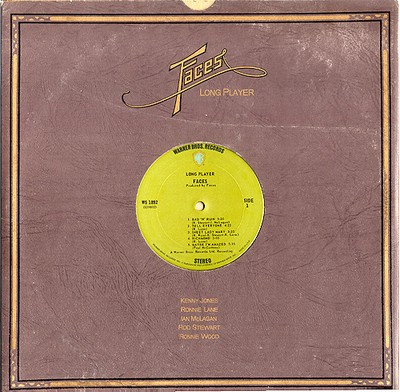
The Faces – Live in the Studio Sound

We knew this album could sound good, but back in the day we sure didn’t know it could sound like this. The best pressings of this album have amazing live-in-the-studio sound that conveys completely the raw power of one of the hardest rockin’ bands of all time.

Both musically and sonically I don’t think the group ever recorded a better album than this one.

Take the wonderful song Bad ‘N’ Ruin (the opening track on side one) for example. It’s the sound of open mics in a big studio space — nothing more, nothing less. It’s totally free from any phony mastering or bad EQ, and on a Hot Stamper copy like this one, it’s absolute magic.

Martin Birch was the engineer for the first two tracks on side one. You may know him from his work with Fleetwood Mac (1969-1973) and Deep Purple (1969-1977), which include the amazingly well-recorded albums Machine Head and Made In Japan.

It’s a rare record indeed that can rock with the best of them while keeping its audiophile credentials intact. Like we said about our Hot Stampers for Never A Dull Moment, we sure wish more Rolling Stones records sounded like this.

What to Listen For (WTLF)

A bigger presentation – more size, more space, more room for all the instruments and voices to occupy. The bigger the speakers you have to play this record, the better.

More bass and tighter bass. This is fundamentally a pure rock record. It needs weight down low to rock the way the band wanted it to.

Present, breathy vocals. A veiled midrange is the rule, not the exception. We take a lot of points off for that.

Good top end extension to reproduce the harmonics of the instruments and details of the recording including the studio ambience.

Last but not least, balance. All the elements from top to bottom should be heard in harmony with each other. Take our word for it, assuming you haven’t played a pile of these yourself, balance is not that easy to come by. Our best copies will have it though, of that there is no doubt.

Side One

Bad ‘N’ Ruin
Tell Everyone
Sweet Lady Mary
Richmond
Maybe I’m Amazed [Live]

Side Two

Had Me a Real Good Time
On the Beach 
I Feel So Good [Live]
Jerusalem

AMG Review

On their second album Long Player, the Faces truly gel… [I]f the album seems pieced together from a few different sources, the band itself all seems to be coming from the same place, turning into a ferocious rock & roll band who, on their best day, could wrestle the title of greatest rock & roll band away from the Stones.

The key is that Stewart, Lane and Ron Wood are all coming from the same place, all celebrating a rock & roll that’s ordinary in subject but not in sound.