boosted-top

Mobile Fidelity’s Approach to Mastering – I Have a Theory

Hot Stamper Pressings of the Music of Little Feat Available Now

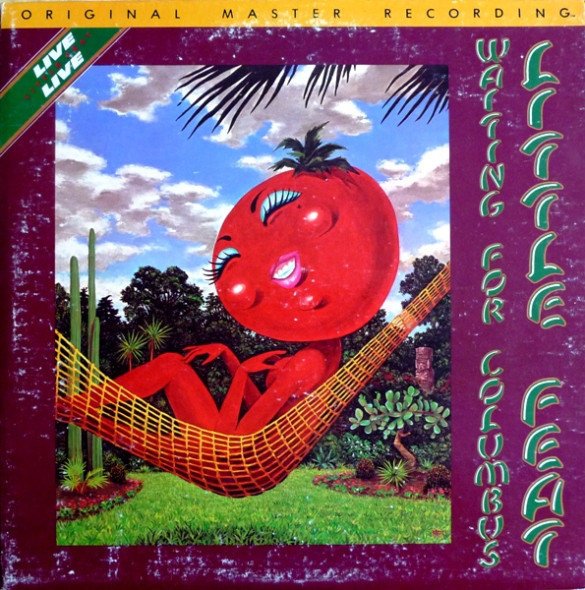
I have a theory about why MoFi’s mastering approach tended to work for the Waiting for Columbus album when it failed so miserably for so many others. It goes a little something like this. 

Back in their early days, MoFi tended to add bass and treble to practically every record they mastered, regardless of whether or not the master tape they were using needed a boost.

A little extra sparkle up top and a little extra kick down low was what the audiophile public seemed to want.  We call this the smile curve and lots of audiophile records have a case of it.

Truth be told, I was a member of that group and I know I did.

Fortunately for them, Waiting for Columbus is an album that can ofteny use a little at both ends. Rarely did The Mastering Lab supply it, making the original domestic pressings somewhat bass-shy and dull on the extreme top. The MoFi clearly corrected the poor EQ choices The Mastering Lab had often made. 


UPDATE 2024: Poor EQ Choices?

Or perhaps it could have been one or more of the following:

  • Perhaps the band liked it better that way.
  • Perhaps The Mastering Lab found it easier to cut that way.
  • Perhaps the cause of the records lacking extension on both ends comes from some other factors that cannot be known.

Or, if you don’t like those three, just make up some other reasons that sound plausible, or ones that fit in with other ideas you may have, even though there is probably not an iota of evidence to support any of it.

This is the way of the audiophile record collector — theories galore, but not much experimental evidence to back them up (or falsify them as the case may be). We are more inclined to the No Theory approach to finding good records, which you can read about here. We believe it has served us well and can do the same for you.
(more…)

Sounds Unheard Of! – Another Analogue Productions Disaster

Hot Stamper Pressings Featuring Shelly Manne Available Now

Remember the 90s Acoustic Sounds Analog Revival series mastered by Stan Ricker? This was one of the titles they did, and completely ruined of course, as was the case with all the titles from that series that we played.

Ricker boosted the hell out of the top end, as is his wont, so all the percussion had the phony MoFi exaggerated sizzle and tizziness that we dislike so much around here at Better Records.

Yes, it’s the very same phony top that many audiophiles do not seem bothered by to this day. 

The whole series was an audio disaster, but oddly enough, I cannot remember reading a single word of criticism in the audiophile press discussing the shortcomings of that series of (badly) Half-Speed mastered LPs — outside of my own reviews of course. Has anything in audio really changed?

If I were to try to “reverse engineer” the sound of a system that could play this record and hide its many faults, I would look for a system that was thick, dark and overly smooth, with no real extension on the top end to speak of. Stan’s 10k boost — along with other the colorations he favors — is just what the doctor ordered for such a system.

I know that sound. I had a system in the 90s with many of the same shortcomings, but of course I didn’t know any of that.

I didn’t know what I didn’t know back then.

(more…)

What to Listen For on What Were Once Vices Are Now Habits

Hot Stamper Pressings of the Music of The Doobie Brothers Available Now

This mass-produced stuff is pretty lame most of the time. Actually, that’s not really fair; the specialty audiophile limited edition pressings of most records are even worse, so the production numbers really don’t have much to do with the final product, now do they? They made millions of copies of this album, and heavy vinyl pressings are made in the thousands, but which would you rather play? I’ll take good old thin vinyl from the 70s over that heavy stuff any day of the week.

But I digress. Most copies — like most modern heavy vinyl pressings — simply lack energy. They’re flat and compressed and no matter how loud you turn them up the band never seems to be all that enthusiastic about the songs they’re playing.

Ah, but the good pressings show you a band that’s on fire, playing and singing their hearts out. Such are the vagaries of record production. Who can explain it or even understand it? All we know is what the finished product sounds like. The rest is guesswork, entertaining for idle minds and forum posters but of little value to those of us who take records seriously and want to hear the music we love with the best sound we can find. (More on guessing and speculating here.)

Watch Out For

Tipped up top end, plain and simple.

A little extra top and the guitars sparkle and Johnston’s voice gets a little hi-fi-ish. On the most ridiculously tipped-up copies, you could easily mistake such a pressing for a MoFi Half-Speed mastered LP.

That sparkle used to thrill me forty years ago. Now it makes me roll our eyes — what the hell were they thinking, boosting the hell out of the top end like that?

And why can’t so many audiophiles today, still in thrall to that sound, recognize how unnatural it is and was?

The short answer: vintage audio equipment needs that extra kick.

Most audiophiles have not taken sufficient advantage of the revolutions in audio of the last twenty or so years and so must find records that give them the boost their deficient audio systems need.

Those of us — and that includes many of you or you wouldn’t be spending all your money on Hot Stampers — have systems that find dramatically more information in the grooves of our records than we ever dreamed was there.

We then get that information to go through our electronics and come out of our speakers with far more energy and far less distortion than we could in the past.

Lee Herschberg, Engineer Extraordinaire

One of the top guys at Warners, Lee Herschberg recorded What Once Were Vices… (along with Donn Landee, who recorded their previous album and would take over the engineering duties on subsequent releases) as well as the first Doobie Brothers album.

You’ll also find his name in the credits for many of the best releases by Ry CooderRandy NewmanGordon Lightfoot, and Frank Sinatra, albums we know to have outstanding sound (potentially anyway; if you’re on this site you know very well that you have to have an outstanding pressing to hear outstanding sound).

And of course we would be remiss if we didn’t mention the album most audiophiles know all too well, Rickie Lee Jones’ debut. Herschberg’s pop and rock engineering credits run for pages. Won the Grammy for Strangers in the Night in fact.

(more…)

The Dark Side of the Moon – 2003 Heavy Vinyl Reviewed

Pink Floyd Hot Stamper Pressings Available Now

An audiophile hall of shame pressing and a Heavy Vinyl disaster if there ever was one (and oh yes, there are plenty).

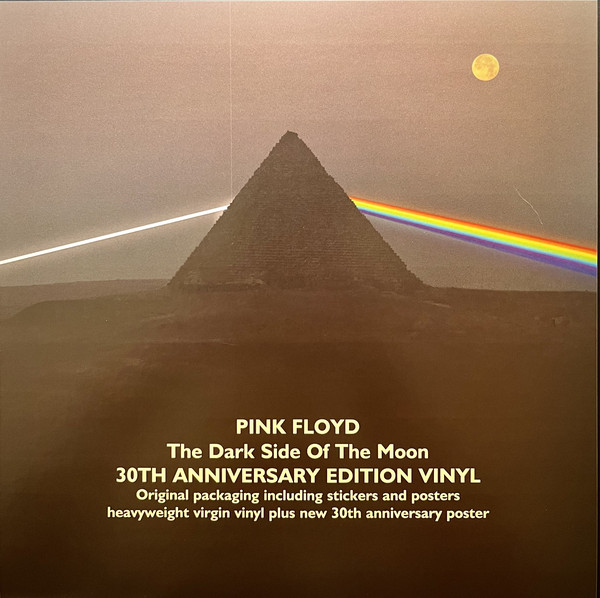
The 30th Anniversary Heavy Vinyl pressing is too bright. There is a boost in the top end, probably in the 12K region, that appears to be a poor mastering choice the late Doug Sax made, one that is surely not doing this recording any favors.

In fact, in the case of this new pressing, it’s positively ruinous, assuming you have set your VTA correctly and have the properly functioning tweeters to show you how bright this record is. If you like the phony detail a boosted top end provides, this record should be right up your alley. However, you would do well to recognize that this is a blind alley, and the best way forward is to turn around and start heading in the opposite direction.  

Some audiophiles revere a record like this (last time I checked, the average selling price on Discogs was $149.50) because they need it to wake up their sleepy stereos. My stereo hasn’t been sleepy enough to play this 2003 recut for a very long time, and I hope you can say the same.

As a service to the audiophile community, please click on the link below to find other records that your system should be able to make clear are too damn bright.

(more…)

Beethoven’s Symphony No. 4 – The Classic Pressing Can Have Very Good Sound

More of the music of Ludwig van Beethoven (1770-1827)
Somehow we managed to have a Classic Records pressing on hand to play in our most recent shootout for the Beethoven Symphony No. 4.

We knew all the way back in 1997 that Classic had done a good job with the record — we recommended it as one of the best Classic Records pressings in our catalogs at the time — but we sure didn’t expect it to do as well as it did, earning 2 pluses on one side and close to that on the other.

Years ago we wrote:

Here is the kind of sound that Classic Records could not ignore, even though the original was only ever made available as part of RCA’s budget reissue series, Victrola.

Don’t let its budget status fool you — this pressing puts to shame most of what came out on the full price Living Stereo label. (And handily beats any Classic Records reissue ever made.)

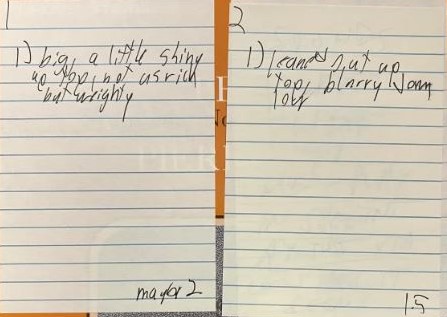
The top and bottom are wrong to varying degrees on both sides of the Classic, as you can see from our notes, which read:

(more…)

One of the Great Audio Disasters, Courtesy of Mobile Fidelity

More of the Music of Steely Dan

We recently amended this listing. Scroll down to see what we have to say about it in 2023.

More MoFi bashing, but boy does this MoFi deserve it. In our estimation, it is tied with the Cisco 180g pressing (2007) for the worst version ever.

I remember back in 1977 when Aja was released. I was a big Steely Dan fan by then, having been turned on to their albums with Countdown to Ecstasy in 73. With each new Dan record I became more impressed with their music, from Pretzel Logic to Katy Lied to Royal Scam and finally on to this, their commercial breakthrough.

At the time I thought the album sounded pretty good on my plain old ABC original.

Then I got a copy of the Mobile Fidelity pressing and I thought it sounded much, much better.

Side two of the MoFi had bass that was only hinted at on my domestic copy. Wow! Listen to all that bass!

Sometime in the 80s, I realized that the MoFi was hideously phony sounding, and that all the bass on side two was boosted far out of proportion to what must be (I’m guessing) on the master tape.

If I May

How much bass is on the master tape is of course of no concern to anyone not mastering the record. The bass has to be right on the record, not the tape.

The song Home At Last has at least an extra three or four DBs added around 50 cycles. It’s ridiculous.

And that’s just the bottom end; the highs are every bit as wrong.

(more…)

Ridiculously Phony and Compressed Sound – The White Album on MoFi

Sonic Grade: F

An Audiophile Hall of Shame pressing and another MoFi LP reviewed and found seriously wanting. The phony sound here is perfectly suited to the stone age stereos of the past. I should know. I had a stereo like that back in 1982 when this record came out, and I thought it sounded great.

The last time I played a copy of the MoFi, I could not believe how ridiculously bright, phony and compressed it was.

As sibilant as any Beatles record they ever did. Cry Baby Cry spits like crazy!

And to think I used to like their version when it came out back in the 80s.

A good example: on Yer Blues, the MFSL pressing positively wreaks havoc with all the added bass and top end The Beatles put on this track. The MoFi version is already too bright, and has sloppy bass to start with, so the result on this track is way too much BAD bass and way too much BAD spitty 10k-boosted treble. The MoFi is nothing like the good imports, which have way too much GOOD bass and treble.

Yer Blues ROCKS! Listen to the big jam at the end of the song, where John’s vocal mic is turned off but his performance is still caught by a room or overheard mic. They obviously did this on purpose, killing his vocal track so that the “leaked” vocal could be heard. (We have since learned from Ken Scott that it was mistake, but one they liked and left in.)

Those crazy Beatles! It’s more than just a cool “effect.” It actually seems to kick the energy and power of the song up a notch. It’s clearly an accident, but an accident that works. I rather doubt George Martin approved. That kind of “throw the rule book out” approach is what makes Beatles recordings so fascinating, and The White Album the most fascinating of them all.

The EQ for this song is also a good example of something The Beatles were experimenting with, as detailed in their recording sessions and later interviews with the engineers. They were pushing the boundaries of normal EQ, of how much bass and treble a track could have. This track has seriously boosted bass, way too much, but somehow it works.
(more…)

Waiting for the Sun – Don’t the DCC Pressings All Sound Different Too?

More of the Music of The Doors

I recently had a chance to listen again to this DCC pressing for the first time in many years. I was putting it up on ebay to sell and dropped the needle to check the sound. I can’t say I liked what I heard. Knowing the record as well as I do, I could her that the DCC was clearly to be brighter in the midrange.

When I went back to read what I had said about the DCC years ago, I saw that I had described that copy the same way. You can read it for yourself.

Our old review follows.

We rate the DCC LP a B Minus

We used to like the DCC pressing of this Doors album. Now… not so much. It’s a classic case of Live and Learn.

Keep in mind that the only way you can never be wrong about your records is simply to avoid playing them. If you have better equipment than you did, say, five or ten years ago, try playing some of your MoFi’s, 180 gram LPs, Japanese pressings, 45 RPM remasters and the like. You might be in for quite a shock.

Of course the question on everyone’s mind is, “How does this Hot Stamper copy stack up to the famous DCC pressing?” After all, the DCC was the one we were touting all through the ’90s as The One To Beat.

Well, to be honest, the DCC is a nice record, but a really special original copy throws a pretty strong light on its faults, which are numerous and frankly fairly bothersome.

The top end on the copy I played was a touch boosted, causing a number of problems.

For one, the cymbals sounded slightly tizzy compared to the real thing, which had a fairly natural, though not especially extended, top end.

But the real problem was in the midrange. Morrison sounded thinner and brighter, more like a tenor and less like a baritone, with a somewhat hi-fi-ish quality added to the top of his voice. Folks, I hate to say it, but if someone had told me that the record playing was half-speed mastered, I probably would have believed it. I detest that sound, and the DCC pressing bugged the hell out of me in that respect.

Morrison has one of the richest and most distinctive voices in the history of rock. When it doesn’t sound like the guy I’ve been listening to for close to forty years, something ain’t right.

The mid-bass was also a tad boosted — not in the deep bass, but more in that area around 100-200 cycles, causing the sound to be overly rich. None of the originals we played had anything like it, so I’m pretty sure that’s a bit of added EQ Hoffman introduced for reasons best known to him. (Did he like it that way, or was he pandering to some of the audiophile community’s preference for overly rich sound, the kind they confuse with “analog”? Nobody knows.)

Not So Fast There, O Hot Stamper Guru

But wait a minute — don’t all records sound different? Is it really fair to paint his version with such a broad brush on the basis of having played only one copy?

Of course not. Perhaps other copies sound better. It wouldn’t be the first time. (Maybe they sound worse. Think about that.)

So here’s our offer to you, dear customer: We absolutely guarantee our Hot Stamper copies will handily beat the DCC pressing or your money back. We’ll even pay the return domestic shipping if for some reason you are not 100% satisfied with the sound of our Hot Stamper. Now there’s an offer you can’t refuse, for any one of you who love the album and have a wad of money burning a hole in your pocket.

(more…)

Sergio Mendes & Brasil ’66 – Another Spitty and Thin MoFi

Sonic Grade: D

An Audiophile Hall of Shame pressing and another MoFi LP reviewed and found wanting.

So spitty and thin! Why, in God’s name, why would you want to ruin such a wonderful recording?

When you have a recording that is already plenty bright, adding top end and taking out more lower midrange is the last thing in the world you should be doing. Since that was the standard operating procedure for MoFi and other Half-Speed mastering outfits around this time, that’s exactly the approach they ended up taking.

Those of you who have had the opportunity to play the Mobile Fidelity pressing of this record should know what a disaster it is.

Is brighter better? Apparently Mobile Fidelity thinks so. It sounds like a bad CD.

But it’s not a bad CD. It’s an expensive audiophile record!

If you’ve spent any time on this site, you should know by now that many audiophile records sound WORSE than the typical CD.

The typical CD does not have an equalization curve resembling a smile. The classic smile curve starts up high on the left, gets low in the middle, and rises again at the end, resulting in boosted bass, boosted top end, and a sucked out midrange — the Mobile Fidelity formula in a nutshell.

But they forgot to boost the bass on this album, so it’s closer to a half-smile I suppose.

More letters, reviews and commentaries for the debut album by Sergio Mendes and Brasil ’66