3-2023

1A, or Is 1B Better on Parsley, Sage, Rosemary and Thyme? Your Guess Is As Good As Mine

Hot Stamper Pressings of the Music of Simon and Garfunkel Available Now

UPDATE 2024

Speaking of 1A and 1B, the evidence is in. We have now confirmed that one of these sets of stampers (one for each side) can win shootouts. Which of the two it is we will leave to you to discover, as we make it a point never to give out the shootout winning stampers except under the rarest of circumstances. We give out plenty of stamper information, just not the stampers of the winners.


We now return to our commentary from many years ago:

Before we go any further, I have one question:

Why are we guessing?

I received an email recently from a customer who had gone to great pains to do his own shootout for a record; in the end he came up short, with not a lot to show for his time and effort. It had this bit tucked in toward the end:

Some of [Better Records’] Hot Stampers are very dear in price and most often due to the fact that there are so few copies in near mint condition. I hate to think of all the great Hot Stampers that have ended up in piles on the floor night after night with beer, Coke, and seeds being ground into them.

Can you imagine all the 1A 1B or even 2A 2B masters that ended up this way or were just played to death with a stylus that would be better used as a nail than to play a record!

To be clear, it’s extremely unlikely than any Hot Stampers have ever ended up in piles on the floor. Hot Stampers are not just originals or good sounding records.

They are pressings that have been cleaned, gone through the shootout process and found to be superior to their competition. Until they prove themselves, records like the ones whose unfortunate fate this reviewer fantasizes about are just old records that had the potential to sound good but never got the chance to demonstrate they had better sound than other pressings.

As it so happens, shortly thereafter I found myself on Michael Fremer’s old website of all places, where I saw something eerily similar in his review for the (no doubt awful) Sundazed vinyl. I quote below the relevant paragraphs.

(more…)

On Dark Side of the Moon, “Breathe” Is a Good Check for Midrange Tonality

Hot Stamper Pressings of the Music of Pink Floyd Available Now

Breathe is my favorite test track for side one for any version of Dark Side Of The Moon, Half-Speed or otherwise. When the voices come in about halfway through the song, you can tell that most copies are too bright simply by listening to the vocals on this track. The cymbals might sound wonderful; lots of other instruments might sound wonderful; and there might be plenty of ambience, detail and transparency.

But all of that counts for nothing if the voices don’t sound right.

And far too many copies have the voices sounding bright, aggressive, grainy and transitory. (This is unfortunately the case with the 180 gram 30th anniversary edition. That pressing will wake up a sleepy stereo, but my stereo hasn’t been sleepy enough to play that recut for a very long time, and I hope you can say the same.)

The discussion below may shed light on some of the issues involved in the remastering of Dark Side.

Of course, most audiophiles are still under the misapprehension that Mobile Fidelity, with their strict ‘quality control’, which they spend hundreds of words explaining on their inner sleeves, eliminates pressing variations of these kinds.

Isn’t that the reason for Limited Edition Audiophile Records in the first place? The whole idea is to take the guesswork out of buying the Best Sounding Copy money can buy.

But it just doesn’t work that way. I hate to be the bearer of bad news, but our entire website is based on the proposition that nothing of the sort is true. If paying more money for an audiophile pressing guaranteed the buyer better sound, 99% of what we do around here would be a waste of time.

(more…)

Rockin’ the Mandolin with Loggins and Messina

Hot Stamper Pressings of the Music of Loggins and Messina Available Now

A recent White Hot Stamper pressing of L&M’s fourth release demonstrated pretty convincingly just what an amazing Demo Disc this album can be.

When Jim Messina rips into his mandolin solo halfway through Be Free, your jaw is likely to hit the ground. On the best copies it positively leaps out of the left speaker.

I can’t recall another pop or rock recording that captures either the plucked energy or the harmonic nuances of the instrument better. To hear such a well-recorded mandolin on a copy of this quality is nothing less than a thrill.

This copy showed us:

  • A full-bodied piano
  • Rich, lively vocals, present between the speakers and brimming with enthusiasm
  • Harmonically-rich guitars, mandolins, dobros and the like, as well as a
  • Three-dimensional soundstage that revealed the space around them all

What to Listen For

What typically separates the killer copies from the merely good ones are three qualities that we often look for in the records we play: transparency, speed, and lack of smear.

Transparency allows you to hear into the recording, reproducing the ambience and subtle musical cues and details that high-resolution analog is known for.

Note that most Heavy Vinyl pressings being produced these days seem to be transparency challenged. Lots of important musical information — the kind we hear on even second-rate regular pressings — is simply nowhere to be found.

Lack of smear is also important, especially on a recording with so many plucked instruments. The speed and clarity of the transients, the sense that fingers are pulling on strings, strings that are ringing with tonally correct harmonics, is what makes these L&M records so much fun to play.

The best copies really get that sound right, in the same way that the best copies of Cat Stevens’ records get the sound of stringed instruments right.

No two pieces of electronics will get this record to sound the same, and some will fail miserably. If vintage tube gear is your idea of good sound, this record may help you to better understand where its shortcomings lie.

(more…)

Letter of the Week – “I was swept up, and able to relax and enjoy a stupendous album again.”

Hot Stamper Pressings of the Music of Michael Jackson Available Now

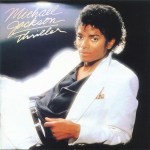
One of our good customers wrote to us about his experience with a Hot Stamper pressing of Thriller.

Dear Tom and Fred,

I surprised myself by buying a White Hot Stamper of Thriller. It’s an album that struck me as a particular challenge to your business model. This is probably the most-pressed record in existence. A hot stamper has to be a needle in a really big haystack. And besides, how much better can they be, really? Isn’t any old copy of Thriller a pretty awesome-sounding record?

And, what’s more, why do I need an expensive copy of an album that I could happily live my entire life without ever hearing again?

But hey, I’ve returned records to you before, and you’ve never once tried to convince me to keep it, or given me any headaches about a return, so why not explore the limits of what your business can provide?

The first time I put it on, I could already tell it was special. It’s not like I was “hearing new details” or something like that. It’s that I was swept up, and able to relax and enjoy a stupendous album again. Listening to this copy of Thriller brought me as much joy as this music used to.

ab_ba

Dear ab_ba,

We’ve written about this experience before. If your current copy or some new audiophile pressing doesn’t bring you the joy of the music you remember feeling back in the day, it’s not the music’s fault. It’s the record’s. Or the stereo’s.

Aaron, you have taken your system to new heights. Your ears don’t work the way they used to. While you weren’t looking, the bar somehow, rather mysteriously, reset itself. Now it’s much, much higher.

You’re simply a lot harder to please than you used to be. You have a much better understanding of how high is up, and up is a lot higher than it used to be, whether you like it or not. Good isn’t good enough anymore.

And you will never be able to go back, even if you wanted to. You could no more go back to those days than you could become a child again.

Welcome to my world, post 2007.

That’s why we tout Beatles albums as being critically important for testing and tweaking your system. We know they have the life of The Beatles’ Music in their grooves, giving you the sound you remember falling in love with all those years ago.

If you’re not getting a thrill from your Beatles records, something is very, very wrong — precisely the reason their recorded oeuvre is a true audiophile wake up call.

(more…)

John writes: “The only problem I have with my evaluations is that I never heard his records.”

More Commentaries Prompted by Forums, Videos and Comments Sections

If you haven’t had a chance yet, please check out the interview Wired conducted with me a few years back.

If you have some time on your hands, maybe too much time on your hands, go to the comments section and read the 300 plus postings that can be found there, the writers of which seem to be offended by the very idea of Hot Stampers. They also decry the obvious shortcomings of analog vinyl itself, as well as the ridiculously expensive equipment some “credulous, misguided audiophiles,” their terms, use to play vinyl records, as if you didn’t know already!

Here is one that I found to be especially interesting, from a psychological perspective if not from an audio one: 

Bad, mismatched system setup. Customer base probably has the same. Also evaluation process is questionable. Uses a mediocre solid state amp and looks for “tubey magic” because of some misplaced concept of “accuracy” as I discussed before. [Man, this guy has got our number all right, ouch!]

Yes, there is a lot of bad stuff out there, and it does give the stereo industry as a whole a bad name. I have heard some pretty crappy, expensive setups in my day.

I was listening to Phoebe Snow’s “Second Childhood” on my best system last night. Boy, I love my new turntable!

The only problem I have with my evaluations is that I never heard his records. My comments are probably correct, but it would be interesting to audition a few of his “golden” albums just to confirm he hasn’t really found anything. The reason I am confident that he probably does not have anything is because virtually every repressing I’ve heard is better than the original. Claiming otherwise hurts his credibility.

John

There is one sentence in the paragraphs above that should raise a giant red flag and help you to appreciate how reliable John’s analysis of our stereo and methods might turn out to be. If you didn’t catch it the first time through, give it another shot. Okay, here goes:

The reason I am confident that he probably does not have anything is because virtually every repressing I’ve heard is better than the original.

That’s so strange! Virtually every repressing I’ve heard is worse than the original.

What gives?

If I may paraphrase our writer: the reason I am confident that he probably does not know anything about records or audio is that he thinks repressings are always better than vintage pressings.

We’ve critically auditioned tens of thousands of records, including many hundreds of repressings, admittedly on our “bad, mismatched system setup,” and I guess we must have gotten it all wrong over the 38 years we’ve been in the audiophile record business. The shame of it all!

Obviously, John knows he does not need to try one of our Hot Stampers. You can see him talking himself into the wisdom of doing nothing with every succeeding paragraph.

It’s easy for him to be right by simply pretending to know something he cannot possibly know.

(Knowledge that is not backed up by empirical findings [1] comes in for a lot of criticism here at Better Records, and for good reason. Guessing, speculating and assuming are poor approaches to separating the good pressings from the bad ones.)

And if he did ever order one, and had at least a halfway decent stereo to play it on, it would turn his world upside down so fast it would make his head hurt, and the possibility of that happening would be very, very upsetting. It makes no sense for John to risk such an outcome.

Even if our records were as cheap as the ones he is buying, even the superior sound would not justify the psychological damage that would result. He would basically have to start his collection over again, as this good customer did.  A few hundred others just like him have done the same, and they’re the ones that will be keeping us in business for years to come. To paraphrase another famous saying, “They’ve heard the future, and it works!”

Better for John to follow the path he is on. It’s working for him. Why would he want to rock his own boat?

(more…)

How can I find my own Hot Stamper pressings?

New to the Blog? Start Here

Finding Hot Stampers is all about doing shootouts for as many different pressings of the same title as you can get your hands on.

There are four basic steps you must take, and you have to do right by each of the four if you are going to be successful at discovering and evaluating your own Hot Stampers. 

We discuss every one of them in scores of commentaries and listings on this blog. Although none of it will come as news to anyone who has spent much time reading our stuff, we cobbled together this commentary to help formalize the process and hopefully make it easier to understand and follow.

If you want to make judgments about recordings — not the pressing you have in your collection, but the actual recording it was made from — you have to do some work, and you have to do it much more thoroughly and carefully and above all scientifically than most audiophiles and record collectors we’ve met apparently think is necessary. Don’t be one of those guys. Do it right and get the results that are simply not possible with any other approach.

The Cornerstones of Hot Stampers

There are four aspects to the work required to find these very special pressings:

  1. You must have a sufficient number of copies to play in order to find at least one “hot” one.
  2. You must be able to clean your copies properly in order to get them to sound their best.
  3. You must be able to reproduce your copies faithfully.
  4. You must be able to evaluate them critically.

There is a clear benefit to doing it this way, and it’s something you should consider when tweaking your system too.

Lately we have achieved the best results by going about it like this:

If you have five or ten copies of a record and play them over and over against each other, the process itself teaches you what’s right and what’s wrong with the sound of the album at key moments of your choosing.

Once your ears are completely tuned to what the best pressings do well that others do not do as well, using a specific passage of music — the acoustic guitar John beats the hell out of on Norwegian Wood just to take one example — it will quickly become obvious how well any given pressing reproduces that passage.

The process is simple enough. First you go deep into the sound. There you find something special, something you can’t find on most copies. Now, with the hard-won knowledge of precisely what to listen for, you are perfectly positioned to critique any and all pressings that come your way.

Admittedly, to clean and play enough copies to get to that point may take all day, but you will have gained experience and knowledge that you cannot come by any other way. If you do it right and do it enough it has the power to change everything you will ever achieve in audio.

This hobby is supposed to be fun. If you’ve been in it for any length of time, you know that sometimes it is and sometimes it isn’t. But if you enjoy doing it, and you devote the proper resources to it — time and money — you will no doubt derive a great deal more pleasure from the music you play, especially if you use our approach.

It works for us and there’s no reason it can’t work for you.

(more…)

60s 360 Vs. 70s Red Label on Je m’appelle Barbra

More Titles that (Potentially) Sound Their Best on the Right Reissue

For Barbra Streisand’s early albums, the original pressings on the 360 label just have to be better, right? 

Not in this case. It’s just another rule of thumb, one that will sometimes lead you astray if what you are trying to find are not just good sounding pressings of albums, but the best sounding pressings of albums.

Same with reissue versus original. Nice rule of thumb but only if you have enough copies of the title to know that you’re not just assuming the original is better. You actually have the data — gathered from the other LPs you have played — to back it up.

The best of the 360 pressings in our shootout did well, just not as well.

A classic case of compared to what? Who knew the recording would sound better on the Red Label Columbia reissue pressing from the ’70s? Certainly not us, not until we had done the shootout.

This is why we do shootouts, and why you must do them too, if owning the highest quality pressings is important to you.

Our good later label pressings had all the richness and Tubey Magic of the 360s — one really couldn’t tell which pressing was on the turntable by the sound — but had a bit more space, clarity and freedom from artificiality.

Watch your levels because she really gets loud on some of this material. The best copies, such as this side one, hold up. The lesser copies get congested, shrill and crude at their loudest, and of course get marked down dramatically when that happens.

Side two as very rich and smooth, yet clear and breathy – this is the right sound for ol’ Babs. The first track has tons of Tubey Magical reverb – check it out!

(more…)

L.A. Woman – Rhino Heavy Vinyl Reviewed

Hot Stamper Pressings of the Music of The Doors Available Now

The Rhino pressing we auditioned from the Doors Box Set was surprisingly good. It’s rich and smooth with an extended top end — tonally correct, in other words — and there’s lots of bass.

This is all to the good. For the thirty bucks you might pay for it you’re getting a very good record, assuming yours sounds like ours, something we should really not be assuming, but we do it because there is simply no other way to write about records other than to describe the sound of the ones we actually have played.

What it clearly lacks compared to the best originals is, first and foremost, vocal immediacy.

Jim Morrison seems to be singing through a veil, an effect which becomes more and more bothersome over time, as these kinds of frustrating shortcomings have a habit of doing.

A bit blurry, a bit smeary, somewhat lacking in air and space, on the plus side it has good energy and better bass than most of the copies we played. All in all we would probably give it a “B.” You could do a helluva lot worse.

(more…)

Listening in Depth to Heart Like a Wheel

More of the Music of Linda Ronstadt

Presenting another entry in our extensive Listening in Depth series with advice on precisely what to listen for as you critically evaluate your copy of Heart Like a Wheel.

A key test on either side was to listen to all the multi-tracked guitars and see how easy it was to separate each of them out in the mix. Most of the time they are just one big jangly blur. The best copies let you hear how many guitars there are and what each of them is doing.

Pay special attention to Andrew Gold’s Abbey Road-ish guitars heard throughout the album. He is all over this record, playing piano, guitar, drums and singing in the background.

If anybody deserves credit besides Linda for the success of HLAW, it’s Andrew Gold.

Our In-Depth Track Commentary

Side One

You’re No Good

Right from the git-go, if the opening drum and bass intro on this one doesn’t get your foot tapping, something definitely ain’t right. Check to make sure your stereo is working up to par with a record you know well. If it is, your copy of HLAW belongs on the reject pile along with the other 90% of the copies ever pressed.

It Doesn’t Matter Anymore

Amazing acoustic guitars! Lots of tubey magic for a mid-’70s pop album. And just listen to the breathy quality of Linda’s voice. She’s swimming in echo, but it’s a good kind of echo. Being able to hear so much of it tells you that your pressing is one of the few with tremendous transparency and high resolution.

Faithless Love

Another superb arrangement with excellent sound. The banjo that opens this track is key — the picking should have a very strong plucky quality, with lovely trailing harmonics, even some fret buzz.

So many copies are veiled or blunted sounding; this clearly demonstrates a lack of transient information.

The copies without the trailing harmonics lack resolution.

Once you hear either of these problems on the banjo, you can be sure to find them on the voices and guitars throughout the side.

That the Cisco pressing doesn’t do a very good job reproducing the banjo should be clear for all to hear. If you want the sound of the real thing, only the best Capitol pressings are going to be able to give it to you.

(more…)

Bill Berry and His Ellington All-Stars – For Duke

  • An original M&K Real Time pressing with stunning Nearly Triple Plus (A++ to A+++) sound from first note to last – just shy of our Shootout Winner
  • Tubier, more present, and more alive than practically all other copies, with more of that “jumpin’ right out of the speakers” quality that only The Real Thing (The Real Thing being An Old Record) ever has
  • “. . . this album features a true all-star lineup. Each artist solos in this heartfelt tribute session. . . one of those rare albums that you can enjoy over and over without losing your smile.”

(more…)