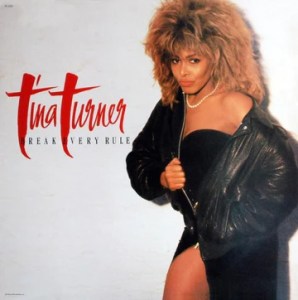
Tina Turner – Break Every Rule

More Tina Turner

More Women Who Rock

  • Break Every Rule makes its Hot Stamper debut with solid Double Plus (A++) sound or BETTER throughout this original Capitol pressing – exceptionally quiet vinyl too
  • These sides are bigger and richer and have more of the rock solid energy that’s missing from the average copy
  • Turn this one up good and loud (which you can do when the sound is right) and you’ll have a living, breathing Tina Turner singing her heart out right in front of you
  • “Throughout Break Every Rule, Turner sounds as if she had the time, guidance and confidence to really master these songs. The result is a potent display of passion and control, and that alone would make this record worth discovering.” – Rolling Stone

(more…)

Letter of the Week – “I wonder if you’ve ever had another customer who doesn’t own a turntable buy a White Hot stamper from you?”

Hot Stamper Pressings of the Music of Fleetwood Mac Available Now

Aaron has been trying to help his audiophile friends learn the differences between good records and Heavy Vinyl records. This first story concerns Chuck, who sold Aaron the VPI table you see pictured.

Aaron writes:

Chuck’s a real record guy. I played him some hot stampers, alongside the same record in heavy vinyl format.

First up was Rumours – white hot up against the Hoffman 45 mastering. He wanted to hear “you make loving fun,” so we did.

The drums on the Hoffman are more prominent, and they grab you right away. Way out of balance to my taste.

He said, “Hoffman’s done a great job with the drums. But it comes at the expense of Christine’s voice. That’s okay, I never loved her as a singer anyway.”

Next I busted out my holy grail, and played him my Zep 2 WHS. Followed up by the Jimmy Page remastering. The latter is indeed a decent record, Tom, as you say. But the clarity on the drums is superior on the Ludwig. [Clarity is not the word I would have chosen, but that’s another story for another day.]

As Chuck put it, “I never thought of this as a vocal record.” Plant’s voice just has so much more emotion on the hot stamper than on the Page version. He said, “the Page version takes out some of the humanity.” I totally agreed with that. Chuck was amazed that you were able to find and sell me a RL copy with such clean vinyl. I took the record off the table and showed it to him – he was amazed to see how scuffed it looked. It’d grade VG at best visually, but man does it play clean.

So, record after record, Chuck could hear what the hot stampers were doing. And, no doubt, the VPI table is making the hot stampers sound better, and in comparison, the heavy vinyl sounds even duller.

That said, this turntable is so much more revealing than my Clearaudio was, that there is always something delightful to listen to on my heavy vinyl records. They don’t sound worse, they sound better than they used to. It’s just that the gap between them and the hot stampers is only continuing to grow wider.

So, my man Chuck, who sold me his VPI turntable, saw the light. But then he shielded his eyes from it. Even though Chuck’s got a stack of 25 benjamins in his hand right now, I don’t think any of that is headed your way, Tom.

(more…)

Falla – El Amor Brujo / El Retablo De Maese Pedro / Ansermet / Argenta

More of the music of Manuel De Falla (1876-1946)

More Classical and Orchestral Recordings

  • This vintage London Stereo Treasury Import LP of Falla’s wonderful classical works boasts superb Double Plus (A++) grades or close to them from first note to last
  • Side two is big, rich, open, and natural sounding with wonderfully full vocals and a more three-dimensional sound than most other copies we played, and side one is not far behind in all those areas
  • The Argenta recording of El Retablo de Maese Pedro (Master Peter’s Puppet Show) is High Fidelity Audiophile Demo Disc Quality Gold, with bells, drums, voices, trumpets, strings, woodwinds and more, all sounding so real it will take your breath away.
  • Our favorite performance with top quality sound is found on a 1967 Decca with Fruhbeck De Burgos at the helm, but the Ansermet we are presenting here is still a very good record if you know what to look for

This Golden Age tape has been mastered brilliantly with “modern” mastering equipment from 1967, not the low-rez junk they’re forced to make do with these days, giving you, the listener, sound that only the best of both worlds can offer.

You can be pretty sure of two things when you hear a record of this quality: one, the original won’t sound as good, having been cut on much cruder equipment.

And two, no modern recutting of the tapes by the likes of Speakers Corner for example could begin to capture this kind of naturalistic sound. I have never heard a Heavy Vinyl pressing begin to do what this record is doing. This STS may be a London budget reissue pressing, but it was mastered by Decca, pressed in England on high quality vinyl, using fairly fresh tapes, and mastered about as well as a record can be mastered. The sound is REAL and BELIEVABLE.

When have you ever heard a modern remastering with this kind of depth and width to the soundstage? I have yet to have the pleasure and I’ve played scores of them, close to a hundred I would guess. We used to carry all that Heavy Vinyl back in the day and I played them and reviewed them as they came out, rejecting a good 80% right from the get go. None, not one, ever sounded like this.

This price for a reissue might seem to be a stretch, but we know an amazing record when we hear one, and we know that the next copy that comes along is very unlikely to sound as good as this one does. That’s simply “regression toward the mean,” a reality we have learned to respect. We don’t sell our records based on their reputations. We sell them based on the sound inscribed in their grooves, and these are some mighty fine grooves on both of these sides.

(more…)

Neil Young – Unplugged

More Neil Young

More Live Recordings of Interest

  • With INCREDIBLE Shootout Winning Triple Plus (A+++) grades or close to them on both sides, this original Reprise import pressing is one of the BEST we have ever heard – fairly quiet vinyl too
  • Richer, warmer, more natural, and more relaxed than all others we played – this is what vintage analog is all about, that smooth sound that never calls attention to itself and just lets the music flow
  • Of course the main attributes that set the better copies apart from the also-rans are size, energy, weight, vocal presence and an overall freedom from grit and grain, and we guarantee that this copy will do better in all of these areas than any you have ever heard
  • “The songs [are] wistful, midtempo reflections on stardom, love, and the passage of time. Some were familiar, including ‘Mr. Soul’ and ‘Like a Hurricane,’ and were given new treatments; others were obscure or even previously unrecorded (“Stringman”). But all [are] melodic and inviting, especially the selections from Harvest Moon…”

(more…)

Listening in Depth to Ambrosia

AMBROSIA is an album we admit to being obsessed with — just look at the number of commentaries we’ve written about it. It’s also part of our extensive Listening in Depth series. There is no question that this band, their producers and their engineers sweated every detail of this remarkable recording. They went the distance. In the end they brought in Alan Parsons to mix it, and Doug Sax to master it. The result is a masterpiece, an album that stands above all others.

It’s not prog. It’s not pop. It’s not rock. It’s Ambrosia — the food of the gods.

The one album that I would say it most resembles is Dark Side of the Moon. (Note the Parsons connection.) Like DSOTM, Ambrosia is neither Pop nor Prog but a wonderful mix of both and more. 

Perhaps hearing Dark Side was what made you realize how good a record could sound. Looking back on it over the last thirty years, it’s clear to me now that this album, along with a handful of others, is one of the surest reasons I became an audiophile, and managed to stick with it for so long. What could be better than hearing music like this sound so good?

Although I didn’t discover the album until some time later in the 90s, I recognized the challenge it presented to my system, setup and room immediately, a subject I write about here.

The band’s first album is yet another record the deserves a great deal of credit for helping me become a better listener.

Side One

Nice, Nice, Very Nice

Once you know this record well, you can easily tell if you have a good side one within the first minute of this song. Side one has a tendency to be somewhat bright and even aggressive in places. This problem is further exacerbated by the typical copy’s lack of bass. The best copies have incredibly tight, punchy bass at the beginning of this song, and plenty of it. Phenomenal bass. Demo Disc quality bass.

If that’s not what you hear, you know you will soon be in for more problems. The vocals need to start out smooth, because they get brighter later on. Missing bass or added brightness are sure signs of trouble ahead. The lines “I wanted all things to make sense/ so we’d be happy instead of tense” will be aggressive on copies that are not tonally correct. And copies without tons of bass are not tonally correct, because the recording has tons of bass. It’s essential to the music. Any stereo incapable of providing the power in the lower octaves demanded by this recording is going to make a real mess of this one.

(more…)

Two Key Tracks for Testing Sibilance and Transparency on Tea for the Tillerman

Hot Stamper Pressings of the Music of Cat Stevens Available Now

The song Father and Son can be a bit sibilant. On the best copies the sibilance is under control.

The best copies have the least amount and make the spit they do have much less gritty and objectionable.

We’ve known for decades how good a test sibilance is for tables, cartridges and arms. Sibilance is a bitch. The best pressings, with the most extension up top and the least amount of aggressive grit and grain mixed into the music, played using the highest quality, most carefully dialed-in front ends, will keep sibilance to an acceptable minimum.

VTA, tracking weight, azimuth and anti-skate adjustments are critical to reducing the amount and the quality of the spit in your records.

Another track I like to play on side two is Into White. With this song, you hear into the music on the best copies as if you were seeing the live musicians before you. The violinist is also a key element. He’s very far back in the studio. When he’s back where he should be, but the sound of the wood of his violin and the rosin on the strings is still clearly audible, without any brightness or edginess to artificially create those details, you know you are hearing the real thing.

(more…)

Jethro Tull – Minstrel In The Gallery

More Jethro Tull

  • With solid Double Plus (A++) grades or close to them from start to finish, you’ll have a hard time finding a copy that sounds remotely as good as this original UK Chrysalis import
  • This side one is remarkably big and full with wonderfully breathy vocals and deep punchy bass, and side two is not far behind in all those areas
  • Here is the rock energy and power this music needs that few other copies we played could compete with (particularly on side one)
  • 4 stars: “Minstrel in the Gallery was Tull’s most artistically successful and elaborately produced album since Thick As a Brick…”

This original British copy gets BIG when it needs to (the proggy parts), and that makes it fun. Plenty of Tubey Magic is on offer as well, with rich, sweet acoustic guitars and a lovely freedom from hi-fi-ishness on the vocals.

As you probably know, Ian Anderson can get a little carried away with the processing on his voice, but the better copies make that processing sound right within the context of the overall sound. Most copies have added distortion and grit on the vocal effects, making them much less pleasing to the ear than the engineers envisioned.

Tubey Magical Acoustic Guitar reproduction is superb on the better copies of this recording. Simply phenomenal amounts of Tubey Magic can be heard on every strum, along with richness, body and harmonic coherency that have all but disappeared from modern recordings (and especially from modern remasterings).

(more…)

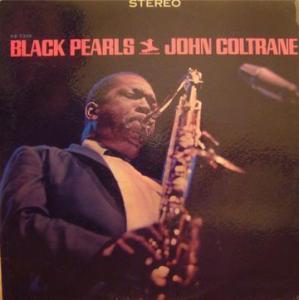
John Coltrane – Black Pearls

More John Coltrane

  • Excellent sound throughout this vintage 60s Stereo Prestige pressing, with both sides earning solid Double Plus (A++) grades or BETTER
  • It’s bigger, livelier, tubier, and with more presence and transparency than most of what we played
  • A great Rudy Van Gelder recording that hits a whole ‘nother level on a copy that was mastered and pressed as well as this one
  • Marks in the vinyl are sometimes the nature of the beast with these vintage LPs – there simply is no way around them if the superior sound of vintage analog is important to you
  • 4 stars: “. . . Black Pearls indeed captures Coltrane at the height of perfecting the intense volley that would garner the name ‘sheets of sound.'”

A superb copy of this wonderful 1958 Coltrane recording (released in 1964)! We heard one that blew us away a few years back, so we picked up a bunch more and finally had the chance to evaluate them. The music was always enjoyable, but on a copy like this things really get going. Coltrane is joined here by Donald ByrdRed GarlandPaul Chambers and Art Taylor — a top lineup, the same crew behind the great Lush Life.

The sound here is wonderfully natural and clear. You get incredible presence, impressive transparency, real size and space between the players. It’s also amazingly rich and full-bodied with lots of energy. Most of the copies we’ve collected didn’t come close, so if you’re looking for some late 50s Coltrane magic, this is the hot ticket right here!

(more…)

Letter of the Week – “The real point for me is that I can keep enjoying these new listening experiences over and over again.”

Our new customer Michel wrote to tell us how much he likes his Hot Stamper pressing of So.

Hi Tom,

Many of the BR titles I bought I had stopped listening to due to lack of engagement with the music. It just didn’t do it for me anymore. But then I’d buy one of your LPs… it would then destroy my other copies… and now I listen to that LP on a regular basis, enjoying music I love but had stopped listening to.

When I put on a BR record, I am engaged with the music… and of course I keep hearing new nuances, etc. with every play.

Why pay so much for an album?  Well if music floats your boat, then no explanation needed. Just bring your ears to my living room…then you’ll get it!

The real point for me is that I can keep enjoying these new listening experiences over and over again. It is an immeasurable joy really to hear beautiful music reveal itself in all its splendor.

How the f*** does yours sound so much better? Virtually as soon as the music began the difference was obvious.

I remember liking some aspects of the UK… and the same goes for the US… I liked the warmth and rolled back highs in comparison the UK, but it seemed muddy/veiled/mishmashy which was bothersome, so then I stopped listening.

The BR copy somehow has it all. It is by far the most listenable copy of this I’ve ever heard. It can be turned up all the way from start to finish without any worries about what you might hear.

Plenty of shrill-free highs, lots of killer bass… deep low tones with analog warmth, boomy wide room filling sound, etc, etc.  No muddiness in the presentation… clarity with warmth, nothing veiled.

Thank You!!
Michel

Michel,

You make a point that I have been banging on for years. Better sounding pressings are the only way to rediscover music that you’ve lost interest in because the copies you own didn’t have the sound you needed.

If your old copies of So had sounded better, you would have played them, but they didn’t, and so they sat on the shelf.

Knowing the sound was off, you simply stopped playing them. You lost track of So.

Hot Stamper pressings get played. They have the life of the music in their grooves and demand to be heard!

We say music does the driving in this hobby, but that’s not really the whole story for us audiophiles, is it?

Music with good sound is what really does the driving.

Joy to Your World

When you get hold of the pressing that presents the music the way you want to hear it, that’s the record that gets played beause that’s the record that brings joy to the listener.

The other pressings of So sit on the shelf, reminders that badly-mastered, badly-pressed records are the norm, not the exception.

The exceptional pressing is the one that can bring the music you love back from the purgatory of the overcrowded record shelf.

Think of the audiophiles that have thousands and thousands of records on their shelves and never find time to play them. Why is that?

Maybe it’s because there is nothing special about those pressings. Some collectors are so proud of having so many records — look at them all! — but what good are they? To our way of thinking, the man with ten or twenty exceptionally good records is far better off than than the one with a thousand or five thousand mediocrities.

If you want a powerful, immersive, thrilling musical experience, you will need a record that is powerful, immersive, and thrilling.

The thousands of records sitting on your shelf, the ones you haven’t played in years, are the silent reminders that they aren’t nearly as good as you think they are. If they were better, they would call out to you from that graveyard you call a record collection and fight their way back to your turntable.

So Is Back

Now, after all these years, you finally have a pressing of So that demands to be played.

If others of you out there haven’t played your copy of So in a long time, maybe there’s a reason for that.

Thanks for your letter.

Best, TP

(more…)
Crosby Stills & Nash – Critical Listening Exercise

Hot Stamper Pressings of the Music of Crosby, Stills and Nash Available Now

This very old commentary from an early Hot Stamper listing (2005?) for CSN’s debut makes note of some specific qualities in the recording that are a good test for midrange transparency and naturalness.

Here are some other albums with specific advice on what you should be listening for.

What’s magical about Crosby, Stills, Nash (& Young)? 

Their voices of course. It’s not a trick question. They revolutionized rock music with their genius for harmony. Any good pressing must sound correct on their voices or it has no value whatsoever. A CSN record with bad midrange — like most of them — is a worthless record.

Suite: Judy Blue Eyes

Listen to the section of the song that starts with Stills’ line “Can I tell it like it is,” with Nash and Crosby behind him — it’s clearly a generation of tape down from what came before and what comes after. The voices and the acoustic guitars just seem to lose their immediacy and transient impact for no apparent reason. Wha’ happen?

It’s the mix, folks, and no mastering engineer can fix it. This album is full of parts and pieces of various songs that are occasionally problematical in that way. Recognize them for what they are, little bumps in the road, a road that led ultimately to one of the greatest pop albums ever made.

On the hot copies the best sounding material will sound amazing, and the lesser sounding material (i.e., the more poorly recorded or mixed bits and pieces) will sound as good as they can sound.

That’s the nature of the beast. It is what it is. The more intensely you listen to a record like this — a true Rock Classic from the 60s, and one we listen to very intensely when doing these shootouts — the more you will notice these kinds of recording artifacts. It’s what gives them “character.”

It’s also what allows you to play a record like this on a regular basis and still find something new in it after all these years.

We’ve made some recent improvements to the stereo and room here at Better Records and I can tell you I heard things in this recording I never knew were there.

What could be more fun than that? The music never gets old, and neither does the sound.