*Helpful Pressing Advice

The advice here should help you in your search for better sounding pressings.

At the very least it may help you avoid some of the worst ones.

What to Listen For on Birds of Fire

Hot Stamper Pressings of Jazz-Rock Fusion Albums Available Now

Birds of Fire as a recording is not about depth or soundstage or ambience.

It’s about immediacy, plain and simple.

All the lead instruments positively jump out of the speakers — if you are lucky enough to be playing the right pressing.

This is precisely what we want our best Hot Stampers to do. In most cases, the better they do it, the higher their grade will be.

The main problem with this record is a lack of midrange presence. If the keyboards, drums and guitars are not front and center, your copy does not have the presence it should. On the best copies the musicians are right in the room with you. We know this for a fact because we heard the copies that could present them that way, and we heard it more than once.

Which of course gets to the reason shootouts are the only real way to learn about records.

The best copies will show you qualities in the sound you had no way of knowing were there. Without the freakishly good pressings you run into by chance in a shootout you have no way to know how high is up. On this record up is very high indeed.

A True Demo Disc

Birds of Fire is one of the top two or three Jazz/Rock Fusion Albums of All Time. In my experience, few recordings within this genre can begin to compete with the Dynamics and Energy of the best pressings of the album — if you have the Big Dynamic system for it.

(more…)

The First Two Roxy Music Albums Are the Band’s Best Sounding

Hot Stamper Pressings of the Music of Roxy Music Available Now

For Your Pleasure is a Masterpiece of Art Rock, Glam Rock and Bent Rock all rolled into one. AMG calls Roxy Music the “most adventurous rock band of the early ’70s” and I’m inclined to agree with them.

Spacious, dynamic, present, with HUGE MEATY BASS and tons of energy, the sound is every bit as good as the music. (At least on the best copies it is. That’s precisely what Hot Stampers are all about.)

Strictly in terms of recording quality, For Your Pleasure is on the same plane as the other best sounding record the band ever made, their first.

Siren, Avalon and Country Life are all musically sublime, but the first album and Pleasure are the only two with the kind of dynamic, energetic, POWERFUL sound that Roxy’s other records simply cannot show us (with the exception of Country Life, was is powerful but a bit too aggressive).

The super-tubey keyboards that anchor practically every song on the first two albums are only found there. If you want to know what Tubey Magic sounds like in 1972-73, play one of our better Hot Stamper Roxy albums. Roxy and their engineers and producers manage to capture a keyboard sound on their first two albums that few bands in the history of the world can lay claim to.

I love the band’s later albums, but none of them sound like these two. The closest one can get is Stranded, their third, but it’s still a bit of a step down.

Chris Thomas and John Punter

With all the latest technological advances in playback, I can tell you that these records sound a whole lot better than I ever thought they could.

For Your Pleasure is an amazing recording. Chris Thomas produced side one; he produced the rest of their albums (and engineered The Beatles and Badfinger and mixed Dark Side of the Moon and on and on).

The album has many of his trademark qualities: an enormous, 3-dimensional soundstage; tons of bass; tremendous dynamics; and energy to rival anything around.

John Punter‘s engineering is superb in all respects — virtually faultless.

Big Rock Records with Big Rock Sound

Both of these albums are the very definition of big speaker albums. The better pressings have the kind of ENERGY in their grooves that are sure to have most audiophile systems begging for mercy.

This is The Audio Challenge that awaits you. If you don’t have a system designed to play records with this kind of SONIC POWER, don’t expect to hear them the way the band and those involved in their productions wanted you to.

This album wants to rock your world, and that’s exactly what our Hot Stamper pressings are especially good at doing.

Roxy Music is one of the most influential and important artists/bands in my growth as a music lover and audiophile, joining the ranks of Steely Dan, 10cc, Ambrosia, Yes, Bowie, Supertramp, Eno, Talking Heads, Jethro Tull, Elton John, The Beatles, Crosby, Stills and Nash, The Cars, Led Zeppelin, Cat Stevens and countless others, musicians and bands who dedicated themselves to making the highest quality recordings they could, recordings that could only come alive in the homes of those with the most advanced audio equipment.

My system was forced to evolve in order to reproduce the scores of challenging recordings issued by these groups in the 70s.

It’s clear that these albums informed not only my taste in music, but the actual stereo I play that music on. It’s what progress in audio is all about. I created the system I have in order to play demanding recordings such as these, the music I fell in love with all those years ago.


Want to find your own killer copies?

Consider taking our moderately helpful advice concerning the pressings that have been winning our Hot Stamper shootouts for years. For Your Pleasure and the first album only really come alive:

Of course it needs to be played loud. What Roxy Music album doesn’t?

Furthermore, the better copies sound their best:

(more…)

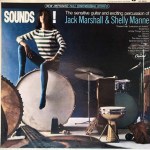
Shelly Manne & Jack Marshall – Sounds!

Hot Stamper Pressings of Percussion Recordings Available Now

This is the follow-up to Sounds Unheard Of!, the duo’s 1962 stereo test and demo record released on the Contemporary label.

How did we find the killer Hot Stamper pressings we offered for sale starting in 2023? The same way we learned about every record we list on the site. It is simplicity itself:

For our shootout for Sounds!, we had at our disposal a variety of pressings that had the potential for Hot Stamper sound. We cleaned them carefully, then unplugged everything in the house we could, warmed up the system, Talisman’d it, found the right VTA for our Triplanar arm (by ear of course) and proceeded to spend the next hour or so playing copy after copy on side one, after which we repeated the process for side two.

If you have five or more copies of a record and play them over and over against each other, the process itself teaches you what’s right and what’s wrong with the sound of the album. Once your ears are completely tuned to what the best pressings do well that the other pressings do not do as well, using a few carefully chosen passages of music, it quickly becomes obvious how well a given copy can reproduce those passages. You’ll hear what’s better and worse — right and wrong would be another way of putting it — about the sound.

This approach is simplicity itself. First, you go deep into the sound. There you find a critically important passage in the music, one which most copies struggle — or fail — to reproduce as well as the best. Now, with the hard-won knowledge of precisely what to listen for, you are perfectly positioned to critique any and all pressings that come your way.

It may be a lot of work but it sure ain’t rocket science, and we’ve never pretended otherwise. Just the opposite: from day one we’ve explained step by step precisely how to go about finding the Hot Stampers in your own collection. Not the good sounding pressings you happen to own — those may or may not have Hot Stampers — but the records you actually cleaned, shot out, and declared victorious.

Want to find your own top quality copy?

Consider taking our moderately helpful advice concerning the pressings that consistently win our Hot Stamper shootouts.

This record has been sounding its best for many years, in shootout after shootout, this way:

(more…)

Hot Stamper Sharing Can’t Get Off the Ground, How Come?

Basic Concepts and Record Realities Explained 

The above link takes you to our blog. Normally such a link would take you to our in-stock Hot Stamper pressings on the site for the band in question, but we rarely have any Traffic albums to sell these days, which is the case as of this writing.

Finding just the right Traffic pressings, with audiophile-quality vinyl no less, requires effort and resources that we just haven’t been committing to lately. We hope to do better in 2025.

In 2014 somebody on the Hoffman forum tried to get a Hot Stamper thread going under this heading: cheap Hot Stampers revealed.

The thread:

“If you have a “hot stamper” record – one that smokes and takes no prisoners, I mean a BADASS pressing, show it here with matrix info, label or other identifying features so we can all hunt with a bit of a head-start.

“I know these records are out there, just looking for a place to show off their analog glory.

“Here is a recent find that fits the bill and then some:

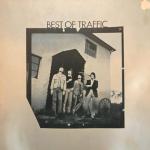
“Traffic: Best Of Traffic UK.

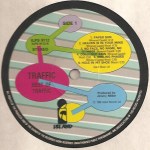
“Matrix # ILPS 9112 A-1/B-1”

OK, let’s talk about this Island reissue. We know the record well. If it sounds the way the copies we played over the years have sounded, we would say it can be good, not great, and if it qualified for Hot Stamper status, it might — might — earn a plus and a half at best. (1.5+.)

We don’t even bother to pick them up at any price these days, if that tells you anything.

He got very little support in his endeavor. The thread closed after a while with practically nothing in it.

Could it be that the folks on the Hoffman forum have a poor grasp of the amount of effort, time and money it takes to find Hot Stampers?

And, having committed to neither the effort, the time nor the money, find that they have nothing of any value to contribute to such a list?  

Yes, that could be. That definitely could be. Thank god it doesn’t keep them from criticizing those of us who, working in concert with a staff of ten or so, have devoted ourselves to the task and found them by the thousands.

By the way, we know that Traffic title very well. The Pink Label original is by far the best pressing in our experience. No copy we have ever heard on the label promoted by this poster would qualify as much more than a bargain Hot Stamper in comparison to the Pink Label and Pink Rim label pressings that we sell, although of course, not having heard his copy, we can’t say it’s not fabulous. 

It’s just not very likely to be fabulous. 

(more…)

What Are My Options on Pearl?

Hot Stamper Pressings of the Music of Janis Joplin Available Now

Mobile Fidelity famously attempted to do a version of this album back in the 80s that (thankfully) never made it past the test pressing phase.

Sells for big money too. Collector mentality at its worst.

And what could be sadder than collecting the awful records of that ridiculous label?

In the 80s it might have made sense — I myself was a big fan back then — but at some point we should consider making at least some progress in this hobby, and it does not take much audio progress before the shortcomings of the vast majority of these remastered pressings become obvious and intolerable.

There’s a Sony 180 gram reissue from Germany that’s godawful, and the later Columbia versions are a mess as well.

Consider taking our moderately helpful advice concerning the pressings that tend to do well in our shootouts.

This record has been sounding its best for many years this way:

(more…)

Years Ago We Badly Misjudged the Recording Quality of Tull’s Debut

Hot Stamper Pressings of the Music of Jethro Tull Available Now

A clear case of live and learn.

We listed a White Hot copy of This Was in 2008 on the Island pink label and noted at the time:

Be forewarned: this ain’t Stand Up or Aqualung. I don’t think you’ll be using any copy of This Was to demo your stereo, because the recording has its share of problems. That said, this record sounds wonderful from start to finish and will make any fan of this music a VERY happy person. We guarantee you’ve never heard this album sound better, or your money back.

Now we know a couple of things that we didn’t back in 2008.

1). This album is a lot better sounding than we gave it credit for years ago. It’s not perfect by any means but it is much better than the above comments might lead you to believe.

We chanced upon an exceptional sounding copy of the album in 2017 or so, and that taught us something new about the record:

2). The Pink Label pressings are not the best way to go on this album.

Once we heard the exceptional copy alluded to above, we played it against our best Pink Label copies and it was simply no contest.

In 2008 we still had a lot to learn. We needed to do more research and development, which of course we are doing regularly with Classic Rock records, our bread and butter and the heart of our business.

We do them as often as is practical, considering how difficult it is to find copies with audiophile quality playing surfaces.

Nine years later, we felt we finally had a proper understanding on the various pressings of This Was. It goes like this:

The Pink Label original British pressings can be good, but they will never win a shootout up against copies with these stampers (assuming you have more than one copy — any record can have the right stampers and the wrong sound, we hear it all the time. Beware of small sample sizes).

(more…)

Listening in Depth to Synchronicity

Hot Stamper Pressings of the Music of Sting and The Police Available Now

The choruses get LOUD and are so POWERFUL on the best copies of this album that they make a mockery of most of the pressings out there.

Let’s face it, this is a big speaker record. It requires a pair of speakers that can move air with authority below 250 cycles and play at fairly loud levels. If you don’t own speakers that can do that, this record will never really sound the way it should.

It’s the kind of recording that has caused me to pursue Big Stereo Systems driving Big Dynamic Speakers for as long as I can remember. You need a lot of piston area to bring the this recording to life, as well as to get the size of all the instruments to match their real life counterparts.

For that you need big speakers in big cabinets, the kind I’ve been listening to for more than forty years. (My last small speaker was given the boot around 1974 or so and I have never looked back.)

To tell you the truth, the Big Sound is the only sound that I can enjoy. Anything less is just not for me.

Side One

Synchronicity I

One of the two title tracks on this record (huh?), it’s also one of the quickest ways to hear what is happening sonically on this side. It’s a high energy, take-no-prisoners rock track that usually ends up sounding bloated and brittle on the typical pressing. However, when it’s cut right it’s amazing.

The bass guitar and kick should be driving the track, not making you want to skip to the next one. Also, when you can hear the separation and detail in the multitrack army of Stings during the chorus, you’re in good shape.

Walking in Your Footsteps

Is that a pan flute I hear? More than likely it’s a synth, but if you can hear the “air” going through it and all of the ambience surrounding it, you’re not off to a bad start.

Also, the percussion should actually sound like a drum and not like a stack of textbooks getting smacked. (more…)

Dream Weaver – A Good Test Record for Gritty, Grainy Sound

More Records that Are Good for Testing Grit and Grain

Most pressings of this album tend to err in one of two ways: either they’re a little bright and get hard and gritty in the upper mids, or they’re wrong in the opposite direction, with sound that is smeary and dull.

Our best copies get the balance right — plenty of texture on the keyboards and drums, with vocals that still have presence and breathiness — and not too much grit.

An all-keyboard pop record like this was a rarity at the time. The only other instruments besides drums (and one track with guitar) are keyboards. Every song is layered with multi-tracked clavinets, organs, and Moogs — it was a remarkable feat in 1975 to create an album with nothing but keys.

Listen to the title track, the most dynamic song on the record, and you will hear just how well all of those stacked keyboards and synths work together. (Steve Winwood’s Back in the High Life borrowed a page or two from Gary’s solo debut here.)


  • If you’re a Gary Wright fan, or perhaps a fan of mid-’70s synth-pop, this title, a personal favorite of mine from 1975, is surely a Must Own.
  • In our opinion, Dream Weaver is his best sounding album, and probably the only Gary Wright record you’ll ever need. Click on this link to see more titles we like to call one and done.
  • The sound may be too heavily processed for some, making it fairly difficult to reproduce, but the best sounding pressings, played at good, loud levels on big dynamic speakers in a large, heavily-treated room, are a fun listen. They sound just fine to us.
  • 1975 was a good year for music on vinyl — here are some excellent pressings of well-recorded albums available for purchase now.

(more…)

Brothers in Arms – Not Bad When It’s Properly Mastered and Pressed!

Many copies suffer from harsh, digital-sounding highs.

Pull out your old copy and listen to the beginning of side two and you should have no trouble hearing what we’re on about.

Compare that to the silkier, sweeter top end on even the lowest-graded Hot Stamper pressing you may have picked up from your friends at Better Records and it’s unlikely you’ll find yourself going back to listening to whatever pressing you had been playing.

The comparison, we hope, will be edifying.

Want to find your own top quality copy?

Consider taking our moderately helpful advice concerning the pressings that tend to win our shootouts.

In our experience, this record sounds best this way:

And that means that it’s Robert Ludwig’s initials you should be looking for in the dead wax. Accept no substitutes.

(more…)

Good Horns, Probably Good Everything

Hot Stamper Pressings of the Music of Eric Clapton Available Now

This is not your usual Clapton album, and that’s a good thing, because most Clapton albums are full of filler. Not so here — almost every song is good, and many are superb.

The sound of the horn arrangements that back almost every song on the album are key to understanding the pressing and mastering quality on any given copy.

Blary, smeary, leading-edge-challenged horns are the kiss of death on this album, as are grainy, gritty, transistory ones.

When the horns have clarity, correct tonality, plenty of space around them and a solid, full-bodied sound, probably every other instrument in the soundscape will too.

Other records with brass instruments that are good for testing can be found here.


Want to find your own top quality copy?

Consider taking our moderately helpful advice concerning the pressings that consistently win our Hot Stamper shootouts.

This record has been sounding its best for many years, in shootout after shootout, this way:

(more…)