Top Artists – Oscar Peterson

West Side Story – How Does the DCC Pressing Stack Up?

Hot Stamper Pressings of the Music of Oscar Peterson Available Now

I’ve known this was a well recorded album since I first heard the excellent DCC Gold CD back in the 90s.

If you happen to own the DCC vinyl, buy the CD and find out for yourself if it doesn’t have better sound.

The vinyl will most likely be thickopaqueairless and tonally too smooth.

That is the sound their records tended to have back in those days, and at the time I bought into that mastering approach.

Over the course of the next decade I learned how foolish I had been to fall for that kind of euphonic EQ.

The better the system, the more second-rate Hoffman’s remastered vinyl releases will sound when they aren’t just terrible.

And Kevin Gray, his partner in crime, has been making a mockery of the audiophile LP for decades now.

Testing with Oscar

We write quite a bit about how good pianos are for testing your system, room, tweaks, electricity and all the rest, not to mention turntable setup and adjustment.

(more…)

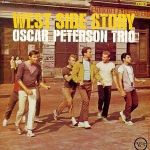
Oscar Peterson Trio – West Side Story

More Jazz Recordings Featuring the Piano

  • A West Side Story like you’ve never heard, with KILLER Shootout Winning Triple Plus (A+++) grades or close to them throughout this early Stereo Verve pressing
  • Rich, solid bass; you-are-there immediacy; energy and drive; instruments that are positively jumping out of the speakers – add it all up and you can see that this copy had the sound we were looking for
  • Which wouldn’t mean much if the music wasn’t swingin,’ but it is – every track shows just how good this trio was in 1962
  • Credit engineer Bob Simpson, the man behind the legendary Belafonte at Carnegie Hall live recording from a couple of years before
  • An absolute Must Own – for sound and music, this is our pick for The Best Oscar Peterson Album of All Time
  • It’s hard to imagine that any list of the Best Jazz Albums of 1962 would not have this record on it

(more…)

Ben Webster – Soulville

  • A vintage Verve Two-Fer set with very good Hot Stamper sound or BETTER on all FOUR sides
  • Unlike the Speakers Corner version from a few years back, this is the real thing, mastered by real pros, not audiophiles
  • This reissue combines the albums Soulville and Ben Webster Meets Oscar Peterson
  • With rave reviews for both albums, AMG lauds Soulville as, “one of the highlights of that golden 50s run,” and notes Ben Webster Meets Oscar Peterson is “one of the jazz legend’s all-time great records.”

(more…)

Judging the Sound of Heavy Vinyl We’ve Never Played

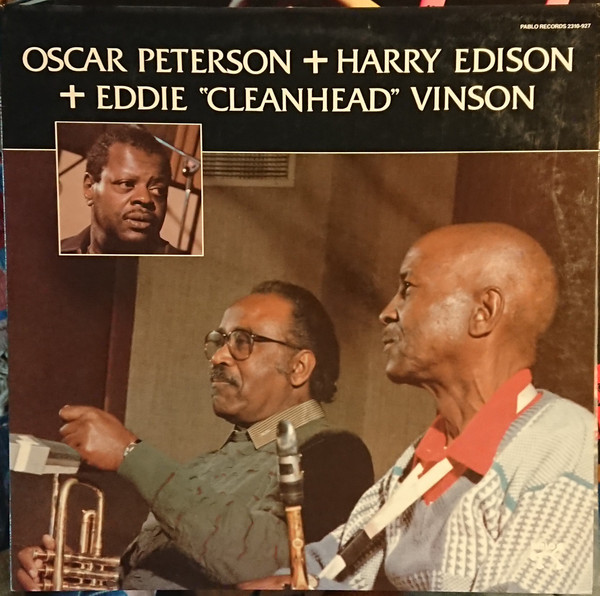
Hot Stamper Pressings of Pablo Recordings Available Now

We freely admit that we have never played the Heavy Vinyl pressing of The Alternate Blues on the Analogue Productions label. It started life in 1996 as APR 3010, part of the Analog Revival Series on 150 gram vinyl (average price on Discogs these days: $99), and now it seems to be in print on 180 gram vinyl, made from the same metalwork by the looks of it.

The mastering of the Analog Revival Series pressing may have been credited to Bruce Leek and Stan Ricker, but the stamper information is TML, The Mastering Lab all the way.

In case you, unlike us, are tempted to try one or both of the AP pressings, or perhaps already own one or both, here is our advice on how to recognize the fairly predictable shortcomings of Chad’s pressing, or any pressing mastered by Doug Sax in the 90s for that matter. Every one we’ve ever played has suffered from the same suite of sins.

The Best Part

And we expect that the AP pressing’s failures in some areas will be so obvious that you really don’t need any other copy of the album to be able to hear them.

Just focus on the two qualities that Analogue Productions’ records have always failed to deliver: transparency and freedom from smear.

In our 2011 shootout notes we drew the reader’s attention to both:

What to Listen For – Transparency

What typically separates the killer copies from the merely good ones are two qualities that we often look for in the records we play: transparency and lack of smear. Transparency allows you to hear into the recording, reproducing the ambience and subtle musical cues and details that high-resolution analog is known for.

Note that most Heavy Vinyl pressings being produced these days seem to be quite transparency challenged.

Lots of important musical information — the kind we hear on even second-rate regular pressings — is simply nowhere to be found. That audiophiles as a whole — including those that pass themselves off as the champions of analog in the audio press — do not notice these failings does not speak well for either their equipment or their critical listening skills.

What to Listen For – Lack of Smear

Lack of smear is also important, especially on a recording with this many horns, where the leading edge transients are so critical to their sound. If the horns smear together into an amorphous blob, as if the sound were being fed through ’50s vintage tube amps (for those of you who know that sound), half the fun goes right out of the music.

Richness is important — horns need to be full-bodied if they are to sound like the real thing — but so are speed and clarity, two qualities that insure that all the horns have the proper bite and timbre.
More on Smeary Sound

Smear, a blurring of the sharpness of the notes, refers to the loss of transient information which is most often associated with tube gear.

However, smear occurs with every kind of gear, especially high-powered amps, the kind typically required to power the inefficient speakers audiophiles often favor. We caution against the use of both.

When we finally got rid of our tube equipment and high-powered amps, a lot of smear in the playback of our records disappeared with them.

Once that happened, the smear that is commonly heard on most modern Heavy Vinyl repressings became much more noticeable and, over time, even more annoying.

Nobody else seems too bothered by smear, and one of our many theories about the stereo shortcomings of reviewers and audiophiles in general is that their systems are fairly smeary, so a extra smear — a little or a lot — becomes virtually inaudible to them.

(more…)

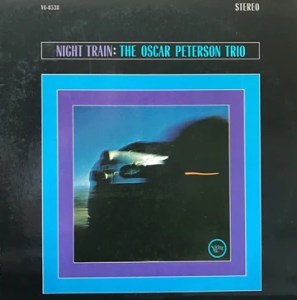
Oscar Peterson – Night Train

More of the Music of Oscar Peterson

  • Night Train debuts on the site with solid Double Plus (A++) grades on both sides of this Stereo Verve reissue pressing
  • It’s yet another example of a record that sounds better on the right reissue rather than the original, and of course, the only folks who can possibly know such a thing are those who do shootouts
  • Rich, solid bass; you-are-there immediacy; energy and drive; instruments that are positively jumping out of the speakers – add it all up and you can see that this copy had the sound we were looking for
  • Val Valentin engineered, one of the greats in our world – he’s responsible for an awful lot of our favorite audiophile-quality recordings
  • 4 1/2 stars: “…a definitive look at the 1960s Oscar Peterson trio.” 

(more…)

Letter of the Week – “This copy is a completely different musical experience.”

Hot Stamper Pressings of the Music of Grover Washington, Jr. Available Now

One of our good customers had this to say about some Hot Stampers he purchased:

Hey Tom, 

I really liked the Oscar Peterson West Side Story and appreciate the effort you put in to find me a Hot Stamper. This was an album my mother bought for me and I have fond memories of lying on my back under my parents RCA console stereo looking up at the glowing tubes and listening to it. Thank you. Much better than the DCC CD. It now sounds like I remember it.

Mr. Magic was also a surprise. It never sounded that good and was better than I remember it. 

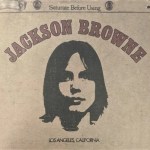
The one that has completely blown me away was the Jackson Browne 3+ side one.

It never sounded like that ever. I had a 1.5 and it was good; kind of like I remember it.

This copy is a completely different musical experience. I enjoy the presentation more and have a much better appreciation of the music. You guys did it again.

Thanks as usual,
Mike H.

Mike,

Thanks for your letter.

A 3+ Jackson Browne first album is a very special record indeed, so rich and smooth.

Would make a great Demo Disc, the opposite of the kind of phony trash they play at audio shows.

Other letters from customers recounting the incredibly powerful experiences they’ve had while playing one of our shootout winning pressings can be found here.

If you think you would enjoy kicking your musical satisfaction up a notch or two, nothing can get you to the next level faster than playing one of our killer Hot Stamper LPs.

(more…)

Letter of the Week – “All I can say is “Holy Cow”! I’m definitely a convert.”

Hot Stamper Pressings of the Music of Oscar Peterson Available Now
One of our good customers had this to say about some Hot Stampers he purchased recently:

I got my first Hot Stamper yesterday. Last night, I A/B-ed it with my current pressing of the same LP, which is a super-nice and very glossy VG++.

All I can say is “Holy Cow”! I’m definitely a convert. I have a very revealing headphone system, and this Hot Stamper is a stunning revelation! I went from listening to a video someone took on their phone at an Oscar Peterson concert, to sitting at a front table in the club! No exaggeration.

I am already scouring your website for my next purchases. I’m drooling over the Shelly Manne “Bells Are Ringing” – I have a copy of “West Side Story” with those guys that I love!

Many thanks, and I look forward to more great LPs from you all in the future!

Best regards,
Grainger

Grainger,

Thanks for your letter. Stunning revelation is exactly what we were going for.

Tom

(more…)

Alan Sides Sure Likes a Dead Studio

Hot Stamper Pressings of Pablo Recordings Available Now

Many of Allen Sides‘ recordings suffer from a lack of ambience. The musicians do not seem to have much room around them. In audiophile parlance, his recordings often lack “air.”  I can’t say all his recordings are made in a dead studio, but some of them sure are.

Many audiophile recordings, especially direct-to-disc recordings from the ’70s, are insufferable in this respect, with too much multi-miking and not enough studio space.

This Bach recording on Crystal Clear is a good example of the sound some audiophile labels were going for. Back in the 70s, audiophile producers and engineers were using state-of-the-art high-tech recording equipment, but they seemed to lack experience as well as knowledge of the recordings of the past. They regularly ended up producing records that are not remotely the equal of those that were commonly made only twenty years before.

For Duke is the poster boy for that sound. The instruments are dynamic as all get out, but no one ever imagined that the ideal approach to recording Ellington’s music would be to cram a big group of players into the equivalent of a heavily carpeted and draped livingroom.

Miller and Kreisel created a completely new, strange and inappropriate sound for Duke’s music, and it has been rubbing me the wrong way since I first heard it demoed in the audio showrooms I frequented back in the 70s.

(more…)

Oscar Peterson’s Best Recording? Sure Sounds Like It to Us

Hot Stamper Pressings of the Music of Oscar Peterson Available Now
I’ve known this was a well recorded album since I first heard the DCC Gold CD back in the 90s.

It sounded great to me at the time, although I had nothing to compare it to. I was not an Oscar Peterson fan in those days. The CD may be very good, but it is unlikely to hold a candle to any of our Hot Stamper vinyl pressings.

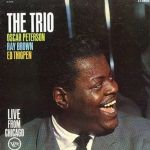
I now realize that this album is clearly one of the best jazz piano recordings ever made. In its own way it’s every bit as good as  another landmark recording we talk about, The Three, recorded in 1975.

This album checks off a number of important boxes for us here at Better Records:

The description for the amazing copy we found in our shootout more than a decade ago has been reproduced below.

The Right Sound from the Get Go

Side one starts out with a solid, full-bodied piano and snare drum, a sure sign of great sound to come. This side was richer and fuller than all the other copies we played. That rich tonality is key to getting the music to work. It keeps all the instrumental elements in balance. The natural top on this side is just more evidence that the mastering and pressing are top drawer. Great space and immediacy, powerful driving energy — this side could not be beat.

And side two was every bit as good! The sound was jumpin’ out of the speakers. There was not a trace of smear on the piano, which is unusual in our experience, although no one ever seems to talk about smeary pianos in the audiophile world (except for us of course).

Ray Brown’s bass is huge, probably bigger than it would be in real life, but I can live with that. Once again, with this kind of extended top end, the space of the studio and harmonics of the instruments are reproduced brilliantly.

Testing with Oscar

Lately we have been writing quite a bit about how good pianos are for testing your system, room, tweaks, electricity and all the rest, not to mention turntable setup and adjustment.

  • We like our pianos to sound natural (however one chooses to define the term)
  • We like them to be solidly weighted
  • We like them to be free of smear, a quality that for some reason is rarely mentioned in the audiophile reviews we read [more on smear at the end of this commentary]

Here are some of our favorite jazz records with top quality piano sound

Other records that we have found to be good for testing and improving your playback can be found here.

(more…)

The Timekeepers Is Probably Bad on Heavy Vinyl, But Who Can Be Bothered to Find Out?

More of the Music of Count Basie

Analogue Productions remastered this longtime favorite of ours, The Timekeepers, on 45 RPM vinyl. Considering their dismal track record — an unbroken string of failures, scoring not a single winner that I am aware of — I’m guessing the Hot Stamper we offered here would have blown the doors off their version, as well as any other Basie album they have done or ever will do on vinyl.

A good customer emailed us back in 2012 with the quote below, authenticating our rather negative disposition at the time concerning the AP releases from the ’90s:

Recently I unearthed a pile of “The Tracking Angle” magazines, MF’s short-lived venture in publishing, that I’d kept all these years (this may damn me in your eyes, but at the time he was one of the more animated [animated but consistently wrong, not a good tradeoff] writers on audio). I dutifully reread the very first issue (Jan. 1995) for the first time in many years, even a review of “Tea for the Tillerman,”… I was flabbergasted to come across this:

So what does Mr. “Better Records” think? In a newsletter where he says a digital remastered OJC vinyl title sounds better than Acoustic Sounds’ all analogue version and says the whole lot of them “suck” and “simply cannot sound good on a good stereo,” he calls this Cat Stevens reissue “Fabulous. Very dynamic with plenty of presence in the midrange, unlike the ‘audiophile’ records of today.”

We proudly stand behind every word. If the comparable OJC title sounds better than the remastered one Acoustic Sounds is peddling, then it sounds better, digital remastering or no digital remastering.

We don’t pay any attention to who makes the records, how they make them or why they make them.

We just play them and let the chips fall will they may. Mr. Fremer thinks that making records the “right” way should result in better sounding records, but we have found precious little evidence to back up that theory, and volumes of evidence which utterly refute it.

Yes, those Analogue Productions records sucked, they continue to suck, and they will always suck. The “audiophile” records of that day did lack presence, and the passage of time is not going to change that fact.

Play practically any Reference, Chesky or Classic title from 1995 to the present day and listen for the veiled midrange, the opacity, the smeary transients, and the generally constricted, compressed, lifeless quality of its sound, a sound that has been boring us to tears for decades as well as fundamentally undermining the very rationale for the expense and hassle of analog itself in the modern digital age, a much more serious charge.

Ask yourself, where are those records now?

Piled on the ash heap of analog history, that’s where (apologies to Leon Trotsky). Nobody writes about them anymore, and it’s not because they were so good, no matter what any audiophile-type reviewer thought or may think about them.

As long as Analogue Productions is around, at least no one can say that Mobile Fidelity makes the worst sounding audiophile records in the world. They are certainly some of the worst, but not so hopeless that they have never made a single good sounding record, which is the title that Chad Kassem holds.

To the best of our knowledge. Obviously we have only played a small fraction of the records released on his godawful label. In our defense let me say that a small fraction was all we could take.