Top Artists – Linda Ronstadt

Two of the Worst Mistakes You Can Make Collecting Records

Our Guide to Record Collecting for Audiophiles

To be clear, it’s only a mistake if you are looking for top quality sound.

If, however, you are a record collector who doesn’t care about the sound of your records and is just looking for music to play, you may want to consider the very real possibility that you are on the wrong site. At the very least you are probably wasting your time.

Do you know many audiophiles who own multiple copies of the same album?

Some? Sure, okay. How many of them are still hunting around for more? Not many, right?

I’ve been buying duplicate copies of my favorite albums for more than three decades, but I’m not exactly your average audiophile record collector.

Fortunately for me, with the advent of Better Records in 1987, I’ve had an outlet for the second- and third-rate pressings I choose not to keep. (What’s left of my audiophile pressings are being sold on ebay these days. Good riddance!)

A few audiophile friends have multiple copies, but most audiophiles I know usually stop after one, or at most two or three.

At least they know not to make the worst mistake of them all: buying an audiophile pressing and figuring that that’s the one to keep.

Tossing out their vintage pressings, or never bothering to buy vintage pressings in the first place guarantees you will never have an especially good sounding collection of records to play.
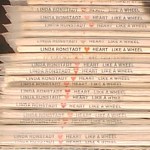
Those of you who take the time to read our Hot Stamper commentary, whether you buy any of our special pressings or not, no doubt know better. At least I hope you do.

Hearing Is Believing

The only way to understand this Hot Stamper thing is to hear it for yourself, and that means having multiple copies of your favorite albums, cleaning them all up and shooting them all out on a good stereo.

Nobody, and we mean nobody, who takes the time to perform this little exercise can fail to hear exactly what we are on about.

If that’s too much trouble, you can join the other 99% of the audiophiles in the world, the ones who don’t know just how dramatic pressing variations for records and CDs can be. Probably a fairly large percentage of that group also doesn’t want to know about any such pressing variations and will happily supply you with all sorts of specious reasoning as to why such variations can’t really amount to much — this without ever doing a single shootout!.

Such is the world of audiophiles. Some audiophiles believe in anything — you know the kind — and some audiophiles believe in nothing, not even their own two ears.

(more…)

Something Phony This Way Comes

Here’s what we learned from a shootout many years ago.

Some copies sounded like they were Half-Speed mastered by Mobile Fidelity.

(This is not a compliment. We hate that label’s phony sound and we don’t know why so many audiophiles would want to put up with the colorations MFSL’s records were notorious for.)

  • They had a little something phony added to the top of Linda’s voice.
  • They had a little bit of suckout right in the middle of the midrange, the middle of her voice, and
  • They had a somewhat diffuse, vague quality, with sound that lacked the solidity we heard on the best pressings.

These hi-fi-ish qualities that we heard on so many copies reminded us of the kind of audiophile sound we decry at every turn. We’ve played literally hundreds and hundreds of MoFi’s and other Half-Speed mastered records over the course of the last forty plus years, and one thing we know well is what they sound like.

But think about it. What if you only had one copy of the album — why would you have more than one anyway? — and it had that Half-Speed sound?

You would simply accept that the recording obviously had those qualities. (This assumes you could be expected to recognize them in the first place.)

Let’s face it, most audiophiles can’t, or all these companies would have gone out of business and stayed out of business, and their out of print records would sell for peanuts, not the collector prices they bring on ebay and audiophile web sites.

(more…)

Linda Ronstadt – Prisoner In Disguise

More Linda Ronstadt

More Women Who Rock

    • Prisoner In Disguise returns to the site for the first time in over two years, here with Linda’s trademark punchy, lively Shootout Winning Triple Plus (A+++) sound on both sides of this vintage Asylum pressing
    • Here are just a few of our notes for this killer copy: “silky and breathy vox,” “big and punchy,” “huge, rich and silky,” “tons of space and detail,” “so tubey.”
    • This is an amazing recording, but it takes a special copy like this one to reveal all the magic that we know had to have been on the tape in 1975, almost fifty years ago
    • 4 1/2 stars – “Love Is a Rose,” “Tracks of My Tears” and “Heat Wave” were hits, but Linda really pours her heart into “Hey Mister, That’s Me Up On The Jukebox”
    • Andrew Gold (so critical to the success of HLAW) is still heavily involved, along with EmmyLou Harris, James Taylor, Lowell George, David Lindley, JD Souther, and of course Peter Asher

The soundfield has a three-dimensional quality that was nonexistent on some of the other copies we played. Drop the needle on “Many Rivers To Cross” and check out the amazing sound of the organ coming from the back of the room. Only the highest resolution copies give you that kind of soundstage depth.

The piano sounds natural and weighty. The fiddle on “The Sweetest Gift” (played by our man David Lindley) is full of rosiny texture.

Emmylou Harris, dueting here with Linda, sings beautifully throughout.

All in all, you will find truly Demo Disc Quality sound on the best copies.

The acoustic guitars are tonally right on the money, neither bright nor dull, with transient information that is captured perfectly as long as the pressing itself is not smeary, which the better Hot Stamper pressings won’t be.

Listen to the opening guitar in the right channel of “The Sweetest Gift”; we used it as a test track and when that guitar is right there you know you have a copy with Hot Stampers.

(more…)

Linda Ronstadt – What’s New

More of the Music of Linda Ronstadt

  • Boasting KILLER Shootout Winning Triple Plus (A+++) grades or close to them on both sides, we guarantee you’ve never heard What’s New sound this good
  • So hugely spacious and three-dimensional, yet with a tonally correct and fairly natural sounding Linda, this is the way to hear it
  • What engineer George Massenburg gets right is the sound of an orchestra, augmented with jazz musicians (Ray Brown, Tommy Tedesco, Plas Johnson, Bob Cooper), all performing live in a huge studio
  • “…the best and most serious attempt to rehabilitate an idea of pop that Beatlemania… undid in the mid-60s.”
  • If you’re a Ronstadt fan, this title from 1983 is surely a Must Own. The complete list of titles from 1983 that we’ve reviewed to date can be found here.

With two outstanding sides, this pressing gets two critically important elements of the recording right:

The strings in the orchestra, and, for obvious reasons, even more importantly, Linda’s voice.

We guarantee that these sides give you a more natural sounding Linda than you’ve ever heard, or your money back.

If all you own is a mediocre sounding pressing or the truly awful Mobile Fidelity from 1983, you are in for a world of better sound with this pressing.

(more…)

Linda Ronstadt – For Sentimental Reasons

More Linda Ronstadt

  • An incredible copy of Ronstadt’s 1986 release with Shootout Winning Triple Plus (A+++) sound or close to it from first note to last
  • Linda is fuller, sweeter, breathier, less spitty (some tracks more than others) and just plain less artificial here than on all other copies we played in our recent shootout
  • The final installment of the jazz trilogy that Ronstadt recorded with bandleader and arranger Nelson Riddle
  • “… it is in the hushed intensity of Mr. Riddle’s string arrangements for the album’s ballads that one senses a musician reaching deeply into his soul to make eloquent final statements… The arrangements’ emotional gravity reverberates in Miss Ronstadt’s singing…”

With two outstanding sides, this pressing gets two critically important elements of the recording right: the strings in the orchestra, and, for obvious reasons, even more importantly, Linda’s voice. We guarantee that these sides give you a more natural-sounding Linda than you’ve ever heard, or your money back. (more…)

This Linda Ronstadt Album from 1969 Did Not Make the Grade

Hot Stamper Pressings of the Music of Linda Ronstadt Available Now

Transistory and veiled. Not worth the Capitol vinyl it was pressed on. Not the least bit enjoyable on today’s much more revealing high quality equipment.

The only stereo that can play a record that sounds the way this album does is a stereo that is powered by a pair of vintage tube amps like the Macs seen below, or something like them. (Some modern amps try to recreate that sound, and if you want to hear what is on your records, you had best avoid them.)

The above approach to record playback is also very good at hiding the faults of the modern Heavy Vinyl record.

Remastering Out The Good Stuff

What is lost in the newly remastered recordings so popular with the record buying public these days?

Lots of things, but the most obvious and irritating is the loss of transparency.

(more…)

Listening in Depth to Heart Like a Wheel

More of the Music of Linda Ronstadt

Presenting another entry in our extensive Listening in Depth series with advice on precisely what to listen for as you critically evaluate your copy of Heart Like a Wheel.

A key test on either side was to listen to all the multi-tracked guitars and see how easy it was to separate each of them out in the mix. Most of the time they are just one big jangly blur. The best copies let you hear how many guitars there are and what each of them is doing.

Pay special attention to Andrew Gold’s Abbey Road-ish guitars heard throughout the album. He is all over this record, playing piano, guitar, drums and singing in the background.

If anybody deserves credit besides Linda for the success of HLAW, it’s Andrew Gold.

Our In-Depth Track Commentary

Side One

You’re No Good

Right from the git-go, if the opening drum and bass intro on this one doesn’t get your foot tapping, something definitely ain’t right. Check to make sure your stereo is working up to par with a record you know well. If it is, your copy of HLAW belongs on the reject pile along with the other 90% of the copies ever pressed.

It Doesn’t Matter Anymore

Amazing acoustic guitars! Lots of tubey magic for a mid-’70s pop album. And just listen to the breathy quality of Linda’s voice. She’s swimming in echo, but it’s a good kind of echo. Being able to hear so much of it tells you that your pressing is one of the few with tremendous transparency and high resolution.

Faithless Love

Another superb arrangement with excellent sound. The banjo that opens this track is key — the picking should have a very strong plucky quality, with lovely trailing harmonics, even some fret buzz.

So many copies are veiled or blunted sounding; this clearly demonstrates a lack of transient information.

The copies without the trailing harmonics lack resolution.

Once you hear either of these problems on the banjo, you can be sure to find them on the voices and guitars throughout the side.

That the Cisco pressing doesn’t do a very good job reproducing the banjo should be clear for all to hear. If you want the sound of the real thing, only the best Capitol pressings are going to be able to give it to you.

(more…)

Linda Ronstadt – Heart Like A Wheel

More Linda Ronstadt

More Women Who Rock

  • With two outstanding sides, this vintage Capital pressing was giving us the sound we were looking for on Linda Ronstadt’s Best Album
  • “You’re No Good” was the hit but “It Doesn’t Matter Anymore,” “Faithless Love” and “The Dark End of the Street” are every bit as good – and that’s just side one!
  • A Must Own Classic, the best album Ms Ronstadt ever made, and a True Country Rock Masterpiece practically without peer
  • 5 stars: “What really makes HLAW a breakthrough is the inventive arrangements that producer Peter Asher, Ronstadt, and the studio musicians have developed. …[they] help turn Heart Like a Wheel into a veritable catalog of Californian soft rock, and it stands as a landmark of ’70s mainstream pop/rock.”
  • If you’re a Country Rock fan, then Linda’s Masterpiece from 1974 belongs in your collection.
  • The complete list of titles from 1974 that we’ve reviewed to date can be found here.

I’ve been playing HLAW since the year it came out, roughly 48 years by my calculation, and I can tell you it is no easy task to find this kind of smooth, sweet, analog sound on the album. Folks, we heard it for ourselves: the Heart Like A Wheel magic is here on practically every song.

Pay special attention to Andrew Gold‘s Abbey Road-ish guitars heard throughout the album. He is all over this record, playing piano, guitar, percussion and singing in the background. If anybody deserves credit besides Linda for the success of HLAW, it’s Andrew Gold.

A key test on either side was to listen to all the multi-tracked guitars and see how easy it was to separate each of them out in the mix. Most of the time they are just one big jangly blur. The best copies let you hear how many guitars there are and what each of them is doing.

(more…)

Linda Ronstadt – Hasten Down The Wind

More Linda Ronstadt

Hot Stamper Pressing on the Asylum Label

  • A vintage Asylum pressing that earned outstanding Double Plus (A++) grades or close to them from first note to last
  • This copy is doing pretty much everything right, particularly on side two — huge, rich and lively, with Linda’s vocals reproduced to near perfection
  • “Her big but pretty voice is a stunning instrument for expressing feelings, particularly intense feelings that require a slightly understated delivery… a fine album that begs closer inspection than, I fear, many of us are willing to give to Linda Ronstadt’s art. Like the best moments of the preceding nine, though, the best moments of Hasten Down the Wind will be with us a long, long time.”
  • If you’re a fan of the lovely Ms Ronstadt, her 1976 release is surely one that belongs in your collection
  • The complete list of titles from 1976 that we’ve reviewed to date can be found here

The sound is rich, smooth, full-bodied and natural on both sides. In other words, this is Classic Analog from the ’70s, recorded by none other than Val Garay, one of our favorite engineers.

Most pressings of this album have quite obvious problems. If you own the record see if you don’t notice some of them on your own copy.

Some have a phony boosted top end, a subject we have discussed on Linda’s records before.

Some are just too fat and Tubey. Perhaps the result of too much Aphex Aural Excitement?

Some are thick, some are thin, some are too clean, some are not clean enough, every sonic issue you can imagine can be heard on this album if you have enough copies to play, and we had plenty.

We know that this copy is about as correct as can be. We know because we cleaned and played it and listened to it critically in comparison to other copies, and we did it all by ourselves. (Of course we did. There’s really no other way to do it.)

(more…)

Linda Ronstadt / The Stone Poneys

More Linda Ronstadt

More Folk Rock

  • With two seriously good Double Plus (A++) sides, this was one of the better copies we played in our shootout for these later pressings – exceptionally quiet vinyl too
  • Much more folk than pop, for the most part the sound here is tubey, rich and sweet
  • Re-released when HLAW hit big, this album features three great tracks with Linda singing solo
  • “It doesn’t have “Different Drum,” but the first Stone Poneys album is their folkiest and best, dominated by close harmonies and strong original material by the group’s guitarists, Bob Kimmel and Ken Edwards.”
  • The originals from 1967 have never impressed us much. Click on the links below for more records that sound best to us on the right reissue pressing 
  • Here are some currently available Hot Stamper pressings that we think sound their best on the right reissue (the ones we sell, obviously; there are plenty of reissues that don’t have good sound, but the ones we offer handily beat the originals we’ve — and no doubt you’ve — heard)
  • Here are all the titles we’ve reviewed to date that have the potential to sound their best on the right reissue

On this album the sound varies a fair amount from track to track.

The best tracks are rich, tubey and clear; the worst thin, bright and hard. Some What to Listen For advice follows.

If you are interested in digging deeper, our Listening in Depth commentaries have extensive track by track breakdowns for some of the better-known albums we’ve done multiple shootouts for.

The first track on side one rarely stayed clean when loud, but here for the most part it does. It’s a good test for whether or not you have a copy with high quality, low distortion mastering. Listen for the least amount of smear and congestion and the most resolution.

The second track is richer and tubier – it proves that side one is mastered correctly.

On side two the first track is rough, the second track better, the third richer, sweeter and smoother still. (more…)