Top Artists – David Crosby

Crosby / Nash – Whistling Down The Wire

More of the Music of David Crosby and Graham Nash

  • You’ll find incredible Nearly Triple Plus (A++ to A+++) sound throughout this vintage pressing – just shy of our Shootout Winner
  • These sides were noticeably richer than practically all others we played, which generally tended to be lean and dry
  • We played a big pile of these, but finding the Tubey Magical, spacious, sweet analog sound we were after was not easy
  • Fortunately this copy showed us that it indeed was possible to get the clear, breathy vocals necessary to bring out the wonderful harmonies these two are so rightly famous for
  • If you’re a fan of hippie folk rock, this title from 1976 is surely a Must Own
  • The complete list of titles from 1976 that we’ve reviewed to date can be found here

As a budding audiophile, I went out of my way to acquire any piece of equipment that could make these records from the ’70s (the decade of my formative music-buying years) sound better than the gear I was then using. It’s the challenging recordings by Crosby, Stills, Nash and Young, as well as scores of other pop and rock artists like them, that drove my pursuit of higher quality audio, starting all the way back in high school.

And here I am — here we are — still at it, fifty years later, because the music still sounds fresh and original, and the pressings that we find get better and better with each passing year.

That kind of progress is proof that we’re doing it right. It’s a good test for any audiophile. If you are actively and seriously pursuing this hobby, perhaps as many as nine out of ten non-audiophile pressings in your collection should sound better with each passing year. As your stereo improves, not to mention your critical listening skills, the shortcomings of some will be revealed, but for the most part, vintage pressings should sound better each time you play them with continual refinements and improvements to your system, room and cleaning techniques.

That’s what makes it fun to play old records: They just keep getting better.
(more…)

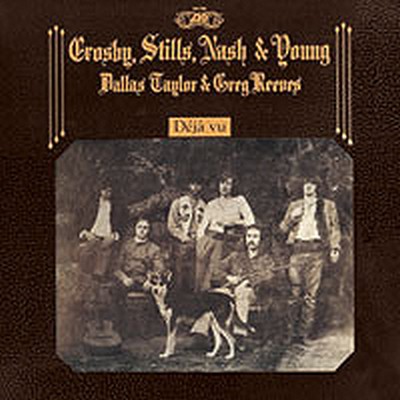
Listening in Depth to Deja Vu

Hot Stamper Pressings of the Music of Crosby, Stills, Nash and (Sometimes) Young

DEJA VU is an album we admit to being obsessed with — just look at the number of commentaries we’ve written about it. It’s yet another in the long list of rock and pop records that really come alive on big speakers at loud levels .

One obvious reason that our turn up your volume is such a good test is that the louder the problem, the harder it is to ignore.

Presenting another entry in our extensive listening in depth series with advice on what to listen for as you critically evaluate your copy of Deja Vu. Here are some albums on our site you can buy with similar track by track breakdowns.

Side One

Carry On

This song is a great test for the quality of the vocals. If you can get through the first part of the song with little to no strain in the voices, you’re on the right track.

The bass on this track always lacks a measure of definition, but you’ll know by track three if your bass is solid enough to set the foundation this music requires to really get going. Carry On has a huge number of overdubs, so it will never have very high resolution, but on a Hot Stamper copy like this one it can sound wonderful.

Teach Your Children 
Almost Cut My Hair

One of the key test tracks we use for side one, this is the only time Crosby, Stills, Nash & Young actually sounds like a rock and roll band. According to Stephen Barncard this was recorded live in the studio. It sure sounds like it. The amount of energy the band generates on this track exceeds all the energy of the first album put together.

The reason this track presents such a tough test is that it has to be mastered perfectly in order to make you want to turn it up as loud as your stereo will play. This song is not for sipping wine and smoking cigars. It positively cries out to be played at serious volume levels on monstrously large speakers. Nothing else will do justice to the power of the band’s one and only live performance.

(more…)

The Turn Up Your Volume Test – Almost Cut My Hair

Hot Stamper Pressings of the Music of Crosby, Stills, Nash and (Sometimes) Young

The only time Crosby, Stills, Nash & Young actually sound like a real rock and roll band is on the track Almost Cut My Hair.

According to Stephen Barncard, one of the engineers on Deja Vu, the track was actually recorded live in the studio.

Boy, it sure sounds like it. The amount of energy the band generates on this one song exceeds the energy of the entire first album put together. 

The reason this song presents such a tough test is that it has to be mastered properly in order to make you want to turn it up, not just louder, but as loud as your stereo will play.

This song is not to be used as background music whilst sipping wine and smoking cigars.

It positively cries out to be played at serious volume levels on monstrously large speakers. Nothing else will do justice to the power of the band’s one and only live performance captured on the album.

Listen to Neil in the left channel wailing away like a man possessed. Imagine what his grunged-out guitar would sound like blasting out of a stack of Marshall amps the size of a house.

Now hold that sound in your head as you turn up the volume on your preamp.

When your system starts to distort, back it off a notch and take your seat.

Deja Vu Letters

Some of our customers have written to tell us about the amazing sound they heard on our Hot Stamper pressings of Deja Vu.

“I know in one sense you’re only doing your job but who the hell else does what you do?”
“I almost fell off my listening chair.”
“I think It’s a bargain at $800. It absolutely trashes my Mofi version…”
“I had no idea that vinyl could produce this sound.”

(more…)

Crosby Stills & Nash – Critical Listening Exercise

More of the Music of Crosby, Stills and Nash

This very old commentary from an early Hot Stamper listing (2005?) for CSN’s debut makes note of some specific qualities in the recording that are a good test for midrange transparency and naturalness.

Here are some other albums with specific advice on what you should be listening for.

What’s magical about Crosby, Stills, Nash (& Young)? 

Their voices of course. It’s not a trick question. They revolutionized rock music with their genius for harmony. Any good pressing must sound correct on their voices or it has no value whatsoever. A CSN record with bad midrange — like most of them — is a worthless record.

Suite: Judy Blue Eyes

Listen to the section of the song that starts with Stills’ line “Can I tell it like it is,” with Nash and Crosby behind him — it’s clearly a generation of tape down from what came before and what comes after. The voices and the acoustic guitars just seem to lose their immediacy and transient impact for no apparent reason. Wha’ happen?

It’s the mix, folks, and no mastering engineer can fix it. This album is full of parts and pieces of various songs that are occasionally problematical in that way. Recognize them for what they are, little bumps in the road, a road that led ultimately to one of the greatest pop albums ever made.

On the hot copies the best sounding material will sound amazing, and the lesser sounding material (i.e., the more poorly recorded or mixed bits and pieces) will sound as good as they can sound.

That’s the nature of the beast. It is what it is. The more intensely you listen to a record like this — a true Rock Classic from the 60s, and one we listen to very intensely when doing these shootouts — the more you will notice these kinds of recording artifacts. It’s what gives them “character.”

It’s also what allows you to play a record like this on a regular basis and still find something new in it after all these years.

We’ve made some recent improvements to the stereo and room here at Better Records and I can tell you I heard things in this recording I never knew were there.

What could be more fun than that? The music never gets old, and neither does the sound.

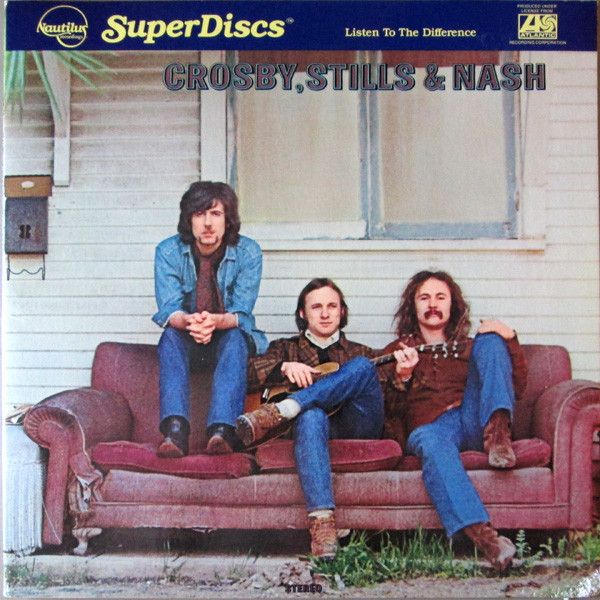
This Nautilus LP Has the Most Bloated, Ill-Defined, Overblown Bass in the Sad, Sordid History of Half-Speed Mastering

More Crosby, Stills and Nash

An audiophile hall of shame pressing and a Half-Speed mastered disaster if there ever was one.

An audiophile record dealer (of course; who else?) once raved to me about Crosby Stills and Nash on Nautilus. I said “What are you talking about? That version sucks!” He replied “No, it’s great. Helplessly Hoping sounds amazing.” 

Now one thing I know about the Nautilus is this: although it is wonderfully transparent in the midrange, it may very well take the cake for the most bloated, out of control bass in the history of Half-Speed mastering.

What song on that album has almost no bass, just lovely voices in the midrange? You guessed it. Helplessly Hoping.

The Nautilus got one track right, and ruined the rest. Using that track for comparison will fool you, and when it comes time to play a side of the album, you will quickly hear what a disaster it is.

Or maybe you won’t. Who else harps on bad Half-Speed Mastered bass outside of those of us who write for this blog? I don’t recall ever reading a word about the subject.

This does not reflect well on the bass response of the modern audiophile stereo. If you would like to improve the bass of your system, the records linked below are good for testing different aspects of bass.

(more…)

Crosby, Stills and Nash – You Do the Best You Can with What You’ve Got to Work With

Hot Stamper Pressings of the Music of Crosby, Stills and Nash Available Now

The founding members of CSN chose the Albert brothers to engineer this 1977 reunion.

Their most famous album is Layla. Ever heard a great sounding Layla? Me neither. Can you hear the sound of Layla in your head? That’s more or less what this album sounds like. There are better and worse Layla’s — we’ve done the shootout many times — just as there are better and worse CSNs, but we have never played amazing Demo Disc pressings of either and I doubt we ever will.

The problem with the sound cannot be “fixed” in the mastering, and here’s how we know: on either side some songs have wonderful sound — the midrange magic, the “breath of life” that makes the first Crosby, Stills and Nash album such a special listening experience — and some don’t.

That’s a recording problem.

It sounds like too many generations of tape were used on songs like Shadow Captain and Dark Star, among others.

But Just a Song Before I Go on side two can sound wonderful: rich, sweet, present and surrounded by lovely studio ambience.

So we listen for the qualities of a specific song that help us pinpoint what the best copies do well and the rest do less well and grade them accordingly, on a curve.

Animals will never sound like The Wall. You do the best you can with what you’ve got to work with.

(more…)

Various Artists / Woodstock

More Live Albums

  • These original pressings boast seriously good Double Plus (A++) sound or BETTER on all SIX sides
  • With Mint Minus Minus vinyl and no marks that can be heard, you will have a very hard time finding a copy that plays this well
  • We guarantee there is dramatically more richness, fullness, vocal presence, and performance energy on this copy than others you’ve heard, and that’s especially true if you made the mistake of buying whatever Heavy Vinyl pressing is currently on the market
  • “As potent a musical time capsule as ever existed, it captures the three-day, 1969 concert event that united close to half a million members of what came to be known as the ‘Woodstock Generation.’ It topped the Billboard Charts for four weeks and sold two million copies.”

You will have a very hard time finding a quieter copy!

Folks, it was a struggle, let me tell you! Not as much of a struggle as putting on the concert itself to be sure, but a struggle for those of us charged with finding good sound on this famously badly recorded album.

First off there are six sides to play for every copy.

Secondly the sound is problematical at best; figuring out what the best copies do well that the run-of-the-mill copies don’t takes quite a bit of concentration, and one has to stay focused for a long time (most of the day in fact). After a while it can really start to wear on your nerves. (more…)

Accurate VTA Using Helplessly Hoping on the Classic LP

Hot Stamper Pressings of the Music of Crosby, Stills and Nash Available Now

This commentary from way back when (2005!) describes how to go about adjusting your VTA for 180 or 200 gram vinyl, using the track Helplessly Hoping from the first album.

Helplessly Hoping is a wonderful song with plenty of energy in the midrange and upper midrange which is difficult to get reproduce. Just today (4/25/05) I was playing around with VTA, having recently installed a new Dynavector DV-20x [a cartridge replaced by the 17d3 soon afterwards and again by the 17dx] on my table, and this song showed me EXACTLY how to get the VTA right.

VTA is all about balance. The reason this song is so good for adjusting VTA is that the guitar at the opening is a little smooth and the harmony vocals that come in after the intro can be a little bright.

Finding the balance between these two elements is key to getting the VTA adjusted properly.

When the arm is too far down in the back, the guitar at the opening will lose its transparency and become dull and thick. Too high in the back and the vocals sound thin and shrill, especially when the boys all really push their harmony. The slightest change in VTA will noticeably affect that balance and allow you to tune it in just right.

To be successful, however, there are also other conditions that need to be met. The system has to be sounding right, which in my world means good electricity, so make sure you do this in the evening or on a weekend when the electricity is better.

(more…)

Listening in Depth to Graham Nash / David Crosby

More of the Music of David Crosby and Graham Nash

Presenting another entry in our extensive listening in depth series with advice on what to listen for as you critically evaluate your copy of Graham Nash / David Crosby.

Here are some albums currently on our site with similar Track by Track breakdowns.

This album has some of the BEST SOUND Crosby and Nash ever recorded, but you’d never know that listening to the average pressing. You need plenty of deliciously rich Tubey Magic if this music is going to work, and on that count this copy certainly delivers.

Bill Halverson was the engineer for this album, the man behind the first CSN album and many others.

We asked ourselves: Where in the world did all the midrange magic we were hearing on Graham Nash / David Crosby come from?

On a song like Where Will I Be the sound is so unbelievably transparent, open and intimate, it sounds like an outtake from David Crosby’s first album, one of the ten best sounding rock records ever made. How did Bill Halverson learn how to record as well as Stephen Barncard all of a sudden?

[We were very wrong to disparage Bill Halverson’s engineering skills and will be addressing our error soon.]

(more…)

Crosby, Stills and Nash – Self-Titled

More of the Music of Crosby, Stills, Nash

  • A vintage copy of CS&N’s self-titled debut LP that was doing just about everything right, with both sides earning superb grades
  • The sound is big and rich, the vocals breathy and immediate, and you will not believe all the space and ambience
  • We love the album, but it is a cryin’ shame, as well as a fact, that few were mastered and pressed well, and that includes none of the originals in our experience
  • The reason you don’t see this title on the site more frequently is simply that it has become nearly impossible to find copies in audiophile playing condition with the right stampers
  • The right stampers for this album are at least ten times more rare than those for Zep II, but for some reason everybody thinks that record is rare!
  • We’ve discovered a hundred or more titles in which one stamper always wins, some of which we’ve identified, and no, we have no intention of giving out that information, sorry
  • The fact that only one specific later pressing ever wins our shootouts is proof that freeing your mind from unscientific thinking is the only way to find the highest quality pressings
  • 5 stars: “A definitive document of its era.”
  • This is a Must Own Hippie Folk Rock Masterpiece from 1969 that belongs in every right-thinking audiophile’s collection

Although millions of copies of this album were sold, so few were mastered and pressed well, and so many mastered seemingly with no regard to sound quality, that only a vanishingly small number of copies have ever made it to the site with Hot Stampers.

We consider this album a Masterpiece. It’s a recording that should be part of any serious Popular Music Collection.

Others that belong in that category can be found here.

(more…)