Focus-R/P/S

Here you will find rock, pop, soul, etc. albums we think we know well, having cleaned and played them by the score over the course of many decades.

There are currently 160 or so entries, but the number could easily exceed 1000 considering how many records we play every week in our shootouts.

We Didn’t Know How Good We Had It in the Seventies

Hot Stamper Pressings of Well-Recorded Folk Rock Albums Available Now

Stealin’ Home has long been a Folkie-Pop favorite of mine, mostly on the strength of the consistently smart songwriting, polished production and audiophile sound quality.

But really, to be truthful, what I found attractive right from the start was Iain Matthews’s especially clear, sweet tenor. That’s the hook that drew me to the album.

Only later would I be pleasantly surprised to find that the recorded sound was wonderful; that the production was equal to the best major label Rock and Pop around (a comparison to The Doobie Brothers would not be a stretch); and, with repeated listening, it was clear that the level of songwriting was high indeed (an a capella rendition of Rodgers and Hammerstein’s You’ve Got to Be Carefully Taught, which opens side two, can’t help but raise your averages).

ian_matthews_-_stealin_homeWe Didn’t Know How Good We Had It

Produced in 1978, the best copies are rich, smooth and sweet in the best tradition of ANALOG recording.

Only a few years later this sound was out of style, replaced by the edgy, hard, digital qualities preferred by synthpop bands like Tears for Fears and Simple Minds.

This would turn out to be a bad time for audiophiles (like me) who liked the pop music of the day but not the pop sound of the day. Heavy-handed processing as well as the overuse of synthesizers and drum effects, with the whole of the production slathered in digital reverb, have resulted in most of the albums from the early- to mid-80s being all but impossible to enjoy on a modern high-end system. Believe me, we’ve tried.


UPDATE 2026

Getting distortion out of the system, electricity, room and all the rest helps make the records from the 80s much more enjoyable. Brothers in Arms comes instantly to mind, but there are scores of others. Obviously some heavily processed recordings are going to sound much better than others, especially if you have the right pressings, but few of them can compete with the better recordings from the 70s.
(more…)

On Please Please Me, Which Is More 3-Dimensional, Mono or Twin Track?

Hot Stamper Pressings of the Music of The Beatles Available Now

With all due respect to George Martin, we’ve played a number of mono pressings of Please Please Me in the past twenty or so years and have never been particularly impressed by any of them.

The monos jam all the voices and instruments together in the middle, stacking them one in front of the other, and lots of musical information gets mashed up and simply disappears in the congestion. 

But is twin track stereo any better?

Yes, when you do it the way Norman Smith did on Please Please Me.

Twin Track stereo (which is actually not very much like two-track stereo, I’m sure Wikipedia must have a listing for it if you’re interested) is like two mono tracks running simultaneously. It allows the completely separate voices to occupy one channel and the completely separate instruments to occupy another, with no leakage between them.

On some stereos it may seem as though the musicians and the singers are not playing together the way they would if one were hearing them in mono. They are in fact recorded on two separate mono tracks, the instruments appearing in the left channel and the singers in the right, separated as much as is physically possible.

Stuck in their individual stereo speakers, so far apart from one another, the members of the band don’t even seem to be playing together in the same room.

That’s on some stereos, and by some stereos I mean stereos that need improvement. Here’s why.

Three-Dimensional Mono?

In the final mixing stage, Norman Smith added separate reverb to each of the two channels, sending the reverb for the sound recorded in each channel to the opposite channel. This has the effect of making the studio, the physical space that The Beatles appear to be in, seem to stretch all the way from the right channel, where the Beatles’ voices are heard, to the back left corner of the studio, where the reverb eventually trails off.

(more…)

Thriller Is Proof that Bernie Grundman Was Cutting Great Records in 1982

Hot Stamper Pressing of the Music of Michael Jackson Available Now

This commentary was written many years ago, probably in 2007, right around the time that our system really started to get Thriller to sound good, owing to advances we had made in cleaning and playback. We went into a great deal more detail about those changes in this commentary, which compares the sound of Thriller from the 80s and the sound of Thriller today.

Our old friend Bernie Grundman handled the mastering for Thriller and managed to do a really nice job. Unfortunately, most copies of this mass-produced classic don’t give you as much of the magic as other copies, including the ones BG mastered.

The sound on this copy is huge — big, wide, deep, and open, with the kind of three-dimensional soundstaging that lets the music unfold in front of you and around you as well. You get the bottom-end punch that’s so crucial to this music and tons of energy. The bass is meaty and well-defined, showing you the rhythmic foundation that the music needs. The sound is transparent with amazing texture to practically every element.

Michael’s voice is marvelous on this copy — breathy, textured, and positively dripping with emotion (just listen to him break down on The Lady in My Life).

Thanks to constant improvements in our stereo, we’re now getting this album to sound better than it ever has. Extended highs appeared where none had been before. We were hearing synthesizers buried deep in the mix we’d never heard. All of a sudden, these ’80s pop records had amazing analog magic.

If your system is up to the task, you won’t believe how big and lively this album sounds. Who woulda thunk it?

In a more recent commentary we went into some detail about Bernie Grundman’s shortcomings as a mastering engineer.

(more…)

Botnick and Levine Knocked Equinox Out of the Park

Hot Stamper Pressings of the Music of Sergio Mendes Available Now

The music is of course wonderful, but what separates Sergio from practically all of his ’60s contemporaries is the AMAZING SOUND of his recordings. Like their debut, this one was engineered by the team of Bruce Botnick and Larry Levine.

Botnick is of course the man behind the superb recordings of The Doors, Love and others too numerous to mention. 

Levine is no slouch either, having engineered one of the best sounding albums on the planet, Sergio Mendes’ Stillness.

Just play the group’s amazing versions of Watch What Happens, Night and Day, or Jobim’s Wave to hear the kind of Mendes Magic that makes us swoon. For audiophiles it just doesn’t get any better. (Well, almost. Stillness is still the Ultimate, on the level of a Dark Side of the Moon or Tea for the Tillerman, but Equinox is right up there with it.)

Only the best copies are sufficiently transparent to let the listener hear all the elements laid out clearly, with each occupying a real three-dimensional space within the soundfield. When you hear one of those copies, you have to give Botnick and Levine their due. These guys knew what they were doing like few that have come along since.

(more…)

The Glorious Big Speaker Sound of Wind of Change

Hot Stamper Pressings of the Music of Peter Frampton Available Now

A while back we discussed the kind of sound that Glyn Johns managed to get for the likes of Humble Pie and The Who:

But oh what a glorious sound it is when it’s working. There’s not a trace of anything phony up top, down low or anywhere in-between. This means it has a quality sorely at odds with the vast majority of audiophile pressings, new and old, as well as practically anything recorded in the last twenty years, and it is simply this: The louder you play it, the better it sounds.

Chris Kimsey knew how to get the Big Rock Sound onto tape about as well as anybody who ever lived. His work on this album set me on a path I would would follow for the next fifty years.

Wind of Change is the very definition of a big speaker record, one that requires the highest-resolution, lowest-distortion components to bring out its best qualities. If you have a system like that, you should find much to like here.

I bought my first copy in 1972 while still in high school and it quickly became one of my favorite records.

All these years later it still is.

It’s records like this that shaped my audio purchases and pursuits. It takes a monster system to even begin to play this record right, and that’s the kind of stereo I’ve always been drawn to.

A stereo that can’t play this record, or The Beatles, or Ambrosia, or Yes, or the hundreds of other amazing recordings we put up on the site every year, is not one I would want to own.

This is Peter Frampton’s Masterpiece as well as a personal favorite of yours truly.

(more…)

I Don’t Care What Anybody Says, One Eighty Is a Great Album

Hot Stamper Pressings of the Music of Ambrosia Available Now
This is smooth, rich ANALOG at its best.

Easy on the ears as we like to say.

One Eighty is clearly the poppier side of Ambrosia, containing as it does two of their highest-charting mainstream hits, Biggest Part of Me (#3) and You’re the Only Woman (#13). 

I myself of course prefer the proggy first two albums, which fallinto the broad category of Art Rock, where my favorite albums by Bowie, Peter Gabriel, Roxy Music, Supertramp, 10cc, later-period Beatles, Jethro Tull, Pink Floyd, Traffic and so many others from the last forty-plus years can be found.

These artists’ recordings tend to be big, powerful and exceedingly hard to reproduce, which, probably more than anything else, accounts for my becoming a serious stereo enthusiast right out of my teens.

(My mother had to co-sign the loan I needed to purchase the currently-state-of-the-art ARC SP3A-1 preamp I coveted. I remember it being $600+ at a time, back when I was earning roughly $2 an hour. That had to hurt, but I did it. Bought a D-75 amp after I paid it off too.)

The Music

One Eighty (recorded on 1/80, get it?) kicks off with a real rocker: Ready, which is a great name for an opening track and really gets the album off to a high-energy start. Side two opens with my favorite track on the album, Livin’ On My Own. I actually used to demonstrate my system with it: the bass is huge, way up in the mix and really punchy. Additionally there are powerful multi-tracked vocal harmonies in the chorus that are wall-to-wall, surprisingly dynamic, yet sweet (all things considered; this is a modern recording after all).

One Eighty has an excellent mix of rock and softer pop ballads. The last track, Biggest Part Of Me, no matter how many times you’ve heard it, on the radio or elsewhere, is an exceptionally well-produced (designed?) piece of songcraft that will tug at anyone’s heartstrings, anyone who has a heart that is (if I may quote the title of the best song Burt Bacharach ever wrote). On a big audiophile system it should be both powerful and emotional. (more…)

This Is the Most Amazing Record the Dregs Ever Made

dixiedregsHot Stamper Pressings of Jazz Rock Fusion Albums Available Now

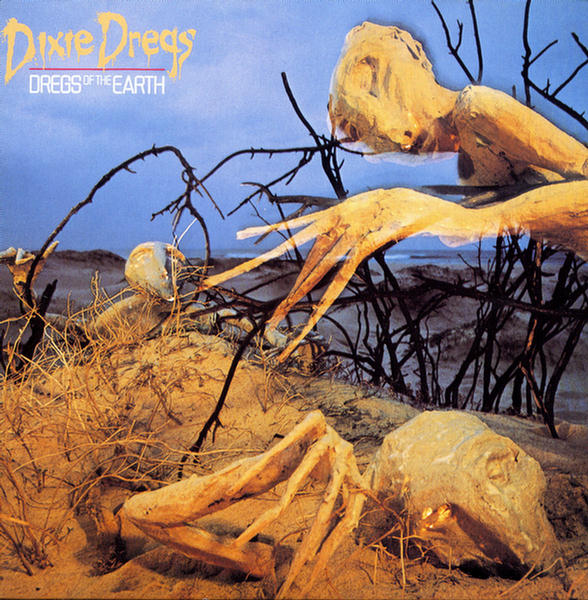
This is the band’s Masterpiece as well as a personal favorite of yours truly.

It’s also a clear case of one and done, at least when it comes to vinyl. (The live album, Bring ‘Em Back Alive, shown below, is only available on CD, but it comes highly recommended as well. I listen to it regularly.)

If you want to hear what happens when five virtuoso instrumentalists manage to combine their talent for Jazz, Rock, Classical and Country (thanks god there aren’t any vocals) into a potent mix that defies classification and breaks all the rules, this is the one. It reminds me of Ellington’s famous line that there are only two kinds of music: good music and bad music. This is the kind of music you may have trouble describing, but one thing’s for sure — it’s good. In fact it’s really good.

This is the most AMAZING album the Dregs ever recorded, and now this wild amalgamation of rock, jazz, country, prog and classical music has the kind of sound I always dreamed it could have. It’s rich and smooth like good ANALOG should be. It’s also got plenty of energy and rock and roll drive, which is precisely where the famous half-speed falls apart.

Few audiophiles know this music, and that’s a shame. This record is just a delight from beginning to end.

I’m apparently not the only one who noticed how good the album is. In 1980 Dregs of the Earth received a Grammy nomination for Best Rock Instrumental Performance.

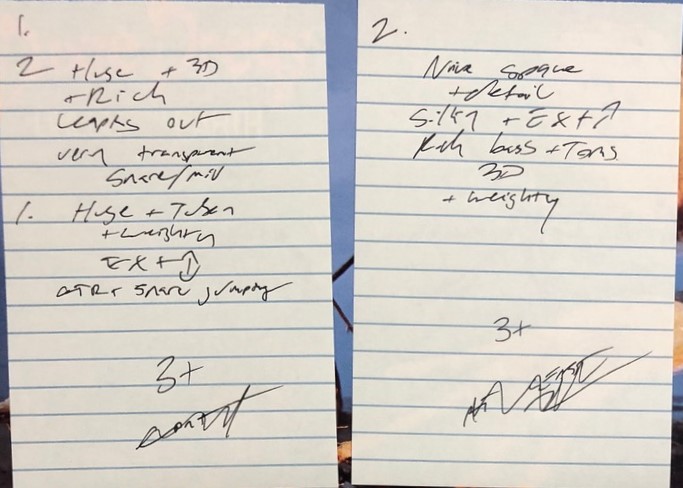
The notes for our recent shootout winner are shown below:

More amazing finds like this one can be found here.

(more…)

Room Treatments Bring Out The Big Speaker Whomp Factor

Hot Stamper Pressings of the Music of Sergio Mendes Available Now

UPDATE 2025

The first Sergio Mendes and Brasil ’66 album is one of those records that helped us dramatically improve the quality of our playback.


Only the best copies are sufficiently transparent to grant the listener the privilege of hearing all the elements laid out clearly, each occupying a real three-dimensional space within the soundfield. 

With recent changes to some of our room treatments, we now have even more transparency in the mids and highs, while improving the whomp factor (the formula goes like this: deep bass + mid bass + speed + dynamics + energy = whomp) at the listening position.

There’s always tons of bass being produced when you have three 12′ woofers firing away, but getting the bass out of the corners and into the center of the room is one of the toughest tricks in audio.

For a while we were quite enamored with some later pressings of this album — they were cut super clean, with extended highs and amazing transparency, with virtually none of the congestion in the loud parts you hear on practically every copy.

But that clarity comes at a price, and it’s a steep one. The best early pressings have whomp down below only hinted at by the “cleaner” reissues. It’s the same way super transparent half-speeds fool most audiophiles. For some reason audiophiles rarely seem to notice the lack of weight and solidity down below that they’ve sacrificed for this improved clarity. (Probably because it’s the rare audiophile speaker that can really move enough air to produce the whomp we are talking about here.)

But hey, look who’s talking! I was fooled too. You have to get huge amounts of garbage out of your system (and your room) before the trade-offs become obvious.

When you find that special early pressing, one with all the magic in the midrange and top without any loss of power down below, then my friend you have one of those “I Can’t Believe It’s A Record” records. We call them Hot Stampers here at Better Records, and they’re guaranteed to blow your mind. (more…)

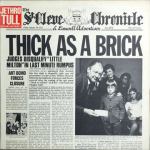
Thick as a Brick Is a Top Test Disc for System Accuracy

Hot Stamper Pressings of the Music of Jethro Tull Available Now

From 2009 to 2010 this was our single go-to record for testing and tweaking our system.

Although we now use an amazing copy of Bob and Ray (the big band version of The Song of the Volga Boatmen located therein has to be one of the toughest tests we know of), we could easily go back to using TAAB.

Artificiality is the single greatest problem that every serious audiophile must guard against with every change and tweak to his stereo. cleaning system, room, electricity and everything else.

Since TAAB is absolutely ruthless at exposing the slightest hint of artificiality in the sound of the system, it is clearly one of the best recordings one can use to test and tune with. Here are just some of the reasons this was one of our favorite test records back in the day:

Dynamics

The better copies are shockingly dynamic. At about the three minute mark the band joins in the fun and really starts rocking. Set your volume for as loud as your system can play that section. The rest of the music, including the very quietest parts, will then play correctly for all of side one. For side two the same volume setting should be fine.

Bass

The recording can have exceptionally solid, deep punchy bass (just check out Barrie “Barriemore” Barlow’s drumming, especially his kick and floor toms. The guy is on fire).

Midrange

The midrange is usually transparent and the top end sweet and extended on the better pressings.

Tubey Magic

The recording was made in 1972, so there’s still plenty of Tubey Magic to be heard on the acoustic guitars and flutes.

(more…)

Jump Into the Fire with Harry Nilsson

Hot Stamper Pressings of the Music of Harry Nilsson Available Now

This commentary was written more than ten years ago.


Jump Into The Fire is one of the best tests we use for side two.

Copies that are too smooth make the “just bass and drums” intro sound thick and smeared.

Too bright and the vocals will tear your head off.

The “just right” copies rock from the start and never get too far out of control, even when Harry does. The best we can hope for is that the loudest vocal parts stay tolerable. Believe me, it is not that easy to find a copy that’s listenable all the way through, not at the high volume I play the record at anyway!

Again, with Nilsson screaming at the top of his lungs, you better have a good copy to get through this track, and even then it’s a bit of a problem.

A tough test for the old stereo, that’s for sure. Make sure your equipment is tuned up and the electricity is good before you get anywhere near a pressing of this album.

Big production pop like this is hard to pull off. Harry did an amazing job, but the recording is not perfect judging by the dozen or so copies I played this week and the scores I’ve suffered through before.

Let’s face it: Jump Into The Fire will never be smooth and sweet; neither will Down on side one. But other tracks on this album have Demo Disc quality sound, and, of course, the music is to die for.

Side One

Gotta Get Up

A tough one right off the bat. If you have an aggressive sounding copy, you’ll know it pretty quick!

Driving Along (more…)