Pressings with Weak Sound or Music

These vintage records didn’t sound very good to us. Additionally, some made the list because the music or performances were not to our liking.

As to their sound quality, some of them are bad recordings, but some are no doubt just bad pressings of good recordings. Either way, audiophiles should avoid them.

Bad sounding Heavy Vinyl and Half-Speed mastered pressings can be found in their own sections.

Gorgeous Cover, Bad Sound

Hot Stamper Pressings of the Music of Felix Mendelssohn Available Now

UPDATE 2025

Our favorite recording of the work can be found here.


Awful sound. It’s bright, dry and flat, with strident strings.

The sound is much too unpleasant to be played on high quality modern equipment.

If your system is dull, dull, deadly dull, the way older systems tend to be, this record has the hyped-up, bright and aggressive sound that is sure to bring it to life in no time.

There are scores of commentaries on the site about the huge improvements in audio available to the discerning (and well-healed) audiophile. It’s the reason Hot Stampers can and do sound dramatically better than their Heavy Vinyl or audiophile counterparts: because your stereo is good enough to show you the difference.

With an Old School system, you will continue to be fooled by bad records, just as I and all my audio buds were fooled thirty and forty years ago. Audio has improved immensely in that time. If you’re still playing Heavy Vinyl and other audiophile pressings, there’s a world of sound you don’t know you’re missing.

(more…)

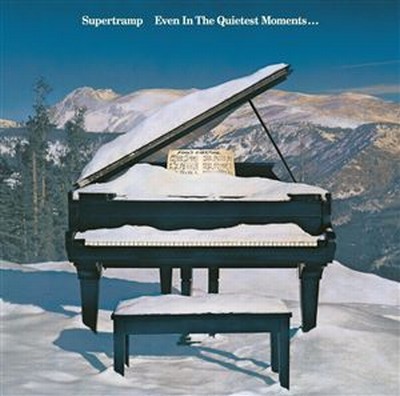
Even in the Quietest Moments – P & M Stampers Let Us Down This Time

Hot Stamper Pressings of the Music of Supertramp Available Now

After discovering killer Hot Stampers for this forgotten classic, we feel the album can hold its own with any of Supertramp’s 70s releases, from Crime of the Century all the way through to Breakfast in America.

The UK-pressed White Hot Stamper pressings from our recent shootouts showed us some of the best Supertramp sound we have ever heard on any of their albums, which is saying a lot. Supertramp is one of the most well-recorded bands in the history of pop music. Geoff Emerick took over most of the recording duties after the band decided to work with a different engineer for this, their 1977 album.

KEN SCOTT recorded the two albums that came before this one, Crime and Crisis, and as has been well documented on this very site, he knocked both of them out of the park.

(more…)

In 1959 Columbia Let Leonard Bernstein Record an Awful Version of Scheherazade

More of the music of Rimsky-Korsakov (1844-1908)

Even worse, they made the mistake of releasing it!

Bernstein’s performance here is far too slow to be taken seriously. This is a record you can find in the bins for five bucks, and for five bucks it’s worth picking up just to hear how awful it is.

Our favorite Scheherazade has long been the one Ansermet conducted for Decca in 1961.

Outstanding Hot Stamper pressings of recordings from 1959, a great year for records, can be found here.

The complete list of titles from 1959 that we’ve reviewed to date can be found here.

(more…)

The Pines of Rome with Maazel – Not the Pressing You Want

Hot Stamper Pressings of Orchestral Music Available Now

I played a lot of different pressings of this music a while back, trying to find recordings worthy of a shootout.

My notes for this one read:

  • Very multi-miked.
  • No depth, but the stage is wide.
  • Not warm but dynamic.

There are a lot of DG recordings that have this kind of sound. We’ve played them by the score. Most went directly into the trade bin.

We simply do not sell classical records with this kind of second-rate sound regardless of how good the performances may be.

We learned from our first big shootout for these works something that we think will remain true for the foreseeable future: the 1960 Reiner recording with the Chicago Symphony on RCA just can’t be beat.

Our Job

Our job is to find you good sounding pressings.

That’s the reason we carry:

(more…)

Audiophiles Should Skip the OJC of More Swinging Sounds

Hot Stamper Pressings of Well Recorded Jazz Albums In Stock Now

The vintage OJC pressings we played in our most recent shootout suffer from sonic problems common to many of these reissues: it was bright and dry.

To help you avoid records with this kind of sound, better suited to those who might prefer the sound of a compact disc to vintage vinyl, we have linked to others with similar problems on the blog.

Here are some of the titles we found had dry sound and here are some that had bright sound.

The OJC pressing of this album is clearly better suited to the old school audio systems of the 60s and 70s than the modern systems of today. These kinds of reissues used to sound good on those older systems, and I should know, I had an old school stereo and some of the records I used to think sounded good back in the day don’t sound too good to me anymore (although this one never did).

The OJC pressings of More Swinging Sounds are thinner and brighter than even the worst of the later pressings we’ve auditioned. That is decidedly not our sound. It’s not the sound Roy DuNann was famous for, and we don’t like it either, although we have to admit that we did find the sound of many of these OJC pressings more tolerable in the past.

(more…)

Audiophiles Should Avoid These Stampers on LSC 2435

Hot Stamper Pressings Featuring the Violin Available Now

We had two copies with 10s/10s stampers and both of them ended up at the bottom of the rankings with a decnt side one but a terrible side two, earning a grade of NO, meaning just awful.

1.5/NO, 10S, 10S, Shaded Dog
1.5/NO, 10S/10S, Shaded Dog

Note also that our 1s side one did not win the shootout, although the sound was still quite good and better than most of what we played.

There are quite a number of other records that we’ve run into over the years with obvious shortcomings.

Here are some of them, a very small fraction of what we’ve played, broken down into the three major labels that account for most of the best classical and orchestral titles we’ve had the pleasure to play.

  • London/Decca records with weak sound or performances
  • Mercury records with weak sound or performances
  • RCA records with weak sound or performances

We’ve auditioned countless pressings in the 36 years we’ve been in business — buying, cleaning and playing them by the thousands.

This is how we find the best sounding vinyl pressings ever made, through trial and error. It may be expensive and time consuming, but there is simply no other method for finding better records that works. If you know of one, please write me!

We are not the least bit interested in records that are “known” to sound the best.

Known by whom? Which audiophiles — hobbyists or professionals, take your pick — can be trusted to know what they are talking about when it comes to the sound of records?

(more…)

Avoid M Stampers and Imports If You Want the Best Sound on Tapestry

More of the Music of Carole King

The domestic pressings with the stampers shown below, and others similar to them, have not done well in our shootouts for years now. If you own a copy with these stampers, or ones like them, the good news is that we can get you a much better sounding copy of Tapestry than you have ever heard. It won’t be cheap, but we can guarantee that it will be very, very good.

Stamper numbers are not the be-all and end-all in the world of records, a subject we discuss below, but after hearing too many copies with these stampers and decidedly mediocre sound, from now on we are going to focus our attention on the stampers that do well and leave copies with these markings sitting in the bins.

Note that the last listing is for an early UK import. I have no idea how that record got into the shootout. The chances of an import doing well up against Bernie Grundman’s brilliant mastering — from back in the good old days of the 60s, 70s and 80s when he was actually doing brilliant mastering work — is so close to zero it can’t be calculated.

Sometimes we take long shots, hoping to learn something new. In this case, we learned what we already know. Yes, there are still some audiophiles who buy imports of a record like this hoping to find better sound. I can’t imagine what kind of system it would take to hide the bright, dubby sound of the UK pressing we played, but judging from some of the foolishness I read on the Hoffman forum and others of its ilk, I know there must be plenty of them out there.
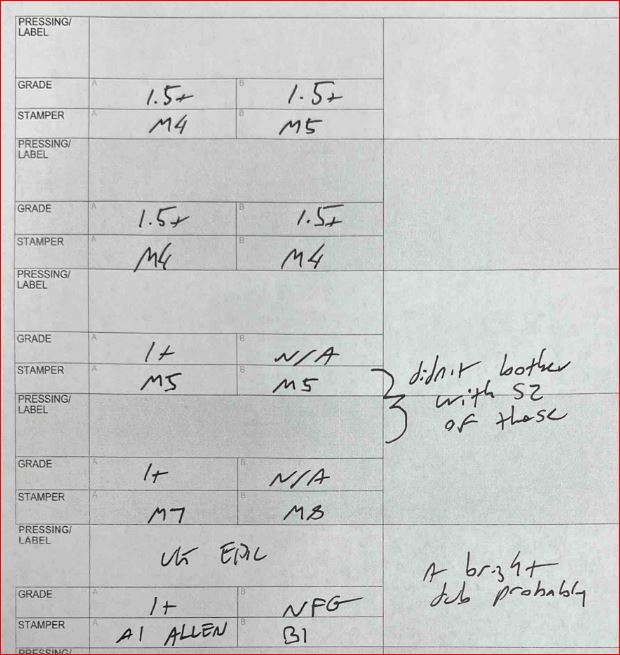
Monarch is responsible for the mediocre-at-best sound of the pressings with the stampers you see above. We tend to like Monarch pressings as a rule, but sometimes they mess up, and they messed up Tapestry compared to others who pressed the record.

We liked all the other copies with other stampers better than than these, which just goes to show you can never know how good it can get until it gets that good. That is what shootouts allow us to do.

Playing close to twenty copies of Tapestry in a shootout allows us to grade Tapestry on a scale, with the M stampers filling out most of the bottom and the other stampers — wouldn’t you like to know which ones! — occupying the middle and the top of the distribution. 

This is what the forum posters fail to understand. They think they have a Hot Stamper when what they actually have (maybe!) is a good sounding record. They don’t know how amazing the record can sound — so much more amazing than the one they own, probably — so they assume they have something good, maybe even the best.

They probably do not, but who really knows? The shootout would supply the data they need to support their conclusions, and since they could not be bothered to conduct one, they have no data to back up their opinions.

The “probably” you see in the above two sentences is there for a good reason. We make a point of being clear about what we can know and we cannot know, and we cannot know what a record sounds like until we play it.

This is obviously true for those of us who try to listen as critically as possible, but we also know that it is just as important to think about records the right way.

(more…)

Our Old Prediction for LSC 2563 Came True

Hot Stamper Pressings that Feature the Violin

Many years ago we wrote:

This is a very old review and it’s doubtful we would not prefer the right Shaded Dog pressing these days.

That turned out to be the case, as we had two late-label 70s Red Seal pressings in the shootout we just did and only one of them was even passable.

A few things about the new pressings and the old commentary caught my eye.

First off, 3s is a fairly low number. The Shaded Dogs that win the shootout must be lower, which means they are either 1s or 2s. Not much to choose from there!

Secondly, the commentary you see below goes into great detail regarding what each piece found on the pressing was doing right and wrong.

It makes us sound like we knew what we were talking about when it came to this specific Red Seal pressing of the album we had played.

I assure you that we did not.

On the web I come across lots of reviews for audiophile pressings in which the writers go on for page after page about how much better the new Heavy Vinyl pressing is compared to the old record the reviewer owns.

This is no longer hard for me to understand. They are simply as lost as I used to be.

(more…)

These Are Just Some of the Stampers to Avoid on Catch Bull at Four

More of the Music of Cat Stevens

The domestic pressings of Catch Bull at Four with the stampers shown below, and others similar to them, have not done well in our shootouts for years now. If you own a copy with these stampers, or ones like them, the good news is that we can get you a much better sounding copy of Catch Bull at Four than you have ever heard.

Stamper numbers are not the be-all and end-all in the world of records, a subject we discuss below, but after hearing too many copies with these stampers and decidedly mediocre sound, from now on we are going to focus our attention on the stampers that do well and leave copies with these markings sitting in the bins.

When it comes to stampers, labels, mastering credits, country of origin and the like, we make a point of revealing very little of this information on the site, for a number of good reasons we discuss here.

The idea that the stampers are entirely responsible for the quality of any given record’s sound is a mistaken idea, and a rather convenient one when you stop to think about it. Audiophiles, like most everybody else on this planet, want answers.

(more…)

This Living Stereo from 1958 Didn’t Make the Grade

Hot Stamper Pressings of Living Stereo Records Available Now

Our notes for this copy of LSC 2177 read “blary, bright, not nearly as good as Anserment’s recordings,” which are the ones we compared it to, both the complete ballet and the highlights.

In other words, it just sounded like an old record.

If you are looking for a top quality pressing with a performance to match, we recommend two:

  1. The complete ballet on three discs with Anserment conducting, and/or
  2. The highlights, on a single disc, again with Ansermet conducting.

This Shaded Dog might be passable on an old school audio system, but it was unpleasant when played on the high quality modern equipment we use.

There are quite a number of other vintage classical releases that we’ve run into over the years with similar shortcomings. For fans of vintage Living Stereo pressings, here are some to avoid.

(more…)