Testing String Tone – Pop, Jazz, etc.

Records that Are Good for Testing String Tone and Texture – Pop, Jazz, etc.

Lincoln and Doug Produced The Audiophile Sgt. Pepper of Its Day

Hot Stamper Pressings of the Music of Lincoln Mayorga Available Now

When I was selling audio equipment back in the 70s (Audio Research, Fulton speakers), The Missing Linc this was a favorite Demo Disc in our store.

With a big speaker like the Fulton J, the bass drum at the end of track two would shake the walls. At the time I had never heard a record with bass that went remotely that deep. (The album came out in 1972. I’m guessing I probably first heard a copy in ’75 or ’76 when I bought my Fultons, which would have been sometime in my early twenties.)

Every bit as amazing to me was the string quartet on side 2. You could actually hear the musicians breathing and turning the pages on their music stands, just as if you were actually in their “living presence.” No recording I had ever owned allowed me to hear that level of natural detail.

This is one of the albums that made me realize how good audio in the home could be.

(more…)

The Strings on this Album Are a Tough Test

jobimthecomposerHot Stamper Pressings of the Music of Antonio Carlos Jobim Available Now

Credit engineer Phil Ramone for correctly capturing the sound of every instrument here: the guitars, piano, flutes, strings, drums, percussion instruments — everything has the natural timbre of the real thing.

I used to think this recording erred on the bright side, but not the Hot Stamper copies. They are tonally right on the money.

When the balance lacks lower midrange, the sound can get lean, which causes the strings to seem brighter than they really are, a not uncommon problem with some of the pressings we heard.

We had quite a batch of these to play, including imports, originals, reissues (all stereo), and one lone mono, which was so ridiculously bad sounding we tossed it right out of the competition and into the trade pile.

For those of you playing along at home, we are not going to be much help to you here in finding your own Hot Stampers. Every version had strengths and weaknesses and all are represented in the three listings we are putting up today.

The sound of this side one blew our minds — no other copy could touch it. So open and airy, yet with real weight to the piano and a clear and strong bass line, this copy did EVERYTHING right.

The strings are very much part of the ensemble on this album, and getting good string tone, with just the right rosiny texture, the least amount of smear, freedom from shrillness or hardness — this is not easy to do. 

Side two was quite good at A+ to A++, but we found other copies that bested it, including one Triple Plus that was in a league of its own. Even so, this copy on side two would be hard to beat without a number of carefully cleaned pressings to choose from. 

Here are some records we’ve discovered that are good for testing string tone and texture.

Here are some records we’ve discovered that are good for testing midrange tonality.

(more…)

The Strings on Elton John’s Second Album Are a Tough Test

Hot Stamper Pressings of the Music of Elton John Available Now

What’s especially remarkable about this album is the quality of Paul Buckmaster‘s string arrangements. I don’t know of another pop record that uses strings better or has better string tone and texture. Strings are all over this record, not only adding uniquely interesting qualities to the backgrounds of the arrangements but actually taking the foreground on some of the songs, most notably Sixty Years On.

When the strings give in to a lovely Spanish guitar in the left channel (which sounds like a harp!) just before Elton starts singing, the effect is positively glorious. It’s the nexus where amazing Tubey Magical sound meets the best in popular music suffused with brilliant orchestral instrumentation. Who did it better than The Beatles and Elton John? They stand alone.

Correct string tone and texture are key to the best-sounding copies. The arrangements are often subtle, so only the most transparent copies can provide a window into the backgrounds of the songs that reproduce the texture of the strings.

Without extension on the top, the strings can sound shrill and hard, a common problem with many pressings.

Without a good solid bottom end, the rockers (“Take Me to the Pilot”) don’t work either of course, but you can even hear problems in the lower strings when the bass is lightweight.

String tone on a pop record is a tough nut to crack, even more so on a record like this where the strings play such a prominent role. It’s the rare copy that allows you to forget the recording and let you just enjoy the music.

For that you really need a Hot Stamper.

These Are Some of the Qualities We’re Listening For on Elton’s Albums

There are probably closer to a dozen, but some of the more important ones would be these:

(more…)

1962 Tubes and The Sound That’s Been Lost for Fifty Years

Hot Stamper Pressings of Pop and Jazz Vocal Albums Available Now

UPDATE 2025

This review was written many years ago, circa 2010 I would guess, right about the time we first started doing shootouts for the album. (Here is what we have to say about I Left My Heart in San Francisco these days, suspiciously similar to what we had to say in 2010. As the song says, ‘”The fundamental things apply…”)


Everything that’s good about All Tube vocal recordings from the 50s and 60s is precisely what’s good about the sound of this record.

The huge studio the music was recorded in is captured faithfully on this pressing. The height, width and depth of the staging are extraordinary, a true Demo Disc in that regard.

We are not big soundstage guys here at Better Records, but we can’t deny the appeal of the space to be found on a record that sounds as good as this one does.

Transparency and Tubey Magic are key to the sound of the orchestra and you will find both in abundance on these two sides.

(Other records that are good for testing those two qualities can be found here and here.)

Albums such as this live and die by the quality of their vocal reproduction. On this record Mr. Tony Bennett himself will appear to be standing right in your listening room, along with the 38 other musicians from the session. (Actually, come to think of it, they’re probably sitting.)

On the best pressings, the space of your stereo room will seem to expand in all directions to accommodate them — an illusion of course, but nevertheless a remarkably convincing one.

(more…)

God Bless the Child Has Some of Don Sebesky’s Best Arrangements

Hot Stamper Pressings of the Music of Kenny Burrell Available Now

This is one of our favorite orchestra-backed jazz records here at Better Records. A few others off the top of my head would be Wes Montgomery’s California Dreaming (1966, also Sebesky-arranged), Grover Washington’s All the King’s Horses (1973) and Deodato’s Prelude (also 1973, with brilliant arrangements by the man himself).

On a killer copy like this the sound is out of this world. Rich and full, open and transparent, this one defeated all comers in our shootout, taking the Top Prize for sound and earning all Three Pluses.

What’s especially notable is how well recorded the orchestra’s string sections are.

They have just the right amount of texture and immediacy without being forced or shrill. They’re also very well integrated into the mix. I wouldn’t have expected RVG to pull it off so well — I’ve heard other CTI records where the recording quality of the orchestration was abominable — but here it works as well as on any album I know.

[Or maybe I just had a bad pressing of a very good recording!]

Both sides impressed us with their deep, wide soundstaging and full extension on both the top and the bottom.

The bass is deep and defined; the tonality of the guitar and its overall harmonic richness are right on the money.

The piano has the weight and heft of the real thing.

This kind of warm, rich, Tubey Magical analog sound is gone forever. You might have to go all the way back to 1971 to find it!

Watch out for some of the later pressings, even the later ones still mastered by Rudy Van Gelder. A case in point:

VAN GELDER in the dead wax is no guarantee of high quality sound, on any record.

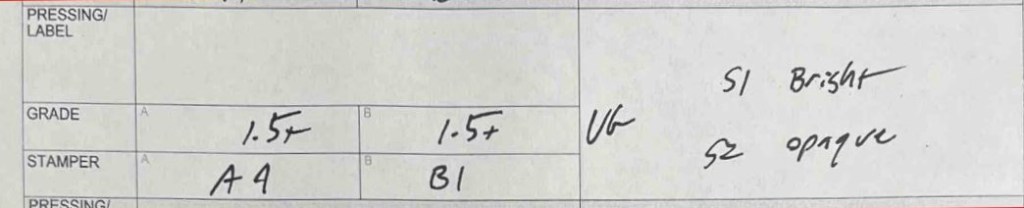
Side one of this original pressing with later stampers was bright and side two opaque. This pressing was not awful, or even mediocre — the reissues without VAN GELDER in the dead wax would most likely be much worse sounding, we stopped buying them years ago — but at 1.5+ we would say these grades point to the sound is good, not great.

The only way to guarantee higher quality sound is to put the album through a shootout with a good-sized pile of cleaned pressings and find the one that sounds the best using the rigorous testing methodologies we recommend. For this kind of work to be meaningful and reproducible, top quality playback is a must.

There is of course a way to avoid doing all that work and spending all the kind of money it takes to acquire piles of pressings — most of which you will eventually have no use for — and that’s to buy a Hot Stamper copy of the album from us.

The Music

The high point for side one is clearly the first track. It’s got a Midnight Blue relaxed groove going on, the kind that Kenny Burrell seems to be able to bring to any session he plays on. Or maybe it’s the rhythms Ray Barretto works out in the songs that make them so relaxed and swinging at the same time.

Side two is magical from start to finish. The two extended songs, both more than eight minutes in length, leave plenty of room for the band — and the orchestra! — to stretch out.

(more…)

It’s the Rare Yellow Submarine that Sounds Anything Like This One

Hot Stamper Pressings of the Music of The Beatles Available Now

Here is how we described our best copy of Yellow Submarine from the last shootout:

Boasting two KILLER Shootout Winning Triple Plus (A+++) sides, this vintage UK copy could not be beat.

Without a doubt the hardest single side of any Beatles album to find with good sound is side two of Yellow Submarine, and here’s a copy that is as good as it gets.

The only place to find the all-time classic “Hey Bulldog,” as well as “All Together Now” and “It’s All Too Much.” In addition, “All You Need Is Love” debuted in a true stereo mix on this album.

My favorite lines from the notes for the notoriously difficult-to-get-to-sound right side two:

  • Big and clear and 3-D for this
  • Nice string texture — sweet and rich for once

You do the best you can with what you have to work with, and normally side two of this album does not give you much to work with, as most copies are thin sounding and have screechy strings.

One or two out of ten copies — and of course we are only talking about the real vintage UK pressings, nothing else is worth bothering with — will get the strings right on side two. That makes side two a good test for string tone in our book, especially for those of you who don’t have any of our Hot Stamper orchestral pressings.

This is a very difficult album to find good sound for; many pressings are almost unbearably gritty and harsh. Fortunately, these two sides have no such problems. The overall tonality is rich and full-bodied, and there’s plenty of presence and energy as well.


A Tough Title to Play

Side two of this recording, the orchestral side, ranks high on our difficulty of reproduction scale. Do not attempt to play it using any but the best equipment.

It took us a long time to get to the point where we could clean the record properly, twenty years or so, and about the same amount of time to get the stereo to the level it needed to be, involving many of the revolutionary changes in audio we discuss at great length on the blog.

As we’ve said before about these kinds of recordings, they are designed to bring an audio system to its knees. If you have the kind of big system that a record like this demands, when you drop the needle on the best of our Hot Stamper pressings, you are going to hear some amazing sound.

This is a record that’s going to demand a lot from the home audio enthusiast, and we want to make sure that you feel you’re up to the challenge. If you don’t mind putting in a little hard work, here’s a record that will reward your time and effort many times over, and probably teach you a thing or two about tweaking your gear in the process (especially your VTA adjustment, just to pick an obvious area most audiophiles neglect).

(more…)

Belafonte at Carnegie Hall – Key Tracks for Side One

Hot Stamper Pressings of Pop and Jazz Vocal Albums Available Now

Harry Pearson brought this record to the attention of audiophiles with his TAS list a long time ago, and rightfully so: it’s an amazing recording.

We happen to love the music too, which makes it one of the most recommendable records we have ever offered. If you can find a better combination of demo disc sound, with music worth the hassle and expense of reproducing it properly, more power to you. We sure can’t.

Because this is a live recording, because it has lots of natural instruments as well as a vocal, because it was recorded in the Golden Age by one of the greatest labels of all time, RCA, by Bob Simpson no less — for this and many other reasons, it has to be considered one of the most amazing recordings in the history of the world.

That said, it is our contention (and the basis of our business model) that the brilliant quality of the recording can only be appreciated if you have the pressing that captured the sound that the engineers recorded. In other words, a Hot Stamper.

From an audiophile point of view, you get to hear live musicians and all the energy they bring to this music, all on the stage at the same time: strings, brass, percussionists, and Harry Belafonte front and center. Tube mics (and not too many of them), a tube tape recorder, RCA’s superb engineering and all-tube mastering chain ensure that the “breath of life” is captured intact.

I know of no better live popular vocal recording on the planet.

Side One

Introduction
Darlin’ Cora
Sylvie 

This is a wonderful song, sung by Belafonte with virtually no accompaniment. His voice should be rich and full-bodied with plenty of presence. In other words, he should sound like a living, breathing person.

Cotton Fields 

The liner notes say this song was introduced in the previous year in Las Vegas. Before I read that I noted that the uptempo arrangement had a jazzy feel to it. The walking bass is well up in the mix and the piano and a few of the other instruments in the song are well behind — it’s pretty much Belafonte and bass. The bass is deep and very note-like.

This is of course a big system record. Do not expect good results from small speakers.

But what makes this one of the best Demo Quality tracks on the album is Belafonte’s amazingly energetic performance. He really sells this song.

As I was listening to the dynamics on the best pressings, it made me think about all the compressed-to-death vocals that are so much a part of the recording style of the modern era. Nobody gets loud anymore.

Belafonte did back in 1959, and not too many followed him.

(more…)

Three Tracks Are Key on Supertramp’s Fifth Album

Hot Stamper Pressings of the Music of Supertramp Available Now

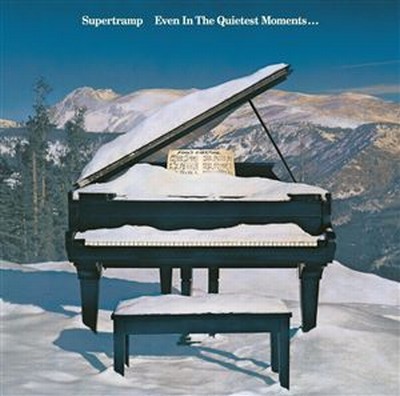
On the best copies of Even in the Quietest Moments the bottom end is big and punchy, the top end smooth and sweet, and the vocals are present and breathy.

If your copy sounds like that, you have the basic ingredients for a Hot Stamper pressing. Now all you need is half a dozen more cleaned copies and you are ready to do a shootout to find out just how good your copy may be.

On an exceptionally transparent copy the drums really punch through the dense mixes that Supertramp and Geoff Emerick favored for the album, giving the music more life and energy. (More of Geoff’s work can be found here.)

Also make sure that the piano sounds solid and clear with little to no smear, and that the sax is full and breathy. These are all critically important to getting the record to sound right, which of course is simply another way of saying getting the music to sound right.

In 2005 we wrote:

This is actually one of Supertramp’s best albums but it’s almost impossible to find a domestic copy that won’t tear your head off. The vast majority of them are unbelievably bright and grainy. I’ve been buying them lately because I found a copy or two that seemed to sound pretty good, but most of my money was wasted on aggressive, noisy vinyl.

Side one of this copy is no great shakes — it’s too bright — but side two is actually quite good. The highs are sweet and silky, there’s plenty of bass and the vocals are actually quite natural sounding. I can’t call this a Hot Stamper. The best way to look at it is to say it’s a Relatively Hot Stamper. The average copy is so bad that when a copy like this one sounds pretty good it really sticks out. We’re still in the hunt but haven’t got much to show for our efforts to date, I can tell you that.

The good news is that ten years later and more copies than we care to remember we think we’ve got EITQM’s ticket. We now know which stampers have the potential to sound good as well as the ones to avoid. Finding the right stampers (which are not the original ones for those of you who know what the original stampers for A&M records are) has been a positive boon.

Once we figured them out we were in a much better position to hear just how well recorded the album is. Now we know beyond all doubt that this recording — the first without Ken Scott producing and engineering for this iteration of the band — is of the highest quality, in league with the best. Until recently we would never have made such a bold statement. Now it’s nothing less than obvious.

Key Tracks for Critical Listening

Give a Little Bit

The piano can get buried in the dense mix. Side ones that are rich and tubey and smooth with a clear piano did very well in our shootout.

Lover Boy

A Demo Quality track on the best copies. It can be huge, spacious and lively.

Getting the strings to sound harmonically rich without sliding into shrillness is not easy but some copies manage it. The breakdown at about 2:20 is a lot of fun on the biggest, richest copies.

From Now On

On side two the recording quality of the solo piano at the start of this track is nothing short of breathtaking.

No piano on any Supertramp album sounds as good, and only the White Hot Stamper pressing will get it to sound its best.

It’s such a well-recorded piano that it will always sound at least good.

Shootouts are the only way to know when it actually sounds its best.

(more…)
Another 30th Street Studio Knockout – This One’s from Tony Bennett

Hot Stamper Pressings of the Music of Tony Bennett Available Now

UPDATE 2018

This review was written many years ago, circa 2010 I would guess, right about the time we first started doing shootouts for the album. (Here is what we have to say about I Left My Heart in San Francisco these days, suspiciously similar to what we had to say in 2010. As the song says, ‘”The fundamental things apply…”)


Everything that’s good about All Tube vocal recordings from the 50s and 60s is precisely what’s good about the sound of this record.

The huge studio the music was recorded in is captured faithfully on this pressing. The height, width and depth of the staging are extraordinary, a true Demo Disc in that regard.

We are not big soundstage guys here at Better Records, but we can’t deny the appeal of the space to be found on a record that sounds as good as this one does.

Transparency and Tubey Magic are key to the sound of the orchestra and you will find both in abundance on these two sides.

(Other records that are good for testing those two qualities can be found here and here.)

Albums such as this live and die by the quality of their vocal reproduction. On this record Mr. Tony Bennett himself will appear to be standing right in your listening room, along with the 38 other musicians from the session. (Actually, come to think of it, they’re probably sitting.)

On the best pressings, the space of your stereo room will seem to expand in all directions to accommodate them — an illusion of course, but nevertheless a remarkably convincing one.

(more…)

Our 2024 Shootout Winner of Mac’s Greatest Hits Was Amazing Sounding

Hot Stamper Pressings of the Music of Fleetwood Mac Available Now

With a KILLER Shootout Winning Triple Plus (A+++) side two mated to a solid Double Plus (A++) side one, this vintage British import is doing practically everything right.

Here are just a few of the things we had to say about this incredible copy in our notes: “big and tubey and weighty”…”lots of space and detail”…”sweet and breathy vox”…”jumping out of the speakers.”

Big, rich, energetic, with an abundance of analog Tubey Magic, this original Orange Label UK pressing has exactly the right sound for this music.

“Oh Well, Parts One and Two,” “Black Magic Woman,” “Man of the World,” and the surprise Number One single “Albatross” are all here and guaranteed to blow your mind.

Peter Green is hands down our favorite British Blues Guitarist of All Time – play this record and you will surely see why we feel that way.

This is a lot of money for a somewhat noisy copy, but the sound is so awesome and quiet pressings of the album so hard to come by that we hope someone will take a chance on it and get the thrill we did from hearing it sound right for once.

We’ve recently compiled a list of records we think every audiophile should get to know, along the lines of “the 1001 records you need to hear before you die,” but with less of an accent on morbidity and more on the joy these amazing audiophile-quality recordings can bring to your life.

If you’re a fan of Fleetwood Mac, this copy is guaranteed to blow your mind. Like all the best vintage British pressings, the sound is smooth, rich and full.

This is Old School ANALOG, baby. They don’t make ’em like this anymore because they don’t know how to.

(more…)