*Our Playback System

Our stereo, along with some occasional advice on how to go about improving the sound quality of any system.

My Stereo from the 70s and the Audio Cult I Was In

Basic Audio Advice – These Are the Fundamentals of Good Sound

A somewhat strange coincidence occurred not long ago. I found an old commentary describing the speakers I used to own, part of a discussion explaining why I have never wanted to settle for small speakers.

At the same time, I saw that a fellow on Audiogon was selling the electrostatic tweeter array for the very same speaker I owned, the RTR 280DR.

Let me tell you, it really took me back; I haven’t seen a pair in over twenty years. The RTR 280DR you see pictured below plays full range, but there is an optional electrostatic tweeter array that is designed to sit on top of it, which provides a radical improvement in the mids and highs. 

The sound of the 280DR with the electrostatic array was dramatically better than any speaker I had ever heard up to that time.

Here is the story from the old listing talking about the RTRs, sparked by a discussion of Demo Discs.

Fooled Again

I was duped into buying my first real audiophile speaker, Infinity Monitors, when the clever salesman played Sheffield’s S9 through them. I desperately wanted sound that incredibly real in my playback system, and so I agreed to buy them then and there.

It was only later when I got home with them that none of my other records sounded as good, or even good for that matter. That was my first exposure to a Direct to Disc recording. To this day I can still picture the room the Infinity’s were playing in; it really was a watershed moment in my audiophile life.

And of course I couldn’t wait to get rid of them once I’d heard them in my own system with my own records. I quickly traded them in for a pair of RTR 280DR’s. Now that was a great speaker! A 15 panel RTR Electrostatic array for the highs; lots of woofers and mids and even a piezo tweeter for the rest. More than 5 feet tall and well over 100 pounds each, that speaker ROCKED.

(more…)

The Townshend Seismic Isolation Platform Is Key to Better Orchestral Playback

Robert Brook has a blog which he calls

A GUIDE FOR THE DEDICATED ANALOG AUDIOPHILE

Below is a review Robert Brook wrote for one of our favorite tweaks. We have most — but not all — of our equipment sitting on one of these stands. We were big fans of the earlier model all the way back in the early 2000s, the kind that had three air bladders inside for isolation. You had to pump air into with a bicycle pump.

Those Cursed Bladders

The unfortunate aspect of that design was the fact that the amount of air in the bladders had a profound effect on the sound quality of the system. We would pump the thing up, and then listen, and if the sound wasn’t right we would let some air out. We would do this a couple of times, and if the sound refused to get better, we would pump the thing up and start the process all over again.

For every shootout.

The air pressure changed during the day with the heat, and the bladders did not hold air all that well, so you had to do a lot of pumping and air releasing if you wanted to get the best sound.

Crazy, huh? And that’s in combination with all the VTA adjustments that were needed for each title.

(more…)

Talisman Testimonial – “… Damn! And to think I doubted you …”

Tom,

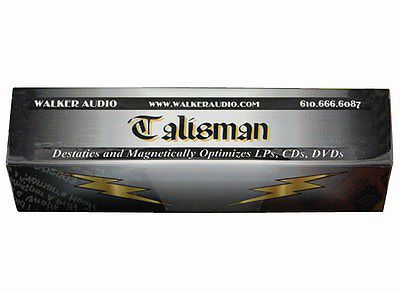
I’m in receipt of the Talisman and have tried it on numerous CDs, LPs and DVDs… damn! And to think I doubted you. A truly serious upgrade without spending serious money. A sheen has been removed from the top and I can hear farther into the recording than ever before, whatever the format. It definitely benefits LP playback more, at least on my system (a Linn rig). Mids are more palpable and instruments play more to their natural voice.

I’m a member of the St. Louis Symphony and recordings that I have participated in sound more like the sound I hear when I’m in the midst of my colleagues on stage at Powell Hall. Thanks for your help.

Tom D.

Tom,

O ye of little faith… Seriously, could you ever be without it now? And the private email I sent you explaining how to get even more out of the device surely meant an even greater improvement in the sound of your system. The kind of change you describe — for a couple hundred bucks! — is practically unheard of nowadays, but of course you heard it, I heard it, everybody hears it. The only people who don’t hear it are the people who are so skeptical that they cannot allow themselves the opportunity to hear it.

This is the kind of thinking that I rather unkindly refer to as Stone Age Audio. If you don’t believe audio has made huge strides in recent years, you simply haven’t taken advantage of the Revolutionary Changes in Audio we talk about on the site. Talisman? Magic Pillow? Hallographs? These things can’t work!

Of course it’s easy to say that if you’ve never heard them, not so easy once you have. If you’re happy with the sound of your stereo, don’t really see the need to make it sound any better, hey, you sure don’t need any of these products.

If, however, you, like us, are THRILLED with the fact that the sound of your favorite recordings is constantly improving, then you need to have a little faith in your friends here at Better Records. We talk the talk because we walk the walk, five days a week and twice on Sunday. My [old] annual tweaking budget is easily in the multi-hundreds of hours; that’s what it takes to make improvements of the kind that we have implemented over the years. With a system like mine, nine out of ten things I try don’t work. It’s that tenth one that makes it all worthwhile.

For our customers, however, we make it so easy. The devices we recommend are guaranteed to work or your money back. They do not require hours of tedious tweaking and listening in search of an appreciable change (that might never materialize). The equipment and sound improving devices we recommend make a DRAMATIC and OBVIOUS change right from the get go.

The only people who don’t know that are the ones who haven’t tried them. Perhaps with a little more faith… (more…)