Record Labels with Shortcomings

Records Like This Make Audiophiles the Laughing Stocks of the Music World

More Reviews and Commentaries for Heavily Processed Recordings

This album has some of the worst sound I have ever heard in my life, worse than The Hunter even, and that’s saying something.

If this kind of crap is what audiophiles choose to play, then they deserve all the derision heaped upon them.

We’re glad we no longer offer embarrassments such as The Well, although we used to, many years ago. In our defense we would simply offer up this old maxim: de gustibus non est disputandum.

Our old slogan was Records for Audiophiles, Not Audiophile Records, but we also followed this business rule: Give the Customer What He Wants.

Now we give the customer what he wants, as long as he wants one of the best sounding pressings of the album ever made. (In this case obviously there is no good sounding pressing.)

How Bad Is It?

If this isn’t the perfect example of a pass/not-yet record, I don’t know what would be.

Some records are so wrong, or are so lacking in qualities that are critically important to their sound — qualities typically found in abundance on the right vintage pressings (although there is no acceptable pressing of this record, vintage or otherwise) — that the defenders of these records are fundamentally failing to judge them properly. We call these records pass/not-yet, implying that the admirers of these kinds of phony-sounding records are not where they need to be in audio yet, but that there is still hope, and if they devote enough time and money to the effort, they can get where they need to be, the same way we did.


(more…)

Speakers Corner Heavy Vinyl and the Loss of Transparency

Hot Stamper Pressings of Classical and Orchestral Music Available Now

We review yet another mediocre Speakers Corner Heavy Vinyl reissue.

We recently gave the Heavy Vinyl pressing from Speakers Corner, the same one that we had previously recommended back in the 90s, a sonic grade of C+. 


UPDATE 2024

Recently in this case means about twenty years ago.


To our ears now it has many more shortcomings than it did back then, which we discuss below.

So often when we revisit the remastered pressings we used to like on Heavy Vinyl we come away dumbfounded — what on earth were we thinking? These are not the droids sounds we are looking for. Perhaps our minds were clouded at the time.

Below are some thoughts from a recent classical listing that we hope will shed some light on our longstanding aversion to the sound of modern remasterings.

What is lost in these newly remastered recordings? Lots of things, but the most obvious and bothersome is TRANSPARENCY.

Modern records are just so damn opaque.

We can’s stand that sound. It drives us crazy.

Important musical information — the kind we hear on even second-rate regular pressings — is simply nowhere to be found. That audiophiles as a whole — including those that pass themselves off as the champions of analog in the audio press — do not notice these failings does not speak well for either their equipment or their critical listening skills.

It is our contention that no one alive today makes records that sound as good as the ones we sell. Once you hear this Hot Stamper pressing, those 180 gram records you own may never sound right to you again. They sure don’t sound right to us, but we are in the enviable position of being able to play the best properly cleaned older pressings (reissues included) side by side with the new ones, where the faults of the current reissues become much more recognizable, even obvious. When you can hear them that way, head to head, there really is no comparison.

A Lost Cause

The wonderful vintage disc we are offering here will surely shame 100% of the Heavy Vinyl pressings ever made, as no Heavy Vinyl pressing — not one — has ever sounded especially transparent or spacious to us when played against the best Golden Age recordings, whether pressed back in the day or twenty years later.


UPDATE 2024

We live and learn. To prove it can be done, here’s one, And we now know of one other. So that makes two.

(more…)

We Review the MoFi Pressing of Let It Be

Hot Stamper Pressings of the Music of The Beatles Available Now

This review was probably written about fifteen years ago, so we can’t say we would agree with the grade we awarded the album at the time.

Sonic Grade: B or B-

Although I haven’t played my copy in quite a while — it might have been as far back as 2007 or 2008 that I last listened to it if memory serves — I recall that it struck me as one of their better titles.

All things considered, it’s actually pretty good, assuming your copy sounds like mine (an assumption we really can’t make of course — no two records sound the same — but for the purposes of this review we’re going to assume it anyway). I would give it a “B” or “B-“.

It can’t hold a candle to the real thing, but at least MoFi didn’t ruin it like they did with so many of the other Beatles albums, especially this ridiculously phony, bright and compressed one.

(more…)

Just Say No to The Yes Album on Rhino

Hot Stamper Pressings of the Music of Yes Available Now

You can find this one in our audiophile record hall of shame, along with almost 300 others that, in our opinion, make a mockery of the term “audiophile record.”

Is it the worst version ever?

Hard to imagine it would have much competition. The CD I own is dramatically better sounding, and it can probably be had for ten bucks or less. (Make sure Joe Gastwirt had nothing to do with whatever version you buy. His stuff is usually no-noised garbage.)

That notorious hack Ron McMaster strikes again.

Rhino Records bills their releases as pressed on “180 gram High Performance Vinyl.” However, if they are using performance to refer to sound quality, we have found the performance of their vinyl to be quite low, lower than the average copy one might stumble upon in the used record bins.

The CD versions of most of the LP titles they released early on are far better sounding than the lifeless, flat, pinched, so-called audiophile pressings they produced starting around 2000.

The mastering engineer for this junk title actually has the nerve to feature his name in the ads for the records. He should be run out of town, not promoted as a keeper of the faith and defender of the virtues of “vinyl.” If this is what vinyl sounds like I’d would have switched to CD years ago.

And the amazing thing is, as bad as these records are, there are people who like them. I’ve read postings on the internet from people who say the sound on these records is just fine. It’s sad.

Their Grateful Dead titles sound as bad as the cheapest Super Saver reissue copies I have ever heard. And those are terrible!

(more…)

Letter of the Week – “I’m hearing things I’ve never heard before. Orders of magnitude better.”

One of our good customers had this to say about some Hot Stampers he purchased recently:

Hey Tom,   

Once again, you folks have proved that your albums are worth EVERY PENNY that you charge for them.

For years, I’ve had a couple of domestic pressings, and a “200 gram Anadisq” MOFI, of ELP’s Trilogy. Always thought the sound was pretty solid.

But I JUST finished spinning the British A+++ pressing I scored from you folks this past week, and OH MY. It absolutely CRUSHES all prior versions. It leaves the MOFI in the DUST. I mean, it’s not even close. Not subtle. Not “Well, if I listen closely, I think I MIGHT hear a difference….”

NO. It’s utterly ridiculous. I’m hearing things I’ve never heard before. Orders of magnitude better.

THANK YOU, for your dedication to optimizing the quality of listening. SUCH a great album – and sound that finally is commensurate to the quality of the musicianship. 🙂

Steve

Steve,

So glad to hear it!

I was selling MoFi records when that pressing of Trilogy came out. What a murky piece of crap that was. The cutting system they were using was a joke, and the one they have now is not much better.

(more…)

Virtuoso Guitar Is Potentially an Awesome Direct to Disc Record

Hot Stamper Pressings of Direct-to-Disc Recordings Available Now
This recording has very little processing or EQ boost, and the studio is somewhat dead sounding (all too common in the late-70s). That combination can mean only one thing: If you don’t play this record loud, it will not sound right. 

The famous Sheffield S9 is exactly the same way. It sounds dead and dull until you turn it up good and loud. When you do, lookout — it really comes alive. The best pressings can sound shockingly like live music, something one just does not hear all that often, even when one plays records all day long as we do.

The snare drum on this copy represents one of the most realistic and dynamic sounding snares I have ever heard. Talk about jumping out of the speakers! If you have plenty of large, fast, powerful dynamic drivers like we do, you are in for a real treat. Track one, side one — lookout!

Our Shootout Winner from Years Ago

As usual, the shootout allowed us to hear what was lacking on side two.

Side One

A+++ As Good As It Gets sound from top to bottom. No copy was as transparent, lively or high-rez. No copy actually did ANYTHING better, which is unusual. The distortion level is close to zero on this one. The louder you play it the better it sounds.

Side Two

With a grade of A Double Plus this copy was close to the best, falling a bit short in the area of upper midrange presence and top end. Still, there’s lots of space, the cello sounds full and rich, as does the guitar, and none of the plucked instruments suffer from smear at all.

A great side, just a bit dark compared to the very best.

(more…)

Jack Sheldon / Unreleased UHQR Test Pressing

More Hot Stamper Pressings of Digital Recordings with Audiophile Quality Sound

UPDATE

We reviewed this album in 2007, which was a long time ago, so please take that into consideration when reading this review.


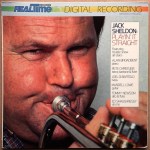
This is a practically brand new UHQR JVC test record.

I’m SHOCKED at how good this record sounds.  It has AMAZING live-in-the-studio jazz sound.

(more…)

Getting Fooled, or Fooling Yourself?

Basic Concepts Every Audiophile Should Understand
This excerpt is from a longer commentary we wrote in 2022 about the digital step (the horror!) Mobile Fidelity was secretly using to make their so-called One Step pressings.

What follows is one way to look at what happened and who it happened to.

This gentleman you see pictured, a certain Mike Esposito, made a foolish mistake.

He bought into the hype of the Modern Audiophile Remastered Record hook, line and sinker.

Rather than being skeptical, he wanted to believe what they told him.

He did not use his own ears to make judgments, he let others — reviewers, fellow audiophiles, the label itself — tell him what was pure and good.

Now he has learned that he was misinformed by those in whom he placed his trust. Even worse, he was lied to by the label he… is worshipped to strong a word?

He was also misinformed by the audiophile reviewers who should have known something was wrong. Not being able to recognize the shortcomings in the sound of these pressings was entirely predictable, since these reviewers never developed listening skills much better than those of Mr Esposito. (For more on just how out of his depth the man was, click here.)

His world has been turned upside down. But that’s not technically true — it was always upside down.

We know of practically no evidence to support the proposition that this label knows how to make good sounding records.  We wondered how they were still in business and have no expectation of ever getting any answer more helpful than “shut up.” (If you actually have evidence to support any claim you wish to make, we can help you do that.)

Finding good records and being able to reproduce them properly is hard. Perhaps now Mr Esposito is coming to appreciate just how little he knew about either.


UPDATE 2025

Based on the fact that he charges $1.99 per month — I kid you not — to advise his clients which are the best sounding pressings of the albums he auditions, it’s doubtful that he has learned anything from his experience of being fooled by Mobile Fidelity, along with all the other audiophile reviewers who apparently are as easily duped as he is. (Is there any job in the world requiring less in the way of qualifications than “audiophile record reviewer”?)


(more…)

Al Di Meola et al. on Speakers Corner Heavy Vinyl

Sonic Grade: D?

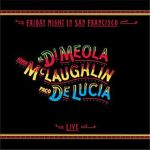
The Speakers Corner remastered Heavy Vinyl pressing of this famous jazz album had two big strikes against it right from the get go. The sound is both congested and hard.

With these guys hell-bent on one-upping each other right off of the stage, even our best Hot Stamper pressings struggle with clarity, transparency and harmonic sweetness

Do you really want to add all the problems of the modern remastered heavy vinyl pressing to a tape that already has plenty of problems to start with?

Congested and hard is the kind of sound Speakers Corner should be quite familiar with by now. You can hear it on plenty of their mostly mediocre-at-best pressings.

Sourced from a digital tape of the master? Maybe, but who cares what tape was used to make this dog?

It’s a loser and should be avoided at any price.

Our Hot Stamper pressings of this album will be dramatically more transparent, open, harmonically-correct, resolving of musical information, clear and just plain REAL sounding, because these are the most obvious areas in which Heavy Vinyl pressings tend to fall short, if our experience with hundreds of them over the last few decades counts for anything.

(more…)

Capriccio Italien on Classic Records and How Badly I Missed the Boat

More of the Music of Peter Ilyich Tchaikovsky

More of the Music of Nikolai Rimsky-Korsakov

Years ago, around 2005 if memory serves, I played a copy of the Classic Records pressing of LSC 2323 and thought it was pretty good.

I thought it was better than the Shaded Dog copies I had compared it to, which, based on hundreds of other Classic Records titles I had auditioned, was unexpected to say the least.

Little did I know that the Shaded Dog pressings on this title are not remotely competitive with the early reissues.

The best of the Shaded Dog pressings we could find, which just happened to have a 1s side one, came in tied for last with the one 70s Red Seal pressing we thought sounded good enough to make the shootout.

(Some inside baseball: most of the Shaded Dogs and Red Seals were needle-dropped, and all but two were eliminated before the shootout. It takes time and wastes money to clean and play pressings that sound hopeless, so a quick elimination round often precedes the cleaning process.)

Back then it was tough to wrap my head around the idea that a Classic Record classical title could actually be better sounding than a Shaded Dog — it had never happened, so I knew there had to be more to the story.

Finding the time to do the serious investigation of LSC 2323 that would be necessary to get to the bottom of it was not in the cards, so I shelved the project for close to the next twenty years.

The title would have to wait until 2024 to go through a proper shooout, and when it did, naturally the Classic was part of the mix, which is the way we do things here at Better Records. Every record gets the chance to show us what it can do, to be evaluated fairly without the listener having any way to know which pressing is playing.

It turns out that side one of the Classic was passable, but side two — the side I had probably never played — was every bit as bad as most of their other classical offerings.

Side One, Second Movement (Tchaikovsky)

  • Big, but bright and compressed
  • Gets loud but opaque and hot
  • Good weight

Side One, First Movement

  • Bright and blurry bells
  • Sort of tubey but a mess
  • Grade: 1+ (passable, but no Hot Stamper)

Side Two (Rimsky-Korsakov)

  • Big but boomy and smeary
  • Brass is edgy and opaque
  • No top end or space
  • Peaks are hot and congested
  • Grade: NFG

To recap: In 2005 I was impressed with Classic’s pressing of LSC 2323. That was only twenty years ago, yet I could not have been more wrong. I thought my stereo was great — I’d owned top quality equipment since 1975 by then — thirty sodding years — so my audiophile credentials would surely dwarf those of the vast majority of forum posters who write about audiophile pressings today. How reliable should we expect their reviews to be?

(more…)