Mercury (Orchestral) – Reviews, Commentaries, Letters, etc.

The Reissues Consistently Beat the Originals on this Mercury

Hot Stamper Pressings of Mercury Classical Records Available Now

For Mercury classical and orchestral recordings, the original FR pressings on the plum label are the way to go, right? 

In some cases, yes. We talk about how much better the FR pressings for The Firebird are compared to the much more common, and still quite good, M2 reissue pressings here.

The stamper numbers you see below belong to a different album.

The notes for the FR original pressings we played read:

  • Less spacious, more bright and flat.

They’re not bad sounding, they’re just not as good sounding as the RFR reissues, which, incidentally, won the shootout.

We’ve lately been giving out much more stamper information than we used to, but we make it a point to never give out the stamper information for our shootout winners, as finding those very special pressings has been the work of a lifetime and is certainly not something that should be given away for free.

Rules of Thumb

It’s just another one of a number of rules of thumb collectors use (“A method or procedure derived entirely from practice or experience, without any basis in scientific knowledge; a roughly practical method”), one that will sometimes lead you astray if what you are trying to find are not just good sounding pressings of albums, but the best sounding pressings of albums.

Same with reissue versus original. Nice rule of thumb, but it only works, to the extent that it works at all, if you have enough copies of the title to know that you’re not just assuming the original is better. You actually have the data — gathered from the other LPs you have played — to back it up.

Who Knew?

Who knew the recording would sound so much better on the right reissue pressings?

Certainly not us, not until we had done the shootout.

The difference between the way we do things and the way others do them boils down to this: We assumed that the original could be the best, and then we tested that assumption and found out we were wrong.

But the right reissues of this Mercury — again not the ones you see pictured — is indeed an exceptionally good sounding record.

This is why we do shootouts, and why you must do them too, assuming that owning the highest quality pressings is important to you.

(more…)

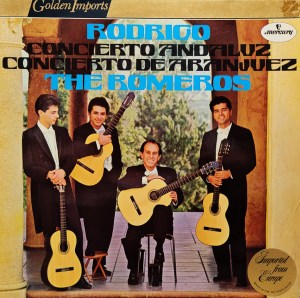
Skip the Later Labels of this Rodrigo Title on the TAS List

More of the music of Joaquín Rodrigo (1901-1999)

This is a TAS list title that deserves its place on a list of Super Discs, as long as you are talking about one that sounds the way the best copies do.

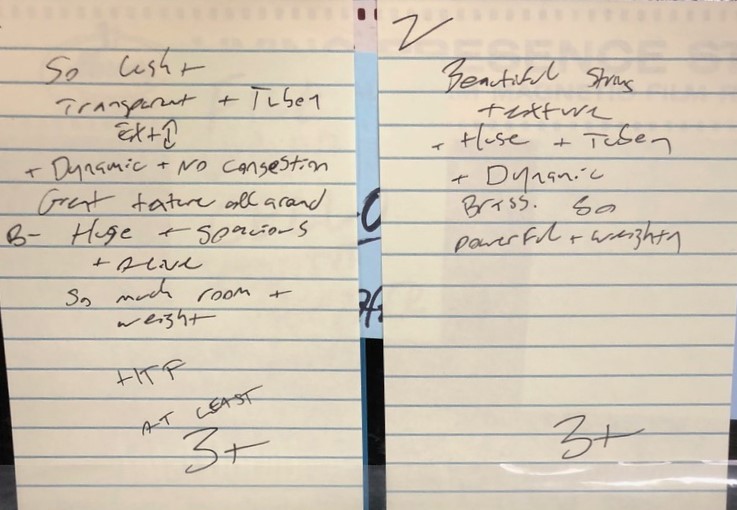
The best sides are exceptionally transparent and full of energy, with the lush strings of the guitars sounding much more textured and real. The orchestra is rich and sweet, especially for a Mercury, yet the guitars are clear, present and appropriately placed relative to the surrounding ensemble.

But all the later label pressings we’ve bought over the years, mostly because we could afford to buy them, hoping for a miracle, have fallen well short of the mark. The notes below tell the story of their typical and obvious shortcomings.

Side One of the most recent late label pressing we played was crude, smeary and hot (bright).

Side Two was even worse, it was very hot (bright).

If you want to avoid records with these problems, click on any of the links below to see the titles we’ve found over the years with the same issues.

(more…)

This Is Why We Love Records from the 50s

Hot Stamper Pressings of Mercury Classical Recordings Available Now

From time to time a record comes our way that sounds absolutely amazing, “I can’t believe it’s a record” amazing.

If it’s the kind of record that sounds like the best copy of Fiesta in Hi-fi from our most recent shootout, we might even let our enthusiasm for its superb fidelity get the better of us. That’s the effect a record as good as the copy we played can have. You just can’t stop yourself from saying one great thing after another about it.

Our over-the-top notes, like those you see below, attempt to convey what it’s like to experience the absolutely breathtaking sound we were hearing.

But where is the harm in that? These are notes that no one outside of the staff are ever expected to see. They are helpful to us in writing our commentary and pricing the specific copy we auditioned, but they are practically never quoted in the listings.

Fiesta in Hi-Fi is an example of one of those recordings that doubles as a thrill ride. They come along from time to time in order to show us the kind of sound that we’d almost forgotten was possible on a record.

Oh yes, with the rare properly-cleaned, properly-mastered, properly-pressed vintage vinyl LP, played back on top quality equipment in a heavily treated, dedicated soundroom, we can assure you it is very possible indeed. Allow us to make the case with the Shootout Winning original pressing you see below.

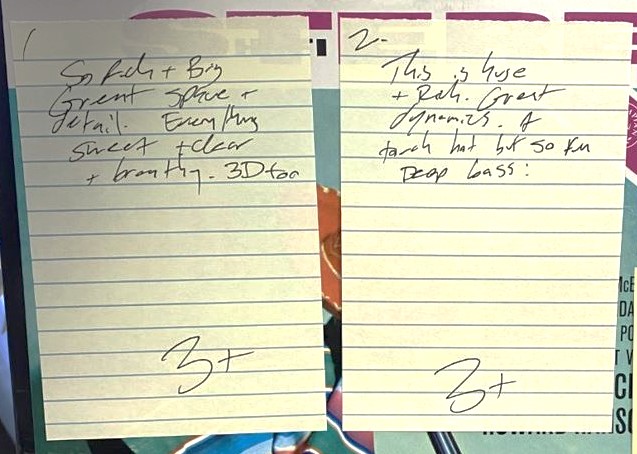
The notes read: 

So rich and big / Great space and detail / Everything sweet + clear + breathy / 3D too / Great dynamics / A touch hot but so fun / Deep bass.

You know what’s unusual about these notes?

(more…)

The Original Mercury Pressings Don’t Sound Good on this Title, But Why?

Hot Stamper Pressings of Mercury Classical Recordings Available Now

For Mercury classical and orchestral recordings, the original FR pressings (when there are such pressings) on the plum label are the way to go, right? 

In some cases, yes. We talk about how much better the FR pressings for The Firebird are compared to the much more common, and still quite good, M2 reissue pressings here.

And the FR pressing of the Rachmaninoff record you see pictured above may indeed have the best sound.
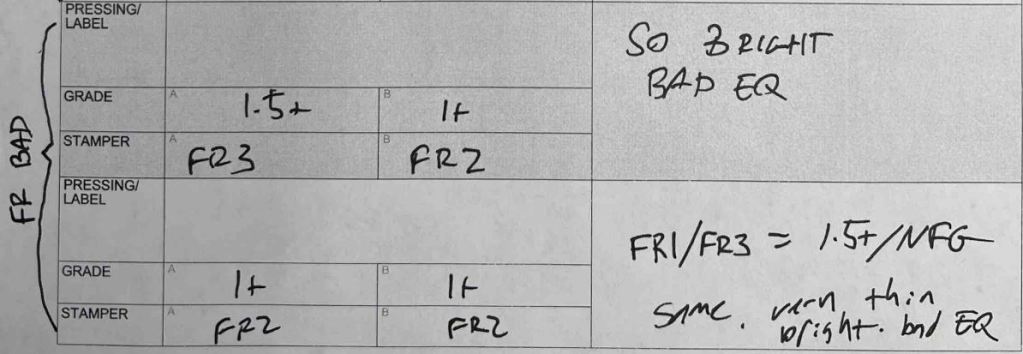

The stamper numbers you see below belong to a different album.

(We’ve lately been giving out much more stamper information than we used to, but for now we are keeping this title closer to the vest.)

Note that we had FR1, FR2 and FR3, all originals, yet none of them could be considered good enough to offer our customers.

It’s just another one of a number of rules of thumb collectors use (“A method or procedure derived entirely from practice or experience, without any basis in scientific knowledge; a roughly practical method.”), one that will sometimes lead you astray if what you are trying to find are not just good sounding pressings of albums, but the best sounding pressings of albums.

Same with reissue versus original. Nice rule of thumb, but it only works, to the extent that it works at all, if you have enough copies of the title to know that you’re not just assuming the original is better. You actually have the data — gathered from the other LPs you have played — to back it up.

Who knew the recording would sound so much better on the right reissue pressings?

(more…)

And to Think I Used to Like this Strauss Record

Hot Stamper Mercury Pressings Available Now

I used to like this Strauss Family Album back in the old days. Picked them up whenever I saw them, usually for ten bucks or less. They’re fairly common. It’s not exactly HiFi a la Espanola.

Now when we play this Mercury, it doesn’t sound so good. We traded what we had in stock back to stores or gave them away as freebies to our good customers.

A lot of records that I used to like because they were cleaner and brighter — later Red Seal Living Stereos, some OJC jazz, some reissues of rock — sounded much better when my system was darker and less revealing.

Side one of this copy has steely strings, the kiss of death on this kind of music.

Side two is passable, a low grade Hot Stamper. If you see this album for five bucks, pick it up and give it a listen. More than that and you should probably pass.

Many Mercury records simply do not sound good, and this appears to be one of them. The sound is  shrill, and that is just not acceptable on today’s highly-tweaked stereos.

Some of the early Mercs seem better suited to the old school audio systems of the 60s and 70s than the modern systems of today.

Some of these records used to sound good on those older systems, and I should know. I had an Old School stereo and some of the records I used to think sounded good back in the day don’t sound too good to me anymore.

For a more complete list of those records, click here.

How Did We Figure All of This Out?

There are more than 2000 Hot Stamper reviews on this blog. Do you know how we learned so much about so many records?

Simple. We ran thousands and thousands of record experiments under carefully controlled conditions, and we continue to run scores of them week in and week out to this very day.

(more…)

Dorati and Mercury Did Not Produce a Good Sounding Eroica

More of the Music of Ludwig van Beethoven

The sound of this 1959 Mercury recording was unacceptable. SR 90011 was crude and shrill. It seems that many early Mercury recordings suffer from these shortcomings.

Our favorite Beethoven 3rd for sound and performance is the one Solti recorded for Decca in 1959.

1959 just happens to be one of the truly great years for quality analog recordings, as can be seen from this amazing group of albums, all was recorded or released that year.

This Mercury might be passable on an old school system, but it was too unpleasant to be played on the high quality modern equipment we use.

There are quite a number of others that we’ve run into over the years with similar shortcomings. Here they are, broken down by label.

  • London/Decca records with weak sound or performances
  • Mercury records with weak sound or performances
  • RCA records with weak sound or performances

Have You Noticed…

If you’re a fan of Mercury Living Presence records — and what right-thinking audiophile wouldn’t be? — have you noticed that many of them, this one for example, don’t sound very good?

If you’re an audiophile with good equipment, you should have.

But did you? Or did you buy into the hype surrounding these rare pressings and just ignore the problems with the sound?

There is plenty of hype surrounding the hundreds of Heavy Vinyl pressings currently in print. I read a lot about how wonderful their sound is, but when I actually play them, I rarely find them to be any better than mediocre, and most of them are downright awful.

It seems as if the audiophile public has bought completely into the hype for these modern Heavy Vinyl pressings. Audiophiles have too often made the mistake of approaching these records without the slightest trace of skepticism. How could so many be fooled so badly? Surely some of these people have good enough equipment to allow them to hear how bad these records sound.

I would say Mercury’s track record during the ’50s and ’60s is a pretty good one, offering (potentially) excellent sound for roughly one out of every three titles or so.

But that means that odds are there would be a lot of dogs in their catalog. This is definitely one of them.

To see the 50+ Living Presence classical titles we’ve reviewed to date, click here.

(more…)

Compromised Recordings and the Rapture of the Purely Musical Experience

Hot Stamper Classical and Orchestral Pressings Available Now

The best classical recordings of the ’50s and ’60s, like the wonderful Mercury you see pictured, were compromised in every imaginable way.

Yet somehow they manage to stand head and shoulders above virtually anything that has come after them. How is that possible?

Well, having taken advantage of scores of revolutionary changes in audio that have come to pass since those days, finally we can hear them in all their glory on the kind of high quality playback equipment that exists today.

The music lives and breathes on those old LPs. Playing them you find yourself in the Living Presence of the musicians. You become lost in the performances captured in the grooves of these old records.

Whatever the limitations of the medium, they seem to fade quickly from consciousness. What remains is the rapture of the musical experience.

That’s what happens when a good record meets a good turntable.

We live for records like these. It’s the reason we all get up in the morning and come to work, to find and play good records. It’s what this site is all about — offering the audiophile music lover recordings that provide real musical satisfaction. It’s hard work — so hard that nobody else seems to want to do it — but the payoff makes it all worthwhile. To us anyway. Hope you feel the same.

The One Out of Ten Rule

If you have too many classical records taking up too much space and need to winnow them down to a more manageable size, pick a composer and play half a dozen of his works.

Most classical records display an irredeemable mediocrity right from the start; it doesn’t take a pair of golden ears to hear it.

(more…)

The Said and the Unsaid – The Firebird on Mercury

Hot Stamper Pressings of the Music of Igor Stravinsky Available Now

For our shootout years ago of The Firebird we had three minty, potentially hot copies of the Mercury with Dorati, as well as our noisy ref. (We have a noisy reference copy for just about every major title now. We have been doing these shootouts for a very long time. After thirty years in the record business we have accumulated a World Class collection of great sounding records that are just too noisy to sell.)


UPDATE 2024 

This is no longer true. Our customers seem to be able to put up with surface noise on the records we offer if the price is low enough. Not actually low, just low enough. We have a section for records with condition issues, and there are 175 entries in it as of today, which turns out to be more than a quarter of all the Hot Stamper pressings on the site as a matter of fact.


We had one FR pressing and two of the later pressings with the lighter label, the ones that most often come with Philips M2 stampers. This is how we described the winner:

So clear and ALIVE. Transparent, with huge hall space extending wall to wall and floor to ceiling. Zero compression.

Lifelike, immediate, front row center sound like few records you have ever heard.

Rich, sweet strings, especially for a Mercury. This side really gets quiet in places, a sure sign that all the dynamics of the master tape were protected in the mastering of this copy.

What we didn’t say — and what we never say in the listings — is what the second tier copies didn’t do as well as the shootout winner.

We used to. When you read the older entries, most of the time they mention the shortcomings that caused one side or another to be downgraded by some amount, usually something like a half to a full plus.

Not all the top end, not all the bass, not as present, slightly smeary, slightly congested — the list of potential faults for any given pressing is long indeed. These are all the problems we listen for and it’s the rare copy that doesn’t suffer from one or more of them.

We decided years ago that it was better just to let you hear the two sides of the record for yourself and make your own judgments about the sound, rather than make clear to you what areas we felt needed improvement.

Consider this example. If on our system the bass was lacking compared to the very best, perhaps on your system the bass was fine, not an issue, good enough. Without the top copy to compare yours to, how would you know how much better the bass could possibly be?

A classic case of “compared to what?

Shootouts are the only way to answer that question, which, as we never tire of saying, is THE most important question in all of audio. This is why we do shootouts, and why you must do them too, if owning the highest quality pressings is important to you.

Click on the following link to see more records for which we’ve detailed the strengths and weaknesses of a specific copy.

What We Heard on The Firebird

With all that in mind, only the Triple Plus (A+++) copy, as described above, did everything right.

There were two Double Plus (A++) copies, and each of them fell short in different ways.

(more…)

Offenbach & Strauss – A Waste of Money on the Mercury Original

More of the Music of Jacques Offenbach (1819-1880)

This lovely Mercury boasts one of the greatest performances of the piece ever recorded. 

Dorati is surely The Man when it comes to energy, drive and dynamic excitement with this venerable warhorse. He and his Minneapolis Symphony play the hell out of this boisterous music, and luckily for us audiophiles, the Mercury engineers give us Demonstration Quality Sound to go with it.

But not on the original pressing.

The original Mercury release of this record (90016) is a shrill piece of trash, as is the Mercury Wing pressing. So many of the early Mercurys were poorly mastered it seems.

We used to really like the Golden Import reissue, but that was years ago. Not sure how we would feel about it now.

Our current favorite performance of The Gay Parisian is this one on, gulp, Readers Digest.

(more…)

Rachmaninoff / Piano Concerto No. 3 – Years Ago We Liked a Mono Pressing

Hot Stamper Mercury Pressings Available Now

CBFR-1/CBFR-2. This Mono pressing sounds SUPERB, much smoother and more natural than I remember the Stereo pressings sounding. What’s interesting about these Monos is they’re not mastered by Robert Fine. They are mastered by someone with the initials J.J., who apparently does all the Mono mastering. The reason Mercury Monos can sound as good as they do is because they have their own separate microphone feed and their own separate Mono tape recorder dedicated all to themselves. (London did the same thing and that’s why so many London Monos are amazing sounding.)

I don’t think you can find a better sounding Rachmaninoff 3rd on Mercury than this one. 

[UPDATE: Of course we no longer agree with that.  The best stereo copies are in an entirely different league. The mono can be good, but it cannot be great in the way the stereo pressings can be.] (more…)