Folk Rock – Reviews and Commentaries

Listening for Harmonically Correct Acoustic Guitars on America’s Debut

More of the Music of America

The guitars on this record are a true test of stereo fidelity. As it says below, most of the pressings of this record do not get the guitars to sound right. They often sound veiled and dull, and on a copy with a bit too much top end they will have an unnatural hi-fi-ish sparkle.

This kind of sparkle can be heard on many records Mobile Fidelity made in the ’70s and ’80s. Tea for the Tillerman, Sundown, Year of the Cat, Finger Paintings, Byrd at the Gate, Quarter Moon in a 10 Cent Town — the list of MoFis with sparkling acoustic guitars would be very long indeed, and these are just the records with prominent acoustic guitars!

Three Roses and Rainy Day

The key song on side one that we use to test is Three Roses. There are three sonically-separated individuals each playing six string acoustic guitars, and when this side is cut right the guitars sound just gorgeous: sweet, with all their harmonic structures intact. (It’s also my favorite song on side one.)

The real test on side two is the song Rainy Day. Lots of guitars, and when the close-miked descending guitar figure comes in after the first few couplets, if it’s too bright, you’re going to know it. This song is the hardest one to cut and almost never sounds right. Some copies are cut JUST RIGHT. The vocals are breathy, the guitars are full-bodied, and the overall sound is airy, open, and spacious.

On the best copies Rainy Day is Demo Disc material — they just don’t know how to make acoustic guitars sound like that anymore. You have to go back to 50-year-old records like this one to find that sound.

Simply phenomenal amounts of Tubey Magic can be heard on every strum, along with richness, body and harmonic coherency, all the things that have all but disappeared from modern recordings (and especially from modern remasterings).

Of course, many 50 year old records are beat to death, and many of them don’t sound any good anyway. It’s no mean feat to find quiet, superb pressings of albums like this, but you can be sure that Better Records is up to the task.

(more…)

Can Chris Bellman Cut Records As Well As Artisan Used to?

Robert Brook has a blog which he calls

A GUIDE FOR THE DEDICATED ANALOG AUDIOPHILE

Robert’s story begins:

Recently a friend and a frequent reader of my website suggested I review the 50th Anniversary Edition of David Crosby’s debut. He’d read my article from a while back in which I made comparisons between two different Hot Stamper copies of the record, and he knew I was a fan the album.

I’m sure he also knew, as any of my regular readers would, that I’m extremely skeptical of modern reissues. You can find many examples on this site of reissues I’ve written about that have failed miserably to impress me. But this friend was pretty insistent that this one, remastered by long time engineer Chris Bellman, was different. He also told me it was on par with original Monarch pressing of …My Name he also owned.

Bellman was responsible for cutting one of the few heavy vinyl reissues that my friend Tom Port has liked and recommended – a European pressing from 2020 of the Dire Straits record Brothers In Arms. Tom likes precious few “audiophile” reissues. He’s mentioned maybe 4 or 5 over the years as being worthy of any consideration. Given that, and the fact that my friend was so insistent, I figured why not give Bellman’s recut of . . .My Name a shot?

Click on the link to read the whole thing. I left some comments at the end you may enjoy reading. I hope to be able to address some of the other issues Robert brings up at a later date.

IF ONLY I COULD REMEMBER MY NAME: 50th Anniversary Edition

If you are interested in picking up an amazing Hot Stamper pressing of the album, we currently (as of 2/24) have some in stock. Click on this link to see what is available: If I Could Only Remember My Name.

On the website, we talk about just how much we love this album:

(more…)

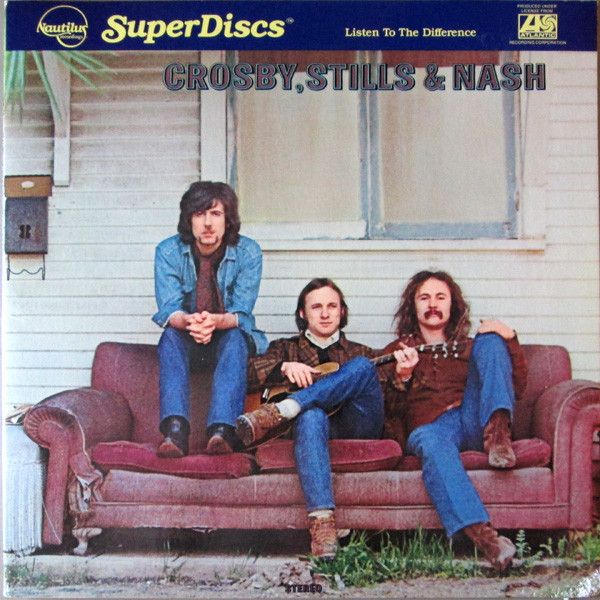
This Nautilus LP Has the Most Bloated, Ill-Defined, Overblown Bass in the Sad, Sordid History of Half-Speed Mastering

More Crosby, Stills and Nash

An audiophile hall of shame pressing and a Half-Speed mastered disaster if there ever was one.

An audiophile record dealer (of course; who else?) once raved to me about Crosby Stills and Nash on Nautilus. I said “What are you talking about? That version sucks!” He replied “No, it’s great. Helplessly Hoping sounds amazing.” 

Now one thing I know about the Nautilus is this: although it is wonderfully transparent in the midrange, it may very well take the cake for the most bloated, out of control bass in the history of Half-Speed mastering.

What song on that album has almost no bass, just lovely voices in the midrange? You guessed it. Helplessly Hoping.

The Nautilus got one track right, and ruined the rest. Using that track for comparison will fool you, and when it comes time to play a side of the album, you will quickly hear what a disaster it is.

Or maybe you won’t. Who else harps on bad Half-Speed Mastered bass outside of those of us who write for this blog? I don’t recall ever reading a word about the subject.

This does not reflect well on the bass response of the modern audiophile stereo. If you would like to improve the bass of your system, the records linked below are good for testing different aspects of bass.

(more…)

Two Minutes that Shook My World – “But I Might Die Tonight”

After building our new studio a few years ago, we soon found out we had a whole host of problems.

We needed to work on electrical issues. We needed to work on our room treatments. We needed to work on speaker placement.

We initially thought the room was doing everything right, because our Go To setup disc, Bob and Ray, sounded super spacious and clear, bigger and more lively than we’d ever heard it. That’s what a 12 foot high ceiling can do for a large group of musicians playing live in a huge studio, in 1959, on an All Tube Chain Living Stereo recording. The sound just soared.

But Cat Stevens wasn’t sounding right, and if Cat Stevens isn’t sounding right, we knew we had a huge problem.

Some stereos play some kinds of records well and others not so well. Our stereo has to play every kind of record well because we sell every kind of record there is. You name the kind of music, we probably sell it.

And if we offer it for sale, we had to have played it and liked the sound, because no record makes it to our site without being auditioned and found to have excellent sound.

But I Might Die Tonight

The one song we played over and over again, easily a hundred times or more, was But I Might Die Tonight, the leadoff track for side two. It’s short, less than two minutes long, but a lot happens in those two minutes. More importantly, getting everything that happens in those two minutes to sound not just right, but as good as you have ever heard it, turned out to be a tall order indeed.

I could write for days about what to listen for in the song, but for now let me just point the reader to one of the most difficult parts to reproduce.

At about 50 seconds into the track, Cat repeats the first verse:

I don’t want to work away
Doing just what they all say
Work hard boy and you’ll find
One day you’ll have a job like mine, job like mine, a job like mine

Only this time he now has a multi-tracked harmony vocal singing along with him, his own of course, and he himself is also singing the lead part louder and more passionately. Getting the regular vocal, call it the “lower part,” to be in balance with the multi-tracked backing vocal, call it the “higher part,” turned out to be the key to getting the bottom, middle and top of the midrange right.

When doing this kind of critical listening we play our records very loud. Live Performance level loud. As loud as Cat could sing, that’s how loud it should be when he is singing his loudest toward the end of the song for the final “But I might die tonight!” If he is going to sing loudly, I want my stereo to be able to reproduce him singing as loud as he is actually singing on the record.

No compression.

No distortion.

All the energy.

Yes, that’s the way I want to hear it!

The last fifteen seconds or so of the song has the pianist (Cat himself) banging out some heavy chords on the piano. If you have your levels right it should sound like there is a real piano at the back of the room and that someone is really banging on it, a powerful coda perfectly fitting for such an emotionally stirring song.

(more…)

Crosby, Stills and Nash – You Do the Best You Can with What You’ve Got to Work With

Hot Stamper Pressings of the Music of Crosby, Stills and Nash Available Now

The founding members of CSN chose the Albert brothers to engineer this 1977 reunion.

Their most famous album is Layla. Ever heard a great sounding Layla? Me neither. Can you hear the sound of Layla in your head? That’s more or less what this album sounds like. There are better and worse Layla’s — we’ve done the shootout many times — just as there are better and worse CSNs, but we have never played amazing Demo Disc pressings of either and I doubt we ever will.

The problem with the sound cannot be “fixed” in the mastering, and here’s how we know: on either side some songs have wonderful sound — the midrange magic, the “breath of life” that makes the first Crosby, Stills and Nash album such a special listening experience — and some don’t.

That’s a recording problem.

It sounds like too many generations of tape were used on songs like Shadow Captain and Dark Star, among others.

But Just a Song Before I Go on side two can sound wonderful: rich, sweet, present and surrounded by lovely studio ambience.

So we listen for the qualities of a specific song that help us pinpoint what the best copies do well and the rest do less well and grade them accordingly, on a curve.

Animals will never sound like The Wall. You do the best you can with what you’ve got to work with.

(more…)

What, You’re Selling Your TAS Super Disc List LPs? Say It Isn’t So!

Hot Stamper Pressings of the Music of David Crosby Available Now

UPDATE 2025

The bulk of this listing was written more than ten years ago and updated last year. Please to enjoy!

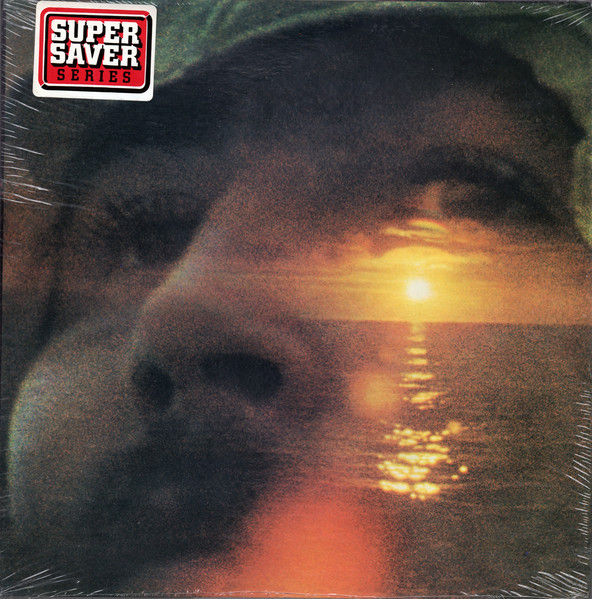
Also, whatever you do, don’t buy the Super Saver pressing of David Crosby’s debut like the one you see pictured, assuming you want to hear the album sound the way it should. Original only, and the right one of course.


We ran across a website years ago that confirmed our worst prejudices regarding audiophiles and their apparent desire to rely on gurus such as Harry Pearson to tell them which recordings sound good and which don’t.

This flies in the face of everything we stand for here at Better Records.

Since no two records sound the same, a list of so-called Super Discs is practically meaningless.

“Practically meaningless” hits the nail right on the head as far as we are concerned.

Picture yourself standing in your local record store with a record in your hands, one you happen to know is on the TAS List. This knowledge makes the record slightly more likely to sound better than any other record you might have randomly picked up in the store. Insignificantly, trivially more likely. In other words, as a practical matter, not all that much more likely.

Why is this? Three reasons:

  1. Many Super Discs are not on the TAS List;
  2. Some of the records on the TAS List are not deserving of Super Disc status; and most importantly,
  3. Most pressings of titles on the TAS List don’t sound especially good — only the right ones do. (I pictured the David Crosby album you see above with the cover you definitely don’t want in order to hammer home that point.)

But that’s not even the point. Ask yourself this:

Why on earth would anyone want to collect the records on The TAS List, when most of those records contain music that appeals to a very small group of people not named Harry Pearson?

(more…)

Letter of the Week – “…they sound WONDERFUL…..no surprise but LOTS of satisfaction!”

More of the Music of  The Grateful Dead

One of our good customers had this to say about some Hot Stampers he purchased recently:

Hey Tom,     

Just got the Fresh Cream and Grateful Dead albums, cranked up the rig and they sound WONDERFUL, no surprise but LOTS of satisfaction! Thanks for your sale to enable this “poor” retired audiophile access to great sound.

Thanks for being such a unique person to have discovered what the audio world never really knew or appreciated or admitted to, and for making it available to others.

Best Regards,

EdZ

Ed,

It was our pleasure.

Thanks for your letter.

Best, TP

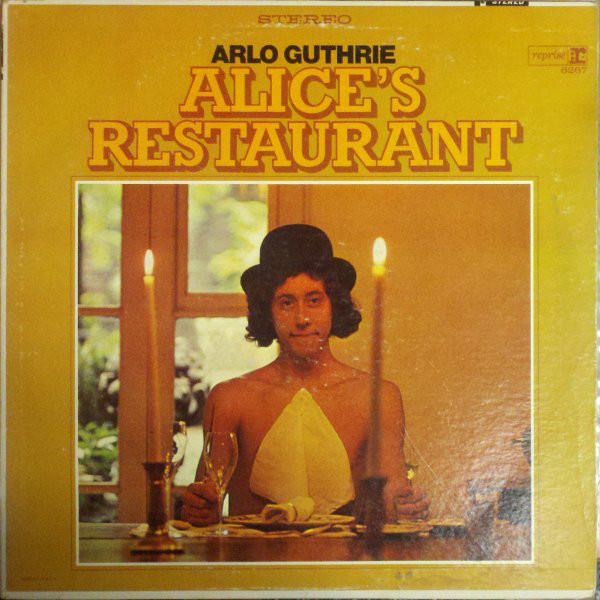
The Tri-Color Pressings Are Hard to Beat on Alice’s Restaurant

More of the Music of Arlo Guthrie

More Hot Stamper Pressings of Classic Debut Albums

This two-tone Reprise stereo pressings of Arlo Guthrie’s classic debut often do well in our shootouts, but the Tri-Color originals are a step up in class, when and if they can be found with quiet enough surfaces.

The originals win the shootouts, but they need to be mastered and pressed right, and cleaned properly, to beat the best of the second pressings.

The originals tend to have exceptionally Tubey Magical sound and it certainly doesn’t take a pair of golden ears to hear it.

The 18 minute plus title song sounds wonderful – natural, Tubey Magical, and tonally correct, as befits any top quality vintage pressing, especially one with Lee Herschberg handling the engineering duties.

As we never tire of saying:

This vintage pressing has the kind of Tubey Magical Midrange that modern records can barely BEGIN to reproduce. Folks, that sound is gone and it sure isn’t showing signs of coming back. If you love hearing INTO a recording, actually being able to “see” the performers, and feeling as if you are sitting in the studio with the band, this is the record for you. It’s what vintage all analog recordings are known for — this sound.

If you exclusively play modern repressings of vintage recordings, I can say without fear of contradiction that you have never heard this kind of sound on vinyl. Old records have it — not often, and certainly not always — but maybe one out of a hundred new records do, and those are some pretty long odds.

(more…)

American Beauty – Barncard Knocked It Out of the Park with This One

More of the Music of The Grateful Dead

The crowning glory of the Grateful Dead, this is their MASTERPIECE. Albums like this come along once in a band’s life — if they’re lucky. This is the zenith of the Grateful Dead. Workingman’s Dead is a good album. American Beauty is a great one.

If you don’t have a killer copy yet, it’s time to get on the bus. Stephen Barncard is the recording engineer responsible for this album, Deja Vu, Brewer and Shipley’s Tarkio, and a host of other amazingly rich, sweet and natural, mostly acoustic recordings that stand head and shoulders above the bulk of their contemporaries. American Beauty is one of them.

All the Elements Come Together for Once

All of the elements necessary to take this music to an entirely new level are here, my friends: smooth, sweet vocals; rich, meaty bass; an open and airy top end; top-notch presence and so forth. The sound is so spacious and transparent that you can easily pick out each of the instruments and follow them over the course of the songs.

The acoustic guitars sound magical on this one, and I can’t believe how wonderful these guys’ voices sound. The Tubey Magic and immediacy on this copy are going to STUN you.

You could choose any track you wanted to and find lovely sound here, but I’d recommend Ripple and Attics Of My Life for starters.

(more…)

On Tarkio, Do All the Robert Ludwig Mastered Copies Have Hot Stampers?

Hot Stamper Pressings of Hippie Folk Rock Albums Available Now

This commentary describes some observations we were able to make after doing a shootout a few years back.

Even though all the original Pink Label pressings are mastered by the great Robert Ludwig, they have a marked tendency to be dull, thick and opaque. Other records we’ve played with these same shortcomings can be found by clicking on the links below.

On too many original pressings, the sound is too smooth.

Starting at some point in the mid-’90s, many Heavy Vinyl pressings started to have the same shortcoming, one that we find insufferable to this day: they are just too damn smooth.

(more…)