Exotica and Easy Listening – Reviews and Commentaries

An Amazing Pressing of Latin Rendezvous – Complete with Notes!

Hot Stamper Pressings of Records from 1963 Available Now

We offered a White Hot stamper copy of this album many years ago, but our customers were not the least bit interested in it at the time, and we suspect that not much has changed since then.

It’s been tagged a never again record, meaning that although we like the music and the sound, we can’t devote the resources — in this case, mostly studio time — to finding top quality copies if there are not going to be any buyers for them.

We think it’s well worth seeking out, and one thing you can be sure of, you won’t have to pay too much for it. If you see one locally on the early label, in stereo, pick it up.

There’s a high probability it will sound at least very good, and you might even luck into one that is downright amazing the way we did, assuming you can clean it right.

More amazing finds like it can be found here.

NOTE: On side two, track three, the initialism ROTM stands for Right On The Money. See if you agree with me that the second track on side one is “kind of dry and thin.”


Our Review

A wonderful Latin jazz collection, with the unbeatable combination of the quintet’s “celebrated piano-vibes, liltingly embellished by Latin percussion and occasional flute.”

“In this collection, you’ll find Latin at its most alluring, as a musical language interpreted by Shearing.”

Clean, clear and dynamic, this copy has huge amounts of bass and tremendous space around the keyboards and percussion.

If you’re a fan of the kind of music Cal Tjader was making in the 60s, this album should be right up your alley. Plenty of Latin Percussion, with vibes and flutes to add color to the proceedings, all anchored by Shearing on the piano.

It’s lounge music but it’s fun lounge music — and it sounds like a very well recorded album from Capitol in 1963 should sound: big and rich.

1963 was a phenomenal year for audiophile quality recordings. We’ve auditioned and reviewed more than a hundred  titles to date, and there are undoubtedly a great many more that we’ve yet to discover.

Some of the best titles released in 1963 can be found here.

This link will take you to the 25+ titles recorded or released in 1963 that we think belong in any music-loving audiophile’s record collection.

(more…)

Discovering Reversed Polarity on Music for Bang, Baaroom and Harp Was a Breakthrough

schorymusic

Percussion Recordings with Hot Stampers Available Now

Music for Bang Baaroom and Harp is yet another one of the pressings we’ve discovered with reversed polarity on some copies. This happened many years ago, and as you can see from the commentary we wrote back then, it came as quite a shock to us at the time.

Are audiophile reviewers or audiophiles in general listening critically to records like this?

I wonder; I could not find word one about any polarity issues with this title, and yet we’ve played four or five copies with reversed polarity on side two. How come nobody is hearing it, apart from us?

We leave you, dear reader, to answer that question for yourself.

This listing has the latest information on the stamper numbers to avoid.

More stamper and pressing information can be found here.

(more…)

What Did Harry Really Know About this Chet Atkins Album?

Hot Stamper Pressings of the Music of Chet Atkins Available Now

You can feel the cool air of the studio the minute the needle hits the groove on this killer copy.

What we are offering here is the superior sounding re-recording from 1961, produced by Dick Peirce.

Chet took the orchestra tapes back to his home studio in 1961 and re-recorded his parts over them, and we think he managed to do a much better job the second time around.

This TAS list recording will have you asking why so few Living Stereo pressings actually do what this one does. The more critical listeners among you will recognize that this is a very special copy indeed.

I suppose we owe a debt of gratitude to Harry Pearson for pointing out to us with his TAS List what a great record this is, although I’m pretty sure anybody playing this album would have no trouble telling after a minute or two that this copy is very special indeed.

The pressing that Harry seems to have preferred — it’s the one recommended on his list, along with the Classic Records repress — is the inferior-sounding original recording, the one with the cover showing a guitar superimposed over the cityscape.

(more…)

Out of Polarity Stampers for Bang-Baaroom Revealed

Reviews and Commentaries for the Music of Dick Schory

Presenting another one of the many pressings we’ve discovered with reversed polarity on some copies.

An amazing discovery from Better Records. Many copies of this album are have their polarity reversed on side two (the side with Buck Dance, one of the better tracks on that side and a great track for testing).

We had two 4s copies of the album and both of them had side two out of polarity.  


UPDATE

7s on side two is out of polarity too.

Just played one today. There’s practically no real top end extension until you reverse the polarity.

(more…)

Bob and Ray Produced Our Favorite Record for Cartridge Setup

Hot Stamper Pressings of Bob and Ray Available Now
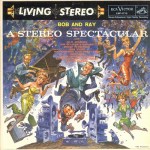
Bob and Ray Throw a Stereo Spectacular just happens to be our favorite Test Disc, eclipsing all others in the areas of naturalness and difficulty of reproduction. Any tweak or new room treatment — we seem to do them almost weekly these days — has to pass one test and one test only — the Bob and Ray Test. 

This record has the power to help you get to the next level in audio like no other.

Six words hold the key to better sound: The Song of the Volga Boatman.

For the purpose of mounting new carts, our favorite track is The Song of the Volga Boatman from LSP 1773. It’s by far the most difficult track we know of to get to sound right.

There are about twenty places in the music that we use as tests, and the right setting is the one that gets the most of them to sound their best. With every change some of the twenty will sound better and some will sound worse. Recognizing when the sound is the biggest, clearest, and most balanced from top to bottom is a skill that has taken me twenty years to acquire.

It’s a lot harder than it looks. The longer you have been in audio, the more complicated it can seem, which may be counterintuitive but comports well with our day-to-day experience very well.

All our room treatments and tweaks must pass The Bob and Ray Test as well. It’s the one record we have relied on more than any other over the course of the last ten years.

Presenting as it does a huge studio full of brass players, no record we know of is more dynamic or more natural sounding — when the system is working right. When it’s not working right the first thirty seconds is all it takes to show you the trouble you are in.

If you don’t have a record like that in your collection, we highly recommend you find one.

It will be invaluable in the long run. The copy we have is so good (White Hot, the best we have ever played), and so important to our operation here, that it would not be for sale at any (well, almost any) price.

The Bob and Ray Trombone / Trumpet Test

One of the key tests on Bob and Ray that keeps us on the straight and narrow is the duet between the trombone and the trumpet about half way through The Song of the Volga Boatman. I have never heard a small speaker reproduce a trombone properly, and when tweaking the system, when the trombone has more of the heft and solidity of the real instrument, that is a tweak we want to pursue.

The trumpet interweaving with it in the right rear corner of the studio tests the transients and high frequency harmonics in the same section. With any change to the stereo, both of those instruments are going to sound different. For a change to be positive they must both sound better.

(more…)

This Buck Dance Had Highs Like No Other

Hot Stamper Pressings of Living Stereo Recordings Available Now

[This review was probably written in 2010 or thereabouts.]

It’s been nearly two years but the waiting is over — we’ve found another copy of the famous Bob and Ray on Living Stereo with DEMONSTRATION QUALITY SOUND! Without a doubt this is the best sound I have ever heard for side one of this album. The sound here is so amazing I’m willing to go out on a limb and make the following recklessly bold statement. Buck Dance on this pressing has the most extended, natural and harmonically correct high frequencies I have ever heard from my speakers (or anyone else’s for that matter). 

And the crazy thing about it is, when played against an actual original pressing of Music for Bang, Baa-room and Harp, this copy, which one would assume is made from a dub, SOUNDS FAR BETTER.

Now of course we don’t have ten copies (or even two copies) of LSP 1866 which would allow us to find one with an even better Buck Dance than the one heard here on Bob and Ray, which means we cannot be definitive in any way about the disparity in sound between the two albums.

We can only judge the records we have in hand, not the ones we might have heard years ago or — even worse — speculate about the sound of records we have not actually played, recently or otherwise.

So we will stick to the facts, and the facts of this side one are that it is ABSOLUTELY AMAZING sounding.

But not perfect. We had three Bob and Rays and one of them was a bit more transparent. One of the them had more deep bass. (That first crack of thunder on side one is an obvious test for bottom end; it can really rattle the room on the right copy.)

So let’s be fair and say that overall this copy earns a grade of A++, having two shortcomings, but that Buck Dance earns a grade of A+++, having NO shortcomings!

(more…)

Making More Progress in Audio

Hot Stamper Pressings of Living Stereo Titles Available Now

The story of our recent shootout is what progress in audio in all about. As your stereo improves, some records should get better, some should get worse. It’s the nature of the beast for those of us who constantly make improvements to our playback and critically listen to records all day.

Courtesy of countless revolutions in audio. (In other words, this list is far from complete.)

In our previous listings we noted:

This is one of those odd records in which the variation in sound quality from track to track is dramatic. Take the first two tracks on side one — they suck. They sound like your average LSP Mancini album, the kind I have suffered through far too many times. And that means bad bad bad. 

But track three boasts DEMO DISC QUALITY SOUND and the next one is nearly as good. Listen to that wonderful glockenspiel. It sound every bit as magical as anything on Bang, Baa-room and Harp, and that’s some pretty magical sound in my book!

Same thing happens on side two. Bad sound for the first tracks, then track four sounds great, followed by a pretty good five and a lovely six with a chorus of voices to die for. Go figure.

Is there a copy that sounds good from start to finish? Doubtful.

We’ve made a dozen or more improvements to the system since we last did this shootout, and I’m happy to report that most of the tracks we had trouble with in the past are now sounding very good indeed. Of course the better tracks we noted from years ago are even better, making this a consistently good sounding Mancini record.

One obvious change from the old days is that we now spend a fair amount of time honing in the VTA for every title. That may account for the fact that the first track on side one, which used to be problematical, now sounds wonderful. The value of getting the correct VTA setting — by ear, for every record — cannot be overestimated in our opinion.

(more…)

Vivid and Accurate Timbre for Reeds and Percussion – A Demo Disc Like No Other

Hot Stamper Pressings of Percussion Recordings Available Now

This is one of the most phenomenal sounding records I have ever heard in my life.

Take the best sound you’ve ever heard from the best authentic Mercury classical record you own (not that Heavy Vinyl BS) and translate it into pop arrangements for clarinets, flutes, saxes, oboes, bassoons, percussion and who-knows-what-else and what do you have?

Sound that leaps out of the speakers with absolutely dead on tonality.

But what is most shocking of all is how vivid and accurate the timbre of every instrument is.

Yes, it’s multi-miked, and sometimes the engineers play with the channels a bit much (especially at the start of the first track).

That said, if you have the system for it, it’s very possible you have never heard most of these instruments sound this real on any other recording. It’s as if you were standing right in the studio with them. Yes, it’s that crazy good.

For our last shootout, it took two copies to provide you with top sound on both sides. Clean stereo pressings are very hard to find. Most copies are mono, and most copies are beat, and that combination makes for some slim pickings indeed. This side two is not especially quiet but it’s the best we can find, and we hope that when you hear the glorious sound the surfaces will be easy to ignore. If not, send it back.

(more…)

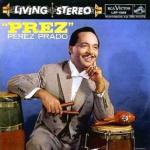
Perez Prado (and Better Records) Implore You to Turn Up the Volume

Another in the long list of recordings that sounds its best when you Turn Up Your Volume.

Tube smear is common to most pressings from the late ’50s, and this is no exception. The copies that tend to do the best in a shootout will have the least amount of smear, or none, yet are full-bodied, tubey and rich. Full sound is especially critical to the horns: any blare, leanness or squawk ruins much of the fun, certainly at the loud levels the record should be playing at.

Which brings up a point that needs making. The tonality of this record is correct when it is playing loud. The trumpets do not get harsh at loud volumes the way they will on, say, a Chicago record. The timbre of the instruments is correct when loud, which means that it was mixed loud to sound correct when loud.

The frequency extremes (on the best copies) are not boosted in any way. When you play this record quietly, the bottom and top will disappear (due to the way the ear handles quieter sounds as described by the Fletcher-Munson curve).

Most records (like most audiophile stereos) are designed to sound correct at moderate levels. Not this album. It wants you to turn it up. Then, and only then, will everything sound completely right from top to bottom.

If you like the sound of percussion instruments of every possible flavor, including some you have never tasted before, you will have a hard time finding a more magical recording of them than this. (more…)

Love the Cover, But the Music Is Awful

Hot Stamper Pressings of Exotica Recordings Available Now

Hot Stamper Pressings of Living Stereo Recordings Available Now

This Bob Thompson record never even made it to the hall of shame. Like hundreds of other albums we’ve played and found wanting, we never bothered to make a listing for it.

I don’t recall its specific shortcomings, but I vaguely remember that it basically just sounded too much like an old record. Some stereo systems of a more forgiving nature can mask the faults of records like these and even make them somewhat enjoyable.

Such is decidedly not the case with our system. Just the opposite in fact. Our stereo is designed to ruthlessly expose the shortcomings of every record we play, precisely the job we need it to do.

We are in the fault-finding business. A stereo such as ours allows us to recognize and describe the manifold problems of hundreds of records that others with — we assume — less revealing equipment do not seem bothered by.

We learned about the strengths and weaknesses of records the old fashioned way. We auditioned them by the thousands over the course of the 37 years we’ve been in business.

Unlike other record dealers catering to audiophile clientele, physically playing old records all day is how we make our money. In the case of this Bob Thompson Living Stereo from 1960, engineered by none other than the often-brilliant Al Schmitt, we were hoping to find top quality sound and music with acceptably broad appeal.

If we found those two things, we could then get hold of a bunch of copies — probably for cheap, let’s be honest — clean them up, shoot them out and sell the best sounding, quietest copies to our customers for prices that would more than cover the time and money it typically takes for our crack staff to carry out each of those operations.

It didn’t work out that way for On the Rocks. Most of the time it doesn’t with albums sporting cool covers from artists that we know practically nothing about. But we do it anyway. It’s how we discover records that few people know have the potential for audiophile sound quality. We know of no other way to do it, and we especially like knowing things that other people don’t know.

(more…)