Art Rock – Reviews and Commentaries

Animal Notes – These Big, Lively Choruses Are a Thrill

Hot Stamper Pressings with Huge Choruses Available Now

The best vintage rock recordings usually have something going for them that few recordings made after the ’70s do: their choruses get big and loud, yet stay smooth, natural and uncongested. 

We’ve mentioned it in countless listings. So many records have — to one degree or another — harsh, hard, gritty, shrill, congested choruses. When the choruses get loud they become unpleasant, and here at Better Records you lose a lot of points when that happens.

This recording, more specifically this pressing of this recording, has exceptionally big, smooth and natural choruses for many of the songs. Rangers at Midnight comes to mind immediately. Credit our man Shelly Yakus below for really getting the choruses right on this album.

Fun tip: Listen for the Elton John-like piano chords on the first track. Can you name that song? (Hint: it’s on Tumbleweed Connection.)

Choruses Are Key

Watch out for too many instruments and voices jammed into too little space in the upper midrange. When the tonality is shifted-up, even slightly, or there is too much compression or distortion, there will be too many upper midrange elements — voices, guitars, drums — vying for space, resulting in congestion and a loss of clarity.

With the more solid sounding copies, the lower mids are full and rich. Above them, the next “level up” so to speak, there’s plenty of space in which to fit all the instruments and voices comfortably, without piling them on top of one another as so often happens. Consequently, the upper midrange “space” does not get overwhelmed with musical information.

Also watch for edge on the vocals, which is of course related to the issues above. Most copies have at least some edge to the vocals — the band wants to really belt it out in the choruses, and they do — but the best copies keep the edge under control, without sounding compressed, dark, dull or smeary.

The highest quality equipment, on the hottest Hot Stamper copies, will play the loudest and most difficult-to-reproduce passages with virtually no edge, grit or grain, even at very loud levels.

(more…)

How Novel Patterns Emerge During Shootouts

Hot Stamper Pressings of the Music of Ambrosia Available Now

When you sit down to play ten or twelve copies of an album, one right after the other, patterns in the sound are going to emerge from that experience, patterns which would be very likely to pass unnoticed when playing one copy against another or two over the course of the twenty or thirty minutes it would take to do it.

In the case of this album, the pattern we perceived was simply this: About one or two out of that dozen or so will have punchy, solid, rich, deep bass. (There is a huge amount of bass on the recording, so recognizing those special copies is not the least bit difficult if you have a full-range speaker and a properly treated room.)

About one or two copies really get the top end right, which is easily heard when the cymbals splash dynamically, with their harmonics intact, and they extend high about the rest of the soundfield (precisely the way they do in live music).

(Fewer copies have an extended top end compared to those with tight punchy bass by the way.)

Like so many Mastering Lab tube-mastered records from the era, most copies tend to be somewhat smooth.

Only one copy had both the best bass and the best highs.

All the other copies fell short in one or both of these areas.

Think about it: if you do your home shootouts with three or four or even five copies of an album, what are the chances that:

1. You will detect this pattern? Or,
2. That you will run into the one copy that does it all?

This is precisely the reason we have taken the concept of doing comparisons between pressings to an entirely new level.

It’s the only way to find the outliers in the group, the “thin tails” as the statisticians like to call them. (More on outliers here.)

(more…)

Which One’s Pink? And What Do All Those Numbers Mean?

This commentary was written at the dawn of the Hot Stamper revolution, circa 2006 I believe. We felt it necessary to explain why we did not give out the stamper information for the pressings we were offering.


UPDATE 2024

We’re so fascinated by the unpredictable nature of the stamper information we often discover in our daily Hot Stamper shootouts that we thought it would be a good idea to create a section on the blog just to draw attention to it. You can find it under the heading of Record Mysteries. Please to enjoy.


Our Letter from 2006

An erstwhile customer wrote to us a while back asking a question about Dark Side of the Moon: “What is the FULL stamper matrix for this record… all the way around the dead wax?”

I replied that we never give out stamper numbers for the records we sell. The only way to find out the stampers for our records is to buy them.

He then countered with this bit of information:

Well, ok. I don’t understand the logic, but it’s your show.

Floyd stampers are probably the most uniquely well documented stampers on [a site that no longer exists] that they’re pretty much common knowledge. If I understand your logic, a first pressing may not be a “Hot Stamper” while a 3rd, 4th or 5th might be. Just a function of the stars aligning when that record is pressed. So what’s the diff?

I would think this would be pretty obvious. If we say pressing X is the best, this is information that you cannot get anywhere else, certainly not on the site you linked to. The day that such a site tells you which stampers sound the best is the day that such a site can have any value to those who are not collecting for the sake of collecting, but actually want to find pressings with the best sound to play

The information on that site has absolutely no value to me, or to any of my Hot Stamper customers, of that I can assure you. [It no longer exists by the way. Why should it?]

If you told me what the stampers were and it was a first pressing and /or issue, it would enhance the marketability of that particular record and I would be more inclined to buy it…not that I would sell it, but just knowing it was a first press would have more value to me.

Why would you want a first pressing if it didn’t sound as good? Or, if a later pressing sounded better, why would that make any difference in your desire to buy it? Isn’t the idea to get good sound?

If you buy records principally to collect original pressings, you will end up with some awful sounding records, that I can tell you without fear of contradiction.

On the other hand, if you want the best sounding pressings, we are the only record sellers on the planet who can consistently find them for you. This is precisely the service we are able to offer, unique in the world as far as we know. 

Anyone can sell originals. Only we can sell the best sound.

Others could of course, but none of them have ever bothered to try, so the result is the same. Finding the best sound is far more difficult and far more rewarding to both the seller and the buyer, as any of our customers will tell you.

I guess the only problem for the “collector” who cares about sound as well as rarity is that your “Hot Stampers” aren’t “certified” in any way. That is, if I went to re-sell a Hot Stamper I bought from you, no one else would know it to be different from any other pressing of the same record. Ever thought about coding your records so that individual record had some kind of verifiable marking that it was a certain level of “hot stamper”???

We do have a customer who makes us fill out hot stamper certificates, but they are really of little value for resell in the real world.

Records aren’t to sell, they are to play and enjoy.

Btw, I collect for sound first, but “collectability / rarity” is up there too. My stone mint MFSL Muddy Waters Folk Singer #0005 / 5000 might fetch a couple more bucks on ebay than number 4999 say, right? I know, 4999 might sound better, but hey, a lot of people don’t have the equipment to tell the difference.

[This is where I got a little fed up and a little testy, or maybe I should say testier than usual.]

Since that is an AWFUL sounding pressing, I hope your equipment is able to tell you what is wrong with its sound. Mobile Fidelity is one of the worst labels in the history of the world; surely you don’t buy their lousy sounding records to play them? Collect them all you want, it’s your money, but who in his right mind thinks they sound any good? There are tons of commentaries on the site detailing their deficiencies. Please take the time to read them.

The fastest way to improve your record collection is to get rid of all your audiophile pressings, since only one out of every ten or twenty is even passable. If your stereo isn’t showing you how wrong the sound of those records is, it’s time to make some serious changes.

Best, 
TP

(more…)

Talking Heads’ Masterpiece – More Songs About Buildings and Food

More of the Music of Talking Heads

Presenting another entry in our extensive listening in depth series with advice on what to listen for as you critically evaluate your copy of More Songs.

Here are some albums currently on our site with similar Track by Track breakdowns.

I don’t think these guys (and gal) ever put together a better group of songs. The ultimate pressings of Little Creatures go a step further sonically, but the best copies of this one can sound incredible, if not quite Demo Disc worthy.

We’re huge fans of late ’70s / early ’80s Art Rock and New Wave music, and these guys are obviously some of the best in the biz. I’d be hard pressed to name another act from the era who put out so many good records.

Along with this album, More Songs About Buildings And Food, Fear Of Music, and Little Creatures are all works of genius. ’77 is full of good ideas, but it doesn’t sound like a fully realized work of art the way the next four albums did.

Key Test Tracks

With Our Love turned out to be one of the better tests for side one. The picking of the rhythmic guitar in the intro told us just about everything we needed to know about smear, veiling and resolution. On most copies the instrument is simply blurry, the notes mashed together. When you get a copy with its transients intact, resolving properly and clearly right there in front of you, you have the makings of a Hot Stamper side one.

My other test track for side one was Warning Signs. This is a great track for evaluating transparency and bass. On the average copy you’d never know how much ambience exists around the drums. Hint: it’s a lot.

Our favorite copies have a fair amount of WHOMP down low, giving the bass guitar that rich, beefy sound that we’re simply crazy for here at Better Records. Once you’ve heard a copy with well-defined, note-like bass, nothing less will do.

Artists Only

A great test track for side two is Artists Only. The guitars in the intro section are almost unbearable to listen to on most copies. I recognize that I am somewhat sensitive to harsh high frequencies, but I’m literally in pain when I listen to an overly compressed, overly midrangy copy. There’s got to be a better way!

Wait, there is. Find a copy that actually has a sweet top end. It makes all the difference.

Take Me to the River

One of the best sounding tracks on the album is the awesome cover of Al Green’s Take Me To The River. Most copies are very skimpy with the amount of bottom end information you get.

Pay attention to the opening before the keys start. The best pressings give you texture on the bass that you won’t find on most. When everything’s working right you’ll also hear ambience around the organ that’s nowhere to be found on the average pressing.

The bass should be tight, punchy, and fairly deep. We wouldn’t mind if some of the tracks were mixed with a bit more punch to the bottom end, but far be it from us to tell Brian Eno and Rhett Davies how to do their jobs. At least on some copies the bass has the kind of power that brings a song like Take Me To the River to heights you probably never imagined it could go.

(more…)

Letter of the Week – “The White Hot Stampers opened up a completely different listening experience.”

Hot Stamper Pressings of the Music of Supertramp Available Now

One of our good customers had this to say about some Hot Stampers he purchased recently:

Hey Tom,  

You don’t need any more adulation; you know I am a fan. I just had to send you a note to share an audio phenomena I am experiencing. I recently got Supertramp Breakfast In America 3+ / 3+ and now Zeppelin IV 2.5+ / 3+.

These were albums that were always average for me and I previously got copies just to have in the collection.

The White Hot Stampers, however, opened up a completely different listening experience. Holy smokes, these albums are really, really good; until I got the WHS’s I just could not hear them.

Probably, more accurately, lesser albums were harsh and not engaging. Once you hear copies like these anything less becomes unlistenable. These albums really rock, long live White Hot Stampers!

Mike H.

Letter of the Week – “I have to admit, I now listen nearly exclusively to your records.”

Hot Stamper Pressings of the Music of Pink Floyd Available Now

One of our good customers had this to say about some Hot Stampers he purchased starting in 2021:

Hey Tom, 

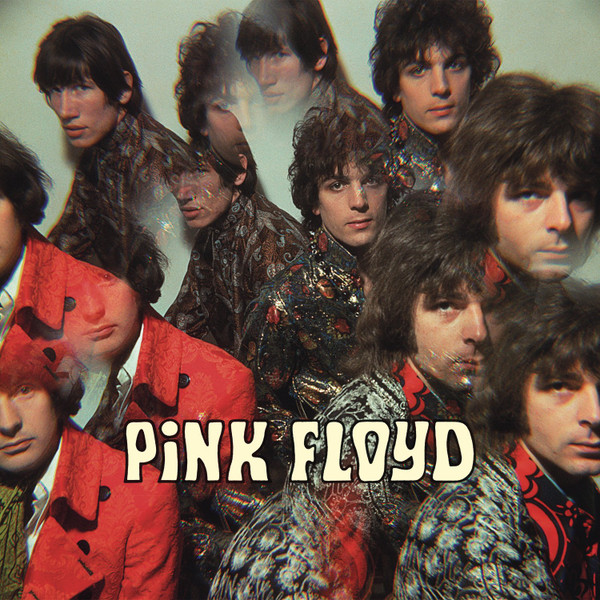
Last December on the 3rd I think it was I ordered my first Hot Stamper, a White Hot Pink Floyd The Piper at the Gates of Dawn.

From January this year on I bought quite a lot more, as it was with the first, any of these records was a pleasure to me.

I have to admit, I now listen nearly exclusively to your records.

In line with the collection of Hot Stampers I improved my stereo. Let me say, it became an obsession.

Many, many thanks for your help, which brought me really forward and helped me over some points of design with the will of throwing all out of the window.

Kind regards from Austria,

Hans

Peter Gabriel – Direct Disk Labs Half-Speed Reviewed

More of the Music of Peter Gabriel

Reviews and Commentaries for the Music of Peter Gabriel

Sonic Grade: D

The Direct Disk Labs half-speed here is thick, compressed and lifeless, though fairly rich tonally, a key quality the best UK pressings always have. The good UK pressings — on the original tan label, avoid the blue label reissues, they suck — are full of luscious Tubey Magic.

This is in fact the only Peter Gabriel recording that has that vintage Tubey Magical Analog sound. The worst recording of his first five, So, has the least amount. It is digital, and it sounds like it’s digital, but that is not the kiss of death if you can find a good domestic pressing of it and clean it right.

You could do worse I suppose, but too much of the life of the music will be lost when playing this poorly remastered pressing.  Did they have a good British tape to work with? It doesn’t sound like it.

Is it better than the average domestic pressing, the ones that are clearly made from dubbed sub-generation tapes? Maybe, in some ways, but both this half-speed and the domestic pressings should be avoided by audiophiles looking for top quality sound.

(more…)

The Polydor Super Deluxe UK Pressings Are the Only Way to Fly on Flesh + Blood

Hot Stamper Pressings of the Music of Roxy Music Available Now

The British Original Polydor Super Deluxe pressings are the only way to go on this album. No domestic pressing or other import in our experience has ever been better than passable; we know, we’ve been cleaning and playing them for more than thirty years.

This British LP is cut by one of my favorite mastering houses in England, which no doubt accounts for the excellent sound. The estimable Robert Ludwig cut the domestic pressings. Unfortunately for us Americans it sounds to us like they gave him a dub tape to master from. (The same thing happened on Avalon by the way.)

This is a transitional album. Some of it sounds like Avalon (Oh Yeah, Over You, etc.) and some of it sounds more like their earlier material. It may not be as consistent as Avalon but it’s well worth owning for its best songs (listed below) and comes highly recommended for fans of the band. 

Best Tracks

Standout tracks on side one include In the Midnight Hour / Oh Yeah / My Only Love

Standout tracks on side two include Over You / Eight Miles High / Rain, Rain, Rain

(more…)

Ruben and the Jets – An Astonishingly Badly Remixed CD

Hot Stamper Pressings of the Music of Frank Zappa Available Now

The album was reissued on CD in 1985, and almost all of the rhythm tracks were re-recorded at that time. Since all of the reissues that followed have contained the new versions of the material, early pressings of this album, such as this one, are the only way to hear this album the way it was originally recorded.

I made the mistake of buying the new CD and was appalled — yes, that’s the right word for it — by both the modernized sound and the wrong-headed re-recording of the rhythm tracks.

The only way to hear this music properly is on the early Blue Label Verve LP. (more…)

A New World Record – Listen for Enthusiastic Female Background Vocals

This review for our Shootout Winner was written in 2008.

Let’s start with side two. So many great songs, with So Fine getting things off to a lively start, and Do Ya rockin’ out toward the end.

Side one is almost as good. The sound is rich and full, yet transparent, the ideal combination in our experience.

Love those female background singers — their voices are clear and individually separated, but even more importantly, on the best copies like this one they are ENTHUSIASTIC. This is the very definition of a Hot Stamper: ELO on this copy is full of life and energy. 

Even though I am not the world’s biggest ELO fan, I am a HUGE fan of this album, which is why I’m so happy to have finally found one with AMAZING SOUND, on both sides!

The British originals are the only ones that can convey the sweet TUBEY MAGIC of the British Master Tapes.

The string tone on the average domestic copy is shrill and smeary; too little of the critically important texture remains after the master tapes have been dubbed and the copies sent to America for mastering. 

As a result of Jeff Lynne’s everything-but-the-kitchen-sink production approach, it will be the rare copy that provides enough transparency and resolution to bring out all the elements in these incredibly dense mixes, strings included. (more…)