Demo Discs for Correct Timbre

Herrmann – Citizen Kane (The Classic Film Scores of Bernard Herrmann)

More of the Music of Bernard Herrman 

  • An original RCA Red Seal pressing with solid Double Plus (A++) grades or BETTER on both of these TAS-approved sides
  • On this outstanding copy you will hear deep bass notes; incredible dynamics from every area of the stage; masses of strings playing at the top of their registers with abandon; huge drums; powerful brass effects, and more
  • Every sound an orchestra can produce is found on this record, and then some – it’s the very definition of Demo Disc sound
  • These wonderful works, undoubtedly some of the greatest Bernard Herrmann composed, should be part of any serious orchestral collection
  • 5 stars: “… the best of the entire series by conductor Charles Gerhardt and the National Philharmonic Orchestra… every track is worthwhile and memorably played.”
  • If you’re a Bernard Herrmann fan, and what audiophile wouldn’t be?, this title from 1974 is clearly one of his best

The ‘Citizen Kane’ Suite on this album is to die for — big, bold, dynamic sound like few records you own. It’s a real Desert Island Disc for me. (The CD, by the way, is actually quite good. I have it in the car and play it often.)

The Concerto Macabre for Piano and Orchestra (from “Hangover Square”) is superbly well-recorded and a brilliant piece of music as well.

(more…)

Rachmaninoff – Piano Concerto No. 3 / Janis / Dorati

More of the Music of Sergei Rachmaninoff

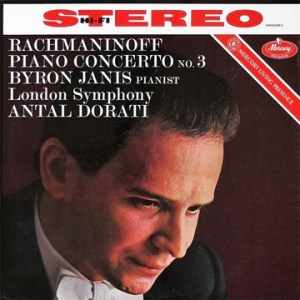
  • Outstanding sound for this classic Byron Janis Mercury album, with both TAS-approved sides earning solid Double Plus (A++) grades or BETTER
  • The piano is huge and weighty, the strings rich and highly resolving, and the overall presentation is powerful, balanced, dynamic and exciting like few other piano concerto recordings we have ever had the pleasure to audition
  • Not only is this the consistently best sounding copy we have had to offer in years, but we are happy to report that the vinyl is reasonably quiet for a Mercury stereo pressing of this vintage
  • If you have the system to play a record as big and powerful as this Mercury from 1961, we cannot recommend it any more highly
  • There are about 175 orchestral recordings we’ve awarded the honor of offering the best performances with the highest quality sound, and this record certainly deserve a place on that list.
  • This is one of the two Must Own Mercury piano concerto recordings, the other being SR 90300, which often suffers from inner groove distortion — not to worry, as a matter of grading policy, we check the inner grooves of every record we offer on the site

Not only is the sound amazing — yes, it’s on the TAS Super Disc list, and for good reason: a copy as good as this one really is a Super Disc — but this copy has another vitally important characteristic that most copies of the record do not: no Inner Groove Distortion.

We can’t begin to count the times we have had to return (or toss) a copy of one of these famous Byron Janis records because the piano breakup for the last inch or so of the record was just unbearable. That’s a sound no serious listener could possibly tolerate, yet I would venture to guess that a great many Mercury piano concerto recordings suffer from this kind of groove damage.

Enough about those typically bad copies, let’s talk about how good this one is.

This is an early Mercury Plum label stereo pressing of one of Byron Janis’s most famous performances (along with the Rachmaninoff 1st; it’s also a longtime member of the TAS super disc list).

The sound is rich and natural, with lovely transparency and virtually no smear to the strings, horns or piano. What an amazing recording! What an amazing piece of music.

The recording is explosively dynamic and on this copy, the sound was positively jumping out of the speakers. In addition, the brass and strings are full-bodied, with practically no stridency, an unusual feat the Mercury engineers seem to have accomplished while in Russia.

Big, rich sound can sometimes present problems for piano recordings. You want to hear the percussive qualities of the instrument, but few copies pull off that trick without sounding thin. This one showed us a piano that was both clear and full-bodied.

With huge amounts of hall space, weight and energy, this is Demo Disco quality sound by any standard. Once the needle has dropped you will quickly forget about the sound (and all the money you paid to get it) and simply find yourself in the presence of some of the greatest musicians of their generation, captured on the greatest analog recordings of all time.

(more…)

Michel Legrand – Legrand Jazz

More Large Group Jazz Recordings

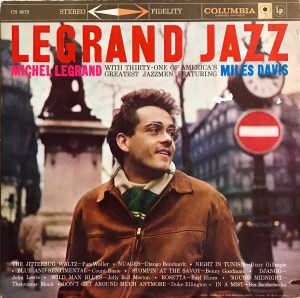
  • This original 6-Eye Stereo pressing was doing just about everything right, earning solid Double Plus (A++) grades from start to finish
  • Both of these sides are open and spacious with real depth to the soundfield and lots of separation between the various instruments, a very important quality for a recording of a large ensemble recording such as this
  • Rich, solid bass; you-are-there immediacy; energy and drive; instruments that are positively jumping out of the speakers – add it all up and you can see that this copy had the sound we were looking for
  • Legrand rounded up 31 of the greatest jazz players of the 50s, divided them up into three groups, and the result was a landmark 30th Street Studio recording with audiophile sound to die for
  • We’re talking jazz giants: John Coltrane, Miles Davis, Bill Evans, Ben Webster, Herbie Mann, Art Farmer, Donald Byrd, Phil Woods — everybody who was anybody is on this record
  • 4 1/2 stars: “Throughout this superlative album, the arrangements are colorful and unusual, making one wish that Legrand had recorded more jazz albums through the years.”
  • Robert Brook recently played the “award winning” Impex 45 RPM pressing from 2019 (as did we) and wants to know what you think of the sound

This album is more common in mono than stereo, but we found the sound of the mono pressing we played seriously wanting. It’s dramatically smaller and more squawky and crude than even the worst of the stereo pressings we played.

We had a copy we liked years ago, but that was years ago. We don’t have that copy anymore and we don’t have a stereo that sounds the way our old one did either.

The unique voices of each of the jazz giants featured on this landmark recording contributes memorable solos then receeds into the group to provide the structure for the rest of the music. Which is an awkward way of saying everybody does his thing in service to the song and then gets out of the way. “The Jitterbug Waltz,” which opens up side one, is a perfect example: the arrangement is completely original, and within its structure, Miles DavisPhil WoodsJohn Coltrane and others solo beautifully, each taking a turn at the melody. If three minutes into this song you don’t like what you’re hearing, jazz is just not for you.

(more…)

Ravel / Rachmaninoff – The Reiner Sound

More of the Music of Maurice Ravel

More of the Music of Sergei Rachmaninoff

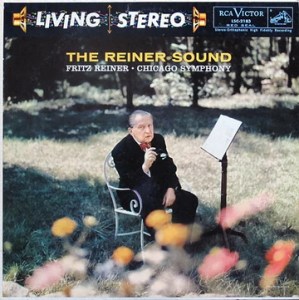
  • With big, bold, dynamic Double Plus (A++) Living Stereo sound or close to it throughout, you’ll have a hard time finding a copy that sounds remotely as good as this original Shaded Dog pressing
  • It’s also remarkably quiet at high end of Mint Minus Minus, a grade that even our most well-cared-for vintage classical titles have trouble playing at
  • Side one is doing just about everything right – it’s rich, clear, undistorted, open, spacious, and has depth and transparency to rival the best recordings you may have heard, and side two is not far behind in all those areas
  • True, side two earned a minimal Hot Stamper grade of 1.5+, but we still guarantee that it will beat the pants off any Heavy Vinyl reissue, because every one of those that we played was ridiculously opaque, muddy and thick enough to have us crying “uncle” after five minutes
  • This record will have you asking why so few Living Stereo pressings actually do what this one does (particularly on side one). The more critical listeners among you will recognize that this is a very special copy indeed (also particularly on side one). Everyone else will just enjoy the hell out of it.
  • Contains two works by Ravel: Rapsodie Espagnole and Pavan for a Dead Princess, as well as Rachmaninoff’s Isle of the Dead

This former TAS list record really surprised us on two counts.

First, you will not believe how dynamic the recording is. Of all the classical recordings we’ve played lately, I would have to say this is the most dynamic of them all.

The explosively loud sections of these wonderful works, with their huge orchestral effects, are dynamic contrasts that are clearly part of the composer’s intentions but ones that rarely make it from the concert hall to vinyl disc the way they do here.

Second, there is simply an amazing amount of top end on this record. Rarely do we hear Golden Age recordings with this kind of energy and extension up top. Again, it has to be some of the best we have heard recently.

(This is, of course, one of the reasons the Classic reissue is such a disaster. With all that top end energy, Bernie’s gritty cutting system and penchant for boosted upper midrange frequencies positively guarantees that the Classic Reiner Sound will be all but unplayable on a tonally correct system. Boosting the bass and highs and adding transistory harshness is the last thing in the world that The Reiner Sound needs.)

Unlike many bien-pensant audiophiles who buy into HP’s classical choices, I am not the biggest Reiner fan. On these works, though, I would have to say the performances are top drawer, some of the best I have ever heard. The amount of energy he manages to coax from the Chicago Symphony Orchestra is nothing less than breathtaking.

(more…)

Mussorgsky & Ravel – Pictures at an Exhibition

More of the Music of Modest Mussorgsky

  • With two seriously good Double Plus (A++) sides, this British EMI import pressing is doing just about everything right – exceptionally quiet vinyl too
  • Our favorite performance by far, with big, bold and powerful sonics like no other recording we know
  • The brass clarity, the dynamics, the deep bass and the sheer power of the orchestra are almost hard to believe
  • No vintage recording of these works compares with Muti’s – and Stravinsky’s Firebird Suite is an extra special added bonus on side two
  • There are about 150 orchestral recordings we’ve awarded the honor of offering the best performances with the highest quality sound, and this record certainly deserve a place on that list.
  • If you like orchestral spectaculars, have we got amazing sounding records for you

This EMI import pressing gives you the complete Pictures at an Exhibition with a top performance and superb sonics.

As this is my All Time Favorite performance of Pictures, this record naturally comes very highly recommended. Pictures is a piece of music that has been recorded countless times, and I’ve played scores of different recordings, but the only one that truly satisfies is this one, Muti’s 1979 recording with the Philadelphia Orchestra. Much like Previn and the LSO’s performance of The Planets, he finds the music in the work that no one else seems to.

A Must Own Classical Record

This orchestral spectacular should be part of any serious Classical Collection. Other Must Own classical recordings can be found here.

For his 1979 review of the Mussorgsky, Robert Layton in the GRAMOPHONE writes of Muti and The Philadelphia Orchestra :

…what orchestral playing they offer us. The lower strings in ‘Samuel Goldenberg and Schmuyle’ have an extraordinary richness, body and presence, and “Baba Yaga”, which opens the second side, has an unsurpassed virtuosity and attack as well as being of demonstration standard as a recording. The glorious body of tone, the richly glowing colours, the sheer homogeneity of the strings and perfection of the ensemble is a constant source of pleasure.

Of the performance of Stravinsky’s Firebird, Layton writes:

…Muti’s reading is second to none and the orchestral playing is altogether breathtaking. The recording is amazingly lifelike and truthful.

(more…)

Grover Washington, Jr. – All The King’s Horses

More of the Music of Grover Washington

  • An early Kudu pressing of Washington’s sophomore release with seriously good Double Plus (A++) grades from top to bottom
  • There’s so much life in these grooves – the sound jumps out of the speakers and right into your lap
  • Credit must go to Rudy Van Gelder for recording and mastering this album so well, and to Bob James for his brilliant big group arrangements
  • We cannot recommend this album highly enough – if you have the big speakers a big group of musicians need to perform live in your listening room, his record is going to be nothing less than a thrill
  • 4 stars: “. . . this set has assumed its proper place in Washington’s catalog: as one of his more ambitious and expertly performed sessions.”
  • This is a Must Own jazz album from 1972, one that deserves a place in any audiophile’s collection

Both sides of this original Kudu pressing are OUT OF THIS WORLD. The sweetness and transparency of Grover Washington Jr.’s breathy sax went beyond any copy we’ve ever played. Who knew it could sound like this? We sure didn’t!

It’s spacious and full of life with virtually no distortion. Of special note, this copy has amazingly articulate bass which brings out the undeniable funkiness of the music in a way that no other copy did.

The early 70s were a good time for Rudy Van Gelder. All the King’s Horses from 1972 is an amazing Demo Disc for a large group. But it only sounds good on the copies that it sounds good on, on the pressings that were mastered, pressed and cleaned right, a fact that has eluded most jazz vinyl aficionados interested in good sound.

But not us. We’ve played the very special pressings that prove the album can sound amazing.

Yer Average Copy

The sound we most often find on original pressings (the only ones that ever sound any good; the later pressings are awful) is full of compression, and suffers as well from the kind of high-frequency restriction that prevents the top end from extending in a harmonically correct way. The result: Grover’s horn often will take on a somewhat sour quality. Our better Hot Stampers are both uncompressed and open up top.

I’m a Big Fan

I’ve been a big fan of this record since I first heard it all the way back in High School. I only found out later that this is not what most people would consider “real” jazz — it’s CTI jazz, more in the pop jazz or soul jazz vein. But I love the music more with each passing year and would not hesitate for a moment to recommend it to any jazz lover or audiophile. If the first track doesn’t knock you out, this album may not be for you. Without a doubt, in my book it’s the best thing Grover Washington ever did.

The really good RVG jazz pressings sound shockingly close to live music — uncompressed, present, full of energy, with the instruments clearly spread out and surrounded by the natural space of the studio.

As our stereo has gotten better, and we’ve found better pressings and learned how to clean them better, his “you-are-there” live jazz sound has impressed us more and more.

(more…)

Sonny Rollins – Way Out West

More of the Music of Sonny Rollins

  • With two solid Double Plus (A++) sides or close to them, this vintage Contemporary pressing is doing just about everything right
  • This copy has superb 1957 Contemporary stereo sound – big, open and natural throughout
  • One of our favorite Rollins albums – one listen to this copy and you will know exactly why we love the recordings of Roy DuNann
  • This is a Must Own jazz album from 1957 that belongs in every jazz-loving audiophile’s collection
  • 5 stars: “The timeless Way Out West established Sonny Rollins as jazz’s top tenor saxophonist…”
  • Contemporary is one of our favorite jazz labels — once you’ve heard a Hot Stamper pressing of one of their releases, you will surely become as enthusiastic as we are about their phenomenally good recordings from the 50s and 60s
  • Like a lot of the best jazz recordings we know of, these sessions were recorded live in the studio

It’s our favorite jazz label for sonics by a long shot. Roy DuNann always seems to get The Real Sound out of the sessions he recorded — amazingly realistic drums in a big room; full-bodied, breathy horns; Tubey Magical guitar tone; deep, note-like bass; weighty pianos; vocal immediacy, and on and on.

For us audiophiles both the sound and the music here are wonderful. If you’re looking to demonstrate just how good a 1957 All Tube Analog recording can be, this copy will do the trick.

This pressing is super spacious, sweet, and positively dripping with ambience. Talk about Tubey Magic, the liquidity of the sound here is positively uncanny. This is vintage analog at its best, so full-bodied and relaxed you’ll wonder how it ever came to be that anyone seriously contemplated trying to improve it.

This IS the sound of Tubey Magic. No recordings will ever be made like this again, and no CD will ever capture what is in the grooves of this record. There is of course a CD of this album, but those of us who possess a working turntable and a good collection of vintage vinyl could care less.

(more…)

The Three on Inner City – By Far the Best Way to Get All Six Tracks

More of the Music of The Three

  • A Demo Disc quality Inner City pressing of this wonderful recording with INCREDIBLE Shootout Winning Triple Plus (A+++) sound or close to it from start to finish
  • The transients are uncannily lifelike – listen for the powerful kinetic energy produced when Shelly whacks the hell out of his cymbals
  • My favorite Piano Trio Jazz Album of All Time; every one of those six tracks is brilliantly arranged and performed
  • 4 stars: “One of Joe Sample’s finest sessions as a leader” – with Shelly Manne and Ray Brown, we would say it’s clearly his finest session, as a leader or simply as the piano player in a killer trio

If you want to hear the full six tunes recorded by The Three at that famous Hollywood session (which ran all day and long into the night, 4 AM to be exact), these 33 RPM pressings are the best way to go. The music is so good that I personally would not want to live without the complete album. The Three is, in fact, my favorite Piano Trio Jazz Album of All Time; every one of those six tracks is brilliantly arranged and performed (if you have the right takes of course; more about that later).

More On The Subject Of Energy

This is a quality no one seems to be writing about, other than us of course, but what could possibly be more important? On this record, the more energetic copies took the players’ performances to a level beyond all expectations. It is positively shocking how lively and dynamic the best copies of this record are. I know of no other recording with this combination of sonic and musical energy. It is sui generis, in a league of its own.

Both sides are so transparent you can hear Shelly Manne vocalizing as he’s playing the drums. The drum solo on side two is killer here. So full of energy and so dynamic. Why aren’t more drum kits recorded this well? Check out the pictures inside the fold-open cover to see all the mics that were used on the drums. That’s where that wall-to-wall, floor-to-ceiling sound comes from.

The transients are uncannily lifelike, conveying the huge amounts of kinetic energy produced when Shelly whacks the hell out of his cymbals.

Ne Plus Ultra Piano Trio

This record is made from the “backup” tape for the session. East Wind released two versions of the famous direct to disc version at 33 RPM, and for those of you who bother to read the commentary, you know that take one of that pressing presents a completely different performance of the music than the one found on the Inner City on offer here.

There was a time when the best copies of a recording like this would go directly into my collection. If I wanted to impress someone, audiophile or otherwise, with the You-Are-There illusion that only Big Speakers in a dedicated room playing a live recording can create, this would be up near the top of the list. There is practically nothing like it on vinyl in my experience.

This is without a doubt my favorite piano trio record of all time. Joe Sample, Shelly Manne, and Ray Brown only made one album together, this one, recorded direct to disc right here in Los Angeles for Eastwind in the Seventies. Joe Sample for once in his life found himself in a real Class A trio, and happily for jazz fans around the world, he rose to the occasion. Actually, it was more like an epiphany, as this is the one piano trio album I put in a class by itself. All three of The Three are giving us the best they’ve got on that November day in 1975.

When it comes to small combo piano jazz, there is none better.

(more…)

Rimsky-Korsakov / Scheherazade / Ansermet (Decca)

More of the Music of Rimsky-Korsakov

  • Excellent sound throughout this vintage Decca pressing of Ansermet and the Suisse Romande’s superb performance of this dazzlingly symphonic suite, with both sides earning solid Double Plus (A++) grades or BETTER
  • It’s also remarkably quiet at the high end of Mint Minus Minus, a grade that even our most well-cared-for vintage classical titles have trouble playing at
  • This copy will go head to head with the hottest Reiner pressing and is guaranteed to blow the doors off of it or your money back
  • The top end is natural and sweet – this is the way the solo violin in the left channel is supposed to sound
  • Extraordinary Demo Disc sound – the brass has weight and energy on that powerful first movement like nothing you’ve ever heard in your life )outside of a live performance)
  • This is the first full price Decca pressing we have ever offered with Hot Stampers — most Decca pressings of this title are awful sounding and it took us a long time to figure out how to find the good ones
  • Marks in the vinyl are sometimes the nature of the beast with these early pressings – there simply is no way around them if the superior sound of vintage analog is important to you

We did a monster shootout for this music way back in 2014, one we had been planning for more than two years. On hand were quite a few copies of the Reiner on RCA; the Ansermet on London (CS 6212, his second stereo recording, from 1961, not the earlier and noticeably poorer sounding recording from in 1959); the Ormandy on Columbia, and a few others we felt had potential.

The only recordings that held up all the way through — the fourth movement being the Ball Breaker of all time, for both the engineers and musicians — were those by Reiner and Ansermet. This was disappointing considering how much time and money we spent finding, cleaning and playing those ten or so other pressings.

Here it is over a decade later and we’re capitalizing on what we learned from the first big go around, which is simply this: the Ansermet recording on Decca/London can not only hold its own with the Reiner on RCA, but beat it in virtually every area. The presentation and the sound itself are both more relaxed and natural, even when compared to the best RCA pressings.

The emotional content of the first three movements (all of side one) under Ansermet’s direction are clearly superior. The roller coaster excitement Reiner and the CSO bring to the fourth movement cannot be faulted, or equaled. In every other way, Ansermet’s performance is the one for me.

(more…)

Shelly Manne & His Men / At The Blackhawk, Volume 2

More of the Music of Shelly Manne

  • With solid Double Plus (A++) sound or BETTER from first note to last, this early Contemporary stereo pressing will be very hard to beat
  • This is West Coast Jazz at its best, and if anyone can capture the realism of a live jazz club, it’s the engineers and producers at Contemporary
  • Each instrument here sounds right – the piano is weighty and percussive; the drums are punchy; and the brass has lovely leading edge transients
  • 4 stars: “These lengthy performances (“Vamp’s Blues” is over 19 minutes long) give trumpeter Joe Gordon, the cool-toned tenor-saxophonist Richie Kamuca, pianist Victor Feldman, bassist Monty Budwig and the leader/drummer a chance to really stretch out. Fine 1950s bebop.”

Wonderful sound and music! This is West Coast Jazz at its best. The sound is superb — airy, open, and spacious with a stunningly good bottom end. You won’t believe how alive the bass sounds — the depth and definition are out of this world! Each instrument here sounds just right — weighty, percussive piano; punchy drums; and lovely leading edge transients on the brass. Contemporary got live nightclub jazz sound down to a “T” here.

(more…)