
_Performers – Heifetz

Letter of the Week – “What I experienced was how emotionally heavy and complex this music is.”

More of the Music of Jean Sibelius (1865-1957)

More Hot Stamper Pressings Featuring the Violin

Our good customer Aaron wrote to tell of us his experience playing some copies of Heifetz’s recording of the Sibelius Violin Concerto. He already had a plain Hot Stamper pressing, probably a Red Seal reissue.

He started off his first email to me by saying this:

The striking difference between the white hot and the hot stamper is in how much the emotional character of the music comes through. Even though the instruments sound more immediate and organic on the white hot, the overall tone is darker and more anguished. The difference isn’t so much in the technical details, like the size of the soundstage, but rather, in the realism of the instruments, and the aggregate effect of that on the emotional impact of the music.

I replied:

Reading between the lines a bit, the Shaded Dog seems to be tonally a bit darker, but I hope that it should sound more tonally correct, as most of the time the later pressings are thinner and less real sounding. I think that’s what you are saying, but I wanted to make sure.

Tom,

In terms of the tone, what I can tell you is that the cello was absolutely chilling and sounded lifelike to me. The violin is rich without being shrill.

What I experienced was how emotionally heavy and complex this music is. Sure, there’s moments of dizzying ecstacy in it, but so much is aching and sad. I don’t want anybody to think I’m saying the white hot is muffled. It’s wonderfully transparent and realistic, and that shows off the melancholy in the music, creating a darker mood / color palette, even though I didn’t experience a darker tone.

Nicely put.

After Aaron had spent another week with the work, he had arrived at a much deeper understanding of the music and the sound:

I’ve now spent a lot of time with the Heifetz Sibelius WHS, the regular hot stamper, and a couple other copies I was able to find at my local shops over the years for $5-$12 each.

You know that before I commit to keeping a white hot stamper, I like to make full use of your 30-day money-back guarantee. By the time I’m splurging for a WHS, it’s usually an album I’ve already got several copies of. Sometimes, one spin is all it takes for me to be able to tell the WHS is delivering the goods. Rumours and Thriller were like this.

Other times, I’ve got to really listen, and carefully do my own shootout to be sure I want to keep it.

This time’s no different. I’m keeping the white hot of the Sibelius, and I’ll be returning the regular hot stamper. It was a more tricky shootout than some others. I can cut to the chase like this – for $5 you can hear Heifetz’s wonderful recording of the Sibelius Violin Concerto. For $495 more, you can hear a violin sound like a violin.

It’s crazy what my stereo can do now with violin and vocals, two particularly egregious weak spots before I got the Tri-Planar. I’m going a little nuts here. Some records I had cast off as having groove wear actually sound perfectly lovely. I guess female vocals was particularly challenging for my old tonearm to track. I took your blog’s advice and purchased some Beethoven string quarets (Julliard and Quartetto Italiano) that are just magnificent. I’ve no doubt proper hot stampers would beat them, but you gotta start somewhere.

Thanks Tom.

Aaron,

Experiencing the illusion of a “realistic” violin floating dead center between your speakers is indeed something that only the highest quality equipment can pull off, and we are glad your Triplanar arm is helping to deliver that magical sound to you.

I struggled with Shaded Dog pressings of Heifetz’s recordings for years back in the 90s. I couldn’t clean them right until the Walker fluids and better machines came along, and I couldn’t play them right until my turntable, arm, cartridge, setup, vibration control and who knows what else had gone through a great many changes.

Now it is obvious to me just how good these recordings can be. I had this to say about a favorite violin concerto not long ago:

This is truly The Perfect Turntable setup disc. When your VTA, azimuth, tracking weight and anti-skate are correct, this is the record that will make it clear to you that your efforts have paid off.

What to listen for you ask? With the proper adjustment the harmonics of the strings will sound extended and correct, neither hyped up nor dull; the wood body of the instrument will be more audibly “woody”; the fingering at the neck will be noticeable but will not call attention to itself in an unnatural way. In other words, as you adjust your setup, the violin will sound more and more right.

And you can’t really know how right it can sound until you go through hours of experimentation with all the forces that affect the way the needle rides the groove. Without precise VTA adjustment there is almost no way this record will do everything it’s capable of doing. There will be hardness, smear, sourness, thinness — something will be off somewhere. With total control over your arm and cartridge setup, these problems will all but vanish. (Depending on the quality of the equipment of course.)

We harp on all aspects of reproduction for a reason. When you have done the work, records like this are nothing less than GLORIOUS.

More recently I wrote about the completely unnatural violin tone found on the Heavy Vinyl reissues of Scheherazade. Both suffered greatly from their mastering engineers’ predilection for overly-smooth, overly-rich sound, a sound that apparently not many audiophiles found as bothersome as I did.

(more…)

Bruch / Vieuxtemps – Scottish Fantasy / Concerto No. 5 / Heifetz

More Classical Recordings Featuring the Violin

  • Boasting two Shootout Winning Triple Plus (A+++) Living Stereo sides, this early Shaded Dog pressing of these wonderful Romantic works could not be beat
  • The Heifetz Scottish Fantasy on side two is our favorite and contains the best sound we know for the work
  • The orchestral passages are rich and sweet, the violin present, all of its harmonics gloriously intact
  • As usual for a Living Stereo Heifetz violin recording, he is front and center, with every movement of his bow reproduced clearly, without being hyped-up in the least
  • Marks in the vinyl are sometimes the nature of the beast with these early pressings – there simply is no way around them if the superior sound of vintage analog is important to you
  • We will have some Super Hots coming soon for those of you looking for quieter vinyl

If you want to demonstrate the magic of Living Stereo recordings, jump right to the second movement of the Bruch. The sonority of the massed strings is to die for. When Heifetz enters, the immediacy of his violin further adds to the transcendental quality of the experience. Sonically and musically it doesn’t get much better than this, on Living Stereo or anywhere else.

The violin is captured beautifully on side two. More importantly, there is a lovely lyricism in Heifetz’s playing which suits Bruch’s Romantic work perfectly. I know of no better performance.

The Bruch brings to mind some of Tchaikovsky’s works. It’s so sweet and melodic, it completely draws you into its world of sound. This is a work of unsurpassed beautymusic that belongs in any serious classical collection.

The performance of the Vieuxtemps Concerto No. 5 is also wonderful, and the Romantic music is even better than I remember it from our last shootout.

(more…)

Sibelius / Violin Concerto on Classic Records Heavy Vinyl

Hot Stamper Pressings Featuring the Violin

An Audiophile Hall of Shame pressing and another Classic Records Classical LP badly mastered to the detriment of those lured by the promise of easy answers and quick fixes.

Classic remastered this title in the ’90s — of course they did, it’s clearly one of the better Heifetz recordings.

As expected, their version was awful, as bad as LSC 1903, 1992, 2129 and others too numerous to list.  

It’s both aggressive and lacking in texture at the same time, the worst of both worlds.

Bernie’s cutting system is what I would call Low Resolution — the harmonics and subtleties of the sound simply disappear.

The world is full of them.

In these four words we can describe the sound of the average Classic Records pressing. If you have the Classic, do your own shootout. We guarantee any of our Hot Stamper pressings will murder theirs.

(more…)

Beethoven’s Violin Concerto – Classic Records Reviewed

Hot Stamper Pressings Featuring the Violin

An Audiophile Hall of Shame pressing and another Classic Records Classical LP we found seriously lacking in some of the most important qualities we listen for on the classical and orchestral recordings we audition.

The Classic pressing of this album does not present the listener with the sound of a real, wood instrument, bowed by horsehair, in a physical space.

It is an airless fraud, a cheap fake reproduction that’s incapable of fooling anyone currently in possession of two good ears, a properly set up hi-fi system and a decent collection of Golden Age violin concerto recordings.

The fact that a great many writers identifying themselves as audiophiles embraced Classic’s mediocre-at-best reissues tells me that they were lacking some or all of the above.

Notes from a Recent Hot Stamper Pressing (more…)

For the Mendelssohn and Prokofiev Violin Concertos‎, These Are the Stampers to Avoid

Hot Stamper Pressings Featuring the Violin

None of the White Dog pressings we played in our most recent shootout were better than mediocre, and the 70s Red Seal pressings were uniformly awful as well.

We had two different side ones with 8s stampers, and two different sides twos with 5s and 7s, respectively. (One of our Shaded Dogs had a 5s side two but it sounded quite a bit better than the White Dog side two with 5s.)

There are quite a number of other records that we’ve run into over the years with obvious shortcomings.

(more…)

We Get Letters – “We could appreciate every tiny decision Heiftez was making. When the orchestra came in, it was thunder.”

More of the music of Peter Ilyich Tchaikovsky (1840-1893)

Dear Tom,

The next best thing to a big pile of Better Records is a friend with a big pile of Better Records.

Last night my good buddy Bill came over with a selection from his recent spate of hot stamper purchases.

You remember Bill, right? He’s the friend who knew I was into stereos, so he came over for some advice about how to assemble a top of the line modern digital playback system.

I played him my White Hot Stamper of Rumours, he buried his face in his hands, and took a deep plunge into building himself a Port-recommended vinyl playback rig, and he’s now a Better Records aficionado.

First up, we played his White Hot Stamper of the Tchaikovsky violin concerto. It was magnificent. We could appreciate every tiny decision Heiftez was making. When the orchestra came in, it was thunder.

Then, we played my Super Hot Stamper. Same stamper, and mine had quieter vinyl, but man, the sound just wasn’t the same. Mine was more shrill (but slightly), and the orchestra was less meaty (but slightly.) I’ve always loved my copy, still do, but the White Hot Stamper clearly improved on it. We were simply hearing more music.

I know a lot of people say they have great sounding records. For anybody who thinks they may have stumbled across a hot stamper out in the wild, I have one simple test: turn it up. If it’s a true White Hot Stamper, you just want to keep turning up the volume. If you get to the point where you say, “actually, that’s a little too loud. Let me just dial it back a little. Ah, that’s better.” Well then, you don’t have a hot stamper on your hands. White Hot Stampers just invite you to play them loud. There’s no limit, they just cohere without getting shrill or strident. It’s a truly strange effect, and until you hear it for yourself, you won’t believe me.

Next up, we put on Bill’s White Hot Stamper of The Wall. Very loud, of course. It was probably the best my stereo has ever sounded.

(more…)

Classic Records and Audio Progress

Hot Stamper Pressings Featuring the Violin Available Now

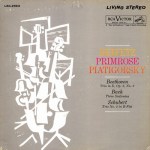
An audiophile hall of shame pressing and another Classic Records Classical LP reviewed and found wanting.

Classic Records ruined this album, as anyone who has played some of their classical reissues should have expected. Their version is dramatically more aggressive, shrill and harsh than the Shaded Dogs we’ve played, with almost none of the sweetness, richness and ambience that the best RCA pressings have in such abundance.

In fact their pressing is just plain awful, like most of the classical recordings they remastered, and should be avoided at any price.

Apparently, most audiophiles (including audiophile record reviewers) have never heard a top quality classical recording reproduced properly. If they had, Classic Records would have gone out of business immediately after producing their first three Living Stereo titles, all of which were dreadful and labeled as such by us way back in 1994. I’m not sure why the rest of the audiophile community was so easily fooled, but I can say that we weren’t, at least when it came to their classical releases.

(We admit to having made plenty of mistaken judgments about their jazz and rock, and we have the We Was Wrong entries to prove it.)

(more…)

Violin Recordings and the Problem of Smear

Hot Stamper Pressings of Living Stereo Titles Available Now

This Shaded Dog pressing of LSC 2129 had practically no smear on either the violin or the orchestra.

Try to find a violin concerto record with no smear.

We often say that Shaded Dogs, being vintage All Tube recordings, tend to have tube smear.

But what about the 70s transistor mastered Red Label pressings – where does their smear come from?

Let’s face it: records from every era more often than not have some amount of smear.

And we can never really know what accounts for it.

The key thing is to be able to recognize it for what it is.

(We find modern records, especially those pressed at RTI, to be quite smeary as a rule. They also tend to be congested, blurry, thick, veiled, and ambience-challenged. For some reason most audiophiles — and the reviewers who write for them — rarely seem to notice these shortcomings.)

Of course, if your system itself has smear it becomes that much harder to hear the smear on your records.  Practically every tube system I have ever heard had more smear than I could tolerate – it comes with the territory. And high-powered transistor amps are notoriously smeary, opaque and ambience-challenged. Our low-powered, all-transistor rig has no trouble showing us the amount of smear on records, including those that have virtually none.

Keep in mind that one thing live music never has is smear of any kind. Live music is smear-free. It can be harmonically distorted, hard, edgy, thin, fat, dark, and all the rest, but one thing it can never be is smeary.

That is a shortcoming unique to the reproduction of music, and one which causes many of the pressings we sell to have their sonic grades lowered.

(more…)

Allow Us to Make the Case that Even CDs Have Better Sound than Classic’s Vinyl

brahmvioli_1903_debunk

Hot Stamper Classical and Orchestral Pressings Available Now

The Classic reissue of LSC 1903 is a disaster: shrill, smeary and profoundly unmusical.

In these four words we can describe the sound of the average Classic Records Living Stereo pressing.

The best Heifetz records on Classic were, if memory serves, LSC 2734 (Glazunov), LSC 2603 (Bruch) and LSC 2769 (Rozsa).

They aren’t nearly as offensive as the others, and one is actually quite good. If you can pick one up for ten or twenty bucks, you might get your money’s worth depending, I suppose, on how critically you listen to your classical records.

The CDs are better for all I know. That’s probably the first place to go, considering Classic’s generally poor track record.

(more…)

For Scottish Fantasy, Forget the Red Seal Pressings

Hot Stamper Pressings Featuring the Violin Available Now
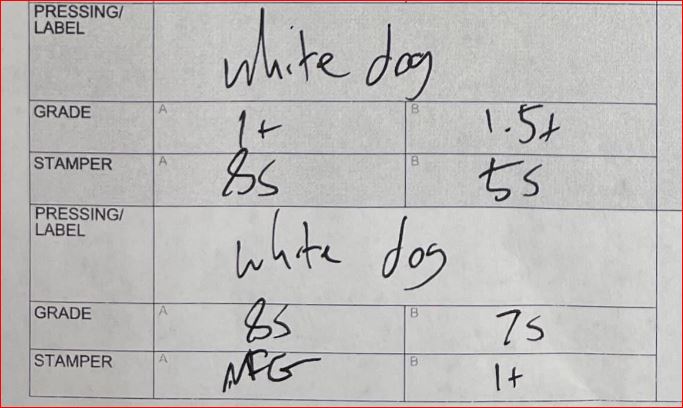
The 70s Red Seal pressings we’ve played recently have all left a lot to be desired, but, since we had one sitting on a shelf in the backroom with lower stampers, we figured what the hell, let’s clean it up, throw it into our next shootout and hope for the best.

As you can see, the best was not to come.

There are quite a number of other records that we’ve run into over the years with obvious shortcomings.

Here are some of them, a very small fraction of what we’ve played, broken down into the three major labels that account for most of the best classical and orchestral titles we’ve had the pleasure to play.

  • London/Decca records with weak sound or performances
  • Mercury records with weak sound or performances
  • RCA records with weak sound or performances

We’ve auditioned countless pressings in the 36 years we’ve been in business — buying, cleaning and playing them by the thousands.

This is how we find the best sounding vinyl pressings ever made, through trial and error. It may be expensive and time consuming, but there is simply no other method for finding better records that works. If you know of one, please write me!

We are not the least bit interested in pressings that are “known” to sound the best.

Known by whom? Which audiophiles — hobbyists or professionals, take your pick — can be trusted to know what they are talking about when it comes to the sound of records.

I have never met one, outside of those of us who work for Better Records. I remain skeptical of the existence of such a creature.

We’re looking for the pressings of albums that actually do sound the best.

You know, when you actually play them.

(more…)