_Performers – Richter, Sviatoslav

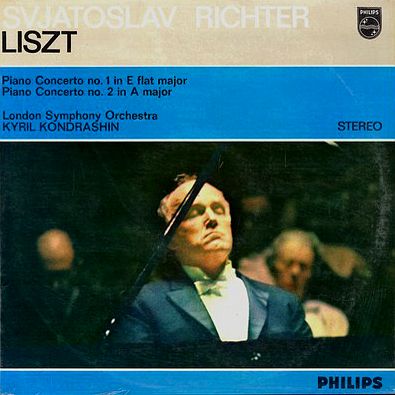
Liszt / Piano Concertos Nos. 1 and 2 / Kondrashin / Richter

More of the Music of Franz Liszt

  • A vintage Philips import pressing of these Classical Masterpieces that boasts two solid Double Plus (A++) sides, pressed on vinyl that’s as quiet as we’ve ever found
  • The finest Liszt 1st and 2nd Piano Concertos we know of for their performances, and unquestionably for sonics (when the sonics are this good)
  • The best pressings of this title are more like live music than any classical recording you own (outside of one of our Hot Stamper pressings, of course; those can be every bit as good) or your money back
  • So big, rich and transparent we guarantee you have never heard a better piano concerto recording

*NOTE: Unlike Concerto No. 1, The Second Piano Concerto opens very quietly, so there will likely never be a vintage pressing of the album that will get that opening to play like a CD. Expect to hear some random ticks, a small price to pay to hear this wonderful performance on top quality analog.

Richter and Kondrashin deliver the finest Liszt 1st & 2nd Piano Concertos I know of, musically, sonically and in every other way. Richter’s performance here is alternately energetic and lyrical, precisely as the work demands. The recording itself is explosively dynamic. The brass is unbelievably full, rich and powerful. You won’t find a better recording of this music anywhere, and this pressing just cannot be beat.

Big and rich (always a problem with piano recordings: you want to hear the percussive qualities of the instrument, but few copies can pull it off without sounding thin). We love the BIG, FAT, Tubey Magical sound of this recording! The piano is solid and powerful — like a real piano.

Huge amounts of hall space, weight and energy, this is DEMO DISC QUALITY SOUND by any standard. (more…)

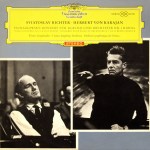
Now That’s the Way a Piano Should Sound!

On the best copies the rich texture of the strings is out of this world — you will have a very hard time finding a DG with better string tone.

The best pressings of this recording have none of the shortcomings of the average DG: it’s not hard, shrill, or sour.

DG made plenty of good records in the 50s and 60s, then proceeded to fall apart, like most labels did. This is one of their finest. It proves conclusively that at one time — 1962 to be exact — they clearly knew exactly what they were doing.

Without question this is a phenomenal piano recording in every way.

I don’t know of another recording of the work that gets the sound of the piano better. On the better copies, the percussive quality of the instrument really comes through.

It’s amazing how many piano recordings have poorly-miked pianos.

These bad sounding pianos are either too distant, lack proper reproduction of the lower registers, or somehow smear the pounding of the keys into a blurry mess.

Are they badly recorded?

Or perhaps it is a mastering issue?

Maybe a pressing issue?

To be honest, it’s probably all three.

Lately we have been writing quite a bit about how good pianos are for testing your system, room, tweaks, electricity and all the rest, not to mention turntable setup and adjustment.

  • We like our pianos to sound natural (however one chooses to define the term)
  • We like them to be solidly weighted
  • We like them to be free of smear, a quality that is rarely mentioned in the audiophile reviews we read

Other records that we have found to be good for testing and improving your playback can be found here.

(more…)

Don’t Waste Your Money on this RCA from 1961

Hot Stamper Pressings of Living Stereo Recordings Available Now

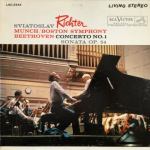
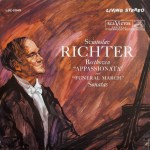
These Beethoven “Appassionata” And “Funeral March” sonata recordings have never impressed us sonically.

On the Shaded Dog pressings of LSC 2545 that we’ve auditioned, the piano is too thin.

Who likes a thin sounding piano?

If you have big speakers that can move air with authority, the kind needed to reproduce the size and power of a concert piano, then check out some of the titles we’ve found to have especially weighty piano reproduction.

The sound is not awful — you could certainly do worse — but we do not see the value in this title considering it will be neither cheap nor quiet.

We say pass.

Lewis Layton is clearly one of our favorite engineers, but this album does not seem to be up to his usual standards, or ours.


There are quite a number of other vintage classical releases that we’ve run into over the years with noticeable shortcomings.

For fans of vintage Living Stereo pressings, here are some to avoid.

Some audiophiles may be impressed by the average Shaded Dog pressing, but I can assure you that we here at Better Records are decidedly not of that persuasion.

Something in the range of five to ten per cent of the major label Golden Age recordings we play will eventually make it to the site. The vast majority just don’t sound all that good to us. (Many have second- and third-rate performances and those get tossed without ever making it to a shootout.)

(more…)

Some Pressings of Tchaikovsky’s Piano Concerto No. 1 Can Sure Be a Letdown

Hot Stamper Pressings of the Music of Tchaikovsky Available Now

I don’t know of another recording of the work that gets the sound of the piano better. On the properly-mastered, properly-pressed copies, the percussive quality of the instrument really comes through.

But that quality (along with lots of others) is only heard on the better copies.

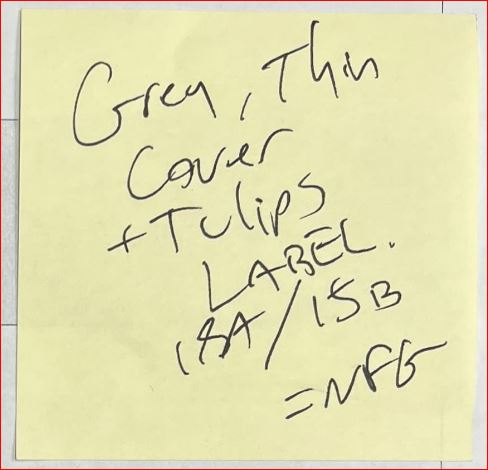
The reissues (one with the later Tulips label, one with the earlier Large Tulips label) described below are at best passable, and some of them were just awful.

The note to the left makes clear that even some of the early Large Tulips label pressings had very bad sound. Watch out especially for 18A/15B stampers. They’re NFG: No F***ing Good.

As you can see from the notes above for this particular recording in the Black and White cover, one side was passable, earning our 1.5+ grade. That makes it a decent sounding record, I suppose, but it’s a long, long, long way from the best.

1.5+ is four grades down from the top copy. That’s a steep dropoff as far as we’re concerned. 1.5+ only hints at how good a recording this DG can be on the best pressings.

To see more records that earned the 1.5+ grade, please click here. (Incidentally, some of them are even on Heavy Vinyl. The better modern pressings have sometimes, if rarely, been known to earn Hot Stamper grades, and two recently shocked the hell out of us by actually winning a shootout. Wouldn’t you like to know which two!)

One Plus (1+) is a sub-Hot Stamper grade. We do not sell records that do not earn a grade of at least 1.5+ on both sides.

For those who might be interested, there’s more on our grading scale here.

Our Favorite Performance with Sound to Match

A recent listing for the album can be found here.

Without question this is a phenomenal piano recording in every way.

On the best copies the rich texture of the strings is out of this world — you will have a very hard time finding a DG with better string tone. This record does not have the shortcomings of the average DG: it’s not hard, shrill, or sour.

DG made plenty of good records in the 50s and 60s, then proceeded to fall apart, like most labels did. This is one of their finest. It proves conclusively that at one time — 1962 to be exact — they clearly knew exactly what they were doing.

It’s amazing how many piano recordings have poorly-miked pianos. The badly recorded pianos are either too distant, lack proper reproduction of the lower registers, or somehow smear the pounding of the keys into a blurry mess.

Are they badly recorded?

Or is it a mastering issue?

Perhaps a pressing issue?

(more…)

Tchaikovsky / Piano Concerto No. 1 – Our Favorite Performance and Sound By Far

More of the music of Peter Ilyich Tchaikovsky (1840 – 1893)

More Masterpieces of Classical Music

  • A Large Tulip label pressing of this wonderful piano concerto with solid Double Plus (A++) grades or BETTER from start to finish
  • Side one was sonically very close to our Shootout Winner – you will be amazed at how big and rich and tubey the sound is
  • It’s also impossibly quiet at Mint Minus to Mint Minus Minus, a grade that practically none of our vintage classical titles – even the most well-cared-for ones – ever play at
  • By far our favorite performance for the work, and fortunately for us audiophiles, it is also the best sounding recording of the work that we know of
  • With huge amounts of hall space, weight and energy, this is Demo Disc quality sound by any standard
  • When the brass is the way it is here – rich and clear, not thin and shrill – you have yourself a top quality DG pressing
  • Virtually no smear to the strings, horns or piano – this is Golden Age recording done right!
  • There are about 150 orchestral recordings we think offer the best performance coupled with the highest quality soundThis record has earned a place on that list.
  • This link with take you to more entries in our core collection of well recorded classical albums.

(more…)

Where Cheap Turntables Fall Flat – The Music of Franz Liszt

Hot Stamper Pressings of Classical Music Available Now

Classical music is unquestionably the ultimate test for proper turntable/arm/cartridge setup.

The Liszt Piano Concerto record you see pictured is a superb choice for making small adjustments to your setup in order to improve the playback of these very difficult to reproduce orchestral recordings.

Here are some other reviews and commentaries touching on these areas of turntable setup.

One of the reasons $10,000+ front ends exist is to play large scale, complex, difficult-to-reproduce music such as Liszt’s two piano concertos. You don’t need to spend that kind of money to play this record, but if you choose to, it would surely be the kind of record that could help you recognize the sound quality your tens of thousands of dollars has paid for.

It has been my experience that cheap tables more often than not collapse completely under the weight of a mighty record such as this.

(more…)

Beethoven and Richter – Our Favorite Performance on Vinyl

More of the Music of Ludwig van Beethoven

  • A stunning copy of this wonderful concerto performance that boasts a Shootout Winning Triple Plus (A+++) side two mated to a solid Double Plus (A++) side one, and reasonably quiet vinyl for a Shaded Dog from 1961
  • This pressing has the real Living Stereo magic in spades, but unlike most of the RCA concerto recordings, Richter, the brilliant soloist featured here, is not overly spotlighted, hence the much more natural “concert hall” sound
  • The piano is part of the orchestra, and properly sized, allowing the contributions of the other musicians to be heard more clearly, laid out as they are so elegantly across a huge and deep Boston Symphony Hall stage

In orchestral music, when it comes to clarity there is nothing close to the sound of the live performance, but some records, this one especially, give you the sense that you are hearing it all. Audio may be an illusion but it can be a very convincing one.

The spaciousness and three-dimensionality of the recording are also exceptional. Through the efforts and skill of the RCA engineers, that striking openness in the recording is somehow combined with an electrifying immediacy in the sound of the piano, no mean feat. One rarely hears both, except of course live (and not always even then).

There may be other performances of merit, but I know of no recording of this music with better sound. If you are demonstrating naturalistic sound, not bombastic Hi-Fi spectacularity, this pressing more than qualifies as a Demo Disc.

(more…)

On This Recording of Concerto No. 1, Transparency and Piano Weight Are Key

More of the Music of Ludwig van Beethoven

Notes from a recent shootout.

This pressing has the real Living Stereo magic in spades, but unlike most of the RCA concerto recordings, Richter, the brilliant soloist featured here, is not overly spotlighted, hence the much more immersive “concert hall” sound.

The piano is part of the orchestra, and properly sized, allowing the contributions of the other musicians in the orchestra to be heard more clearly, laid out as they are elegantly across a huge and deep Boston Symphony Hall stage.

All of which adds up to a top quality piano concerto recording in every way.

When it comes to clarity in orchestral music, there is nothing that comes close to the sound of a live performance.

However, some records, this one especially, give you the sense that you are hearing it all.

Audio may be an illusion but it can be a very convincing one.

The spaciousness and three-dimensionality of the recording are also exceptional. Through the efforts and skill of the RCA engineers, that striking openness in the recording is somehow combined with an electrifying immediacy in the sound of the piano, no mean feat. One rarely hears both, except of course live (and not always even then).

There may be other performances of merit, but I know of no recording of this music with better sound. If you are demonstrating naturalistic sound, not bombastic Hi-Fi spectacularity, this pressing more than qualifies as a DEMO DISC.

What to Listen For

What typically separates the killer copies from the merely good ones are qualities that we often look for in the records we play: transparency. Transparency allows you to hear into the recording, reproducing the ambience and subtle musical cues and details that high-resolution analog is known for.

(Note that most Heavy Vinyl pressings being produced these days seem to be seriously Transparency Challenged. Lots of important musical information — the kind we hear on even second-rate standard-weight pressings — is simply not to be found.)

Solid weighty sound for a piano concerto recording is critically important as well. The piano has to be big, powerful, and solid, as massive as a boulder, just the way it can be in the concert hall. In this respect it helps to have Sviatoslav Richter pounding away on the instrument of course.

Side One

Amazing – big and rich without a touch of smear on the strings or the percussive piano. The piano is right sized and that is unusual indeed in our experience.

Dynamic as all get out, with lively horns and a piano that is clear and present. Tonally correct, in a big hall, the sound is Hard To Fault.

The piano is so clear, yet the orchestra is as rich and smooth as one could possibly ask for. No smear, no congestion, no bandwidth limitations – this is the sound of the master tape. No modern reissue — digital or analog — will ever be able to reproduce more than a fraction of the sound found on this pressing.

Side Two

Big, lively and less congested that most of the copies we played. Side one had no smear, this side has a touch, but the sound is wonderful nevertheless.

Listen to the woodwinds on this side; they are glorious. You will have a hard time finding better sound for that section of the orchestra on other recordings.

Chopin, Rachmaninoff et al. / Richter

More of the Music of Sergei Rachmaninoff

  • This original White Dog Stereo pressing (just missed the cutoff for “Living Stereo” but the sound is awesome anyway) boasts STUNNING Shootout Winning Triple Plus (A+++) sound or very close to it on both sides
  • A WONDERFUL collection of solo piano works performed by one of our favorite pianists, Sviatoslav Richter
  • The piano is present and clear, with no practically no smear whatsoever – both sides are dynamic and open with plenty of weight
  • Recorded live in concert on December 26, 1960, at Carnegie Hall in New York, and December 28, 1960, at Mosque Hall in Newark

This vintage RCA pressing has the kind of Tubey Magical Midrange that modern records can barely BEGIN to reproduce. Folks, that sound is gone and it sure isn’t showing signs of coming back. If you love hearing INTO a recording, actually being able to “see” the performers, and feeling as if you are sitting in the studio with the band, this is the record for you. It’s what vintage all analog recordings are known for — this sound.

If you exclusively play modern repressings of vintage recordings, I can say without fear of contradiction that you have never heard this kind of sound on vinyl. Old records have it — not often, and certainly not always — but maybe one out of a hundred new records do, and those are some pretty long odds.

The Piano

On the transparent and tonally correct copies it is clear and full-bodied. The piano in a solo recording such as this often makes for a good test.

How easily can you see it and how much like a real piano does it sound? 

If you have full-range speakers some of the qualities you may recognize in the sound of the piano are WEIGHT and WARMTH. The piano is not hard, brittle or tinkly. Instead, the best copies show you a wonderfully full-bodied, warm, rich, smooth piano, one which sounds remarkably like the ones we’ve all heard countless times in piano bars and restaurants.

In other words like a real piano, not a recorded one. Bad mastering can ruin the sound, and often does, along with worn-out stampers and bad vinyl and five-gram needles that scrape off the high frequencies. But some copies survive all such hazards. They manage to reproduce the full spectrum of the piano’s wide range on vintage vinyl, showing us the kind of sound we simply cannot find any other way.

(more…)

An Amazing Recording Held Back by Truly Awful Mercury Mastering

Hot Stamper Mercury Pressings Available Now

This recording was released through Mercury after Philips bought the label. It was recorded by Robert Fine and Wilma Cozart, mastered by George Piros, the legendary Mercury team of renown. It is instructive to note that the Philips mastering is dramatically superior to the mediocre Mercury mastering, which may strike you as counterintuitive, but is nonetheless a fact. It’s precisely the reason we play records all day here at Better Records. You can’t judge a record by its credentials. The only way to know how it sounds is to play it, and to really know how it sounds you must play it against a sizeable number of other copies.

Then, and only then, can you talk knowledgeably about the sound. (Note to forum posters: this means you.)

(more…)