_Conductors – Previn

The Planets – Select Commentaries and Letters

Hot Stamper Pressings of Orchestral Spectaculars Available Now

Below you will find a number of the more popular commentaries we’ve written about the various recordings of this wonderful work that we’ve spent time auditioning over the years.

Included here is also a letter from a customer who spent some time with a Hot Stamper pressing of our favorite recording, Andre Previn’s with The London Symphony in 1974.

This Recording of The Planets Has “Blockbuster Sound,” For Better and For Worse

The Planets – MoFi and UHQR Reviewed

Our Planets Shootout Was Years in the Making, and We Got It Wrong Anyway

Letter of the Week – “A very rewarding day spent visiting a remarkable piece of music.”

The Planets – Testing with Mars and Saturn

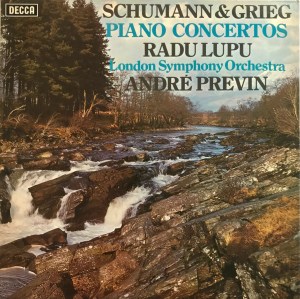
Schumann and Grieg Piano Concertos / Lupu / Previn

More of the Music of Edvard Grieg

  • A superb UK Decca pressing of this wonderful classical masterpiece with Double Plus (A++) sound from start to finish
  • Both sides boast full brass and an especially clear, solid, present piano, one with practically no trace of vintage analog tube smear
  • Dynamic, huge, lively, transparent and natural – with a record this good, your ability to suspend disbelief will require practically no effort at all
  • Back in the days when the TAS Super Disc List meant something, this record was on it and deservedly so
  • The London pressings of the same album can be very good in their own right, but they don’t win shootouts – only the best of these Decca pressings do, a subject we discuss in some of these listings
  • Our two favorite recordings of the Grieg Piano Concerto are this one and Rubinstein’s for RCA in 1962
  • There are about 150 orchestral recordings we think offer the best performances with the highest quality sound. This record is certainly deserving of a place on that list.

(more…)

Rachmaninoff – Symphony No. 2 / Previn

More of the Music of Sergei Rachmaninoff

  • Previn and the LSO’s dynamic performance of Rachmaninoff’s Symphony No. 2 returns to the site for the first time in eighteen months, here with outstanding Double Plus (A++) sound throughout this vintage British EMI pressing
  • A long term resident of the TAS super disc list, and one I never realized was anything special until my stereo got a lot better about ten or fifteen years ago
  • EMI’s from this era always seemed to have one problem or another, but not this copy – these sides are about as clean and quiet as we can ever hope to find them!
  • This recording of the work is guaranteed to put to shame any Heavy Vinyl pressing of this music you may own
  • There are more than 175 orchestral recordings we think offer the best performances with the highest quality sound. This record is certainly deserving of a place on that list.
  • The vast majority of the best orchestral recordings we’ve played were made in the Golden Age of recording (50s & 60s), but that doesn’t mean that the 70s & 80s didn’t produce amazing discs as well, and you can find more than 20 of them here

(more…)

Rachmaninoff – Symphony No. 1 / Previn

More of the Music of Sergei Rachmaninoff

  • Rachmaninoff’s Symphony No. 1 returns to the the site with outstanding sound throughout this original British EMI pressing
  • These sides are clear, full-bodied and present, with plenty of space around the players, the unmistakable sonic hallmark of the properly mastered, properly pressed vintage analog LP
  • The only Rachmaninoff symphonies we know of with the potential for audiophile sound are the ones Andre Previn made for EMI in the 70s
  • However, we have quite a large number of reviews and commentaries for Rachmaninoff’s piano concertos

(more…)

Prokofiev / Symphony Nos. 1 & 7 – Our Favorite “Classical” Symphony

More of the music of Sergei Prokofiev

  • This stunning classical recording returns to the site for only the second time in three years, here with solid Double Plus (A++) sound throughout this British EMI import – exceptionally quiet vinyl too
  • Previn has a spritely take on the first symphony, which is precisely what it needs and, every bit as important, the LSO has the chops to bring his vision to life
  • “[The Classical Symphony] is rather a brilliant display of charm, gaiety and good humor as well as a delightful and respectful homage to the early masters whom Prokofieff had at one time so scornfully rejected.”
  • There are about 150 orchestral recordings we think offer the best performances with the highest quality sound. This record is certainly deserving of a place on that list.

This superb release contains one of my favorite performances of the Classical Symphony, and it also carries the distinction of having the best combination of sonics and performance that we have ever heard on vinyl. (There is a recording by Previn and the LA Phil from 1986 with a performance to die for; unfortunately, it comes with the kind of mid-80s tear-your-head-off digital shrillness that makes the CD medium the worn-out joke we analog lovers know it to be.)

The First Symphony happens to be one of my favorite classical works of all time, right up there with The Planets and Pictures at an Exhibition. I wouldn’t want to go to a desert island without all three.

This remarkable pressing has exceptional transparency and dynamics, allowing the energy and precision of the performance to shine through. Truly a sublime recording that belongs in any music collection, whether you’re a fan of classical music or not.

If I had to choose one piece of classical music that I would never want to live without, it would have to be the performance of Prokofiev’s First Symphony found on this very side one. It’s a work of such joy that I’ve never failed to be uplifted by it (except when the performance is too slow, which it often is).

This is a difficult piece to pull off. Most of the time either the orchestra is not up to the task or the conductor misunderstands the work. Previn has a spritely take on the piece, which is precisely what it needs and, every bit as important, the London Symphony has the chops to bring his vision to life.

(more…)

EMI’s Wonderful Prokofiev Symphony No. 1 with Previn

Hot Stamper Pressings of the Music of Prokofiev Available Now

This EMI contains one of my favorite performances of the Classical Symphony, and it also carries the distinction of having the best combination of sonics and performance that we have ever heard on vinyl.

There is a recording by Previn and the LA Phil from 1986 with a performance To Die For. Unfortunately it comes with the kind of mid-80s tear-your-head-off-digital shrillness that makes the CD medium the worn-out joke we analog lovers know it to be.

The Classical Symphony

It is difficult to determine whether it was in answer to his critics or in revolt against the romanticism and impressionism of the time that the ‘bad boy’ of modern music undertook to write a symphony such as Haydn would have written ‘had he been living today.’ He scored the work for a Haydn-size orchestra (using a pair each of flutes, oboes, clarinets, bassoons, horns and trumpets, with kettledrums and strings.) But far from being a parody, it is rather a brilliant display of charm, gaiety and good humor as well as a delightful and respectful homage to the early masters whom Prokofieff had at one time so scornfully rejected.

— from the liner notes of RCA’s release with Sargent

This superb release contains one of my favorite performances of the Classical Symphony, and it also carries the distinction of having the best combination of sonics and performance that we have ever heard on vinyl. (There is a recording by Previn and the LA Phil from 1986 with a performance to die for; unfortunately, it comes with the kind of mid-80s tear-your-head-off digital shrillness that makes the CD medium the worn-out joke we analog lovers know it to be.)

(more…)

Do Pressings Remastered at 45 RPM Have Better Sound?

Record Collecting for Audiophiles – 45 RPM Pressings

No doubt some do, but based on our admittedly limited experience, we rather doubt any of the titles shown here, or from this series, are likely to be very good sounding.

I was going to write about the awful Holst The Planets with Previn from this series that I had played a few years back, but never got around to it.

Lots of punchy, powerful and deep bass — yes, 45 RPM mastering is known for that — but the dry, overly clean, clear, modern sound and the screechy strings made me take it off the turntable halfway through the first side. (We write more about EMI and Angel pressings here.)

If you want a good sounding pressing of The Planets, our favorite by far is Previn’s reading on EMI from 1974.

As usual, our advice is to accept no substitutes. There are a lot of bad sounding, poorly performed Planets out there.


(more…)

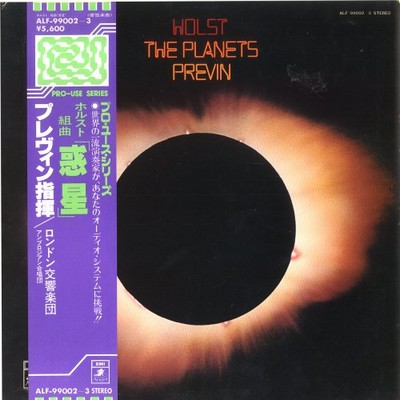
The Planets on Pro-Use Japanese Vinyl at 45 RPM Is Just Awful

More of the music of Gustav Holst (1874-1934)

This EMI 45 RPM Japanese Import 2 LP set is considered one of the great Planets by many audiophiles, but it’s not, based on our playing of a copy we had years ago, which means it belongs in our audiophile hall of shame.

The best copies on British or Dutch EMI vinyl are clearly better than this “audiophile” pressing.

What could be less surprising?

This is precisely why we dislike Japanese pressings as a rule — they sound like this audiophile trash.

Our favorite performance of The Planets can be found here.

The Big Picture from a Lifelong Audiophile

You may have seen the following text in another listing, but it bears repeating.

There is nothing new under the sun, and that is especially true when it comes to bad sounding audiophile records. The world is full of them.

There has been one big change from the days when I self-identified as a freshly minted audiophile in the 70s.

Yes, the records being marketed to audiophiles these days may have second- and third-rate sound, but at least now they have good music. That’s progress, right?

The title reviewed above is a good example of the kind of crap we newbie audiophiles used to put up with back in the old days, long before we had anything resembling a clue.

This one clearly belongs on our list of bad audiophile records.

You might be asking: What kind of audio fool was I? to buy a dumbass record like this.

It’s a fair question. Yes, I admit I was foolish enough to buy records like this and expect it to have good music, or at least good sound. Of course it had neither. Practically none of these kinds of records ever did. Sheffield and a few others made some good ones, but most Direct to Disc recordings were crap.

As clueless as I was, even back in the day I could tell that I had just thrown my money away on this lipsticked-pig in a poke.

But I was an audiophile, and like a certain Mr. Mulder, I wanted to believe. These special super-hi-fidelity records were being made for me, for special people like me, because I had expensive equipment and regular records are never going to be good enough to play on my special equipment, right?

To say I was wrong to think about audio that way is obviously an understatement. Over the course of the last forty years, I (and to be fair, my friends and my staff) have been wrong about a lots of things in the worlds of records and audio.

You can read more about many of the things we got wrong under the heading: live and learn.

The good news? Audio progress is real and anyone who goes about doing audio the right way can achieve the equivalent of miracles.

(more…)

Holst – The Planets / Previn

More of the music of Gustav Holst (1874-1934)

Reviews and Commentaries for The Planets

  • This early British EMI pressing is guaranteed to be the best copy of Holst’s Magnum Opus you have ever heard, with both sides earning Nearly Triple Plus (A++ to A+++) sonic grades – just shy of our Shootout Winner
  • The vinyl on these mid-70s EMI pressings is never as quiet as we would like – with such a dynamic recordings, one with so many quiet sections, lightly ticky vinyl is unavoidable
  • Previn’s and the LSO’s performances are without peer in our estimation
  • These sides are rich, clear and dynamic, with weighty brass, and the kind of dynamic power that lifts the energy level right into space
  • TAS List Super Disc, with a performance that’s as spectacular as the recording (thanks to the work of the two Christophers)
  • More of our favorite orchestral performances with top quality sound

These sides have some of the best sound we have ever heard for the work, and that’s saying something considering the scores of recordings we have played of this famous and famously well-loved piece.

Fortunately for audiophiles who love The Planets but are disappointed by most performances, a group that includes us to be sure, the amazing sound found on this copy is coupled with a superb performance.

As you might imagine, on a big system this would make for a powerful listening experience, which is exactly the experience we ourselves had during our recent shootout. This copy actually deserves its place on the TAS List.

Both sides earned strong grades for their powerful energy and orchestral excitement, especially from the brass section, a subject we discuss at length below. (more…)

Holst and Previn – A Planets for the Ages

More of the music of Gustav Holst (1874-1934)

Reviews and Commentaries for The Planets

Fortunately for audiophiles who love The Planets but are disappointed by most performances, a group that includes us to be sure, the amazing sound found on this copy is coupled with a superb performance.

As you might imagine, on a big system this would make for a powerful listening experience, which is exactly the experience we ourselves had during our recent shootout. This copy actually deserves its place on the TAS List.

The brass is so BIG and POWERFUL on EMI’s recording that other orchestras and recordings frankly pale in comparison. Until I heard one of our top EMI pressings show me brass with this kind of weight and energy, I simply had no idea it was even possible to play the work this powerfully. The lower brass comes in, builds, gaining volume and weight, then calms down, but soon returns and builds relentlessly, ever and ever louder. Eventually the trumpets break out, blasting their way forward and above the melee the heavier brass has created below.

Quite honestly I have never heard anything like it, and I heard this work performed live in late 2012! In live performance the members of the brass section, being at the back of the stage, were at least 100 feet away from me, perhaps more. When playing the best EMI pressings the brass were right there in front of me, eight to ten feet away. In a way this is of course unnatural, but that fact takes nothing away from the subjective power of the experience.

Only the conductor can stand at the podium, but the EMI producers and engineers (the two Christophers in this case) have managed to put the listener, at least in this movement, right there with him.

The EMI Sound

EMI’s are usually recorded with a mid-hall perspective, which is somewhat distant for our taste. That’s not our sound. We prefer the Front Row Center seats (especially at these prices). That said, when an EMI from the ’70s is recorded, mastered and pressed properly, it actually sounds more like the real thing, more like the live performance of orchestral music in a concert hall.

It’s uncanny how real the best copies of this record sound. For a recording of The Planets it has no equal in our experience.

Previn Vs. Mehta

This 1974 release is widely considered one of the great recordings of The Planets. Previn is simply outstanding throughout. He’s not going after effects, he’s making all the pieces fit.

Of course it trounces the Mehta recording that many audiophiles, HP included, are seemingly enamored with. We certainly never have been. EMI knows how to make an orchestra sound like a seamless whole, unlike the Decca recording engineers who appear to take perverse pride in awkwardly spotlighting every section. (Was it a Phase 4 experiment gone wrong? That’s my guess.)

And the average London or Decca pressing of The Planets is lackluster — so opaque and smeary it’s barely second-rate, a fact that audiophile record collectors have mostly failed to appreciate since it first appeared on Harry’s Super Disc list all those years ago.