Advice-WTLF, Vocals

Records with advice on what to listen for in order to separate the best pressings from the also-rans.

Frank Sinatra & Duke Ellington – Booth? What Booth?

More of the Music of Frank Sinatra

More of the Music of Duke Ellington

Notice that, at least for most of the material, and perhaps all of it, Sinatra does not seem to be stuck in a vocal booth. He sounds like he is actually standing on the same stage as Ellington’s band.

Whether this is a recording trick — he’s in a booth but the engineer did a great job creating a sound for the booth that matched the ambience and space of the studio — or whether he is standing front and center with the band, the illusion is convincing and adds greatly to the “reality” of the performance..

Recorded one year after the remarkable Sinatra-Jobim record that we treasure here at Better Records, Sinatra takes the opportunity to work with one of the greatest bandleaders in the history of jazz, the Duke himself. We had good luck with the stereo originals on the lovely Blue and Green Reprise labels — they can be as big, rich and warm as Sinatra’s legendary Capitol recordings when you find the right pressing, and that’s really saying something.

Transparency

What typically separates the killer copies from the merely good ones are two qualities that we often look for in the records we play: transparency and lack of smear. Transparency allows you to hear into the recording, reproducing the ambience and subtle musical cues and details that high-resolution analog is known for.

(Note that most Heavy Vinyl pressings being produced these days seem to be quite Transparency Challenged. Lots of important musical information — the kind we hear on even second-rate regular pressings — is simply not to be found. That audiophiles as a whole — including those passing themselves off as the champions of analog in the audio press — fail to notice these failings does not speak well for either their equipment or their critical listening skills.)

Richness and Lack of Smear

Lack of smear is also important, especially on a recording with this many horns, where the reproduction of leading-edge transients is critical to their sound. If the sharply different characters of the various horns (trumpet, trombone, and various saxes) smear together into an amorphous blob, as if the sound were being fed through ’50s vintage tube amps (for those of you who know that sound), half the fun goes right out of the music.

Richness is important — horns need to be full-bodied if they are to sound like the real thing — but so are speed and clarity, two qualities that ensure that all the horns have the proper bite and timbre.

(more…)

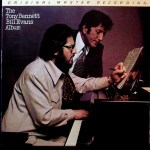
The Tony Bennett / Bill Evans Albums – More Mistaken MoFi EQ

Hot Stamper Pressings of Pop and Jazz Vocals Available Now

Sonic Grade: F

That weird boost around 10k that Stan Ricker likes to add to practically every record he masters wreaks havoc on the sound of Tony Bennett’s voice.

I would be very surprised if the current in-print Compact Disc doesn’t sound more tonally natural, and for us audiophile record lovers – not lovers of audiophile records, but guys who love records with audiophile sound – that’s simply another nail in the coffin for one of the most laughably inept remastering labels in the history of that sad enterprise.

If you love this album, and you should, the regular early Fantasy pressings are the only game in town.

Julie Is Her Name, Volume 2 – Notes from Our First Shootout

More of the Music of Julie London

On side one listen to how rich the bottom end is. The Tubey Magic on this side is off the charts.

Some copies — or, to be more precise, some sides of some copies — can be dry, but that is clearly not a problem on this one.

The naturalness of the presentation puts this album right at the top of best sounding female vocal albums of all time.

To take nothing away from her performance, which got better with every copy we played.

Clap Hands

If only Ella Fitzgerald on Clap Hands got this kind of sound!

As good as the best copies of that album are, this record — like the first volume, the 1955 mono recording — takes the concept of intimate female vocals to an entirely new level.

The notes I took during this shootout lay out just how impressed I was with the sound of this remarkable copy:

  • Wide stereo.
  • Big Bass.
  • Swingin’.
  • Just the right amount of reverb.
  • Tonal perfection.
  • The stereo kills the mono (on this album, on the copies we played anyway).

(more…)

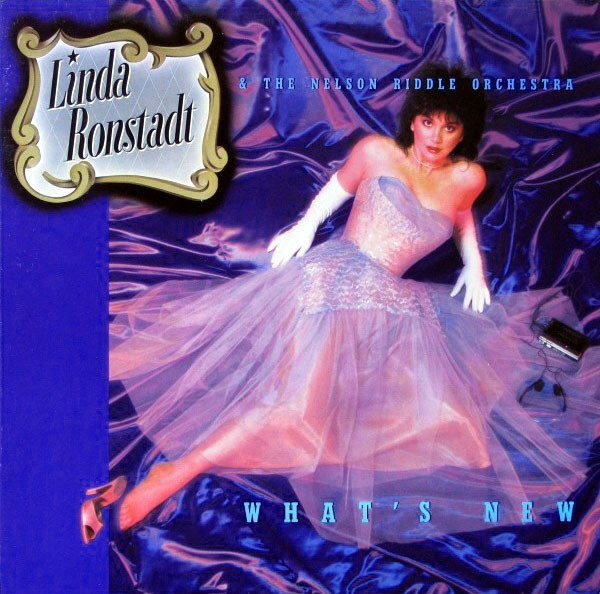
String Tone and Texture Are Key to the Best Pressings of What’s New

Hot Stamper Pressings of the Music of Linda Ronstadt Available Now

We’ve criticized the engineer George Massenburg in the past, but with this copy we almost want to take it all back.

What he gets right on this recording is the sound of an orchestra, augmented with various jazz musicians (Ray Brown, Tommy Tedesco, Plas Johnson, Bob Cooper), all performing live in a huge studio.

The sound stretches far to Linda’s left, far to her right, as well as back far behind her in a huge semi-circle. She is of course singing in a vocal booth, with her vocal placed front and center in the soundstage.

What to Listen for

That’s easy on this album: the strings. When the strings are big and rich, not shrill and thin, that’s a good thing. Rosiny texture means you have a copy with less smear and higher resolution. Harmonics up top means that the top end of your copy is extending properly.

Bottom line: If the strings are bad on this album probably everything else is too.

Here are some records that are good for testing string tone and texture.

Having said that, this is an album of standards sung by a woman with a very recognizable voice. If Linda doesn’t sound right, what’s the point of the record? To hear Nelson Riddle’s well-recorded strings?

The best copies have Linda sounding rich and breathy. Few managed to pull off that particular trick as well as we would have liked. We took major points off for those copies that had her sounding too thin or forced in her upper range.

(more…)

Dream With Dean – Watch Out for Hard and Honky Vocals

Hot Stamper Pressings of Pop and Jazz Vocal Albums

Dream with Dean is great for finding any traces of “honk” in your midrange. Getting Deano’s baritone to sound tubey and rich, to get the sound that Bing Crosby could get just by opening his mouth, is not all that easy on some systems, mine included.

Correctly set VTA is critical in this regard, but pretty much everything must be working at its best for Dean to sound as intimate and natural as we know he can on the best pressings.

Balancing the lower mids with the upper mids is the goal, and it’s not as easy as it sounds. This album is great for testing, and guaranteed to bring practically any high-dollar system at a stereo showroom, a convention, or your very own home to its knees.

This is my favorite Dean Martin record of all time; just Dean and a jazz guitar quartet behind him (featuring Contemporary favorites Barney Kessel and Red Mitchell!) doing standards. On the best copies, the immediacy is absolutely mind-blowing. It’s a shame that there aren’t more Frank Sinatra records that sound like this.

(more…)

Testing For Sibilance on Heavenly

More Pop and Jazz Vocals

More Reviews and Commentaries for Male Vocal Albums

All copies have sibilance, some more than others. The best copies have the least amount and make the spit they do have much less gritty and objectionable.

We’ve known for decades how good a test sibilance is for tables, cartridges and arms. Sibilance is a bitch. The best pressings, with the most extension up top and the least amount of aggressive grit and grain mixed into the music, played using the highest quality, most carefully dialed-in front ends, will keep sibilance to an acceptable minimum.

VTA, tracking weight, azimuth and anti-skate adjustments are critical to reducing the amount and the quality of the spit in your records.

(more…)

Julie Is Her Name – Listen for Barney Kessel’s Guitar Tone

On the first track of side one, focus on how rich the bottom end is on Barney Kessel’s guitar. The Tubey Magic on this side is off the charts. Some copies can be dry, but that is clearly not a problem on the best pressings.

Now compare the sound of that guitar — just the guitar, nothing else — you hear on a good original pressing to the sound of the same guitar on the awful Boxcar Heavy Remaster.

We think there is a very good chance you will be quite shocked.

Unsurprisingly, everything else is worse on the Boxcar record as well. It has no reason to exist. The CD is likely better.

So Natural

The naturalness of the presentation puts this album right at the top of best sounding female vocal albums of all time.

To take nothing away from her performance, which got better with every copy we played. Julie’s rendition of Cry Me a River may be definitive.

If only Ella Fitzgerald on Clap Hands got this kind of sound! As good as the best copies of that album are, this record takes the concept of intimate female vocals to an entirely new level. (more…)

Watch What Happens – Now That’s What a Real Drum Kit Sounds Like!

Another Record We’ve Discovered with (Potentially) Excellent Sound…

and One We Will Probably Never Shootout Again

Some records are just too consistently noisy for us to offer to our audiophile customers no matter how good they sound.

We have a section for records that tend to be noisy, and it can be found here.

This is the most realistic drum kit I have heard on a non-jazz album in my life. The drum sound on the first track is exactly the sound we all know from hanging around small clubs and our friends’ garage bands. There is simply no audible processing on any part of the kit. The drums are centered behind the vocals and lead instruments, with what sounds like to me the barest of miking, surrounded by just the right amount of unbaffled studio space.

When the drums come in on the first track on side one you will hear immediately what I mean. The third track on side two has especially good drums as well. The vocals on that third track, Message to Michael, are some of the most natural on the album as well. Lena can strain a bit on some songs in the loudest passages, but on others she can belt it out and stay clean all the way to the top. Listen track by track to hear how well she holds up when the bigger choruses come in.

As music lovers and audiophiles this was a truly marvelous discovery for us years ago. True, we’ve known about the album for a long time, but as a practical matter it’s been impossible to find enough clean copies to do a shootout — until now of course.

Dave Sanders, a name I — and no doubt most audiophiles — was not familiar with, brilliantly engineered the album as well as other favorites of ours, including Szabo’s 1969, Gilberto’s Windy and McFarland’s Does The Sun Really Shine On The Moon? It’s hard to find a recording he did that isn’t full of Tubey Magic, huge studio space and right-on-the-money instrumental timbres. (more…)

Resolution and Warmth Are Key to the Best Pressings of Stardust

Hot Stamper Pressings of the Music of Willie Nelson Available Now

This copy is hi-res without sacrificing the analog warmth that makes the recording exceptional, especially for one from 1978.

Georgia On My Mind is a DEMO QUALITY track on this album. You aren’t going to believe all the ambience. The top end is gorgeous — sweet, delicate, and silky with loads of extension. The sound is extremely hi-res without sacrificing any of the warmth that makes this music so special.

Just listen to the rimshots and the bell in Georgia On My Mind — we guarantee you have NEVER heard those instruments sound so present, clear, and immediate. 

Willie’s voice is natural and tonally correct, with all the breathy texture you could ever hope to hear. The acoustic guitars and Booker T.’s organ are perfection.

Awareness

Many copies of this album suffer from an phony hi-fi-ish quality (which is probably the reason why Stardust made the TAS List in the first place). You’ve got to play a big stack of copies to come up with a pressing that offers this kind of relaxed, natural sound. That’s our job here at Better Records — playing bad records so you don’t have to.

(more…)

You Know What’s Shocking About This Dionne Warwick Record?

Another Record We’ve Discovered with (Potentially) Excellent Sound…

and One We Will Probably Never Do Again

Some records are just too consistently noisy to offer to our audiophile customers no matter how good they sound.

We have a section for records that tend to be noisy, and it can be found here.

What’s shocking about a record like this is the fact that the instruments you hear behind and to the side of Dionne Warwick are REAL instruments, and for the most part they are not really being processed much, they are simply being recorded. How many times do you hear a pop album with sound like that? Rarely in our case, and we play them by the hundreds.

Just played a Linda Ronstadt album that she did with Nelson Riddle — you know the one —  and I can tell you one thing, the sound of that album and this one are on opposite sides of the recording spectrum in terms of naturalness. On a scale of one to a hundred, Linda scores about a two, and Dionne scores 90, maybe more. It’s a JOY to hear a record with this kind of sound.

Play this one for your audiophile friends who own and respect the recordings of Dianna Krall, Patricia Barber and the like. Be sure to squeeze in the phrase “Boy, they don’t make ’em like they used to…” whenever there is a pause in the music or conversation.

You might also want to ask them if they think the invention of digital reverb was such a good idea after all.

If they’re good analog buddies, ones that you want to keep being your buddies, you might not want to say anything at all. Just keep quiet and let their own ears shame them. This is the kind of record that can do it. (more…)