*Basic Concepts

Here are a group of commentaries illustrating the concepts we’ve found to be helpful in understanding and evaluating the sound quality of recordings.

What Are Some Good General Rules for Acquiring Records with the Highest Quality Sound?

More Entries from Tom’s Audiophile Notebook

The Riverside pressings we’ve auditioned of both The Thelonious Monk Orchestra – At Town Hall and Thelonious Monk Quartet Plus Two – At The Blackhawk were just awful sounding.

The OJC reissues of both albums from the 80s, although better, were not overflowing with the rich, natural, relaxed analog sound we were looking for either.

Ah, but a few years back (2015, maybe?) we happened to drop the needle on one of these Monk Milestone Two-Fers. Here was the sound we were looking for and had had so little luck finding until then.

Which prompts the question that should be on the mind of every audiophile:

What are the rules for collecting records with the best sound quality?

The answer, of course, is that there are no such rules and there never will be.

There is only trial and error. Our full-time staff has been running trials — we call them shootouts and needle drops — for more than twenty years now, with far more errors than successes. Such is the nature of records.

It may be a tautology to note that the average record has mediocre sound, but it nevertheless pays to keep that undeniable fact in mind.

Even worse, if you make the mistake of pinning your hopes on a current Heavy Vinyl reissue — and you happen to be a member of that blessed minority of audiophiles with top quality equipment; a dedicated, heavily-treated room; decades of experience; reasonably high standards and well-trained ears — your disappointment is almost assured.

The Book of Hot Stampers – We’d Love to Read It

_1400755003Some Moderately Helpful Title Specific Advice

I received this email about fifteen years ago:

Hi Tom,

Could you please recommend a book which would give the stamper numbers associated with the different pressings of a particular record.

Dear Sir,

Let me take this opportunity to give a more comprehensive answer, since the concept of Hot Stampers is not especially well understood by the audiophile community outside of our admittedly rather small customer base. Only those who have spent a great deal of time reading the reviews and commentary on the site are likely to understand the importance of stampers. This is partly my fault, as this issue of stamper variability and quality is spread out all over the place, exactly where, no one really knows.

First of All, There Is No Such Book

I regret to say there is no such book and probably never will be. To my knowledge, we are the only guys on the planet selling records who know much about the subject. In fact, we pioneered the very concept, starting about fifteen years ago.

Back in the early ’90s I complained that the TAS Super Disc List didn’t list the “correct” stampers: the stampers (or matrix numbers if you prefer) being the individual markings associated with the actual pressing HP was calling a Super Disc. Without knowing those stampers almost any pressing one might acquire would be different from the one on the list, and quite possibly inferior (or superior; in any event, different sounding).

The catalog number or label — practically all that could be gleaned from his writings — serves as a very poor guide in this respect. Occasionally one might read a review which mentioned stampers, but any such mentions were few and infrequent. To do much good they would have had to be much more systematic, and that never happened (mostly because the reviewers making these pronouncements were of course not very systematic and never pretended to be).

So, since we do not have the time or the intention to write such a book, and no one else to my knowledge has the necessary expertise, one will probably never be written. There are at least two good reasons for not even attempting such an endeavor, however. One is selfish, one is not.

Trade Secrets

First off, when we discover hot stampers, they become the equivalent of trade secrets — we never reveal them to anyone. Over the last twenty five years of collecting we have bought hundreds of thousands of dollars worth of records and spent tens of thousands of hours of our time deciphering those arcane little squiggles in the dead wax that correlate, however imperfectly, with both the good records and the bad ones. Why would we want to give that hard-earned information away? It’s priceless, to us anyway.

(more…)

Tell Us More About “Hot Stampers”

More Straight Answers to Your Hot Stamper Questions

Many of the basic questions concerning Hot Stampers, including our grading system, 2-packs, coupons, the mailing list, as well as more general ordering and payment information, can be found in our FAQ on our website.

The links below deal specifically with the kinds of issues that potential customers, as well as skeptics and forum posters (god bless ’em!) have raised with us over the years.

We think sitting down to play a Hot Stamper pressing is the best way to appreciate its superior sound, in the same way that hearing a vintage LP played back on a top quality audio system is the best way to appreciate the superiority of analog.

If you want to skip all that and just buy a record or two in order to hear what you’ve been missing, click here.

To expand on the basics discussed above, you might want to check out some of these next:

  1. How can I find my own Hot Stamper pressings?
  2. Do I already have some Hot Stamper pressings in my collection?

(more…)

Identical Stampers and New Vinyl Somehow Produce Clearly Different Sounding Records?

nirvaneverMore Milestone Events in the History of Better Records

In this listing from 2007 we recount our experience with some copies of Nirvana’s Nevermind album. It was an important milestone in the evolution of Better Records.

We learned our lesson – no more sealed records. Not if you’re the kind of audiophile record dealer who cares what his records sound like (which appears to put us in a class of exactly one.)

That same year we decided to stop carrying any new Heavy Vinyl release, prompted mostly by the mediocrity of the Rhino reissue of Blue.

So, all in all 2007 was a good year for us. We stopped playing their game and invented a new one all our own. Judging by the enthusiastic response of our customers we think we did the right thing.

Nevermind Circa 2007

The dirty little secret of the audiophile record biz is that the purveyors of these pressings cannot possibly know with any certainty the quality of the sound of any sealed record they are selling. (Whether they can tell what the sound quality is of any record they sell is an open question, and one we would have to answer in the negative based on the hundreds of audiophile pressings we’ve auditioned over the last 40 years.)

They turn a blind eye to the fact that some copies are simply not going to measure up to the sound of the review copy that they auditioned and described.

This is a good reason not to sell sealed records, which, of course, we don’t.

That’s because we’ve done the experiments and found out the things they cannot be bothered to learn.

But wait a minute. Even that’s giving audiophile record dealers far too much credit.  Only a small fraction actually review the records they sell. Most cut and paste a review from the manufacturer and let it go at that. And the few that do write reviews are often so far off the mark that they might as well be talking about another pressing entirely.
(more…)

Better Records’ Record Collecting Axiom Number Two

Thinking Critically About Records Is Key to Understanding Them

In an old commentary for a shootout we did for Carole King’s Tapestry album, we took to task both the CBS Half-Speed mastered audiophile pressing and the Classic Heavy Vinyl audiophile pressing, noting that both fell far short of the standard set by the Hot Stamper copies we’d discovered over the years.

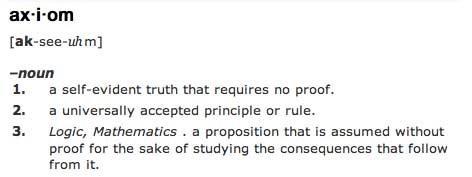
This finding (and scores of others just like it) prompted us to promulgate the following axioms of audiophile record collecting. (Axiom Number One can be found here.)

Which leads us to Better Records Record Collecting Axiom Number Two

No two records sound the same.

If that weren’t true we’d be out of business. It is in fact the very foundation of our business. We wrote a commentary with that idea firmly in mind under the heading identical stampers + new vinyl = different sound?, which goes into that subject in more detail.

And it’s equally true for Half-Speeds — they’re records, right? — so we have a few entries in our we was wrong. section about those rare copies that actually have sounded good to us over the years.

For example, the chances of there being exceptionally good sounding CBS Half-Speed mastered pressings of Tapestry may be vanishingly small, but we can’t say the chances are zero.

There could be some, but considering how bad the idea of Half-Speed mastering is, would they have much chance of beating our Hot Stampers?

As a practical matter I would have to say the chances are zero.

They can’t beat the right early pressings, properly cleaned. They can beat lots of pressings with the wrong stampers.

There might be some copies that sound better than the mediocre Classic Records pressing, which is tonally fine but suffers from the basic issues most of Bernie Grundman’s remastered records suffer from.


Further Reading

What We Listen For – These Are the Basics

What Makes This Enya Pressing a Hot Stamper?

Specifically, what are the criteria by which a record like this should be judged?

The criteria we discuss in most of our Hot Stamper listings are a good place to start:

Energy, vocal presence, frequency extension (on both ends), transparency, harmonic textures (freedom from smear is key), rhythmic drive, correct tonality, fullness, space, Tubey Magic, and on and on down through the list.

When we can get all, or most all, of the qualities above to come together on any given side, we provisionally award it a grade of “contender.” Once we’ve been through all our copies on one side we then play the best of the best against each other and arrive at a winner for that side.

Repeat the process for the other side and the shootout is officially over. All that’s left is to see how the sides matched up.

For some records, we offer advice on what to listen for track by track. 

It may not be rocket science, but it is a science of a kind, one with strict protocols that we’ve developed over the course of many years to insure that the results we arrive at are as accurate as we can make them.

The result of all our work speaks for itself. We guarantee you have never heard this music sound better than it does on any of our Hot Stamper pressings — or your money back.

Size

One of the qualities that we don’t talk about on the site nearly enough is the SIZE of the record’s presentation. Some copies of the album just sound small — they don’t extend all the way to the outside edges of the speakers, and they don’t seem to take up all the space from the floor to the ceiling. In addition, the sound can often be recessed, with a lack of presence and immediacy in the center.

Other copies — my notes for these copies often read “BIG and BOLD” — create a huge soundfield, with the music positively jumping out of the speakers. They’re not brighter, they’re not more aggressive, they’re not hyped-up in any way, they’re just bigger and clearer.

When you hear a copy that does all that, it’s an entirely different listening experience. (more…)

First Get Good Sound – Then You Can Recognize and Acquire Good Records

Advice to Help You Make More Audio Progress

You know why this guy has a wall full of records?

Because it’s easy to be a record collector — you just collect records.

To get your stereo and room to sound right, and recognize when they do sound right, or at least better than before, that is much, much harder. It literally takes a lifetime of effort.

I’ve been at it for forty-five fifty years. I still work at it and try to learn new things every day.


UPDATE 2022

Or at least I did. I retired in 2022 and left the running of the business to my dedicated, hard working and exceptionally talented staff.


Until you get your stereo, room and ears working, collecting good sounding records is all but impossible.

You will very likely waste a fortune on “collectible audiophile records.”

The kind with collector value and not much else.

These are precisely the opposite of Hot Stamper pressings.  Practically all of the value of a Hot Stamper is tied up in its wonderful music and superior sound quality, which is where we think it should be.

(more…)