Month: July 2024

Joe Satriani – Surfing With The Alien

More Joe Satriani

  • Boasting two solid Double Plus (A++) or BETTER sides, this vintage copy of Joe Satriani’s sophomore release (one of only a handful to hit the site in nearly three years) was giving us the big and bold sound we were looking for
  • Trust me on this one – you’re going to have a difficult and (and expensive) adventure trying to find a great sounding copy of this album on your own
  • 4 1/2 stars: “Joe Satriani’s 1987 breakthrough can be seen as the gold standard for guitar playing of the mid- to late 80s, an album that captures everything that was good about the glory days of shred.”

(more…)

Peter Gabriel – So

More of the Music of Peter Gabriel

  • Here is an incredible copy of Gabriel’s breakthrough album from 1986 with Nearly Triple Plus (A++ to A+++) sound from start to finish – just shy of our Shootout Winner
  • Both of these sides are lively, solid and rich – drop the needle on any track and you’ll see what we mean
  • Great songs including “Don’t Give Up,” “Sledgehammer,” “Big Time,” “Mercy Street,” “Red Rain,” “In Your Eyes,” and more
  • Problems in the vinyl are sometimes the nature of the beast with these Classic Rock records – there simply is no way around them if the superior sound of vintage analog is important to you
  • 4 stars: “…[Gabriel’s] most accessible and…catchiest, happiest record he ever cut. “Sledgehammer” propelled the record toward blockbuster status, and [it] had enough songs with single potential to keep it there.”

Here is a copy of So with the Big and Bold Peter Gabriel sound we love. If you want your Art Rock to actually rock (as well as be arty), this is the copy for you.

It’s not a perfect recording by any means, but when it sounds this good you can easily forget its shortcomings and marvel at how consistently good the material and the production are.

No Mean Feat

It’s exceptionally hard to find good-sounding copies of this album, as you can read about below. With a digital recording such as this, the margin for mastering error is very slim. Most copies just aren’t worth the vinyl they’re pressed on. They can sound harsh, gritty, grainy, edgy, and thin.

We did a shootout years ago that taught us a few things. The most surprising finding? The Brit copy I had in my own collection sucked — how about that! As a rule, I like the Brit pressings best for PG, but that rule got broken after playing all these domestic copies, some of which really sound good, clearly better than the average Brit.

Recording Issues

This is a digital recording, and most of the time it is bright, spitty, and grainy like a typical digital recording, which plays right into our prejudices. After hearing a bad copy, what audiophile wouldn’t conclude that all copies will have these bad qualities? After all, it’s digital. It can’t be fixed simply by putting it on vinyl.

Ah, but that’s where logic breaks down. Proper mastering can ameliorate many if not most of a recording’s shortcomings. When we say Hot Stampers, we are talking about high-quality mastering doing exactly that.

Mass-Produced Plastic Problems

But of course the mastering is only one part of the puzzle. I have multiple copies with the same stampers. Some of them are terrible, some of them are wonderful — you just can’t rely on the numbers to guide you with a piece of mass-produced plastic like this. You have no choice but to play the record to know what it sounds like. (And that’s a good thing. Keeps you honest. There’s no “cheating” when you have nothing to go by but the sound.)

This album sold in the millions. They stamped it out until the metalwork was as smooth as a baby’s bottom. Those badly pressed copies are not going to have any high-frequency extension, which leaves them with all the harsh upper mids sticking out of the mix to peel the paint in your living room and make your ears bleed.

(more…)

The RCA Later Label Pressings from the 70s Fall Short Yet Again

Hot Stamper Pressings Featuring the Violin Available Now
Many of the later RCA pressings we’ve played recently have left a lot to be desired.

We’re on record as telling audiophiles that it’s never a good idea to judge records by their labels, so when it came time to do a shootout for this famous Heifetz recording from 1963, LSC 2652, it was only fitting that we force ourselves to clean and play every pressing we had on the shelf, including the White Dogs and Red Seal reissues.

The White Dog did fine (2+ for the Bruch on side one, 1.5+ for the Mozart on side two).

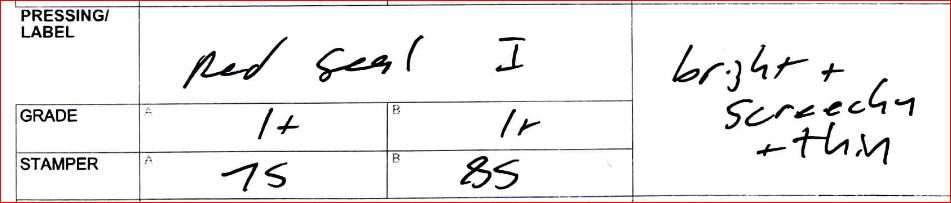
The Red Seal had all the hallmarks of the transistory sound RCA apparently preferred in the 70s.

There are Red Seal pressings with excellent sound — some of them have won shootouts — but this one had too many similarities to the awful Classic Record classical titles produced in the 90s. You know the ones I’m talking about. They have bright, screechy string tone that no self-respecting audiophile with even passable equipment should find tolerable.

(The fact that many of them remain on the TAS list speaks volumes about the self-identified experts’ ability to distinguish a good record from a bad one. More on that subject below.)

More of the Same

Below you will find links to other records we’ve played that had the same problems as this RCA and are best avoided by audiophiles looking for high quality pressings to play.

There is no shortage of other records that we’ve run into over the years with these kinds of obvious shortcomings.

(more…)

Paul Simon – Live Rhymin’

  • Simon’s first live album (one of only a handful of copies to hit the site in two years), here with a KILLER Shootout Winning Triple Plus (A+++) side two mated to a solid Double Plus (A++) side one
  • You get clean, clear, full-bodied, lively and musical analog sound from first note to last
  • Forget whatever dead-as-a-doornail Heavy Vinyl they’re making – the Tubey Magic, size and rock and roll energy of this very special vintage pressing simply cannot be beat
  • Features great versions of Simon classics, including “The Boxer,” “Bridge Over Troubled Water,” “The Sound Of Silence” and many more

(more…)

We Was Wrong about Presence

Hot Stamper Pressings of Led Zeppelin’s Albums Available Now

My history with Led Zeppelin’s seventh album is a classic case of me mistakenly blaming the recording.

In our listings for Presence from about fifteen years ago (a lifetime in audio, at least for us) we noted:

“By the way, Royal Orleans (at the end of side one) never sounds good; it’s always grainy. Same story with the intro to Nobody’s Fault But Mine. It sounds like groove damage, but since it’s on every last one of our domestic copies (the only ones that have the potential to sound amazing in our experience) we know it has to be a pressing problem and not a problem with the individual copies. It’s a shame, but the rest of the songs here all sound amazing.”

This is no longer true, or at least the part about Nobody’s Fault But Mine being grainy or distorted isn’t, since I didn’t test Royal Orleans this time around.

I had just put in a fresh Dynavector 17d3 two days before and spent almost three hours getting the setup dialed in. In fact, it was so right when I was done that I spent the next three or four hours experimenting with room treatments.

When I was done the changes seemed to have opened up the sound and increased the transparency even further. (I went a little too far and had to dial it back a bit, but that’s not at all unusual in my experience.)

Wait a Minute

So now I’m reading about the problems we used to encounter with Nobody’s Fault and thinking to myself, “Wait a minute. I didn’t hear any grain or distortion. Not on the good copies anyway.”

Of course the reason I hadn’t heard those problems is that over the last year or so we’d fixed them.

How I don’t really know.

Maybe the main improvements happened just last week with the cartridge being dialed in better.

Or maybe it was that in combination with a few new room tweaks.

Or maybe those changes built upon other changes that had happened earlier; there’s really no way to know.

(more…)

Gene Ammons – Blue Gene

More Jazz Recordings Featuring the Saxophone

  • Blue Gene returns to the site on OJC-192 after a nearly two year hiatus, here with INCREDIBLE Shootout Winning Triple Plus (A+++) grades or close to them from start to finish, and pressed on fairly quiet vinyl
  • One of the best sounding Ammons records we know of – it’s huge, rich and Tubey Magical, with a solid bottom end and bluesy jazz energy like no other
  • Clean and clear and open are nice qualities to have, but rich and full are harder to come by on this record – this pressing has it all
  • The original pressings we’ve played were astonishingly bad — those of you who are interested can go to the blog in the coming weeks to read all about just how awful they can sound
  • “Some ballad performances in his oeuvre are a testament to an exceptional sense of intonation and melodic symmetry, powerful lyrical expressiveness, and mastery both of the blues and the bebop vernacular that can now be described as, in its own way, ‘classical.'”

For us audiophiles, both the sound and the music here are wonderful. If you’re looking to demonstrate just how good a 1958 All Tube Analog recording by Rudy Van Gelder on Prestige can sound, this killer copy will do the trick.

This pressing is super spacious, sweet and positively dripping with ambience. Talk about Tubey Magic, the liquidity of the sound here is positively uncanny. This is vintage analog at its best, so full-bodied and relaxed you’ll wonder how it ever came to be that anyone seriously contemplated trying to improve it.

This IS the sound of Tubey Magic. No recordings will ever be made like this again, and no CD will ever capture what is in the grooves of this record. There is, of course, a CD of this album, but those of us who possess a working turntable and a good collection of vintage vinyl could care less.

(more…)

Grieg – Peer Gynt / Gruner-hegge / Oslo Philharmonic

More of the music of Edvard Grieg (1843-1907)

More Orchestral Spectaculars

griegpeerg_rca_1508_1357735538

  • You’ll find STUNNING Shootout Winning Triple Plus (A+++) grades or close to them on both sides of this vintage pressing, offering orchestral sound that is gloriously big and bold like no other recording of this music you have ever heard (or your money back)
  • It’s also fairly quiet at Mint Minus Minus, a grade that even our most well-cared-for vintage classical titles have trouble playing at
  • Here are just a few of the things we had to say about this killer copy in our notes: “huge and tubey”…”textured and transparent strings”…”lots of room and space”…”big and lively and dynamic”…”sweet and rich”
  • Rich and tubey, yet open and clear, with lovely string textures, especially in the lower strings, as would be expected of any Living Stereo record from this era
  • The Living Stereo Tubey Magical sonics from 1959 are hard to fault here – they don’t make ’em like this anymore
  • Our favorite performance – Gruner-Hegge and the Oslo Philharmonic understand this music at the most profound levels, making it an absolute Must Own for those of who appreciate the sublime experience of being able to listen to the greatest classical music recordings ever made without ever leaving the house
  • There are some bad marks (as is sometimes the nature of the beast with these early pressings) on Suite No. 2’s “Arabian Dance,” but once you hear just how incredible sounding this copy is, you might be inclined, as we were, to stop counting ticks and just be swept away by the music

As much as I like Fjeldstad’s Peer Gynt on Decca/London with the LSO, I have to say that Odd Gruner-Hegge (love that first name!) and the Oslo Philharmonic Orchestra turn in the better of the two performances. To these ears, theirs is more lyrical; it flows more naturally both within and between the individual movements.

This vintage Living Stereo pressing has the kind of Tubey Magical Midrange that modern records can barely BEGIN to reproduce. Folks, that sound is gone and it sure isn’t showing signs of coming back. If you love hearing INTO a recording, actually being able to “see” the performers, and feeling as if you are sitting in the studio with the band, this is the record for you. It’s what vintage all analog recordings are known for — this sound.

If you exclusively play modern repressings of vintage recordings, I can say without fear of contradiction that you have never heard this kind of sound on vinyl. Old records have it — not often, and certainly not always — but maybe one out of a hundred new records do, and those are some pretty long odds.

Joy

The Oslo Phil also gives me more of a sense that they are feeling the joy in the playing of these works; I do not get quite the same feeling from the LSO. As we worked our way through more and more Living Stereo copies, the Oslo Phil.’s enthusiasm and love for the music became recognizably stronger, and, as one would expect, more agreeable and involving.

Our preference for this performance is, of course, a matter of taste; we cannot be sure you will feel the same. No doubt, you have a version of the Fjeldstad on hand for comparison purposes, perhaps the Speakers Corner pressing (which we used to like quite a bit), but any will do. I expect that playing a handful of select movements from the two performances back to back will show this one to be superior.

To be fair, both are superb. A sizable group of other recordings were auditioned, but we found no others that were comparable in terms of both sound and performance.

(more…)

The Doobie Brothers – What Were Once Vices Are Now Habits

More of The Doobie Brothers

More Rock Classics

  • This copy finished miles ahead of the pack in our most recent shootout, earning INCREDIBLE Shootout Winning Triple Plus (A+++) grades or close to them on both sides – fairly quiet vinyl too
  • Forget the cardboard-y reissues and whatever crappy Heavy Vinyl pressing they’re making now – if you want to hear all the Tubey Magic and energy of these recordings, you need a vintage Hot Stamper pressing like this one
  • “Black Water” was the big hit on their breakthrough fourth album, and it sounds wonderful here – “Eyes of Silver” and “Another Park, Another Sunday” are killer too
  • “The Doobies team up with the Memphis Horns for an even more Southern-flavored album than usual…”

These songs sound every bit as good now as they did thirty-plus years ago when they came out. Better, because we can clean these old records and play them so much better than we could back then. I’ll be the first to admit that back in the day I was a bit of a snob when it came to bands like this. Too mainstream. Too radio-friendly.

Now I realize that the best of this kind of pop rock has stood the test of time very well. One listen and we think you’ll agree: this is good music that belongs in your collection. (more…)

Genesis – Foxtrot

More Genesis

More Prog Rock

  • Outstanding sound throughout this early Peter Gabriel-led Genesis album from 1972, with both sides earning solid Double Plus (A++) grades
  • One of the tougher Genesis albums to find with good sound – this British Charisma LP is much more impressive than most of what we played in our most recent shootout, and guaranteed to trounce any domestic or Heavy Vinyl pressing you may have heard
  • 5 stars: “Foxtrot is where Genesis began to pull all of its varied inspirations into a cohesive sound — which doesn’t necessarily mean that the album is streamlined, for this is a group that always was grandiose even when they were cohesive, or even when they rocked, which they truly do for the first time here. This is the rare art-rock album that excels at both the art and the rock, and it’s a pinnacle of the genre because of it.”

(more…)

Add Made in Japan to the List of Ridiculously Bad DCC Titles

Hot Stamper Pressings of the Music of Deep Purple Available Now

What a murky mess. The sound is dead as a doornail.

It’s yet another audiophile record hall of shame pressing, a Heavy Vinyl disaster if there ever was one.

Is it the worst version of the album ever made?

That’s hard to say. But it is the worst sounding version of the album we’ve ever played, and that should be good enough for any audiophile contemplating spending money on this kind of trash. Take our advice and don’t do it.

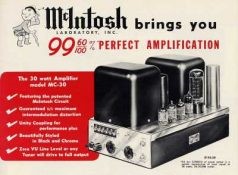
If you like the sound of old McIntosh tube equipment such as the Mac 30s shown here, a sound Steve Hoffman apparently cannot get enough of, DCC is the label for you.

We don’t sell junk like this, but every other audiophile record dealer does, because most of the current group of mastering engineers making records for audiophiles have somehow gotten into their heads that this is the way records should sound.

We’ve been telling them they are wrong about that for years now, that good records have never sounded this way, but the collectors and audiophiles of the world keep buying their wares, so why should they listen to us?

What a Fool Believes

I used to like some of the DCC vinyl titles just fine too. Didn’t play them very often, but I liked what I heard when I did.

Then my stereo got a lot better. Eventually it became obvious to me what was wrong with practically all of the Heavy Vinyl pressings put out by that label. (That story from 1998 gets told in some detail here.)

Heavy Vinyl

The good Heavy Vinyls can be found in this group, along with other Heavy Vinyl pressings we liked or used to like.

The bad Heavy Vinyls can be found in this group. And those in the middle end up in this group.

Audio and record collecting (they go hand in hand) are hard. If you think either one is easy you are very likely not doing it right, but what makes our twin hobbies compelling enough to keep us involved over the course of a lifetime is one simple fact, which is this: Although we know so little at the start, and we have so much to learn, the journey itself into the world of music and sound turns out to be both addictive and a great deal of fun.

(more…)