Musically side two is one of the strongest in the entire Simon and Garfunkel oeuvre (if you’ll pardon my French). Each of the five songs could hold its own as a potential hit on the radio, and there is no filler to be found anywhere. How many albums from 1968 can make that claim?
The estimable Roy Halee handled the engineering duties. Not the most ‘natural” sounding record he ever made — the processing is heavy handed on a number of tracks — but that’s clearly not what neither he nor the duo were going for.
The three of them would obviously take their sound much farther in that direction with the Grammy winning Bridge Over Troubled Water from 1970.
The bigger production songs on this album have a tendency to get congested on even the best pressings, which is not uncommon for four track recordings from the 60s. Those of you with properly set up high-dollar front ends should have less of a problem than some. $3000 cartridges can usually deal with this kind of complex information better than $300 ones.
But not always. Expensive does not always mean better, since painstaking and exacting setup is so essential to proper playback.
The Wrecking Crew provided top quality backup, with Hal Blaine on drums and percussion, Joe Osborn on bass and Larry Knechtel on piano and keyboards.
Side One
Bookends Theme
Save the Life of My Child
I used to think this track would never sound good enough to use as an evaluation track. It’s a huge production that I’d found practically impossible to get to sound right on even the best original copies of the album. Even as recently as ten years ago I had basically given up trying.
Thankfully things have changed. Nowadays, with great copies at our disposal and a system that is really cooking, virtually all of the harmonic distortion in the big chorus near the opening disappears. It takes a very special pressing and a very special stereo to play this song.
In 2007, we wrote the following review for The Power of the Orchestra, VCS 2659:
DEMO DISC QUALITY ORCHESTRAL SOUND like you will not believe. We put two top copies together to bring you the ultimate-sounding Pictures At An Exhibition. Folks, it doesn’t get any better than this for huge orchestral dynamics and energy.
I confess I badly misjudged this record over the course of the last few years. I remember liking it in the early ’90s; at that time it was the only Golden Age recording of Pictures whose performance moved me. I never liked the famous Reiner, LSC 2201, and Ansermet’s performance on London also lacks drive and coherency in my opinion.
I then went on to extoll the many virtues of the recording, making special mention of the brass, dynamics and bass, which you can read about here.
More recently we played a copy of VCS 2659 in one of our regular Pictures at an Exhibition shootouts and were not the least bit impressed by it.
Side One:
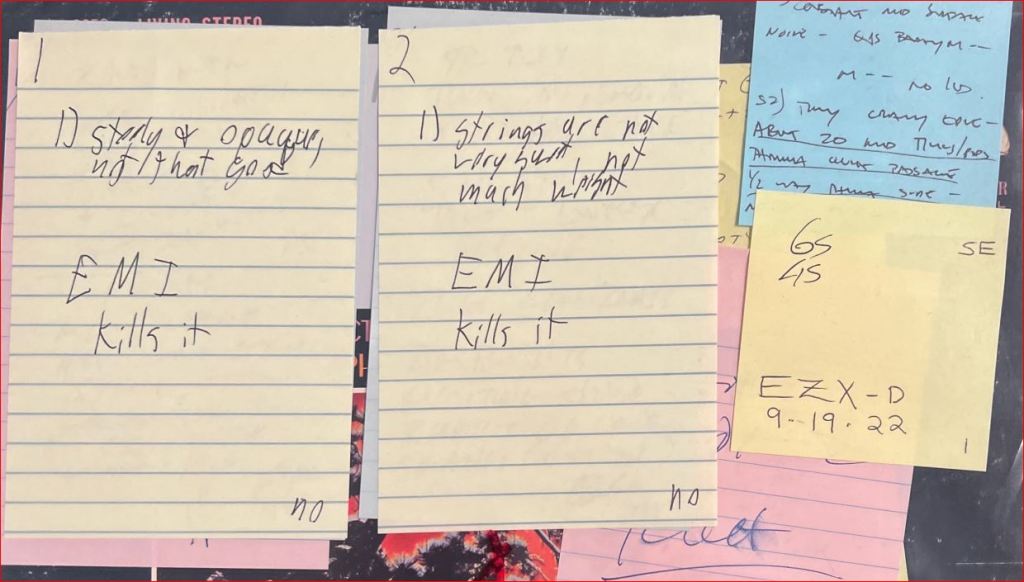
Steely and opaque, not that good.
Side Two:
Strings are not very [unintelligible, might be bright], not much weight.
In other words, it just sounded like an old record.
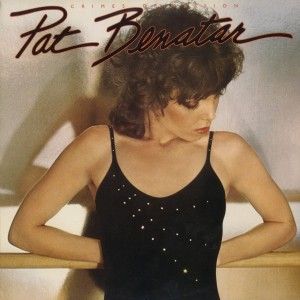
This vintage copy (only the second to hit the site in nearly three years) is close to the BEST we have ever heard, with both sides earning incredible Nearly Triple Plus (A++ to A+++) grades, just shy of our Shootout Winner – exceptionally quiet vinyl too
All kinds of big hits can be found on this one, including Benatar classics such as “Treat Me Right,” “You Better Run” and “Hit Me With Your Best Shot”
4 1/2 stars: “Benatar avoids the synth-happy trends of the early 80s and delivers a hard rocking ten-song session of power pop tempered with a few ballads for balance.”
Credit for the sound must go to the brilliant engineer Keith Olsen, the man behind the amazing sounding Fleetwood Mac self-titled release from 1975. Is there a better sounding Fleetwood Mac album? I certainly can’t think of one.
The man knows Big Rock sound as well as anyone in the business. The two recordings mentioned above and our Crimes of Passion here have too much in common for it to be a mere coincidence. All three have tons of bass (which is the sine qua non of live rock music), huge size and scope, richness, Tubey Magic, a smooth top and last but not least, hard-rockin’ energy.
Those of you who’ve seen the documentary on Sound City know its reputation for great acoustics, along with all the best analog recording equipment and tube microphones. You can clearly hear all of it come together on this album — if you have a copy that sounds like this one that is.
By the way, I note with special interest their first few recording projects from 1970 as listed on their discography page: Spirit’s Twelve Dreams of Dr. Sardonicus (a personal favorite of yours truly), produced by David Briggs, along with another rather well known David Briggs production, After the Gold Rush. The list of Great Sounding Timeless Classic Rock Albums recorded there is a long and glorious one.
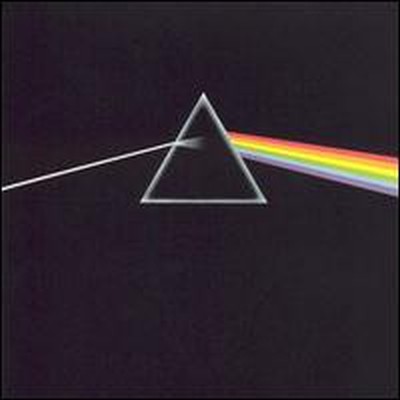
Many years ago, right around 2015 I believe, we played a copy with all the presence, all the richness, all the size and all the energy we ever hoped to hear from a top quality pressing of Dark Side of the Moon.
It did it ALL and then some.
The raging guitar solos (there are three of them) on Money seemed to somehow expand the system itself, making it bigger and more powerful than I had ever heard.
Even our best copies of Blood Sweat and Tears have never managed to create such a huge space with that kind of raw power. This copy broke through all the barriers, taking the system to an entirely new level of sound.
Take the clocks on Time. There are whirring mechanisms that can be heard deep in the soundstage on this copy that I’ve never heard as clearly before. On most copies you can’t even tell they are there. Talk about transparency — I bet you’ve NEVER heard so many chimes so clearly and cleanly, with such little distortion on this track.
One thing that separates the best copies from the merely good ones is super-low-distortion, extended high frequencies. How some copies manage to correctly capture the overtones of all the clocks, while others, often with the same stamper numbers, do no more than hint at them, is something no one can explain. But the records do not lie. Believe your own two ears. If you hear it, it’s there. When you don’t — the reason we do shootouts in a nutshell — it’s not.
The best sounding parts of this record are nothing less than ASTONISHING. Money is the best example I can think of for side two. When you hear the sax player rip into his solo as Money gets rockin’, it’s almost SCARY! He’s blowin’ his brains out in a way that has never, in my experience anyway, been captured on a piece of plastic. After hearing this copy, I remembered exactly why we felt this album must rank as one of the five best Rock Demo Discs to demonstrate the superiority of analog. There is no CD, and there will never be a CD, that sounds like this.
In fact, when you play the other “good sounding” copies, you realize that the sound you hear is what would naturally be considered as good as this album could get. But now we know better. This pressing takes Dark Side to places you have never imagined it could go.
Somehow we managed to have a Classic Records pressing on hand to play in our most recent shootout for the Beethoven Symphony No. 4.
We knew all the way back in 1997 that Classic had done a good job with the record — we recommended it as one of the best Classic Records pressings in our catalogs at the time — but we sure didn’t expect it to do as well as it did, earning 2 pluses on one side and close to that on the other.
Years ago we wrote:
Here is the kind of sound that Classic Records could not ignore, even though the original was only ever made available as part of RCA’s budget reissue series, Victrola.
Don’t let its budget status fool you — this pressing puts to shame most of what came out on the full price Living Stereo label. (And handily beats any Classic Records reissue ever made.)
The top and bottom are wrong to varying degrees on both sides of the Classic, as you can see from our notes, which read:
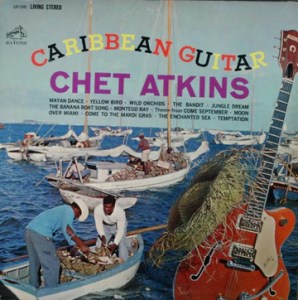
You’ll find superb Double Plus (A++) grades on both sides of this famous TAS Super Disc RCA Living Stereo LP
Plays fairly quiet too – about as quiet as these RCA pressings from the early 60s ever will
If you have ever heard one of our luscious Living Stereo Chet Atkins records, you know what to expect – off the charts Tubey Magic unlike anything made in the last fifty years, or more!
Engineer Bill Porter just doesn’t know how not to make an amazing sounding Living Stereo recording – everything the guy touches is gold
If you’re a fan of the smooth guitar stylings of Mr. Atkins, this is a classic from 1962 that belongs in your collection.
This is one of Chet Atkins’ best albums. Sonically, it’s right up there with The Other Chet Atkins and the Hollywood album. It seems like Bill Porter just doesn’t know how not to make an amazing sounding Living Stereo recording. He knocked this out of the park.
I suppose we owe a debt of gratitude to Harry Pearson for pointing out to us with his TAS List what a great record this is, although I’m pretty sure anybody playing this album can tell after a minute or two that it’s in that very special class of great recordings.
This album is a little more lively than some of his other recordings, which can be criticized for being a little too laid back. For example, try side 2, cut 2 where Chet actually jams.
The last track on side 2 where Chet is joined by a trumpet player is my favorite on the album. That guitar-trumpet combination is pretty magical on that song. And you’ve got to love the kind of sound Bill Porter get from a trumpet. That’s the kind of sound we audiophiles drool over. I do anyway.
One of our good customers had this to say about some Hot Stampers he purchased recently:
I will share with you guys a few more observations.
You will not be surprised to learn that the Led Zep 2 WHS leads the pack. The most expensive record I ever bought but well worth the dough!
Your description says it all: Freakishly good! Firmly trounced my early UK plum and my German RL (side 1).
No disapointments regarding the sound whatsoever with all others. One has to understand though that a 3/3 is an absolute judgement but a relative one (Bruce Springssteen comes to mind) but if one follows you long enough the prices asked for give a bit of indication so that‘s fine with me.
Christian ended his letter with these thoughts.
You made my life better with your records. I keep learning a lot from you following your site everyday now, enhanced my listening skills and sometimes detect now my own HS (just listening and comparing my two early UK Track Who Tommy inspired by your listing yesterday) and am amazed by the quality but also differences from side to side).
Best.
Christian
Christian,
We are so happy to hear that we’ve made your life better with our records, who could ask for anything more?
It wasn’t hard for us to beat your UK and German pressings, the UK original is a joke next to the good RL pressings. I hope you had a chance to play our Hot Stamper against the Heavy Vinyl reissue. If you did, please let us know what you heard.
As for your copies of Tommy have side to side differences, we’ve been going on about that for three decades, but for some reason audiophiles and those who write for them never notice these things.
Steve Westman invited me to appear again on his youtube channel chat with the Audiophile Roundtable.
At about the 39 minute mark, we discuss my picks for what I would rate as the Five Best Sounding Records I know of.
I wanted to go with more variety, so I picked two rock records, two jazz records and one classical album.
A rough transcription with corrections and additions follows:
Before I did my top five, I wanted to say something along the lines of, if you want to know where somebody’s coming from in audio, you don’t ask them what their stereo is, you don’t ask them what their room is like, and how their electricity is done, and what their history with audio is, because they’re not going to tell you, and they just don’t want to go down that road.
But you can ask them about music, and that will tell you a lot about where they’re coming from, so here are my questions for people if I wanted to know more about their understanding of records (and, by implication, audio):
One: what are the five best sounding records you’ve ever heard?
Two: what are your five favorite records of all time?
Three: what five famous recordings never sounded good to you?
Four: name five recordings that are much better than most of your friends or audiophiles in general think?
In my world, you would have to tell me what pressing you’re listening to. If you said “I love the new Rhino Cars album,” I think we would be done, but if you told me that you love the original, then I would say yes, I love that record too. I bought it in 1978 and I’ve played it about 5000 times. Never tired of hearing it.
At about the 48 minute mark I reveal the best stampers for Ry Cooder’s Jazz album.
At about the 50 minute mark someone asks about my system. This would be my answer:
All that information is on the blog., I actually do a thing about my stereo where I take it all the way from 1976 to the present, which I’m sure bores people to death, but you know, there was a lot to talk about there.
There were a lot of changes that I went through and I even talk about how my old stereo from the 90s, which I had put together after having been an audiophile for 25 years, was dark and unrevealing compared to the one I have now, so all my opinions from 25 years ago are suspect, and rightly so.
I feel the same thing is going on in the world of audiophiles when you have systems that aren’t very revealing and aren’t tonally accurate, yet are very musical and enjoyable the way Geoff would like, but they’re not good for really knowing what your records sound like because your system is doing all sorts of things to the record that you’re playing in order to keep the bad stuff from bothering you.
All the bad stuff just jumps out of the speakers, and that’s why these heavy vinyl records don’t appeal to us anymore, because we hear all the bad stuff and we don’t like it.
At 1:03 I’m asked if I like any modern mastering engineers, and the only one I can think of is Chris Bellman, because he masterered one of the few Heavy Vinyl pressing I know of that sounds any good, Brothers in Arms, released in 2021. I played it when Edgers brought it by the studio when he first visited me in preparation for his article.
My best copy was clearly better in some important ways, but Bellman’s mostly sounds right, and that surprised me because most of these modern records sound funny and weird and rarely do they sound right.
(Geoff brought over three records that day: Brothers in Arms, the remastered Zep II, and a ridiculously bad sounding Craft pressing of Lush Life, which was mastered by Bernie Grundman, and one which I have not had time to review yet. It was my introduction to the Craft series (in this case the small batch, limited to 1000), and let’s just say we got off on the wrong foot. I told Geoff it sounded like a bad CD, and that’s pretty much all I remember of it. The average price for that pressing on Discogs is roughly $210 these days. The CD is cheaper and there is very little doubt in my mind that it would be better sounding to boot.)
At 1:04 I mention the biggest snake oil salesman in the history of vinyl, the man behind The Electric Recording Company.
Patrick mentions an ERC Love record which he likes, but we played one that sounded about as bad as a bad record could sound. That Love record will never get any love from us. He says he’ll never buy another ERC pressing, but that doesn’t sound like the kind of thing someone who really likes a record would say, does it? I suppose you can ask him in the comments section why that would be.
At some point I talk about the studio we play records in, not exactly spouse-friendly but good for hearing what’s really in the grooves of the records we play:
The reason the sound room is the way it is is because you’re not there to be reading magazines and looking at your phone. You’re just in there to sit in a single chair in front of two speakers, not talking. Nobody else is in there. They have no business being in there. It’s just you and the music and that’s the way I like it.
This next section has been fleshed out quite a bit. I took the question posed and ran with it:
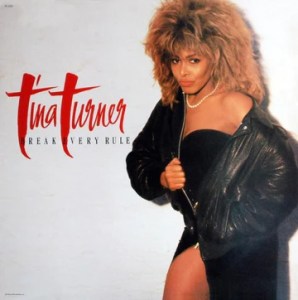
Break Every Rule makes its Hot Stamper debut with solid Double Plus (A++) sound or BETTER throughout this original Capitol pressing – exceptionally quiet vinyl too
These sides are bigger and richer and have more of the rock solid energy that’s missing from the average copy
Turn this one up good and loud (which you can do when the sound is right) and you’ll have a living, breathing Tina Turner singing her heart out right in front of you
“Throughout Break Every Rule, Turner sounds as if she had the time, guidance and confidence to really master these songs. The result is a potent display of passion and control, and that alone would make this record worth discovering.” – Rolling Stone
Aaron has been trying to help his audiophile friends learn the differences between good records and Heavy Vinyl records. This first story concerns Chuck, who sold Aaron the VPI table you see pictured.
Aaron writes:
Chuck’s a real record guy. I played him some hot stampers, alongside the same record in heavy vinyl format.
First up was Rumours – white hot up against the Hoffman 45 mastering. He wanted to hear “you make loving fun,” so we did.
The drums on the Hoffman are more prominent, and they grab you right away. Way out of balance to my taste.
He said, “Hoffman’s done a great job with the drums. But it comes at the expense of Christine’s voice. That’s okay, I never loved her as a singer anyway.”
Next I busted out my holy grail, and played him my Zep 2 WHS. Followed up by the Jimmy Page remastering. The latter is indeed a decent record, Tom, as you say. But the clarity on the drums is superior on the Ludwig. [Clarity is not the word I would have chosen, but that’s another story for another day.]
As Chuck put it, “I never thought of this as a vocal record.” Plant’s voice just has so much more emotion on the hot stamper than on the Page version. He said, “the Page version takes out some of the humanity.” I totally agreed with that. Chuck was amazed that you were able to find and sell me a RL copy with such clean vinyl. I took the record off the table and showed it to him – he was amazed to see how scuffed it looked. It’d grade VG at best visually, but man does it play clean.
So, record after record, Chuck could hear what the hot stampers were doing. And, no doubt, the VPI table is making the hot stampers sound better, and in comparison, the heavy vinyl sounds even duller.
That said, this turntable is so much more revealing than my Clearaudio was, that there is always something delightful to listen to on my heavy vinyl records. They don’t sound worse, they sound better than they used to. It’s just that the gap between them and the hot stampers is only continuing to grow wider.
So, my man Chuck, who sold me his VPI turntable, saw the light. But then he shielded his eyes from it. Even though Chuck’s got a stack of 25 benjamins in his hand right now, I don’t think any of that is headed your way, Tom.
 More of the Music of Simon and Garfunkel
 More of the music of Ludwig van Beethoven (1770-1827)