Month: July 2023

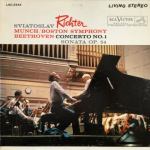
On This Recording of Concerto No. 1, Transparency and Piano Weight Are Key

More of the Music of Ludwig van Beethoven

Notes from a recent shootout.

This pressing has the real Living Stereo magic in spades, but unlike most of the RCA concerto recordings, Richter, the brilliant soloist featured here, is not overly spotlighted, hence the much more immersive “concert hall” sound.

The piano is part of the orchestra, and properly sized, allowing the contributions of the other musicians in the orchestra to be heard more clearly, laid out as they are elegantly across a huge and deep Boston Symphony Hall stage.

All of which adds up to a top quality piano concerto recording in every way.

When it comes to clarity in orchestral music, there is nothing that comes close to the sound of a live performance.

However, some records, this one especially, give you the sense that you are hearing it all.

Audio may be an illusion but it can be a very convincing one.

The spaciousness and three-dimensionality of the recording are also exceptional. Through the efforts and skill of the RCA engineers, that striking openness in the recording is somehow combined with an electrifying immediacy in the sound of the piano, no mean feat. One rarely hears both, except of course live (and not always even then).

There may be other performances of merit, but I know of no recording of this music with better sound. If you are demonstrating naturalistic sound, not bombastic Hi-Fi spectacularity, this pressing more than qualifies as a DEMO DISC.

What to Listen For

What typically separates the killer copies from the merely good ones are qualities that we often look for in the records we play: transparency. Transparency allows you to hear into the recording, reproducing the ambience and subtle musical cues and details that high-resolution analog is known for.

(Note that most Heavy Vinyl pressings being produced these days seem to be seriously Transparency Challenged. Lots of important musical information — the kind we hear on even second-rate standard-weight pressings — is simply not to be found.)

Solid weighty sound for a piano concerto recording is critically important as well. The piano has to be big, powerful, and solid, as massive as a boulder, just the way it can be in the concert hall. In this respect it helps to have Sviatoslav Richter pounding away on the instrument of course.

Side One

Amazing – big and rich without a touch of smear on the strings or the percussive piano. The piano is right sized and that is unusual indeed in our experience.

Dynamic as all get out, with lively horns and a piano that is clear and present. Tonally correct, in a big hall, the sound is Hard To Fault.

The piano is so clear, yet the orchestra is as rich and smooth as one could possibly ask for. No smear, no congestion, no bandwidth limitations – this is the sound of the master tape. No modern reissue — digital or analog — will ever be able to reproduce more than a fraction of the sound found on this pressing.

Side Two

Big, lively and less congested that most of the copies we played. Side one had no smear, this side has a touch, but the sound is wonderful nevertheless.

Listen to the woodwinds on this side; they are glorious. You will have a hard time finding better sound for that section of the orchestra on other recordings.
Are these Strauss Waltzes as Good as Some Say? As Good as We Thought?

The original, favorable review for this album you see further down is from at least ten years ago and probably more like fifteen.

When we revisited the copies we had of this title more recently, we felt the sound was badly lacking in many respects, with no real extension up top nor much weight to the bottom, the very definition of boxy sound.

Many of the vintage classical records we audition have sound that we liked well enough in the past but now no longer meet our standards. Those pressings might sound fine on an old school stereo (or its modern equivalent), but we have something very different to play our records on, courtesy of the many revolutionary changes in audio that have dramatically altered the quality of analog playback over the last twenty five years.

We much prefer Boskovsky’s performances for Decca for waltzes and the like, by Strauss or anyone else.

TAS List Thoughts

We wanted to like the record, it’s on the TAS List for cryin’ out loud, shouldn’t it at least be pretty good?

It very well may be amazingly good, we can’t say it is or it isn’t. In order to be more sure of our opinion, we would need a great deal more data to back it up. We would need to have a large number of copies on hand, clean them all and play them in order to make it possible to find the killer stamper that may be hiding in the pile, assuming one might be.

(more…)

How Can I Possibly Replace Every Record in My Collection with a Hot Stamper Pressing?

What Exactly Are Hot Stamper Pressings?

A customer once wrote to tell us the following:

I never thought I would spend $200 for a record, but I do hear the difference.”

Somewhat faint praise perhaps, but still, any praise is better than no praise, right?

We replied:

If that’s a favorite record of yours, you can now enjoy it for the rest of your life knowing you have a killer copy in your collection to play whenever you damn well please (assuming the kids and the wife are out of the house).

Based on what I am reading, the pressing we sent you is so good it’s practically priceless. But somebody had to put a price on it, and the price we landed on was two hundred bucks.

This is an outrageous amount of money for one record to some people. But not to someone who loves the album and will play it for the rest of his life. Once a month for 40 years comes to $4 a spin. To quote Pete Townshend, I call that a bargain.

Can You Afford It?

Can you afford to replace every record in your collection with a $200 Hot Stamper pressing? Of course not. Almost nobody can. But that’s not really what’s at the heart of our service.

We are offering exceptional copies of your favorite albums. (And of course some records that are soon to be your favorite albums.)

These are records that are guaranteed to be better than any other pressing you can find at any price.

Chasing a Dragon

Here’s an important benefit that often goes unmentioned. We eliminate the need to keep chasing after more and more copies.

If the album is remastered on Heavy Vinyl every two or three years by whatever company hasn’t licensed it yet, who cares? There is not a shred of evidence to back up the contention that any of these labels will ever be able to produce a record that sounds better than the pressing you already have.

How to Buy Hot Stampers

When it comes to Hot Stampers, buy as few or as many as you like. Pay only for records you think are reasonably priced based on how important the music is to you.

Whatever you pay for our record, know that its resale value is essentially nil. Nothing is special about the records we offer other than their superior fidelity.

When you receive a record from us, we ask only that you play it and, in this case, find two hundred dollars worth of sound and music or send it back. You have plenty of time to do that, 30 days.

If lots of customers returned our records, our business would struggle to survive. But we’re doing just fine, thank you very much.


Further Reading

(more…)

Straight, No Chaser – Now That’s a Piano (and a Saxophone)

monk_strai_1507_1435596984

More of the Music of Thelonious Monk

An outstanding copy we played not long ago had us singing its praises, to wit:

If you want to hear just how good Monk’s big, rich piano can sound, look no further.

Rudy Van Gelder, eat your heart out. This is the piano sound Rudy never seemed to be able to get on tape all those years ago.

Some say it’s the crappy workhorse piano he had set up in his studio. Others say it was just poorly miked. Rather than speculating on something we know little about (good pianos and their miking), let’s just say that Columbia had the piano, the room and the mics to do it right, as you can easily hear on this very record.

  • We like our pianos to sound natural (however one chooses to define the term)
  • We like them to be solidly weighted
  • We like them to be free of smear, a quality that is rarely mentioned in the audiophile reviews we read

Listen to Monk vocalizing — this copy is so resolving you can hear him clearly, yet the overall sound is warm, rich and smooth in the best Columbia tradition.

Speaking of warm, rich and smooth, this is important to the horn sound too. Most copies could not make the sax as full-bodied and free of honk as we would have liked.

This one did, earning lots of points in the process. Hard to fault and definitely hard to beat.

Listening in Depth to No Secrets

Hot Stamper Pressings of the Music of Carly Simon Available Now

Presenting another entry in our extensive listening in depth series with advice on what to listen for as you critically evaluate your copy of No Secrets.

Here are some albums currently on our site with similar Track by Track breakdowns.

Balance is key to getting all the tracks to sound their best. Many copies we played were too dull or too bright.

One more note: having your VTA set just right is critical to getting the best out of this album.

The loudest vocal parts can easily strain otherwise.

Once you get your settings dialed in correctly, a copy like this will give you the kind of rich, sweet sound that brings out the best in this music.

Two Tracks Are Key

Listen to Embrace Me, You Child on side two — on the best copies you can really hear the rosiny texture of the strings as they are bowed.

The cymbals too can sound amazing — listen to how extended the crashes are on You’re So Vain.

Side One

The Right Thing to Do
The Carter Family
You’re So Vain

A wonderful song and a good test track to boot. On the best copies the bass will be deep and well-defined, and one can expect the vocals to have a lovely breathy quality.

His Friends Are More Than Fond of Robin
We Have No Secrets

The top end is key to finding great sound on this album. If it’s boosted you’ll have a bright copy that will be glaringly unpleasant. If it’s missing or attenuated, you’ll have a dull copy that’s boring and uninvolving.

Ah, but when it’s extended and correct, everything else seems to fall into place. That’s why this song is such a good test track. If the voices sound smooth but you still have extension up top, you know your copy has been mastered and pressed properly.

(more…)

Rob Wasserman / Solo

More Rob Wasserman

  • An original copy with excellent Double Plus (A++) sound from first note to last on reasonably quiet Rounder vinyl
  • Remarkably spacious and three-dimensional, as well as relaxed and full-bodied – this pressing was a solid step up over most of what we played
  • “…a superior work in terms of showcasing Wasserman’s attributes, which include a huge tone, excellent compatibility and versatility, and tremendous overall skills. His talents were well displayed; he covers all the bases from bop to light fusion.”

This copy blew our minds with the quality of its sound. I don’t know when I’ve heard the bass reproduced with this kind of speed and authority. A Demo Disc par excellence.

As for the music, solo bass is surely not everyone’s cup of tea, but you can’t argue with the sonics. Wasserman is as gifted a player as I’ve ever heard (and I’ve heard Ray Brown live — that guy was pretty damn gifted too!).

(more…)

Give Your Cleaned Records 1 to 3 Plays Before Listening

Record Cleaning – An Overview

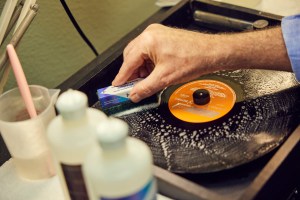
We have a series of turntables set up in the cleaning room that play through every record we’ve cleaned before it goes into the Hot Stamper shootout rotation.

We recommend that you play your records at least once and as many as three times through completely before listening to them, whether you are listening for pleasure or testing for sound quality.

Playing previously cleaned records plows loosened grunge out of the grooves and helps the cartridge “seat” itself in the dead center of the groove at the same time.

Two or three plays usually gets the job done, resulting in a clearly audible improvement of surfaces and sonics.

If you care to, you can clean them the way we do at 45 RPM in order to speed up the process.

For more record cleaning tips and tricks, click here.

To order The Prelude Record Cleaning System, exclusively available from Better Records and 100% guaranteed to be the best record cleaning fluid you have ever used or your money back, please click here.

Once you hear every record you have cleaned sounding better than it ever has, not to mention quieter, we think you will be more than glad you did.

(more…)

Miles Davis / In Person – Friday Night

More Miles Davis

More of Our Best Jazz Trumpet Recordings

  • This early 6-Eye Stereo pressing had the big, rich, transparent and real sound we were looking for, earning outstanding Double Plus (A++) sonic grades on both sides – exceptionally quiet vinyl too
  • If you want to hear a healthy dose of the Tubey Magic, size and energy of this wonderful live session, the first of two recorded at the Blackhawk in April 1961, this copy will let you do that
  • 4 1/2 stars: “The first of two sets recorded during a weekend in 1961 features the Miles Davis Quintet at a period of time when Hank Mobley was on tenor and the rhythm section was comprised of pianist Wynton Kelly, bassist Paul Chambers, and drummer Jimmy Cobb. This is an underappreciated group because of its relatively short life, but as evidenced here, the bandmembers swung fast and hard and never looked back.”

(more…)

Crosby, Stills and Nash – You Do the Best You Can with What You’ve Got to Work With

Hot Stamper Pressings of the Music of Crosby, Stills and Nash Available Now

The founding members of CSN chose the Albert brothers to engineer this 1977 reunion.

Their most famous album is Layla. Ever heard a great sounding Layla? Me neither. Can you hear the sound of Layla in your head? That’s more or less what this album sounds like. There are better and worse Layla’s — we’ve done the shootout many times — just as there are better and worse CSNs, but we have never played amazing Demo Disc pressings of either and I doubt we ever will.

The problem with the sound cannot be “fixed” in the mastering, and here’s how we know: on either side some songs have wonderful sound — the midrange magic, the “breath of life” that makes the first Crosby, Stills and Nash album such a special listening experience — and some don’t.

That’s a recording problem.

It sounds like too many generations of tape were used on songs like Shadow Captain and Dark Star, among others.

But Just a Song Before I Go on side two can sound wonderful: rich, sweet, present and surrounded by lovely studio ambience.

So we listen for the qualities of a specific song that help us pinpoint what the best copies do well and the rest do less well and grade them accordingly, on a curve.

Animals will never sound like The Wall. You do the best you can with what you’ve got to work with.

(more…)

Seals & Crofts’ Folky Rock – What to Listen For

More of the Music of Seals and Crofts

Hot Stamper Pressings of Folk Rock Albums Available Now

In our recent shootout, all our best copies had very similar numbers and letters in the dead wax, which doesn’t happen all that often but does from time to time.

This album does not have a single set of stampers that always win, but it does have a set of very similar stampers that always win. All of the best stampers can only be found on the Green Label original pressings, if that’s any help.

What We’re Listening For On Summer Breeze

Here are some of the things we specifically listen for in a vintage Folk Rock record. Our hottest Hot Stamper copies are simply doing more of these things better than the other copies we played in our shootout. The best copies have:

  • Greater immediacy in the vocals (most copies are veiled and distant to some degree).
  • Natural tonal balance (many copies are at least slightly brighter or darker than ideal; those with the right balance are the exception, not the rule).
  • Good solid weight (so the bass sounds full and powerful).
  • Spaciousness (the best copies have wonderful studio ambience and space).
  • Tubey Magic (without which you might as well be playing a CD).
  • And last but not least, transparency, the quality of being able to see into the studio, where there is plenty of musical information to be revealed in this sometimes simple, sometimes complex and sophisticated recording.

Further Reading

If you would like to run your own tests on the Folk Rock records you own, we make that easy. Here are some other titles that are good for testing these qualities, many with specific advice on what to listen for.