Month: April 2022

Julie London – Julie (in Stereo)

  • This STUNNING vintage Liberty stereo pressing boasts Shootout Winning Triple Plus (A+++) sound from first note to last – exceptionally quiet vinyl for a Julie London album too (don’t get me started)
  • In-the-room presence, preternaturally breathy vocals, and boatloads of wonderful Tubey Magic
  • This amazing sleeper of a record belongs right up at the top of Ms. London’s oeuvre (25 albums strong) along with Julie Is Her Name – high praise indeed
  • 4 stars: “Usually put into a torch song setting, this release allows London to shed that garment and become jazzy. Instead of being sultry, she becomes dazzling and sparkling. She also becomes more adept at phrasing and timing and takes a risk or two in the tradition of a jazz singer.”
  • If you’re a fan of Julie’s, this is a Top Title from 1957 that we think belongs in your collection.
  • The complete list of titles from 1957 that we’ve reviewed to date can be found here.

The great Jimmy Rowles plays piano, handled the arrangements and fronts the big group here, taking the music in a wonderfully jazzy direction that suits Julie’s vocal style perfectly. (more…)

Fleetwood Mac – Penguin

  • This early Reprise LP is a huge step up from most – this copy is full-bodied, smooth and musical – classic Fleetwood Mac sound
  • One of my favorite songs on the album is one of Christine McVie’s best from this period, Did You Ever Love Me – on this pressing it’s rich and sweet exactly the way it should be
  • “Fleetwood Mac’s first album made after the departure of Danny Kirwan features the additions of guitarist Bob Weston and singer Dave Walker… This album gave Fleetwood Mac its best U.S. chart showing yet…”

On the best pressings, the sound is positively JUMPING out of the speakers in a way that is completely unexpected. We often talk about the size of the soundfield on a particular pressing, side to side, bottom to top, and even more often about the energy found on one copy relative to another.

(more…)

Clark Terry – The Happy Horns of Clark Terry

More Clark Terry

More Jazz Recordings

  • Clark Terry’s three horn lineup album returns to the site with superb Double (A++) sound on both sides of this Impulse LP
  • It’s simply bigger, more transparent, less distorted, more three-dimensional and more REAL than most of what we played
  • Credit goes to Rudy Van Gelder once again for the huge space this superbly well-recorded ensemble occupies
  • 4 stars: “This all-star LP has plenty of memorable moments… The lively music is quite enjoyable.”

We dropped the needle on a copy of the album a couple of years ago and immediately we knew it would be a record worthy of a shootout — the sound was big and lively in the best tradition of Rudy Van Gelder’s recordings from the mid-’60s. His sound is the right sound for this style of music, that’s for damn sure.

(more…)

Commodores – Natural High

More Commodores

  • A STUNNING copy of the band’s 1978 release, with Shootout Winning Triple Plus (A+++) sound from top to bottom – exceptionally quiet vinyl too
  • Spacious, full-bodied and Tubey Magical with a solid bottom end and driving rhythmic energy, this is the right sound for this music
  • “… even if ‘Three Times a Lady’ isn’t your cup of tea, Natural High still has a lot to offer R&B fans. ‘X-Rated Movie,’ ‘Such a Woman,’ and ‘I Like What You Do’ are exhilarating examples of hardcore funk, and those who appreciate artists like Heatwave and the Brothers Johnson will find a lot to admire about ‘Fire Girl’ and ‘Flying High’ (both of which are sleek examples of the sophisticated funk style).” 

(more…)

Vince Guaraldi – Jazz Impressions Of Charlie Brown

More 5 Star Albums

  • This superb pressing boasts Shootout-winning Triple Plus (A+++) sound on side one and an excellent Double Plus (A++) side two
  • Guaraldi introduced the world to his unique, melodic, elegantly simple style with this very album – only a pressing this good does the timeless score justice
  • Not the quietest copy we’ve ever played, although finding one much quieter than this is simply not in the cards unless you’re willing to settle for much poorer sound quality
  • 5 stars: “The most remarkable thing, besides the high quality of Guaraldi’s whimsically swinging tunes, is that he did not compromise his art one iota for the cartoon world; indeed, he sounds even more engaged, inventive, and lighthearted in his piano work here than ever.”

On both sides, but especially on this Shootout Winning side one, the sound was jumpin’ out of the speakers. There was not a trace of smear on the piano, which is unusual in our experience, although no one ever seems to talk about smeary pianos in the audiophile world (except for us of course).

If you have full-range speakers, some qualities you may recognize in the sound of the piano on this recording are WEIGHT and WARMTH. The piano is not hard, brittle or tinkly. Instead, the best copies show you a wonderfully full-bodied, warm, rich, smooth piano, one which sounds remarkably like the ones we’ve all heard countless times in piano bars and restaurants.

In other words like a real piano, not a recorded one. This is what we look for in a good piano recording. Bad mastering can ruin the sound, and often does, along with worn out stampers and bad vinyl and five gram needles that scrape off the high frequencies.

But a few copies survive all such hazards. (Too few, hence our prices.) They manage to reproduce the full spectrum sound of the piano (and of course the wonderful performances of the musicians) on vintage vinyl, showing us the kind of sound we never expected from a ’60s Fantasy pressing such as this one.

(more…)

Saint-Saëns, Chausson – Introduction and Rondo Capriccio / Poème / Oistrakh

More of the music of Camille Saint-Saëns (1835-1921)

More Classical and Orchestral Recordings

  • You’ll find outstanding Shootout Winning sound throughout this original RCA Victrola Stereo pressing
  • It’s also fairly quiet at Mint Minus Minus, a grade that most of our classical records, even the mintiest ones, cannot quite manage
  • One of the best violin recordings we offer – the rich, textured sheen of the strings is clearly evident throughout these pieces
  • The sound is big and rich and ALIVE with pyrotechnic fireworks on side one – if you want to demonstrate to a novice listener why modern recordings are unsatisfactory, all you have to do is play this record for them
  • The highlight for us on a collection like this is always going to be The Introduction and Rondo Capriccioso, “one of Saint-Saëns’ few genuine showpieces.”

The violin here is superb — rich, smooth, clear, resolving. What sets the truly killer pressings apart is the depth, width and three-dimensional quality of the sound. The Tubey Magical richness is to die for.

Big space, a solid bottom, and plenty of dynamic energy are strongly in evidence throughout. Zero smear, high-rez transparency, tremendous dynamics, a violin that is present and solid — it takes the sound of this recording beyond what we thought was possible.

The full range of colors of the orchestra are here presented (on side one; side two is simply violin and piano) with remarkable clarity, dynamic contrast, spaciousness, sweetness, and timbral accuracy. If you want to demonstrate to a novice listener why modern recordings are unsatisfactory, all you have to do is play this record for them. No CD ever sounded like this.

The richness of the strings is on display for fans of the classical Golden Age.

It’s practically impossible to hear that kind of string sound on any recording made in the last thirty years. It may be a lost art but as long as we have these wonderful vintage pressings to play it’s an art that is not lost on us.

I don’t think the RCA engineers could have cut this record much better — it has all the stereo magic one could ask for, as well as the clarity and presence that are missing from so many other vintage Golden Age records.

(more…)

Hall, Oates and Mobile Fidelity – A Counterfactual Approach to Remastering

Hot Stamper Pressings of the Music of Hall and Oates Available Now

We here present a set of ideas about remastering that Mobile Fidelity could have used to guide them as they went about cutting their version of Hall and Oates’ masterpiece, Abandoned Luncheonette.

This is the approach they could have taken when it came time to produce an audiophile pressing of Abandoned Luncheonette, an album originally released in 1973.

By the time Mobile Fidelity released their version of the album in 1980, the record was already being offered as a Super Saver reissue, of minimal quality at a reduced price, produced solely for the purpose of keeping record store bins stocked with back catalog. (In our experience it is the rare Super Saver pressing that is worth the vinyl it’s pressed on.)

However, there is nothing inherently wrong with such a budget release. And the Super Saver version may even have some merit. But let’s assume for a moment that it does not.

Why Abandoned Luncheonette?

Now imagine that Mobile Fidelity knows, or at least believes, two things.

One, the album is a Masterpiece that belongs in any right-thinking audiophile’s collection, and two, the current version does not sound very good. The wise men at MoFi recognize that an opportunity to do some good for the audiophile community and make a buck at the same time has presented itself.

Audiophiles may not know it, but they are in need of a good sounding copy of this brilliant album, and they deserve one that sounds every bit as good as the shockingly good sounding originals (like the ones we sell).

In addition, we at MoFi can go Atlantic’s original one better.

We can now press the album on quieter vinyl than Atlantic ever could.

Next, Mobile Fidelity greenlights this project and gets a real master tape from Atlantic. (There are many tapes that masquerade as masters and aren’t any such thing, but let’s assume for the moment that Mobile Fidelity did get a real tape.)

They would also need a nice batch of original pressings, which in our opinion are the best, and would easily be recognized as being the best sounding by anyone playing the album on good equipment. The best originals are lively, rich and smooth, befitting an expensive, high quality studio recording from the era.

So instead of Mobile Fidelity trying to create a new sound for this album, they could have taken a different approach. They could’ve just said to themselves: let’s make a copy of the record that sounds as good as the original, and because we can press it on expensive, high-quality Japanese vinyl, we can justify selling it at a premium price to audiophiles looking for the best sound and quiet vinyl.

They could then cut a number of reference lacquers trying to re-create the best qualities of the originals, and then test those lacquers up against the best originals, in something that might be called a “shootout” long before the term was commonly used bu audiophiles of our persuasion.

The Counterfactual Part

This is what they could have done. That’s why we are calling this commentary a counterfactual.

They did something else entirely.

They tried to make the record sound better than any of the copies they had at hand. They tried to fix the sound. In trying to fix the sound, they made it worse because they simply were not capable of recognizing how right the good originals were.

They must have thought them dull, because the Brain Trust at Mobile Fidelity boosted the hell out of the upper midrange and top end. (Using the concept of reverse engineering, I assume their playback equipment was dull, a fairly safe assumption considering how many Mobile Fidelity records are bright enough to peel the paint.)

They Were on a Mission

They of course would never have been able to get the bass right, because half speed mastering always causes problems down low.

But they could have made the record tonally correct, and fairly transparent in the midrange, and then could have pressed that sound onto state-of-the-art Japanese vinyl.

But none of these things interested Mobile Fidelity at the time. They were hell-bent on making everything they touched better. In the process, practically everything they touched got worse, as anyone with good equipment and two working ears who has played a large selection of their records can attest.

(more…)

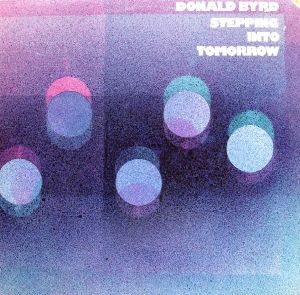
Donald Byrd – Stepping Into Tomorrow

  • Donald Byrd’s 1975 release makes its Hot Stamper debut with outstanding Double Plus (A++) sound from top to bottom 
  • Byrd’s trumpet sounds wonderful here, with just the right amount of bite – credit must go to Val Garay and Dave Hassinger (among others), two of our favorite engineers working at The Sound Factory
  • 4 stars: “… maybe some of those who sniffed at the straightforward nature of some of the rhythms and riffing were won over by the supreme layering of the many components (the way in which “Think Twice” lurches forward, peels back, and gathers steam is nothing short of heavenly), not to mention some deeply evocative playing from Byrd himself.”

(more…)

Letter of the Week – “I now have had a listening experience for myself that confirms all the comments you make on heavy vinyl.”

New to the Blog? Start Here

One of our good customers had this to say about some Hot Stampers he purchased recently:

Hey Tom, 

95% of my record collection are now hot stampers. The other 5% are albums of my youth I am hanging on to waiting for a future shootout. I have no heavy vinyl.

A friend of mine got a 180g Analogue Productions copy of Amos Lee for me as a gift. When I first played it on my system, it sounded clear (no surface noise) but the sound was off (more digital than analog).

I imaged it playing in a reference room of a high end audio store and people sitting commenting how good it sounds. As the record played something was just not right. It sounded overly engineered – if that’s possible.

I pulled out a Bob Dylan (2/2) and listened; then another cut of Amos Lee; then a (3/3) Neil Young. The heavy vinyl just did not sound natural to me.

I now have had a listening experience for myself that confirms all the comments you make on heavy vinyl.

Thanks Tom for Hot Stampers!

Mike

Mike,Thanks for your letter, glad to hear that you hear what we hear!

You carried out your own little record experiment, and discovered the dirty little secret of the Heavy Vinyl pressing: they don’t sound right, at least not up against a real record.

We’ve carried out a few of our own, and you can find a bunch of them here:

You also no doubt improved your critical listening skills, and the better they get, the worse modern records sound. We have written a fair bit about that as well.

With better critical listening skills, you have two options: do your own shootouts, or let us do them for you. There is no other way to find high quality pressings of the music you love.

Thanks for your letter.TP

P.S.

What is lost in the newly remastered recordings so popular with the record collecting public these days ? Lots of things, but the most obvious and irritating is the loss of transparency.

Modern records tend to be small, veiled and recessed, and they rarely image well. But the most important quality they lack is transparency. Almost without exception they are opaque. They resist our efforts to hear into the music and get lost in it.

We don’t like that sound, and like it less with each passing day, although we certainly used to put up with it back when we were selling what we considered to be the better Heavy Vinyl pressings from the likes of DCC, Speakers Corner, Cisco and even some Classic Records.

Now when we play the vinyl those companies produced they either bore us to tears or frustrate us with their veiled, vague, lifeless, ambience-challenged presentation.

It was sometime in 2007 when we turned a corner. The remastered Blue on Rhino Heavy Vinyl came out and was such a mediocrity that we asked ourselves “Why are we bothering?” That was all she wrote.

We stopped selling those third-rate remasters and dedicated ourselves to finding, cleaning, playing and critically evaluating vintage pressings, regardless of era or genre of music.

The result is a website full of great sounding records that should find special appeal with audiophiles who set high standards, who own good equipment and who have well-developed critical listening skills.

John Fogerty – Eye Of The Zombie

More of the Music of John Fogerty

More Roots Rock LPs

  • Insanely good sound throughout with both sides earning Shootout Winning Triple Plus (A+++) grades or close to them
  • Don’t waste your money on whatever dead-as-a-doornail Heavy Vinyl record they’re making these days – if you want to hear the Tubey Magic, size and energy of Fogerty’s second solo album, a vintage ’80s pressing like this one is the only way to go
  • Exceptionally quiet vinyl with both sides playing Mint Minus to Mint Minus Minus
  • John’s last album for over a decade and while not quite as good as Centerfield, there’s still some excellent tracks here, such as “Change in the Weather” and “Knockin on Your Door”

(more…)