Month: January 2022

Letter of the Week – “I’m still listening to the copy you sold me every few days, and loving it…”

More of the Music of Led Zeppelin

Reviews and Commentaries for Led Zeppelin II

One of our good customers had this to say about some Hot Stampers he purchased recently:

Hey Tom, 

I noticed that a Super Hot of Zep 2, and now a Nearly White Hot, both sold out within hours of you listing them, despite some jaw-dropping prices.

Meanwhile, I’m still listening to the copy you sold me every few days, and loving it at least as much as I did on the first play. I’m still wincing at the price, but also feeling very glad you reached out to me about it. So, thanks again.

Aaron

Aaron,

Just think how many times you will play that record in your lifetime. A few bucks a play, for an experience like that, what a bargain!

(more…)

Mendelssohn – Violin Concerto / Bruch – Scottish Fantasia – Campoli / Boult

More of the music of Max Bruch (1938-1920)

More of the music of Felix Mendelssohn (1809-1847)

  • This stunning London Blueback LP presents the complete Mendelssohn Violin Concerto with some of the best sound we have ever heard for the work 
  • The Mendelssohn on London (CS 6010) with Ricci is also excellent, but hard to find and expensive if you do
  • The Scottish Fantasy on side two contains some of the best sound we know for the work, close to our favorite, the Heifetz on Living Stereo (LSC 2603)
  • One of the truly great 1959 All Tube Kenneth Wilkinson “Decca Tree” recordings in Kingsway Hall, captured faithfully in all its beauty on this very disc
  • Referring to the Mendelssohn, Gramophon noted: “[Campoli’s] virtuosity in the finale are as self-evident as is the excellence of the accompaniment under Sir Adrian Boult. There are many felicitous touches and the distinguished soloist plays magnificently throughout.”
  • If you’re a fan of Campoli’s, this 1959 album belongs in your collection, along with quite a few others, if only we could fine them
  • The complete list of titles from 1959 that we’ve reviewed to date can be found here.

As can be seen from the grades above, The Scottish Fantasy on side two was not remotely as good sounding as the Mendelssohn on side one. The best pressings for that work came on the London Stereo Treasury label surprisingly enough. As good as those later British pressings were, the best of which earned the full Three Pluses for its side two, none of them had quite the magic of the Mendelssohn found here. (more…)

Allow Us to Make the Case that Even CDs Have Better Sound than Classic’s Vinyl

brahmvioli_1903_debunk

Hot Stamper Classical and Orchestral Pressings Available Now

The Classic reissue of LSC 1903 is a disaster: shrill, smeary and profoundly unmusical.

In these four words we can describe the sound of the average Classic Records Living Stereo pressing.

The best Heifetz records on Classic were, if memory serves, LSC 2734 (Glazunov), LSC 2603 (Bruch) and LSC 2769 (Rozsa).

They aren’t nearly as offensive as the others, and one is actually quite good. If you can pick one up for ten or twenty bucks, you might get your money’s worth depending, I suppose, on how critically you listen to your classical records.

The CDs are better for all I know. That’s probably the first place to go, considering Classic’s generally poor track record.

(more…)

Every Picture Tells a Story – Love Those Big Drums in a Big Room

Hot Stamper Pressinsg of the Music of Rod Stewart Available Now

What could be better?

If you’re a fan of big drums in a big room, with jump out of the speakerslive in the studio sound, this is the album for you.

The opening track on side one has drums that put to shame 99% of the rock drum kits ever recorded. The same is true of I Know I’m Losing You on side two. It just doesn’t get any better for rock drumming, musically or sonically. Micky Waller is brilliant throughout. Kenney Jones, who only plays on the showstopping “(I Know) I’m Losing You,” is clearly out of his mind.

Some of the best rock bass ever recorded can be found here too — punchy, note-like and solid as a rock. If you have the system for it you are going to have a great time playing this one for your friends, audiophiles and otherwise.


Kenney Jones: Quintessential British Drumming Royalty by Adam Budofsky

We used to do some of Rod’s songs live with the Faces, and “I Know I’m Losing You” was one of them. I’ll never forget when we recorded the studio version of that. I was watching a film at home and Rod called up and said, “We’re in the studio, can you come and do ‘Losing You’ for me?” Luckily it was only five minutes away. So I drove to the studio, got on the drumkit, did the track with the drum break in it, and finished. Then I went back to my house and watched the end of the film. That’s how quickly we did that one.

The song was never meant to have a drum solo, just a drum break that Rod would chant over. But in time the drum break got longer and longer, eventually turning into a bit of a solo. I never view it as a drum solo, though. If I were to choose to do a solo, it wouldn’t be that kind of rhythm, and it wouldn’t be that tempo, although I’ve gotten used to doing it by now. There’s lots of press rolls and triplets with the bass drum. Oddly enough, while I was doing it I kept thinking about “Let There Be Drums.”

Mingus’s Pre Bird Makes the Case For the Hot Stamper

More of the Music of Charles Mingus

Reviews and Commentaries for the Music of Charles Mingus

Robert Brook has a blog which he calls

A GUIDE FOR THE DEDICATED ANALOG AUDIOPHILE

Below is a link to the review he wrote recently for one of our favorite Mingus records, Pre-Bird.

Mingus’s PRE BIRD and THE CASE For the HOT STAMPER

A few quick thoughts on the album which which we hope will be of interest to our readers:

We used to think the early Limelight pressing shown here was so amazing sounding that finding better sound for this recording would simply be impossible, but the original Mercury showed us just how wrong we were – the right Mercury pressing takes the recording to another level, one we never imagined it could reach. (In our experience records do that from time to time. We’ve written about some of the ones we’ve played here.)

Here is a small excerpt from our most recent commentary for the album:

The best copies recreate a live studio space the size of which you will not believe (assuming your room can do a good job of recreating their room). (Here are some of the other recordings we’ve auditioned with exceptional amounts of size and space.

The sound is tonally correct, Tubey Magical and above all natural. The timbre of each and every instrument is right and it doesn’t take a pair of golden ears to hear it — so high-resolution too.

If you love ’50s and ’60s large group jazz you cannot go wrong here. Mingus was a genius and the original music on this record is just one more album supporting the undeniability of that fact.

(more…)

On Tarkus, Only the Brits Have the Tubey Magical Sound We Love

Hot Stamper Pressings of the Music of Emerson, Lake and Palmer Available Now

This killer copy features some of the more intense prog rock sound to hit our table in quite some time. This is a true Demo Disc LP, one of the most dynamic and powerful rock recordings ever made.

The organ captured here by Eddie Offord (of Yes engineering fame, we’re his biggest fans) and then transferred so well onto our Hot Stamper pressings will rattle the foundation of your house if you’re not careful. This music really needs that kind of megawatt reproduction to make sense. It’s big Bombastic Prog that wants desperately to rock your world. At moderate levels it just sounds overblown and silly. At loud levels it actually does rock your world.

Unlike most British pressings of the first album, the Brits here really ROCK, with greater dynamic contrasts and seriously prodigious bass, some of the best ever committed to vinyl. This music needs real whomp down below and lots of jump factor to work its magic. These Brits are super-low distortion, with an open, sweet sound, especially up top, but they still manage to convey the awesome power of the music, no mean feat.

All but the best Brit pressings have a tendency to be a bit turgid and many of them lack the bottom end weight that music like this absolutely needs in order to work its magic. There are some good domestic copies — not in a league with the best Brits at all — but most of them have sub-generation sound that robs the instruments of their immediacy and texture (much the same way that Heavy Vinyl does, truth be told).

(more…)

Who’s Next – An Overview

More of the Music of The Who

The following was written in the early 2000s. Some of the commentary has been added or modified.


Who’s Next has been remastered for audiophiles many, many times, more often than not quite badly in our opinion.

To be fair, we should point out that our opinion has changed quite a few times over the course of the last twenty years.

This then is our story.

MCA MASTERPHILE

Back in the days when I was foolishly in the thrall of half-speed mastered audiophile pressings, I thought that the MCA Masterphile was king. That was probably the mid to late ’80s.

BRITISH TRACK LABEL ORIGINALS

By the early 90s I had discovered how good the Black Label Original British Track pressings could be and started preferring those. A bit murky but Tubey Magical, full and rich, precisely the way a good British Rock recording (Faces, Jethro Tull) should be.

JAPANESE AND GERMAN

Of course by then I had played numerous Japanese and German pressings, none of which sounded right to my ears, then or now. The Japanese did what they like to do to most of the records they master, from whatever dub tapes are sent to them: they brighten up the sound.

When I had much darker, less-revealing system, the Japanese pressing did better than most of the other pressings I played.

But it was wrong, and the better my stereo got the more wrong it sounded. This process comes under the general heading of audio progress 

MCA HEAVY VINYL

In 1995 the MCA Heavy Vinyl version came out, mastered by Kevin Gray. I quite liked it at the time but no longer do; it’s brightened up, opaque, airless and much of the fine detail of the recording is missing, all due to the crude cutting system Kevin employed at the time. It’s also notoriously badly pressed, resulting in stitches in the vinyl that are audible on practically every copy. (more…)

Mozart / String Quartets / Quartetto Italiano

More of the Music of Wolfgang Amadeus Mozart

  • One of the finest string quartet recordings we have ever had the pleasure to play – lovely recreation of space, Tubey Magical richness, and rosiny string textures
  • Clear and transparent and natural – your ability to suspend disbelief requires practically no effort at all
  • “The playing of the Quartetto Italiano has a freshness, range and subtlety that vividly realizes the music in all its variety, while technical problems seem to have been solved so that the music making can be both spontaneous-sounding and thoughtful throughout.”

(more…)

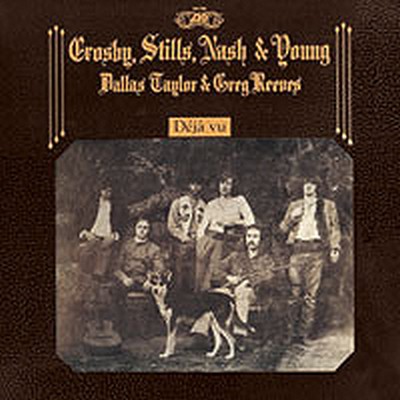
Deja Vu – This Classic Records Knockoff Is Not the Answer, But We Have One

Letters and Commentaries for Deja Vu

More CrosbyMore Stills / More Nash / More Young

An audiophile hall of shame pressing and another Classic Records rock LP badly mastered for the benefit of audiophiles looking for easy answers and quick fixes.

If you bought the Classic Record Heavy Vinyl pressing of Deja Vu, I hope you know how badly Classic Records ripped you off.

If you feel disrespected, you should. They took your money and gave you nothing of real value for it. The right CD (not the current one, that’s for damn sure) is dramatically better sounding than their vinyl reissue.

On the other hand, if you’re not too picky about sound quality and just want to play new records, perhaps because old records are hard to find and often noisy, then fine, the Classic should get that job done for you.

We of course want nothing to do with records like those remastered by Classic Records.

We only want to play good sounding records, and most Classic Records, including this title, are definitely not good sounding, not by our standards anyway.

Records Are in a Sorry State – Here’s What You Can Do About It

It’s a sad state that we currently find ourselves in, but is it really any different than it used to be? Audiophiles used to like half-speeds, they used to like Japanese pressings, they used to like direct to disc recordings with questionable sound and even more questionable music.

Now they like SACDs, Heavy Vinyl and 45s. If you ask me it’s the same old wine in a different bottle.

(more…)

Letter of the Week – “I took another listen to SRV, this time at VOLUME. Oh boy…”

Hot Stamper Pressings of the Music of Stevie Ray Vaughan Available Now

A customer wrote us about his experience with Stevie Ray a while back:

There seems to be a threshold level for this record at which it sounds congested below, but which it comes alive above (and how).

I also noticed that my previous observations about the ratings of sides A and B were reversed at this volume level; there is more bass on side A, which was resulting in it sounding more congested at lower levels, but which is delicious when played loud; side B sounds a bit thin at louder volumes comparatively.

I guess this is more in line with what you heard when reviewing.

C

Conrad,

You hit the nail on the head with your newfound appreciation of the sound of the two sides at louder levels.

We don’t know what our records sound like at moderate levels.

This is true for the electric blues albums of Stevie Ray Vaughan, but just as true for rock, jazz and even classical.

We don’t play them at moderate levels, and we don’t want to hear them at moderate levels.

There are at least two very good reasons for our position:

The first one is the most obvious — we don’t think music played at unrealistically low levels is very enjoyable.

And two, lower levels interefere with our ability to properly judge the sound of the pressings we play in our shootouts.

Playing records quietly too often obscures their faults.

It also reduces their energy, as well as whatever dynamic contrasts they might have, their ability to play clean in the loudest climaxes or choruses, and on and on down the list.


Further Reading