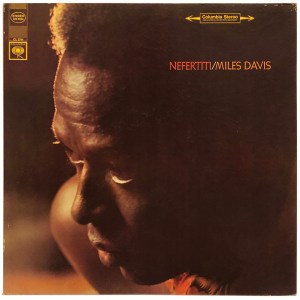
- STUNNING Shootout Winning Triple Plus (A+++) sound throughout for this Columbia 360 Label pressing; relatively quiet vinyl too!
- Both of these sides are incredibly rich, Tubey Magical, and full-bodied with superb transparency and tons of presence
- The music is wonderful too — Miles and his late ’60s quintet featuring Ron Carter, Herbie Hancock, Wayne Shorter and Tony Williams are all in top form here, slowly working their way towards the electric fusion sounds that would be coming shortly
- “What’s impressive, like on all of this quintet’s sessions, is the interplay, how the musicians follow an unpredictable path as a unit, turning in music that is always searching, always provocative, and never boring” – All Music, 5 Stars
It’s getting tougher to find these classic Miles albums. Hit the jazz bins at your local store and I’m sure you’ll have the same experience we’ve been having — tons of pricey modern reissues but not too many clean early copies.
This vintage Columbia pressing has the kind of Tubey Magical Midrange that modern records can barely BEGIN to reproduce. Folks, that sound is gone and it sure isn’t showing signs of coming back. If you love hearing INTO a recording, actually being able to “see” the performers, and feeling as if you are sitting in the studio with the band, this is the record for you. It’s what vintage all analog recordings are known for — this sound.
If you exclusively play modern repressings of vintage recordings, I can say without fear of contradiction that you have never heard this kind of sound on vinyl. Old records have it — not often, and certainly not always — but maybe one out of a hundred new records do, and those are some pretty long odds.
What the Best Sides of Nefertiti Have to Offer Is Not Hard to Hear
- The biggest, most immediate staging in the largest acoustic space
- The most Tubey Magic, without which you have almost nothing. CDs give you clean and clear. Only the best vintage vinyl pressings offer the kind of Tubey Magic that was on the tapes in 1968
- Tight, note-like, rich, full-bodied bass, with the correct amount of weight down low
- Natural tonality in the midrange — with all the instruments having the correct timbre
- Transparency and resolution, critical to hearing into the three-dimensional studio space
No doubt there’s more but we hope that should do for now. Playing the record is the only way to hear all of the qualities we discuss above, and playing the best pressings against a pile of other copies under rigorously controlled conditions is the only way to find a pressing that sounds as good as this one does.
Copies with rich lower mids and nice extension up top did the best in our shootout, assuming they weren’t veiled or smeary of course. So many things can go wrong on a record! We know, we’ve heard them all.
Top end extension is critical to the sound of the best copies. Lots of old records (and new ones) have no real top end; consequently, the studio or stage will be missing much of its natural air and space, and instruments will lack their full complement of harmonic information.
Tube smear is common to most vintage pressings. The copies that tend to do the best in a shootout will have the least (or none), yet are full-bodied, tubey and rich.
What We’re Listening For on Nefertiti
- Energy for starters. What could be more important than the life of the music?
- The Big Sound comes next — wall to wall, lots of depth, huge space, three-dimensionality, all that sort of thing.
- Then transient information — fast, clear, sharp attacks, not the smear and thickness so common to these LPs.
- Tight punchy bass — which ties in with good transient information, also the issue of frequency extension further down.
- Next: transparency — the quality that allows you to hear deep into the soundfield, showing you the space and air around all the instruments.
- Extend the top and bottom and voila, you have The Real Thing — an honest to goodness Hot Stamper.
Side One
Nefertiti
Fall
Hand Jive
Side Two
Madness
Riot
Pinocchio
AMG 5 Star Review
Nefertiti, the fourth album by Miles Davis’ second classic quintet, continues the forward motion of Sorcerer, as the group settles into a low-key, exploratory groove, offering music with recognizable themes — but themes that were deliberately dissonant, slightly unsettling even as they burrowed their way into the consciousness… What’s impressive, like on all of this quintet’s sessions, is the interplay, how the musicians follow an unpredictable path as a unit, turning in music that is always searching, always provocative, and never boring. Perhaps Nefertiti’s charms are a little more subtle than those of its predecessors, but that makes it intriguing.