hard-sound

Is the Heavy Vinyl from 2012 the Best Sounding Sgt. Pepper?

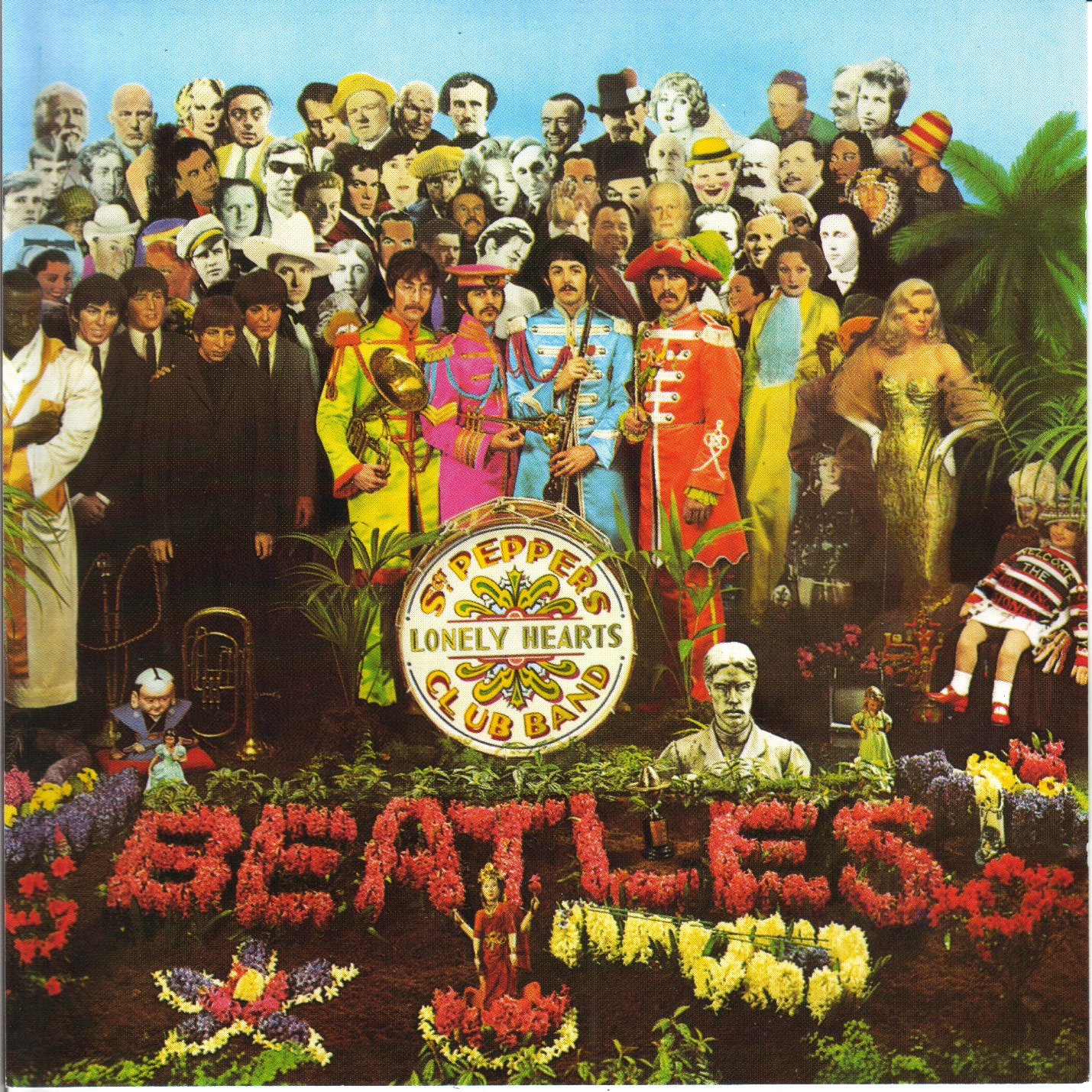
beatlessgtHot Stamper Pressings of Sgt. Peppers Available Now

You might agree with some reviewers that EMI’s engineers did a pretty good job with the new stereo pressing of Sgt. Pepper mastered by Sean Magee from the 2009 digitally remastered tapes.

In the March 2013 issue of Stereophile Art Dudley weighed in, finding little to fault on this title but being less impressed with most of the others in the new box set. His reference disc? The MoFi UHQR! Oh, and he also has some old mono pressings and a domestic Let It Be.

Now there’s a man who knows his Beatles. Fanatical? Of course he is! We’re talkin’ The Beatles for Chrissakes.

When I read the reviews by writers such as these, I often get the sense that I must’ve fallen through some sort of Audio Time Warp and landed back in 1982. How is it that our so-called experts evince so little understanding of how records are made, how variable the pressings can be, and, more importantly, how absolutely crucial it is to understand and implement rigorous protocols when attempting to carry out comparisons among pressings.

Critically comparing LPs is difficult and time-consuming. It requires highly developed listening skills. I didn’t know how to do it in 1982. I see no evidence that the audiophile reviewers of today are much better at it now than I was in 1982.

Just to take one example: They all seem to be operating under the same evidence-free conceit: that the original is the benchmark against which other pressings must be compared.

To those of us who have played Beatles pressings by the hundreds, this is patent nonsense. To cite just one instance, a recent Hot Stamper listing notes [inaccurately as it turns out, see below]:

We defy any original to step into the ring with it. One thing we can tell you, it would not be a fair fight. The cutting equipment to make a record of this quality did not exist in 1967, not at EMI anyway.

We had the opportunity not long ago to audition a very clean original early pressing of the album and were frankly taken aback by how AWFUL it was in virtually every respect. No top end above 8k or so, flabby bass, murky mids — this was as far from Hot Stamper sound as one could imagine. If it were a Heavy Vinyl or Audiophile pressing we would surely have graded it F and put it in our Hall of Shame.

To be fair we have played exactly one early copy of the record on our current system. (Played a copy or two long ago but on much different equipment, so any judgments we might have made must be considered highly suspect.) Perhaps there are good ones. We have no way of knowing whether there are, and we are certainly not motivated to find out given the price that original Sgt. Pepper’s are fetching these days.

We can tell you this much: no original British pressing of any Beatles album up through Pepper has ever impressed us sonically. We’ve played plenty and have yet to hear one that’s not congested, crude, distorted, bandwidth-limited and full of tube smear. (The monos suffer from all of these problems and more of course, which is only natural; they too are made with the Old School cutting equipment of the day.)

If that’s your sound more power to you. It’s definitely not ours. The hotter the stamper, the less congested, crude, distorted, bandwidth-limited and smeary it will be. (Or your money back.)


UPDATE 2023

There is a copy of a Beatles album on the original label that was competitive with our best 70s pressings, this one. We explained why it’s not a problem to admit we were wrong about the album in question, For Sale, this way:

This finding about For Sale is precisely why live and learn is our motto.

We don’t know it all, and we’ve never claimed that we did. We constantly learn things about pressings in our daily shootouts. That should not be too surprising, as record shootouts are the only way to learn anything about the sound of records that’s actually worth knowing.

Start doing your own experiments and your record knowledge might just take off the way ours has. 99% of what we think we know about the sound of records we’ve learned in shootouts over the course of the last twenty years.

Here is our advice on getting started.

Before this, the only Beatles record we would sell on the Yellow and Black Parlophone label was A Collection of Oldies… But Goldies. That title does have the best sound on the early label. In numerous shootouts, no Black and Silver label pressing from the ’70s was competitive with the best stereo copies made in the ’60s.

Until now, it was clearly the exception to our rule. From With the Beatles up through Yellow Submarine, the best sounding Beatles pressings would always be found on the 70s reissue label.


The Best Pepper Pressings

How did we come to find the best Sgt. Peppers pressings? Our recent commentary about a wonderful Benny Carter record on the original Contemporary Black Label may serve to shed some light on the process.

(more…)

On LSC 2222, How Does the Classic Records Heavy Vinyl Compare?

Hot Stamper Pressings of the Music of Claude Debussy Available Now

In 2005 we played an excellent original pressing of Debussy’s Iberia (LSC 2222) and compared it to the Classic Records reissue. We wrote:


This is a wonderful sounding Shaded Dog pressing. Side two is especially dynamic.

This has long been considered one of the Living Stereo triumphs. The spaciousness and tonal correctness are legendary.  However, this copy does not have the prodigious bass of some that I’ve heard.

The Classic reissue has plenty of deep bass, but it’s shrill and hard and altogether unpleasant, so the better bass comes at a steep price.

For better sounding recordings of Iberia, we know of two and they can be found by clicking here.

(more…)

The First Classic Record We Ever Played – Thus Spake Zarathustra

Hot Stamper Pressings of Living Stereo Titles Available Now

Way back in 1994, long before we had anything like the system we do now, we were finding fault with the “Classic Records Sound.”

With each passing year — 28 and counting — we like that sound less.  Some Classic Records pressings may be on Harry’s TAS list — disgraceful but true — but that certainly has no bearing on whether or not they are very good records. 

I had a chance to play LSC 1806 (pictured above) not long ago and I was dumbfounded at how bright, shrill and aggressive it was.

I still remember playing my first Classic Records title, their first release, which would probably have been in 1994. The deep bass of the organ at the start of Also Sprach Zarathustra, the horns and the tympani blasting out from a dead silent background, put a lump in my throat. Had they actually managed to remaster these old recordings so well that the vintage pressings I was selling for such high prices would soon be worthless? I really do remember having that thought race through my mind.

But then the strings came in, shrieking and as bright as the worst Angel or DG pressing I’d ever heard. It was as if somebody had turned the treble control up on my preamp two or three clicks, into ear-bleeding territory. All my equipment at the time was vintage and tube, and even though my system erred on the dark side tonally, the first Classic release was clearly off the charts too bright and transistory, with none of the lovely texture and sheen that RCA was famous for in the early days of Living Stereo.

I knew right then that my vintage record business was safe.

Here is our review from the ’90s, written shortly after the release of Classic’s first three titles. (With minor additions and changes for clarity and context.)

Hall of Shame Pressings, Every One

I’m reminded of the nonsense I read in TAS and elsewhere in the mid-’90s regarding the reputed superiority of the Classic Records Living Stereo reissues. After playing their first three titles: 1806, 1817 and 2222 (if memory serves), I could find no resemblance between the reviews I read and the actual sound of the records I played. The sound was, in a word, awful.

To this day I consider them to be the single worst reissue series in history.


UPDATE 2025

Analogue Productions now holds that crown, surely. Still going strong, producing one crap pressing for the mid-fi collector market after another, there is simply no recording they won’t see fit to ruin.


When Harry Pearson (of all people! — this is the guy who started the Living Stereo craze by putting these forgotten old records on the TAS list in the first place) gave a rave review to LSC 1806, I had to stand up (in print anyway) and say that the emperor clearly had removed all his clothes, if he ever had any to begin with.

This got me kicked out of TAS by the way, as Harry does not take criticism well. I make a lot of enemies in this business with my commentary and reviews, but I see no way to avoid the fallout for calling a spade a spade.

Is anybody insane enough to stand up for LSC 1806 today? Considering that there is a die-hard contingent of people who still think Mobile Fidelity is the greatest label of all time, there may well be “audiophiles” with crude audio equipment or poorly developed critical listening skills, or both (probably both, as the two go hand in hand), that still find the sound of the shrill, screechy strings of the Classic pressing somehow pleasing to the ear. Hey, anything is possible.

As I’ve said again and again, the better a stereo gets, the more obvious the differences between good vintage pressings and most current reissues become. Modest front ends and mediocre playback systems can disguise these differences and mislead the amateur audiophile.

And the “professional” too. We’ve all had the experience of going back to play a record from years ago that we remember as being amazing, only to find it amazingly bad.

The Japanese Led Zeppelin series from the 90s comes immediately to mind. How could my system have been so dull that those bright pressings actually fooled me into thinking they sounded good all those years ago? I’ve done a few Mea Culpas over the years, and that’s one of the bigger ones.

Remember when Chesky Records were all the rage? Does anybody in his right mind play that shit anymore?

A short anecdote: A good customer called me up one night many years ago. He had just finished playing the Chesky pressing of Spain, and had pulled out his Shaded Dog original to compare. The sound of his Shaded Dog pressing was so much better that he took his Chesky and, with great satisfaction, ceremoniously dropped it in the trash can, noting, “Of course I could have sold it or traded it away, but nobody should have to listen to sound like that.”

Another anecdote: when Chesky first got started in the remastering business, a friend picked up their pressing of LSC 2150, Prokofiev’s Lt. Kije with Reiner. He played it for me when I came over to hear his system, and he and I were both shocked that his ’70s Red Seal pressing was better in every way.

We wanted to know: What kind of audiophile label can’t even go head to head with a cheap reissue put out twenty years after the initial release just to keep the bins stocked and satisfy the needs of the low-budget classical record buyer?

The answer: Plenty of them, and definitely Chesky. Playing most Classic Records classical titles is a painful experience these days. I do not recommend it to anyone with good equipment. If you love the Living Stereo sound and cannot afford vintage pressings, consider playing the CDs RCA remastered. The one I know well is clearly better than Classic’s and AP’s LPs.

(more…)

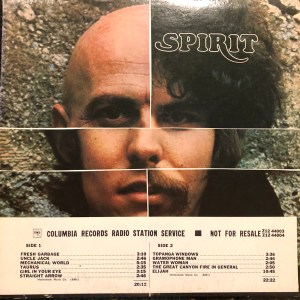
Spirit – The Mono Rocks

More Psychedelic Rock

Reviews and Commentaries for the Music of Spirit

This review was written in 2010. I doubt we would prefer the mono pressings to the stereo pressings were we to do the shootout this year, but you never know. (Don’t get your hopes up. We simply can’t find clean copies of this album anymore.)

That’s what shootouts are for, to give you the data to back up your opinions and your guesses. Without more current data, who can say which of the two we would prefer?

Our old review:

A distinguished member of the Better Records Rock Hall of Fame, not for the best Hot Stamper stereo copies, but for this amazing MONO. 

This killer pressing from 2010 has almost EVERYTHING you want from this ’60s Psych Pop Masterpiece — the energy, presence and sheer rock and roll POWER made a mockery of every stereo copy we played.

Want a glimpse into the kind of energy the band was generating in the studio? Drop the needle on Fresh Garbage, the opening track of this amazing mono pressing, and you will hear this band come alive in a way you never imagined you’d ever hear them.

It’s positively startling how immediate and powerful the sound is here.

That said, from an audiophile point of view, mono does involve a sacrifice — the huge three-dimensional soundstage of the best stereo copies is nowhere to be found here.

From a musical or performance point of view, this mono cannot be beat; it shows the band at their best, fired up and ready to show the world that The Doors are not the only SoCal rock band who have innovative ideas about rock music and the performing chops to pull off their conceptions, not to mention the studio wizards backing them to get it all down on tape.

If I had to choose between The Doors’ first album and Spirit’s, say for a nice drive up the coast with the top down, no contest, Spirit would get the nod. I had the album on 8 Track back in high school and played it to death. Doing this shootout, hearing the album sound so good after so many years, was nothing less than a THRILL. (I went right up to Amazon and bought a CD for the car. Might just take a drive up the coast.)

If you like Surrealistic Pillow and Revolver/Sgt. Pepper-era Beatles and early Doors albums, and you don’t know this album well, you are really in for a treat. This album is a classic of its day that still holds up forty plus years later. I cannot recommend any current album on the site more highly.

(more…)

Dream With Dean – Watch Out for Hard and Honky Vocals

Hot Stamper Pressings of Pop and Jazz Vocal Albums

Dream with Dean is great for finding any traces of “honk” in your midrange. Getting Deano’s baritone to sound tubey and rich, to get the sound that Bing Crosby could get just by opening his mouth, is not all that easy on some systems, mine included.

Correctly set VTA is critical in this regard, but pretty much everything must be working at its best for Dean to sound as intimate and natural as we know he can on the best pressings.

Balancing the lower mids with the upper mids is the goal, and it’s not as easy as it sounds. This album is great for testing, and guaranteed to bring practically any high-dollar system at a stereo showroom, a convention, or your very own home to its knees.

This is my favorite Dean Martin record of all time; just Dean and a jazz guitar quartet behind him (featuring Contemporary favorites Barney Kessel and Red Mitchell!) doing standards. On the best copies, the immediacy is absolutely mind-blowing. It’s a shame that there aren’t more Frank Sinatra records that sound like this.

(more…)

There’s a Riot Goin’ On – From the Analog Master!

More of the Music of Sly and the Family Stone

Sonic Grade: F

Ouch this record sounds bad. Some of the worst sound I have ever heard on Heavy Vinyl. The average cassette sounds better than this piece of crap.

My notes:

Side one: track one is thin and hard. Track two is not very tubey and the sibilance is harsh.

Side two: track two is full and tubey but track three shows that the sound may be tubey but it is very compressed.

But some people think that records that were made from the analog master tapes should sound good. 

Especially when those records were pressed on virgin vinyl.

But do they?

This one sure doesn’t. What could possibly have gone wrong?

We have no idea. We just play the records and listen to them. We let them tell us if they are wrong or right.

This one told us it may have been made from good tapes — may have been, the good folks at Columbia records might be lying to us about that, it wouldn’t be the first time and I certainly would not put it past them — but it sure wasn’t made very well.

(more…)

Bernie Grundman’s Work for Classic Records in Four Words

Hot Stamper Pressings of Mercury Recordings Available Now

Hard, sour, colored and crude.

Oh, and airless. Make that five words.

It’s been quite a while since I played the Classic pressing of Balalaika Favorites, but I remember it as unpleasantly hard and sour.

Many of the later Mercury reissues — some pressed by Columbia, some not — had that sound, so I was already familiar with it when their pressing came out in 1998 as part of the just-plain-awful Mercury series they released.

I suspect I would hear it that way today. Bernie Grundman could cut the bass, the dynamics, and the energy onto the record.

Everything else was worse 99% of the time.

The fast transients of the plucked strings of the Balalaikas were way beyond the ability of his colored and crude cutting system.

In addition, harmonic extension and midrange delicacy were qualities that practically no Classic Records Heavy Vinyl pressing could claim to have.

Or, to be precise, they claimed to have them, and whether audiophiles really believed they did or not, Classic Records sure fooled a lot of them, along with the reviewers that vomited out the facile and reductive superficialities that pass these days for audio journalism.

The better your stereo gets, the worse those records sound, and they continue to fall further and further behind with each passing year.

(more…)

Slow Dancer – Common Problems

Reviews and Commentaries for the Music of Boz Scaggs

This is an album of wonderful white soul music. As a bonus, it also happens to be very well recorded. The problem we ran into on copy after copy was a brighter than ideal tonal balance, hard vocals and, on those copies that don’t extend fully on the top and bottom, a somewhat squashed, peaky midrange.

The better copies deal with those issues and, for the most part solve them. There’s lovely texture to the strings, plenty of punchy rich bass, and all the elements of the recording are properly balanced, something they still knew how to do back in the all analog days of 1974, I’m glad to report. (more…)

Another Fine Entry for Our Hall of Shame (Now Nearly 300 Strong)

Hot Stamper Pressings of Pictures at an Exhibition Available Now

Classic Records Repress at 33, 45, or any other speed – they’re all terrible.

A Heavy Vinyl Disaster if there ever was one (and oh yes, there are plenty).

The shrillness, the hardness, the sourness, the loss of texture to the strings, the phony boosted deep bass — this is the kind of sound that makes my skin crawl. After a minute or two of listening to sound this bad, I have had it.

HP put this on his TAS List? Sad but true.

What do you get with Hot Stampers compared to the Classic Heavy Vinyl reissue? Dramatically more warmth, sweetness, delicacy, transparency, space, energy, size, naturalness (no boost on the top end or the bottom, a common failing of anything on Classic); in other words, the kind of difference you almost ALWAYS get comparing the best vintage pressings with their modern remastered counterparts, in our experience anyway.

Now if you’re a Classic Records fan, and you like that brighter, more detailed, more aggressive sound, our Hot Stampers are probably not for you. We don’t like that sound and we don’t like most Classic Records. They may be clean and clear but where is the RCA LIVING STEREO Magic that made people swoon over these recordings in the first place? Bernie manages to clean that sound right off the record, and that’s just not our idea of hi-fidelity.

Our Hot Stamper Classical Pressings will be dramatically more transparent, open, clear and just plain REAL sounding than practically any record Classic Records ever made, if only because these are all the areas in which heavy vinyl pressings tend to fall short in in our experience.

Strauss / Carnival in Vienna / Ormandy – Reviewed in 2011

More Johann Strauss

Side two of this two-eye Columbia pressing has EXCELLENT sound, rating a sonic grade of A+ to A++. With a grade such as that it ranks somewhere in the Top Five Per Cent of Columbia pressings I would guess, only because so many Columbias are just plain awful. Is even one out of ten passable? I doubt it. But this one is! It’s quite good in fact, with an extended top end and lovely texture to the strings. (more…)