tas-list-bad

The titles listed here have no business being called Super Discs.

Cat Stevens on 2 Heavy Vinyl 45 RPM Discs, Part 1 – Is This the Truest Tillerman of Them All?

About ten years ago we auditioned and reviewed the 2011 edition of Tea for the Tillerman pressed by Analogue Productions, the one that came on a single Heavy Vinyl 33 RPM LP.

I wrote a very long commentary about the sound of that record, taking it to task for its manifold shortcomings, at the end of which I came to the conclusion that the proper sonic grade for such a record is F as in Fail. My exhaustive review asked the not-very-subtle question, this is your idea of analog?

Our intro gave this short overview:

Yes, we know, the folks over at Acoustic Sounds, in consultation with the late George Marino at Sterling Sound, supposedly with the real master tape in hand, and supposedly with access to the best mastering equipment money can buy, labored mightily, doing their level best to master and press the Definitive Audiophile Tea for the Tillerman of All Time.

It just didn’t come out very well, no matter what anybody tells you.

Recently I was able to borrow a copy of the new 45 cutting from a customer who had rather liked it. I would never have shelled out my own money to hear a record put out on the Analogue Productions label, a label that has an unmitigated string of failures to its name. But for free? Count me in!

The offer of the new 45 could not have been more fortuitous. I had just spent a number of weeks playing a White Hot Stamper Pink Label original UK pressing in an attempt to get our new Playback Studio sounding right.

We had a lot of problems. We needed to work on electrical issues. We needed to work on our room treatments. We needed to work on speaker placement.

We initially thought the room was doing everything right, because our Go To setup disc, Bob and Ray, sounded super spacious and clear, bigger and more lively than we’d ever heard it. That’s what a 12 foot high ceiling can do for a large group of musicians playing live in a huge studio, in 1959, on an All Tube Chain Living Stereo recording. The sound just soared.

But Cat Stevens wasn’t sounding right, and if Cat Stevens isn’t sounding right, we knew we had a Very Big Problem. Some stereos play some kinds of records well and others not so well. Our stereo has to play every kind of record well because we sell every kind of record there is. You name the kind of music, we probably sell it. And if we offer it for sale, we had to have played it and liked the sound, because no record makes it to our site without being auditioned and found to have excellent sound.

But I Might Die Tonight

The one song we played over and over again, easily a hundred times or more, was But I Might Die Tonight, the leadoff track for side two. It’s short, less than two minutes long, but a lot happens in those two minutes. More importantly, getting everything that happens in those two minutes to sound not just right, but as good as you have ever heard it, turned out to be a tall order indeed.

(more…)

Balalaika Favorites on Classic Records Is Unpleasantly Hard and Sour

It’s been quite a while since I played the Classic pressing of SR 90310, Balalaika Favorites, but I remember it as unpleasantly hard and sour.

Many of the later Mercury reissues pressed by Columbia had some of that sound, so I was already familiar with it when Classic’s pressing came out in 1998 as part of the just-plain-awful-sounding Mercury series they released.

I suspect I would hear it that way today. Bernie Grundman could cut the bass, the dynamics, and the energy onto the record. Everything else was worse — not just worse, but wrong — 99% of the time.

The fast transients of the plucked strings of the Balalaikas was just way beyond the capabilities of his colored and crude cutting system.

Harmonic extension and midrange delicacy were qualities that practically no Classic Records Heavy Vinyl pressing could claim to have.

Or, to be precise, they claimed to have them, and whether they really believed they did or not, they sure fooled a lot of audiophiles and the reviewers who write for them.

(more…)

Cat Stevens Part 2 – Is This the Truest Tillerman of Them All?

If you haven’t read Part 1 of this story, please click here.

Back to our real story. I listened to my good original pressing. I call it White Hot at least!

Then I put the new pressing on the table, set the SDS for 45 RPM, and got the volume just right. I proceeded to carefully adjust the VTA by ear, going up and down with the arm until the sound was right, which is simply standard operating procedure for every record we audition.

These are my actual notes for But I Might Die Tonight.

This is what I heard as the song worked its way through the various sections, in real time.  The first thing I heard at the start was Zero Tubey Magic for the first verse. One of the last things I heard at the end was No Real Space. Space is what you hear at the end for the big piano and drums finish.

Let’s take it line by line. First up:

Zero Tubey Magic

I didn’t hear much Tubey Magic on the new pressing. The best early pressings — domestic A&M Browns, Pink or Sunray UK Islands — often have simply phenomenal amounts of the stuff. It’s a hallmark of the recording.

If a new pressing comes along without it, that’s a problem. I guess that George Marino‘s cutting system at Sterling could probably do some things well, but it sure doesn’t seem to be able get the sound of tubes right. His 33 RPM cutting had no Tubey Magic, and this one has no Tubey Magic. If I had hired him to cut a record for me and it came out sounding like this, I would find somebody else to cut records for me.

He’s dead now, rest in peace. I would doubt that anyone at Sterling has a better cutting system, and therefore no one should expect any records that have been mastered there to sound very good.

Vocal Is Clear, Clean and Dry

This is the sound you sometimes get with modern, super-clean transistor cutting equipment. It’s low distortion, like a CD is low distortion. We don’t think we should have to put up with dry vocals on records when the good pressings we have been playing all our lives have noticeably richer vocals.

Not rich like Dream With Dean, nothing is that rich, but rich and full-bodied the way the good pressings of this album always make them sound.

(more…)

Diamonds and Rust – Another TAS Listed Anadisq Disaster

Hot Stamper Pressings of the Music of Joan Baez Available Now

Mobile Fidelity released their version of Diamonds and Rust on Anadisq in 1995, and if you want to hear a pressing that’s not murky, compressed and opaque, you would be wise to avoid their Heavy Vinyl Half-Speed.

Somehow it ended up on the TAS Super Disc List, but we could find nothing “super” about it. We felt it more properly belonged on our list of records that have no business being called Super Discs.

It was a real muckfest, as was to be expected from a record mastered by this awful label during the Anadisq era, the darkest chapter in the disgraceful history of Mobile Fidelity, which, considering the consistently dismal quality of their output, is really saying something.

Ken Lee Strikes Again

Many of the worst of them were mastered by a Mr. Ken Lee. If you happen to come across a record in a store with his name in the credits, or his initials in the deadwax, you are best advised to drop it back in the bin and keep moving. Anything else is just asking for trouble.

To be fair, MoFi made some reasonably good sounding records too. For those of you whose budget is on the limited side, if you find an affordable copy of any of these MoFis, you are probably not wasting your money.

Although I had a long way to go in this hobby in the early days of my audiophile record business, even then I could tell how bad the Anadisq series that Mobile Fidelity released in the 90s was. They produced one awful sounding record after another, with not a single winner that I knew of. I sold them — my bad, an ethical lapse for which I must apologize — but I sure never recommended them or had anything good to say about them.

(more…)

Records Like This Make Audiophiles the Laughing Stocks of the Music World

More Reviews and Commentaries for Heavily Processed Recordings

This album has some of the worst sound I have ever heard in my life, worse than The Hunter even, and that’s saying something.

If this kind of crap is what audiophiles choose to play, then they deserve all the derision heaped upon them.

We’re glad we no longer offer embarrassments such as The Well, although we used to, many years ago. In our defense we would simply offer up this old maxim: de gustibus non est disputandum.

Our old slogan was Records for Audiophiles, Not Audiophile Records, but we also followed this business rule: Give the Customer What He Wants.

Now we give the customer what he wants, as long as he wants one of the best sounding pressings of the album ever made. (In this case obviously there is no good sounding pressing.)

How Bad Is It?

If this isn’t the perfect example of a pass/not-yet record, I don’t know what would be.

Some records are so wrong, or are so lacking in qualities that are critically important to their sound — qualities typically found in abundance on the right vintage pressings (although there is no acceptable pressing of this record, vintage or otherwise) — that the defenders of these records are fundamentally failing to judge them properly. We call these records pass/not-yet, implying that the admirers of these kinds of phony-sounding records are not where they need to be in audio yet, but that there is still hope, and if they devote enough time and money to the effort, they can get where they need to be, the same way we did.

(more…)

Carnival of the Animals on Klavier Is Another Doug Sax-Mastered Disaster

Hot Stamper Pressings of the Music of Saint-Saens Available Now

Yet another murky, smeary audiophile piece of vinyl trash from the mastering lathe of the formerly brilliant Doug Sax. He used to cut the best sounding records in the world. (Exhibit A: this one.)

Then he started working for perhaps the worst record label of all time and to my knowledge never cut a good sounding record again.

This record may be on the TAS Super Disc list, but we don’t think it belongs there. Instead, it belongs on the bad TAS list that we created specifically for these far-from-super records.

To be fair, the real EMI is on there as well, ASD 2753. However, including the Klavier on the list brings into doubt the compentence of whoever is curating it these days.
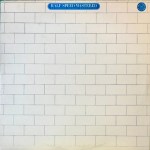
This Klavier pressing, along with all the Classic Records titles, as well as other modern reissues, renders the advice found there all but useless. Is anyone calling attention to all the bad sounding records that have lately been recommended by The Absolute Sound? I think we might just be the only ones. If you know of any others, please email me at tom@better-records.com.

Doug Sax

For those of us who remember the consistently superb work Doug Sax was doing in the 70s, we sadly note that he passed away in 2015. I was honored to have met him a few years before then at a Chopin concert with Lincoln Mayorga performing on the piano. (Impressively performing, I might add. He played the complete Chopin Preludes from memory, all 24 of them.)

Both he and Lincoln were gentlemen and artists of the highest caliber. Needless to say, I hope this awful sounding Klavier is not the kind of record that he would want to be remembered by.

On this record, in Doug’s defense it should be noted that he had only second generation tapes to work with, which is neither here nor there as these pressings are not worth the dime’s worth of vinyl used to make them and should never have seen the light of day.

Can this dubbysmeary sound possibly be what EMI engineer Stuart Eltham was after?

Hard to believe. We’ve played plenty of his recordings and we cannot ever remember any of the non-audiophile pressings having this kind of sound.

But isn’t that just the way? The mainstream labels mass produce the good sounding pressings and the audiophile labels produce the limited edition junk.

Now there’s a rule of thumb you might want to keep in mind, especially if you’ve made the mistake of buying any of the Heavy Vinyl pressings we reviewed in 2024 and 2025, a parade of horribles that defy understanding.

Actually, if we understand that there is a need for vinyl product for the lo- to mid-fi record collector market, it makes perfect sense. That’s what Klavier was in the business of producing, and now everybody wants in on the action, hence the proliferation of crap Heavy Vinyl pressings coming to market, practically every one even worse sounding than the last.

(more…)

The Wall Sounds Terrible on these “Audiophile” Rip-offs

Hot Stamper Pressings of the Music of Pink Floyd Available Now

This Japanese import is one of the dullest, muddiest, worst sounding copies of The Wall we have ever played. It is clearly made from a second generation tape (or worse!).

Is it the worst version of the album ever made? Hard to imagine it would have much competition.

And somehow this pressing, or one very much like it, ended up as on the TAS Super Disc List. I would hope that the copy Harry played sounded a whole lot better than this one.

The version on the TAS Super Disc list is EMI 4814, which I believe is the British original. Conventional wisdom? Is The Absolute Sound capable of any other?

And the CBS Half-Speed is every bit the mudfest that the Half-Speed is.

How is it that the worst sounding pressings are so often marketed to audiophiles as superior to their mass-produced counterparts? In our experience, more often than not they are just plain awful, inferior in every way but one: surface quality.

And the knock on these CBS Half-Speeds is that they are made from the same vinyl CBS used to press all their other records.

I remember buying them back in the late-70s at Tower Records. They were only $12.99 when Mobile Fidelity pressings were $17.99, garnering a premium price because they were pressed in Japan. Fool that I was, I bought plenty of both, not to mention those made by Nautilus, Direct Disk Labs and plenty of others too painful to think about.

Dear audiophiles, stop collecting crappy audiophile pressings with quiet vinyl and just switch to CD already. You’ll be getting better sound and saving yourself a lot of money to boot. You simply cannot defend analog with this kind of junk.

(more…)

Venerable or Execrable? If It’s Athena the Chances Are Good It’s the Latter

Hot Stamper Pressings of the Music of Rachmaninoff Available Now

I spied an interesting quote on the Acoustic Sounds site many years ago:

“…Analogue Productions’ 45rpm remastering improves upon the venerable Athena LP release from the late 80s, with better dynamics and a fuller ‘middle’ to the orchestral sonority.” – Andrew Quint, The Absolute Sound, October 2010

For some reason Andrew uses the word “venerable” when a better, certainly more accurate term would have been “execrable.” Having played the record in question this strikes us as the kind of mistake that would not be easy to make.

Athena was a godawful audiophile label that managed to put out all of five records before going under, only one of which was any good, and it’s definitely not this one.

It was in fact the Debussy piano recording with Moravec, mastered by the venerable Robert Ludwig himself, a man who knows his classical music, having cut scores if not hundreds of records for Nonesuch and other labels in the 60s and 70s.

From the jacket:

Analogue Master Recording™

Unlike other remastering companies, Athena Records always uses the ORIGINAL ANALOG MASTER SESSION TAPES. In this case, The Master Lacquers were cut directly by Doug Sax at The Mastering Lab so you know it will sound superb.

Our Hot Stamper listing for the Vox pressing:

This famously good sounding Vox pressing os Symphonic Dances has been remastered a number of times, but you can be sure that the Hot Stamper we are offering here will beat any of those modern pressings by a wide margin in any area that has to do with sound (surfaces being another matter and one we won’t go into here).

The sound of this recording on the best pressings is dynamic, lively and BIG. The music just jumps out of the speakers, bringing the power and vibrant colors of a symphony orchestra right into your listening room. Guaranteed to put to shame 95% or more of all the classical records you own, even if you own lots of our Hot Stampers. [Can’t say I would agree with that in 2023.]

The bass is phenomenal on this recording, assuming you have a copy that has the bass cut and pressed right. This one sure does! Few Golden Age classical recordings from the 50s will have the kind of bass that’s found on this record.

(more…)

Classic Records 45 RPM Recut – This Is Your Idea of a Great Firebird?

Hot Stamper Pressings of the Music of Igor Stravinsky Available Now

Many years ago, a customer alerted me to a review Wayne Garcia wrote about various VPI platters and the rim drive, and this is what I wrote back to him:

Steve, after starting to read Wayne’s take on the platters, I came across this:

That mind-blowing epiphany that I hadn’t quite reached with the Rim Drive/Super Platter happened within seconds after I lowered the stylus onto the “Infernal Dance” episode of Stravinsky’s Firebird (45 rpm single-sided Classic Records reissue of the incomparable Dorati/LSO Mercury Living Presence recording).

That is one of my half-dozen or so favorite orchestral recordings, and I have played it countless times.

This is why I have so little faith in reviewers. I played that very record not two weeks ago (04/2010) against a good original and the recut was at best passable in comparison. If a reviewer cannot hear such an obvious difference in quality, why believe anything he has to say?

The reason we say that no reviewer can be trusted is that you cannot find a reviewer who does not say good things about demonstrably mediocre and even just plain awful records. It’s the only real evidence we have for their credibility, and the evidence is almost always damning.

I want a reviewer who knows better than to play such an underwhelming pressing and then waste my time telling me about it. He should tell us what a good record sounds like with this equipment mod. Then I might give more credence to what he has to say.

Reviewer malpractice? We’ve been writing about it for more than 25 years.

P.S.

This is one of the Classic Records titles on Harry Pearson’s TAS List of Super Discs(!)

P.P.S.

Allow me to quote a writer with his own website devoted to explaining and judging classical recordings of all kinds. His initials are A.S. for those of you who have been to his site.

Classic Records Reissues (both 33 and 45 RPM) – These are, by far, the best sounding Mercury pressings. Unfortunately, only six records were ever released by Classic. Three of them (Ravel, Prokofiev and Stravinsky) are among the very finest sounding records ever made by anyone. Every audiophile (with a turntable) should have these “big three”.

Obviously we could not disagree more. I’ve played all six of the Classic Mercury’s. The Chabrier, Ravel and Prokofiev titles are actually even worse than the Stravinsky we reviewed.

This same reviewer raved about a record we thought had godawful sound, Romantic Russia on MoFi, a label that never met an orchestral string section it didn’t think needed brightening.

Find me a Mobile Fidelity classical record with that little SR/2 in the dead wax that does not have bright string tone. I have yet to hear one.

What is it with audiophile record reviewers? They seem to be taken in by the most unnatural sounding pressings. The world is full of wonderful vintage pressings that have no such problems. If you are an audiophile who feels himself qualified to write about records, shouldn’t you at least be able to hear the difference between a phony audiophile pressing and the vintage pressings it supposedly improved?

(more…)

Tchaikovsky on Classic Records and the TAS List

Hot Stamper Pressings of the Music of Tchaikovsky Available Now

We used to like the Classic Records pressing of LSC 2241 a lot more than we do now, a case of live and learn.

Our tube system from the 90s was very different from the one we are using now.

That system was noticeably darker and by all accounts far less revealing when we had auditioned the Classic sometime in the 90s, and those two qualities did most of the heavy lifting needed to disguise its shortcomings. We mistakenly noted:

HP put the Shaded Dog pressing (the only way it comes; there is no RCA reissue to my knowledge) on his TAS List of Super Discs, and with good reason: it’s wonderful!

The rest of our commentary still holds up though:

But for some reason he also put the Classic Records Heavy Vinyl reissue on the list, and that record’s not even passable, let alone wonderful. It’s far too lean and modern sounding, and no original Living Stereo record would ever sound that way, thank goodness. 

(more…)