recorded-in-japan

Grossman & Renbourn Direct to Disc – Updated

Hot Stamper Pressings of Direct-to-Disc Recordings Available Now

Many years ago we described the East World Direct-To-Disc Japanese import LP you see pictured this way:

Lovely acoustic music; the best cuts are the first two tracks on side two. They sound like a classic Vanguard recording from the 60s. One of the best East World titles.


UPDATE 2025

In preparation for a possible shootout, we got another copy of the record in and were much less impressed in 2025 than we were in 2010, which was probably the last time we had played the record.

It was somewhat veiled and dry. The sound wasn’t bad, it was actually fairly good, but that’s a long way from amazing. If we’re going to offer you an acoustic guitar recording, it’s going to have to be amazing sounding because there are a lot of amazing sounding vintage acoustic guitar albums from the 50s to the 70s to compete with.

And to compare it to a classic Vanguard recording is just ridiculous.

Vanguard produced some the most natural recordings in the history of the recorded music. East World produced some decent, modern and somewhat artificial-sounding recordings of mostly forgettable music in the 70s. We had no business comparing the two of them.

We obviously had a long way to go in audio before we got straightened out on that point. We’re always banging on about making audio progress so that you can recognize and collect better sounding records, and this East World pressing is the perfect example of us taking our own advice.

Our stereo had improved so much over that span of fifteen years that it was now obvious to us how second-rate this Japanese Direct-to-Disc actually was.

If you have any Direct-to-Disc recordings still sitting on your record shelf, pull some of them down and see how well the sound — and the music — hold up. Chances are good that a number of them might soon be finding a new home in the trade-in pile, in order to clear more space for better records.

(more…)

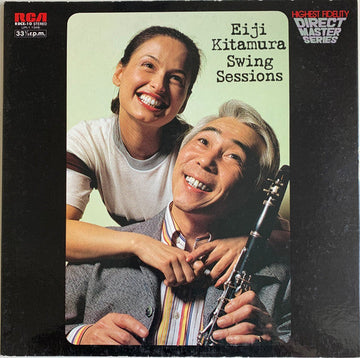
Eiji Kitamura – Swing Sessions

More Eiji Kitamura

More Direct-to-Disc Recordings

  • This rare Japanese import LP boasts incredible DEMO DISC sound 
  • The music here is wonderful – if you’re a fan of clarinet-led swing jazz, you’ll have a hard time finding a better record than this
  • “This album was recorded by the direct-to-disc recording method, to capture the natural reverberation of 1,200 seat concert hall. Various kinds of recording equipment were brought in parts to the backstage of the hall for the recording then reassembled and adjusted. Two whole days were spent adjusting all the equipment.”
  • If you’re a lazz fan — of swing or otherwise — this title from 1978 is surely a Must Own
  • The complete list of titles from 1978 that we’ve reviewed to date can be found here

(more…)

The Four Seasons Direct to Disc at 45 RPM

Hot Stamper Pressings of the Music of Antonio Vivaldi Available Now

This RCA Direct-to-Disc 45 RPM Double LP has awful sound, with exceptionally hard and shrill string tone.

This is precisely why we dislike Japanese pressings as a rule — they sound like this audiophile trash.

If you own this album, it should make a good one for testing string tone and texture. The strings on this record are awful, and they should sound awful on your stereo too.

The Big Picture from a Lifelong Audiophile

You may have seen this text in another listing, but it bears repeating.

There is nothing new under the sun, and that is especially true when it comes to bad sounding audiophile records. The world is full of them.

There has been one big change from the days when I self-identified as a freshly minted audiophile in the ’70s.

Yes, the records being marketed to audiophiles these days may have second- and third-rate sound, but at least now they have good music. That’s progress, right?

The title reviewed above is a good example of the kind of crap we newbie audiophiles used to put up with back in the old days, long before we had anything resembling a clue.

This one clearly belongs on our list of bad audiophile records.

You might be asking: What kind of audio fool was I? to buy a dumbass record like this.

It’s a fair question. Yes, I admit I was foolish enough to buy records like this and expect it to have good music, or at least good sound. Of course it had neither. Practically none of these kinds of records ever did. Sheffield and a few others made some good ones, but most Direct to Disc recordings were crap.

As clueless as I was, even back in the day I could tell that I had just thrown my money away on this lipsticked-pig in a poke.

But I was an audiophile, and like a certain Mr. Mulder, I wanted to believe. These special super-hi-fidelity records were being made for me, for special people like me, because I had expensive equipment and regular records are never going to be good enough to play on my special equipment, right?

To say I was wrong to think about audio that way is obviously an understatement. Over the course of the last forty years, I (and to be fair, my friends and my staff) have been wrong about a lots of things in the worlds of records and audio.

You can read more about many of the things we got wrong under the heading: live and learn.

The good news? Audio progress is real and anyone who goes about doing audio the right way can achieve a great deal.

(more…)

Swing Sessions – Recorded in a Real Concert Hall (Thank Goodness)

If you’re a fan of clarinet-led swing jazz, you’ll have a hard time finding a better record than this. The music is absolutely wonderful. Not only that, but it has DEMO DISC sound as well.

The Liner Notes

Direct-to-Disc Recording recorded live at Iruma City Auditorium, Saitama, Japan on April 21, 1978. Eiji Kitamura and His Allstars include Eiji on clarinet, Ichiro Masuda on vibraphone, Yoshitaka Akimitsu on piano, Yukio Ikezawa on bass, Hiroshi Sunaga on drums and Judy Anton provides vocals on “What a Little Moonlight Can Do.”

This album was recorded by the Direct-to-Disc recording method, to capture the natural reverberation of the 1,200 seat concert hall. Various kinds of recording equipment were brought in parts to the backstage of the hall for the recording then reassembled and adjusted. Two whole days were spent adjusting all the equipment. (more…)

Takemitsu / Ichiyanagi – Percussions in Colors / Yoshihara

More Classical and Orchestral Recordings

More Audiophile Recordings

  • A rare, limited edition Direct to Disc Japanese import pressing of experimental works performed by Sumire Yoshihara, here with KILLER Shootout Winning Triple Plus (A+++) sound or close to it on both sides
  • So transparent, dynamic and real, this copy raises the bar for the sound of this kind of unique percussive music on vinyl
  • Loads of presence, with richness and fullness that showed us just how good the Direct to Disc medium can be at its best

(more…)

Beethoven – Piano Sonata No. 23 (“Appassionata”) / Kamiya – (45 RPM)

More of the music of Ludwig van Beethoven (1770-1827)

More TAS List Super Discs

  • This rare TAS-approved Japanese import LP boasts INSANELY GOOD Shootout Winning Triple Plus (A+++) DEMO DISC sound on both sides
  • You will have a hard time finding a better recording of the piano than this – it’s one of the all time great Direct-to-Discs
  • It’s simply bigger, more transparent, less distorted, more three-dimensional and more REAL than all of the other copies we played
  • All of which adds up to a top quality piano recording in every way
  • A famous resident of the TAS list, this album offers excellent music, performed with feeling, and recorded properly, the best of all possible worlds for us audiophiles
  • A friend of ours tells me that Kamiya plays this piece exactly the way Horowitz did, and that’s probably a good thing – good luck finding a Horowitz recording that sounds like this!

(more…)

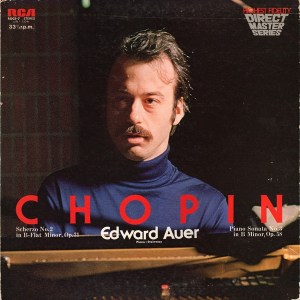
Chopin / Scherzo No. 2 / Auer – Direct to Disc

More of the music of Frederic Chopin (1810-1849)

More Direct-to-Disc Recordings with Hot Stampers

This is an IMMACULATE RCA Direct-to-Disc LP with SUPERB SOUND! This recording is every bit as good as the famous RCA Beethoven Direct Disc and ten times as rare. You will have a very hard time finding a better sounding solo piano recording.  [Or so we thought in 2008.]

Beethoven’s ‘Appassionata’ – A Superb Direct to Disc Recording

More of the music of Ludwig van Beethoven (1770-1827)

More Direct-to-Disc Recordings

A famous resident of the TAS list, this album offers excellent music, performed with feeling, and recorded properly, the best of all possible worlds for us audiophiles.

A friend of mine tells me that Kamiya plays this piece exactly the way Horowitz did, and that’s probably a good thing. Good luck finding a Horowitz recording that sounds like this. Or plays this quietly.

You will have a hard time finding a better recording of the piano than this. It’s one of the all time great Direct-to-Discs.


Further Reading

An RCA Direct Disc with Bad Music & Bad Sound, Like Most Audiophile Albums from the ’70s

Hot Stamper Pressings of the Music of Antonio Vivaldi Available Now

Hey, the records being marketed to audiophiles these days may have second- and third-rate sound, but at least now they have good music.

That’s progress, right?

This is just an awful Direct to Disc recording with bad sound and pointless music.

The Beatles Medley is particularly misguided. These guys have no idea what to do with The Beatles

This is the kind of crap we newbie audiophiles used to have to put up with back in the ’70s before we had anything resembling a clue.

It clearly belongs in only one place on our site: the hall of shame,

This one clearly belongs on our list of bad sounding audiophile records.

(more…)

For Misty, Stick with the Real Japanese Pressings

More Audiophile Recordings with Audiophile Quality Sound

Hot Stamper Pressings of Jazz Recordings Featuring the Piano Available Now

This is a highly recommended Three Blind Mice LP. We don’t like most Three Blind Mice albums, or jazz played by practically anyone who is not American. (Ever played Jazz at the Pawnshop? If so, did you enjoy your nap?)

But we like the music of Yamamoto well enough to recommend some of it. Midnight Sugar might actually be his most enjoyable album of them all.

The Heavy Vinyl versions are not as good, although the 45 RPM pressing probably comes the closest to the real Japanese pressing we review here.

Anything pressed at RTI is rarely better than second rate and should be avoided if at all possible.

We almost never like records Made In Japan that were not recorded in Japan. There are of course a few exceptions.

My First Time

This was the first Three Blind Mice recording I ever heard, over 20 [now close to 40] years ago. A fellow audiophile who went on to become a true audio guru for me (George Louis) played me this recording to demonstrate his stereo.

It had to be the most dynamic piano recording I had ever heard in my life. 

Yamamoto likes to tinkle the keys very softly, and then really pound them. And the Three Blind Mice engineers were able to capture both the quiet tinkling because of the Japanese vinyl, and the full-on pounding because of the audiophile recording equipment they used. It was an ear-opening experience.

Over the course of the next year or two, I sold off my Fulton Premiers and my Audio Research Electronics, because no matter how hard I tried, I couldn’t get Misty to sound like it did at George’s house.

I realized that it takes better equipment than those companies were making back then to get the sound of that record right, and that put me on, to quote Cat Stevens, ”the road to find out.”

And it wasn’t just the equipment that had to get better, a subject we address in our commentary Revolutionary Changes in Audio. An excerpt:

When I got started in audio in the early- to mid-70s, the following important elements of the modern stereo system did not exist:

  • Stand-alone phono stages.
  • Modern cabling and power cords.
  • Vibration controlling platforms for turntables and equipment.
  • Synchronous Drive Systems for turntable motors.
  • Carbon fiber mats for massive turntable platters.
  • Highly adjustable tonearms (for VTA, etc.) with extremely delicate adjustments and precision bearings.
  • Modern record cleaning machines and fluids.
  • And there wasn’t much in the way of innovative room treatments like the Hallographs we use.

A lot of things had to change in order for us to reproduce records at the level required to do our record shootouts and be confident about our findings, and we pursued every one of them about as far as time and money allowed.

For a further discussion of these issues, please click here.

(more…)