r and d

Our extensive ongoing research into records, as well as the development of higher quality playback, is what allows us to keep discovering superior pressings with each passing year.

Many of our “finds” are unknown to the audiophile community, mostly because the do not fit the conventional idea of what should be the best sounding version of any given album.

They might be from the “wrong country,” they might have the “wrong label,” they might be cheap reissues — none of that matters to us.

We’re focussed on one thing: higher quality sound, and we know that the only way to find it is through painstaking and expensive experimentation, or, as it is more commonly known, trial and error.

Workin’ And Steamin’ – We Were Dead Wrong about the Originals

davismiles

Hot Stamper Pressings of the Music of Miles Davis Available Now

This review is for a pressing we put up around 2010.

Up to that time we had never played a clean, early pressing, and when we finally were able to put some in our shootout, one of them had sound that was out of this world.

In the commentary below we discuss what we think the early pressings probably sound like. Now, having heard how good the best of them can sound, we admit we clearly needed to do more research and development.

The record pictured above can have superb sound, much better than any modern Heavy Vinyl reissue you care to name.

However, the right properly-cleaned early pressings have the potential to take the sound of this music to the next level, a level we had no idea could exist until that right record came our way.

(more…)

In 2008 We Had a Lot More R&D Ahead of Us

Hot Stamper Pressings of the Music of Led Zeppelin Available Now

A classic example of live and learn.

In 2008 we simply had not done our homework well enough. I had been an audiophile for at least 33 years by then, and a professional audiophile record dealer for 21, but we still hadn’t cracked the code for Zep III.

Sure, by 2008 we had auditioned plenty of the pressings that we thought were the most likely to sound good: the original and later domestic pressings, the early and later British LPs, some early and later German pressings, maybe a Japanese import or two. In other words, the usual suspects.

We already knew the Classic Records Heavy Vinyl was unbelievably bad; no need to put that in a shootout. It earned an “F” right out of the gate for its bright and harsh sound.

The result? We were roughly in the same position as most serious record collecting audiophiles, if not actually in a better one: who do you know that has played at least ten different pressing Led Zeppelin III, or any other album for that matter?

We had auditioned a number pressings of the album and thought we knew enough about the sound to pick a winner. We thought the best original British Plum and Orange label pressings had the goods that no other copies could or would have. (Years later we would get hold of another one, clean it up and put it in a shootout.)

But of course, like most audiophiles who judge records with an insufficiently large sample size, we turned out to be quite mistaken.

Logic hadn’t worked. None of the originals would end up winning another shootout once we’d discovered the right reissues.

But in 2008, we hadn’t stumbled upon the best pressings because we hadn’t put enough effort into the only approach that actually works.

What approach is that? It’s trial and error. Trial and error would eventually put us on the path to success. We had simply not conducted enough trials and made enough errors by 2008 to find out what we know now.

We hadn’t made the breakthrough we needed to make in order to know just how good the album could sound.

Can you blame us? The pressings that have been winning shootouts for years are from the wrong country (not the UK) and the wrong era (not the original).

We reproduce below the commentary for the 2008 listing that gets it wrong.

The best British originals are good records, but none of them would win a shootout these days up against the superior import pressings we discovered around 2015 or so.

(more…)

We Were Way Off the Mark with Stand Up in 2006

Hot Stamper Pressings of Jethro Tull Albums Available Now

Years ago we wrote:

This Island Pink Label Original British pressing has ABSOLUTELY AMAZING SOUND! We mention that there was a Sunray pressing that may have been even better, but I didn’t have this copy in hand to compare the Sunray to, so I can’t be sure that pressing was any better.

This one sounds as good as any I’ve ever heard. 

It’s amazingly dynamic and powerful, yet full of tubey magic. I played almost ten different pressings of this record today (11/08/06): every domestic label variation and a handful of imports. This copy is clearly the best of the batch.

A textbook case of live and learn.

My stereo was dramatically less revealing back then and also I did not know how to clean records properly. Those two facts, combined with the underdeveloped or yet-to-be-developed listening skills that go with them, allowed me to arrive at the wrong conclusion.

In 2006 we simply had not done our homework well enough. I had been an audiophile for at least 31 years by then, and a legitimate audiophile record dealer for 19.

Sure, by 2006 my staff and I had auditioned plenty of the pressings that we thought were the most likely to sound good: the original and later domestic pressings, the early and later British LPs: in other words, the usual suspects.

The result? We were roughly in the same position as the vast majority of audiophiles. We had auditioned a sizable number pressings of the album and thought we knew enough about the sound of the album to pick a clear winner. We thought the best pink label Island pressings had the goods that no other copies could or would have.

But of course, like most audiophiles who judge records with an insufficiently large sample size, we turned out to be completely wrong.

Logic hadn’t worked. None of the originals would end up winning another shootout once we’d discovered the right reissues.

But in 2006, we hadn’t stumbled upon the best pressings because we hadn’t put enough effort into the only approach that actually works.

What approach is that? It’s trial and error. Trial and error would eventually put us on the path to success. We had simply not conducted enough trials and made enough errors by 2006 to find out what we know now.

We needed a breakthrough, and we hadn’t gotten it yet.

(more…)

On Heroes, It Took Us Ages to Break the Sound Barrier

More of the Music of David Bowie

Because the conventional wisdom turned out to be so wrong.

Our intuition that the British originals would sound the best was incorrect.

The experiments we carried out falsified that prediction.

In the audiophile record collecting world, intuitions have a bad track record, but more than a few audiophiles — many of whom are addicted to sharing their “record knowledge” on audiophile forums — seem unaware of this reality.

Taking a page from one of the greatest minds of the 20th century, we’ve opted to use a more scientific approach to discovering the best sounding record pressings, and we encourage you to do likewise. 

We pioneered the evidence-based approach to finding the best sounding pressings, and, like all good scientists, we shared it with everyone. Some in the audiophile community have taken it to heart, but most have chosen to put their faith in reviewers, forum posters, common sense and logic.

None of these produce consistently good results, but those who use these methods are loathe to doubt them and only rarely if ever learn the error of their ways.

Once a decision has been made and a specific pressing acquired — you could call it door number three I suppose — cognitive dissonance and confirmation bias immediately kick in to justify the result, and soon enough the game is over. The prize has been won. It’s the best prize ever. It does everything right, everything you’d hoped for.

But the best sounding copy of the record was not behind door number three.

You don’t have the best sounding pressing (well, you might, but if you did it would be entirely the result of chance, since you have no experimental evidence), but as long as you think you do, and, like most audiophiles, you play records only for yourself, and purely for enjoyment, you have no way of  discovering where on the spectrum of best to worst your record sits.

As long as you think you have the best, you have the best. How could there ever be any evidence offered to the contrary?

(more…)

Getz Au Go Go – Live and Learn

Hot Stamper Pressings of Bossa Nova Albums Available Now

A classic case of We Was Wrong.

Many years ago we had written these silly lines in a review:

Of course, you would never know this is a good recording by playing the average domestic copy. This Japanese LP is one of the few pressings that can show you that this wonderful smoky night club jazz LP really can have Demo Disc sound.

Ridiculous, right? Well, at the time we believed it. Now our understanding is quite a bit more sophisticated, in the sense that the Japanese pressing is clearly better than many originals, but certainly not all of them.

More importantly, there are amazing sounding domestic reissues of the album that we’ve auditioned over the last ten years or so that really blew our minds and helped to set an even higher standard for the sound of Getz Au Go Go.

Our old story:

Way back in 2005 I discussed this very subject when listing a sealed copy:

There are pressing variations for this title on Japanese vinyl, and there’s no way to know what this one sounds like but all of them are better than any other pressing I know of. As I played the open copy we have listed on the site (1/12/05) I couldn’t help but marvel at the quality of the sound.

These days we would crack open a sealed one, clean it up and shoot it out with any others we could lay our hands on, because finding a copy with sound like this is a positive THRILL.

I’m no fan of Japanese pressings as readers of this Web site know very well, but the Japanese sure got this one right!

The domestic copies of this album are mediocre at best — there’s simply no real top end to be found on any Verve pressing I have ever heard.

The top end is precisely where the magic is! Astrud Gilberto’s breathy voice needs high frequencies to sound breathy.

Gary Burton’s vibes need high frequencies to emerge from the mix, otherwise you can hardly hear them.

And Stan Getz’s sax shouldn’t sound like it’s being played under a blanket.

The only version of this album that allows you to hear all the players right is a Japanese pressing, and then only when you get a good one.

That was our understanding in 2005, after being seriously into audio and records for 30 years, as a professional audiophile record dealer for 18 of them. Clearly we had a lot to learn, and we were on the road to learning it, having embarked on our first real Hot Stamper shootout just the year before. (We had been doing them less formally since the ’90s of course. It was only in 2004 that we were able to do them with the requisite scientific protocols in place.)

In 2005, we simply did not have the cleaning system or the playback system capable of showing us what was wrong with the sound of the Japanese pressing we were so impressed by at the time.

(more…)

Led Zeppelin – Our Old Shootout Winner and Lessons We’ve Learned

Hot Stamper Pressings of the Music of Led Zeppelin Available Now

A textbook case of live and learn.

In 2007 we simply had no idea just how good this recording could sound on vintage vinyl. We needed to do a lot more homework, a subject we discussed in some depth here for Led Zeppelin III.

My guess is that we discovered the right pressings, with the right stampers, pressed in the right era, and mastered by the right guy, sometime in 2014. That was the year this copy came along.

Which, according to my audiophile math, means we needed 7 more years of buying, cleaning and playing copies of the album until we stumbled upon the hottest stampers of them all. And in the many years since, nothing has come along to take the crown away from this bad boy. Our customers seem pretty happy with the pressing we sold them, too.

Yes, it turned out to be quite the breakthrough, and it could not have happened to a better record, as Zep’s first album is my favorite rock album of all time. (Please excuse the all caps writing.)

(more…)

Crisis? What Crisis? – It Took Us Until 2012 to Finally Beat the Audiophile Pressing We Swore By

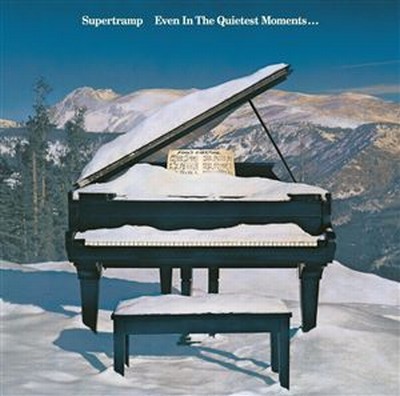
Hot Stamper Pressings of the Music of Supertramp Available Now

This listing is from 2012. Since that time we have been able to find and play a great many British pressings of the album, and they tend to win our shootouts.

But the domestic pressings can also do very well, just not well enough to win shootouts these days, a clear case of live and learn.

Our Understanding from 2012

TWO AMAZING SIDES, including an A+++ SIDE ONE! It’s not the A&M Half Speed, and it’s not a British pressing either. It’s domestic folks, your standard plain-as-day A&M pressing, and we’re as shocked as you are. Hearing this copy (as well as an amazing Brit; they can be every bit as good, in their own way of course) was a THRILL, a thrill that’s a step up in “thrillingness” over our previous favorite pressing, the A&M Half Speed.

The best of the best domestics and Brits are bigger, livelier, punchier, more clear and just more REAL than the audiophile pressing something we knew had to be the case if ever a properly mastered non-Half Speed could be found. And now it has. Let the rejoicing begin!

This is only the second White Hot Stamper copy of Crisis to come to the site, and it’s not the A&M Half Speed. It’s an AMAZING sounding British copy. The only other copy that we have ever heard sound this good was the domestic copy we put up a few weeks back.

The best of the best domestics and Brits are bigger, livelier, punchier, more clear and just more REAL than the audiophile pressing — something we knew had to be the case if ever a properly mastered non-Half Speed could be found.

Our previous commentary for our domestic pressings noted:

We’d love to get you some great sounding quiet British copies, but we can’t find any. They either sound bad (most of them) or they’re noisy (the rest). It is our belief that the best Hot Stamper pressings of this Half-Speed give you the kind of sound on Crisis? What Crisis? you can’t find any other way, not without investing hundreds of dollars and scores of hours of your time in the effort. Wouldn’t you just rather listen to the record?

Why did we think Jack Hunt‘s mastering approach for the A&M Half Speed was the right one?

(more…)

If You Are At All Serious About Audio, You Cop to Your Mistakes

Hot Stamper Pressings of the Music of Steely Dan Available Now

And to think I used to swear by this pressing of Katy Lied — specifically the 2000 Yen reissue, not the 1500 Yen original, which sounded dull, more like the average domestic original I was trying to better.

This one is brighter and cleaner, but at the cost of more distortion, more congestion and, now that I have a better understanding of records and their variations, an incorrect tonal balance. The Japanese tried to fix the smooth sound of the dubbed tape they were given and, in so doing, ruined what was good about the sound. 

Another example of just how wrong one can be — one, in this case, being me circa 1995.

Let’s Talk About Us

We happily admit to our mistakes because we know that all this audio stuff and especially the search for Hot Stampers is a matter of trial and error.

We do the trials; we run the experiments,

That’s the only way to avoid the kinds of errors most audiophiles make in their quest to find the best sounding pressings of their favorite albums,.

Being skeptical of every claim you have not tested for yourself is key to getting good results from this kind of work.

Of course, being human we can’t help but make our share of mistakes. More than our share; we’ve made them by the hundreds.

The difference is that we learn from them. We report the facts to the best of our ability for every shootout we do.

Every record gets a chance to show us what it’s made of, regardless of where it was made, who made it or why they made it. 

If we used to like it and now we don’t, that’s what you will read in our commentary. Our obligation is to only one person: you, the listener. (Even better: you, the customer. Buy something already and see what you have been missing.)

On every shootout we do now, if the notes are more than six months old, we toss them out. They mean nothing. Things have changed, radically, and that’s the way it should be.

With each passing year you should be hearing more of everything on your favorite LPs.

That’s the thrill of this hobby — those silly old records just keep getting better. I wish someone could figure out how to make digital get better. They’ve had forty years and it still leaves me wanting more. You too, I’m guessing.

(more…)

Fandango! – Another Warners Heavy Vinyl Mediocrity

More of the Music of ZZ Top

Sonic Grade: C

Warner Brothers remastered Fandango in 2008, so we took some domestic pressings and put them up against their Heavy Vinyl LP.

The results were mixed; most of our original pressings were lackluster, many were noisy, and we just weren’t hearing anything with the sound we thought deserved to be called a Hot Stamper.

We shelved the project for another day.

In the interim we kept buying domestic pressings — originals and reissues — in the hopes that something good would come our way.

Fast forward to 2015. We drop the needle on a random pressing and finally — finally — hear a copy that rocks like we knew a ZZ Top album should. With that LP as a benchmark, we got a shootout up and running and the result is the record you see here.

How did the WB remaster fare once we had some truly Hot Stamper pressings to play it against?

Not well. It’s tonally correct, with a real top and bottom, something that a substantial number of copies cannot claim to be.

But the sound is stuck behind the speakers, veiled, and sorely lacking in energy and excitement.

The transparency is of course compromised on all these new reissues, and without transparency and resolution, much of the audience participation on the first side is lost.

I won’t say the new pressing is boring. Let’s just say it’s a lot more boring than it should be. (more…)

Compromised Recordings Versus Purist Recordings – If It’s About the Music, the Choice Is Clear

More Entries from Tom’s Audiophile Notebook

That guy you see pictured to the left has spent much of the last forty years wandering around used record stores looking for better records (ahem). Before that he wandered around stores selling new records because he didn’t know how good old used records could be.

Here are some of the things he’s learned since he started collecting at the age of ten sixty years ago. (First purchase: She Loves You on 45. It’s still in the collection, although it cracked long ago and is no longer playable.)

This commentary was written circa 2006. The Hot Stamper world was very different then. A few dozen had been done since 2004, and probably not nearly as well as we thought at the time, truth be told.


A while back one of our good customers wrote to tell us how much he liked his Century Direct to Disc recording of the Glenn Miller big band, one of the few really amazing sounding direct discs that contains music actually worth listening to. Which brought me to the subject of Hot Stampers. 

Hot Stamper pressings are almost always going to be studio multi-track recordings, not direct to discs of live performances.

They will invariably suffer many compromises compared to the purist approach of an audiophile label trying to eliminate sources of distortion in the pursuit of the highest fidelity.

But when they do that, they almost always fail. How many Direct Discs sound like that Glenn Miller? A dozen at most. The vast majority are just plain awful. I know, I’ve played practically every one ever made. For more than a decade I made a living selling them.

Thankfully that is no longer the case, although we do have a handful of direct discs that we still do shootouts for, such as The Three, Glenn Miller, Straight from the Heart and the odd Sheffield.

Compromised Recordings

What we do play is those very special, albeit compromised, mass-produced pressings. The right Londons and Shaded Dogs. Columbia and Contemporary jazz. Brewer and Shipley. Sergio Mendes. The Beatles. The Doobie Brothers for Pete’s sake!

Why? Because those pressings actually communicate the music. They allow you to forget about the recording and just listen. You can’t do that very often with the CD of the album. You can’t even do it with most of the vinyl pressings you run into. You certainly can’t do it with the vast majority of 180 gram LPs being made today, not in our experience anyway.

You have to have the right pressing. That’s what a Hot Stamper is: more than anything else, it’s the right pressing.

It’s the one that really lets the music come through, regardless of whatever compromises were made along the way.

(more…)