post-its

This Is Why We Love Columbia in the 60s

More of the Music of Al Kooper

More of the Music of Michael Bloomfield

Please excuse the copying and pasting from previous listings. When records are this good, we tend to say the same things about them, because they are doing all the things we want them to do.

From time to time a record comes our way that sounds absolutely amazing, “Way better than it used to sound” amazing. Progress in audio is a feature, not a bug, of record collecting and music reproduction at the most advanced levels.

If it’s the kind of record that sounds like the best copy of The Live Adventures of Bloomfield and Kooper from our most recent shootout, we might even let our enthusiasm for its superb fidelity get the better of us. That’s the effect a record as good as the copy we played can have. You just can’t stop yourself from saying one great thing after another about it.

Our over-the-top notes, like those you see below, attempt to convey what it’s like to experience the superb sound we were hearing.

But where is the harm in that? These are notes that no one outside of the staff are ever expected to see. They are helpful to us in writing our commentary and pricing the specific copy we auditioned, but they are practically never quoted in the listings.

The Live Adventures of Bloomfield and Kooper is an example of one of those recordings that comes along from time to time in order to show us sound that we’d almost forgotten was possible.

Oh yes, with the rare properly-cleaned, properly-mastered, properly-pressed vintage vinyl LP, played back on top quality equipment in a heavily treated, dedicated soundroom, we can assure you it is very possible indeed. Allow us to make the case with the Shootout Winning original pressing you see below.

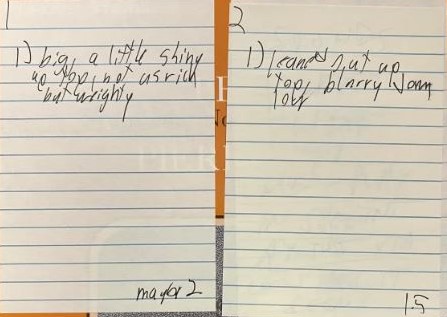
The notes for side one read: 

  • Big, Tubey and jumping out
  • Breathy vocals
  • Deep, sustained bass

Side two:

  • Spacious
  • Glowing and rich drums are weighty and 3-D
  • No congestion
  • Extending high and low
  • Silky and present vocals

Side three:

  • Weighty and rich
  • No hardness
  • Extending high and low

Side four:

  • Rich and ? and space
  • More dynamic and 3-D
  • All around good weight

You know what’s unusual about these notes?

They’re the kind of notes we have never written for any Heavy Vinyl reissue, even for the one that won our shootout not long ago.
(more…)

This Is Why We Love Rudy Van Gelder in the 60s

Hot Stamper Pressings of Rudy Van Gelder Recordings Available Now

The top copy from our most recent shootout went for $1500 and, in our opinion, was worth every penny of that amount, being one of the best sounding jazz records we have ever played

It probably took us ten years to get this shootout going, but the best copies we played were so impressive that they made all the time and money it took to pull it off worth the effort — what a record!

The notes on side one read: 

Track Two

  • Fingered plucky bass
  • Rich and spacious
  • Extending (high and low)
  • Horns are rich and breathy

Track One

  • Fat, rich bass and drums
  • So big and lively and no hardness

The notes on side two read: 

(more…)

The Talking Heads Were Hard to Beat in 77

Hot Stamper Pressings of the Music of Talking Heads Available Now

For some recent listings for the album, we noted:

If I were to compile a list of my favorite rock and pop albums from 1977, this album would definitely be on it.

In the four years since we last played it, we’d forgotten how amazing this album can sound on the best pressings. I’d even say that it’s a sonic step up from Fear Of Music and Remain In Light, probably tying with More Songs About Buildings and Food and Little Creatures for top Talking Heads honors.

That seems to have undersold just how good this album can sound on the right pressing. Having just done the shootout in our new custom-built studio, we could not have been more impressed with the recording, as you can see from the notes for the winning copy shown below.

Side One

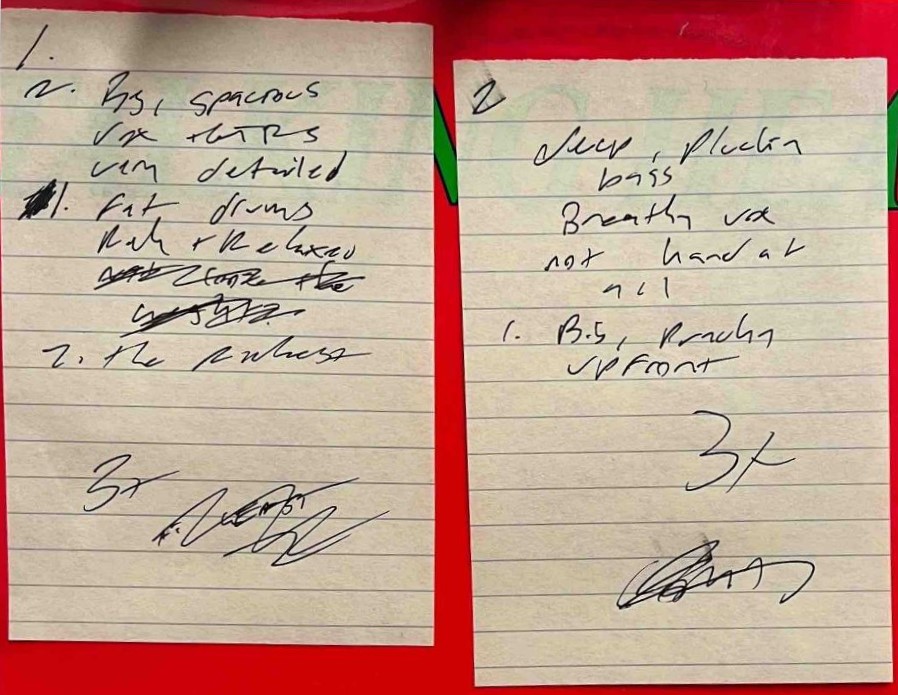
Here are our notes for side one, for those who have trouble reading our scratch. We started off with track two.

Track two

  • Big, spacious vocals and guitars
  • Very detailed

Track one

  • Fat drums
  • Rich and relaxed

The initial grade was one we often give out, “at least 2.” We knew the sound was great, but how great? We would need to play more copies to see how this one compares to the others that seem to be doing everything right, everything being the operative word. What is everything, and how right can it get?

Yes, that’s right, we needed to answer the most important question in all of audio: Compared to what?

We typically take the two or three best side ones — we call them “contenders” — and listen to them again to see which of them has the real Shootout Winning magic in its grooves, the one that does everything right and then some.

(more…)

Willie Nelson and Leon Russell – One for the Road

More Willie Nelson

More Country and Country Rock

xxxxx

  • The sound is big and rich, the vocals breathy and immediate, and you will not believe all the space and ambience
  • This is an exceptionally good (studio) recording, and this pressing really nails the smooth, rich analog sound of what must be an awesome master tape
  • Our notes for sides one and two on our shootout winning copy read: big/rich/no smear/not bright/breathy vox/big bass/3D/huge vox — that’s our kind of sound!
  • 4 stars: “…it’s a small, priceless gem for any serious fan of either singer.”

(more…)

This Is Why We Love Records from the 50s

Hot Stamper Pressings of Mercury Classical Recordings Available Now

From time to time a record comes our way that sounds absolutely amazing, “I can’t believe it’s a record” amazing.

If it’s the kind of record that sounds like the best copy of Fiesta in Hi-fi from our most recent shootout, we might even let our enthusiasm for its superb fidelity get the better of us. That’s the effect a record as good as the copy we played can have. You just can’t stop yourself from saying one great thing after another about it.

Our over-the-top notes, like those you see below, attempt to convey what it’s like to experience the absolutely breathtaking sound we were hearing.

But where is the harm in that? These are notes that no one outside of the staff are ever expected to see. They are helpful to us in writing our commentary and pricing the specific copy we auditioned, but they are practically never quoted in the listings.

Fiesta in Hi-Fi is an example of one of those recordings that doubles as a thrill ride. They come along from time to time in order to show us the kind of sound that we’d almost forgotten was possible on a record.

Oh yes, with the rare properly-cleaned, properly-mastered, properly-pressed vintage vinyl LP, played back on top quality equipment in a heavily treated, dedicated soundroom, we can assure you it is very possible indeed. Allow us to make the case with the Shootout Winning original pressing you see below.

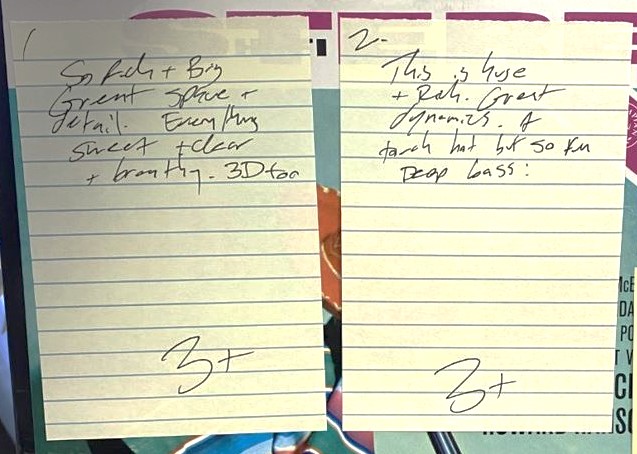
The notes read: 

So rich and big / Great space and detail / Everything sweet + clear + breathy / 3D too / Great dynamics / A touch hot but so fun / Deep bass.

You know what’s unusual about these notes?

(more…)

Beethoven’s Symphony No. 4 – The Classic Pressing Can Have Very Good Sound

More of the music of Ludwig van Beethoven (1770-1827)
Somehow we managed to have a Classic Records pressing on hand to play in our most recent shootout for the Beethoven Symphony No. 4.

We knew all the way back in 1997 that Classic had done a good job with the record — we recommended it as one of the best Classic Records pressings in our catalogs at the time — but we sure didn’t expect it to do as well as it did, earning 2 pluses on one side and close to that on the other.

Years ago we wrote:

Here is the kind of sound that Classic Records could not ignore, even though the original was only ever made available as part of RCA’s budget reissue series, Victrola.

Don’t let its budget status fool you — this pressing puts to shame most of what came out on the full price Living Stereo label. (And handily beats any Classic Records reissue ever made.)

The top and bottom are wrong to varying degrees on both sides of the Classic, as you can see from our notes, which read:

(more…)

The Yellow Submarine Songtrack Did Not Float My Boat

Last year a customer wrote to tell me how much he liked the sound of his 2004 Japanese DMM pressing of the Yellow Submarine Songtrack.

After looking into the background of this album, we saw right from the start that it had three strikes against it.

First off, we rarely like Japanese pressings outside of those that were recorded in Japan, such as the direct to disc jazz and classical records we’ve done shootouts for. Other Japanese pressings we like were recorded in the states for the Japanese market: the jazz direct to discs on East Wind come to mind.

Secondly, whenever possible we avoid DMM pressings. They often add what seems to us like digital artifacts to the sound.

And lastly, we rarely like modern remixes, especially modern remixes that obviously use digital processes of various kinds. The remixed Abbey Road is a complete disaster. Nothing that comes out of Abbey Road these days should be expected to sound good. Their work is a disgrace.

So rather than buy the Japanese-pressed version of the album, we cheaped out and just bought a UK one for half the price.

We half-expected the worst and that’s pretty much what we found.

I used to sell this very version of the album back in 1999 when it came out. I thought it sounded just fine. That was about twenty years ago. My all tube system was darker and dramatically less resolving than the one I have now.

Scores of improvements have been made since then to every aspect of analog reproduction, something we discuss endlessly on this blog.

We Have No Idea

To be fair, we admit that we have no idea what the Japanese pressing of the album sounds like. We’ve never played one.

So what’s wrong with the UK pressing of the Yellow Submarine Songtrack?

From the notes reproduced on the left — incidentally some of the last I wrote before I retired — you can see that the overall sound struck me as drythin and CD-like.

(more…)

After Years of Searching, We Finally Found an Old Beatles Record with Top Quality Sound

Hot Stamper Pressings of The Beatles for Sale Album

UPDATE 2026

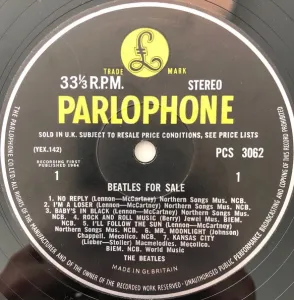
Sometime before 2022 we played a copy of Beatles For Sale on the original label that earned Super Hot Stamper (2+) grades on both sides. This was surprising because we rarely like Beatles albums on the early label with the exception of two titles, Yellow Sub and A Collection of Oldies…


UPDATE: 2022

We just played another original pressing of For Sale and this copy had a Triple Plus (A+++) side one, mated to a Double Plus (A++) side two. For Sale is still the only studio album with top quality sound on the original pressing that we have ever played, but now we can say with some authority that if you have a bunch of originals, you might just have one with killer sound like the one we had. There was a later pressing that also earned our top grade, a subject we touch on in this commentary for Kind of Blue.


UPDATE to the UPDATE: 2023

We’ve just played another original pressing of For Sale in a shootout and amazingly it earned Triple Plus (A+++) grades for its sound on both sides. Most original Beatles pressings on the early label do not even qualify to make it into our shootouts. Their mastering is so crude, congested and distorted that the sound simply cannot be taken seriously on a modern hi-fi rig. On a jukebox, maybe. Mine’s in the shop.

Note that this label information, like most label information, is not as helpful as it might seem. The Yellow and Black Parlophone label was used in the UK all the way up until 1969, during which time a lot of copies of For Sale, first released in 1964, were sold. In other words, if you want to find a great sounding pressing of For Sale on the early label, you have your work cut out for you.


This finding about For Sale is precisely why live and learn is our motto.

We don’t know it all, and we’ve never claimed that we did. We constantly learn things about pressings in our daily shootouts. That should not be too surprising, as record shootouts are the only way to learn anything about the sound of records that’s actually worth knowing.

Start doing your own experiments and your record knowledge might just take off the way ours has. 99% of what we think we know about the sound of records we’ve learned in shootouts over the course of the last twenty years.

We are happy to share our advice with you on getting started.

Before this, the only Beatles record we would sell on the Yellow and Black Parlophone label was A Collection of Oldies… But Goldies. That title does have the best sound on the early label. In numerous shootouts, no Black and Silver label pressing from the ’70s was competitive with the best stereo copies made in the ’60s.

Until now, it was clearly the exception to our rule. From With the Beatles up through Yellow Submarine, the best sounding Beatles pressings would always be found on the best reissue pressings.

Here are the notes for the best sounding For Sale on the early label we played in our 2022 shootout.

For those who have trouble reading our writing, the notes say:

Side One

  • Track one is clear enough, a bit recessed.
  • Track two is clear, open and lively, with good space, but not as weighty as the best.

Side Two

  • Track one is relaxed, solid and musical, with good size.
  • Track two is full, solid and musical, with good bass.

We Was Wrong

A very good sounding record, with few of the problems we heard on the other early label Beatles pressings we’ve played in the past. Most of them had the kind of old record sound — compressed, congested, harmonically distorted, bandwidth limited, etc. — that kept them from making the cut.

But that’s the reason to play records, not judge them by their labels, right? How else would you possibly learn anything about their sound? And you have to play them head to head against other copies, a normally crude process we’ve refined over the last twenty years into a science we like to call the Hot Stamper shootout.

(more…)