good-test

Here are about 60 titles that are good for testing. All genres of music are represented.

Listening for Tubey Magic, Track by Track on Straight from the Heart

More of the Music of John Klemmer

Presenting another entry in our extensive Listening in Depth series with advice on what to listen for as you critically evaluate your copy of Straight from the Heart. Here are more albums currently on our site with similar Track by Track breakdowns.

The best copies give you dynamics and immediacy like you have rarely heard outside of the live event.

Hell, this record IS live; it’s live in the studio. It’s a direct to disc recording, what else could it be?

There is simply nothing getting in the way of the music. If you have the system for it, you can recreate the live sound of this session in a way that few other recordings allow you to do.

This copy had one quality not heard on most of the others: Tubey Magic. The sound is rich and full-bodied, practically free of grit and grain – this is the kind of sound one hears occasionally on the best tube equipment and practically nowhere else. Of course this is an all-transistor affair, but tubey sound is what ended up on the record, so go figure.

Many copies were slightly lean, making the sax a bit aggressive in places. The killer copies fill out the horn sound, giving it the needed weight and body that the real instrument would have, without adding a euphonically artificial richness that the real instrument wouldn’t.

(more…)

Watch What Happens – Now That’s What a Real Drum Kit Sounds Like!

Another Record We’ve Discovered with (Potentially) Excellent Sound…

and One We Will Probably Never Shootout Again

Some records are just too consistently noisy for us to offer to our audiophile customers no matter how good they sound.

We have a section for records that tend to be noisy, and it can be found here.

This is the most realistic drum kit I have heard on a non-jazz album in my life. The drum sound on the first track is exactly the sound we all know from hanging around small clubs and our friends’ garage bands. There is simply no audible processing on any part of the kit. The drums are centered behind the vocals and lead instruments, with what sounds like to me the barest of miking, surrounded by just the right amount of unbaffled studio space.

When the drums come in on the first track on side one you will hear immediately what I mean. The third track on side two has especially good drums as well. The vocals on that third track, Message to Michael, are some of the most natural on the album as well. Lena can strain a bit on some songs in the loudest passages, but on others she can belt it out and stay clean all the way to the top. Listen track by track to hear how well she holds up when the bigger choruses come in.

As music lovers and audiophiles this was a truly marvelous discovery for us years ago. True, we’ve known about the album for a long time, but as a practical matter it’s been impossible to find enough clean copies to do a shootout — until now of course.

Dave Sanders, a name I — and no doubt most audiophiles — was not familiar with, brilliantly engineered the album as well as other favorites of ours, including Szabo’s 1969, Gilberto’s Windy and McFarland’s Does The Sun Really Shine On The Moon? It’s hard to find a recording he did that isn’t full of Tubey Magic, huge studio space and right-on-the-money instrumental timbres. (more…)

Jamento – Listening for Speed and Smear

What to Listen For – Smear

What to Listen For – Speed

Clear piano notes, first and foremost.

Any smear or loss of speed (a problem with hi-fi equipment since the beginning of time) detracts from the fun. 

Next, the tonality of the best copies is rich and solid. Accept nothing less.

And, finally, the proper reproduction of the percussion instruments is critically important to the energy and drive of the music. The better you hear them — without losing the weight and richness of the piano — the more you will enjoy your copy of the record.

No two copies will reproduce all these elements equally well. On high quality equipment with the volume turned up good and loud the winners are easily separated from the losers. (more…)

Vivid and Accurate Timbre for Reeds and Percussion – A Demo Disc Like No Other

Hot Stamper Pressings of Percussion Recordings Available Now

This is one of the most phenomenal sounding records I have ever heard in my life.

Take the best sound you’ve ever heard from the best authentic Mercury classical record you own (not that Heavy Vinyl BS) and translate it into pop arrangements for clarinets, flutes, saxes, oboes, bassoons, percussion and who-knows-what-else and what do you have?

Sound that leaps out of the speakers with absolutely dead on tonality.

But what is most shocking of all is how vivid and accurate the timbre of every instrument is.

Yes, it’s multi-miked, and sometimes the engineers play with the channels a bit much (especially at the start of the first track).

That said, if you have the system for it, it’s very possible you have never heard most of these instruments sound this real on any other recording. It’s as if you were standing right in the studio with them. Yes, it’s that crazy good.

For our last shootout, it took two copies to provide you with top sound on both sides. Clean stereo pressings are very hard to find. Most copies are mono, and most copies are beat, and that combination makes for some slim pickings indeed. This side two is not especially quiet but it’s the best we can find, and we hope that when you hear the glorious sound the surfaces will be easy to ignore. If not, send it back.

(more…)

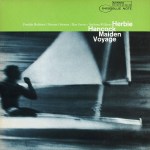
Connecting the Players on Maiden Voyage

More of the Music of Herbie Hancock

More Jazz Recordings Featuring the Piano

Freddie Hubbard on this album is nothing short of astonishing. I remember playing around with the stereo one day, listening for different effects as I made minor changes to the tracking weight, the VTA, adjustments to the Hallographs and the like, and at one point I noticed that the ensemble seemed to be more coherently connected, with each of the players more properly balanced with the others. 

It was a striking effect and it made me realize that musical values can often be overlooked while chasing after audiophile effects of one kind or another.

Hearing the ensemble come together made me appreciate this album even more.

Tony Williams on the drums here deserves a special nod. His cymbal work on the first track is original and spontaneous in the best tradition of jazz improvisation. (more…)

Mingus Revisited – 25 Guys in a Big Room Playing Live

More of the Music of Charles Mingus

Reviews and Commentaries for the Music of Charles Mingus

This copy sounds like a big room full of musicians (25 in all!) playing live, which it surely was. The Tubey Magical richness of this 1960 recording is breathtaking – no modern record can touch it. Allmusic gives it 4 stars and we think it’s maybe even a better than that.

On both sides the best sound can be heard starting with the second track, but on side one the first track was very spacious and had a fuller sounding piano than practically any other we played.

This copy has the original bound-in booklet with pictures and background on the recording, which was “directed” by none other than Leonard Feather.

The best copies recreate a live studio space the size of which you will not believe.

On both sides the best sound can be heard starting with the second track, but on side one the first track was very spacious and had a fuller sounding piano than practically any other we played.

Side one is tonally correct, Tubey Magical and above all natural. The timbre of each and every instrument is right and it doesn’t take a pair of golden ears to hear it.

Side two is big, clear and balanced, with an especially sweet, rich, tubey sax — what a sound! So high-resolution too. The top extends beautifully on this copy, and that was not true for most of the copies we played.

If you love ’50s and ’60s jazz you cannot go wrong here. Mingus was a genius and the original music on this record is just one more album’s worth of proof of that fact.

Hi-Fidelity

What do we love about these vintage jazz Hot Stamper pressings? The timbre of every instrument is Hi-Fi in the best sense of the word. The unique sounds of the instruments are reproduced with remarkable fidelity. That’s what we at Better Records mean by “Hi-Fi”, not the kind of Audiophile Phony BS Sound that passes for Hi-Fidelity these days. There’s no boosted top, there’s no bloated bottom, there’s no sucked-out midrange.

This is Hi-Fidelity for those who recognize The Real Thing when they hear it. I’m pretty sure our customers do, and whoever picks this one up is guaranteed to get a real kick out of it.