 Hot Stamper Pressings of Bossa Nova Albums Available Now
With INCREDIBLE Shootout Winning Triple Plus (A+++) live jazz sound or close to it throughout, this copy is guaranteed to blow the doors off any other Getz – Gilberto #2 you’ve heard.
Rich, tubey and musical, the sound is wonderful for these live performances of the two very different groups – one side featuring Getz, the other Gilberto.
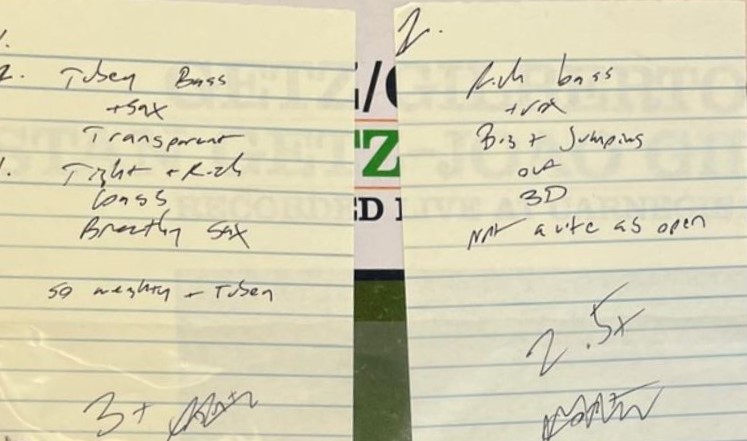
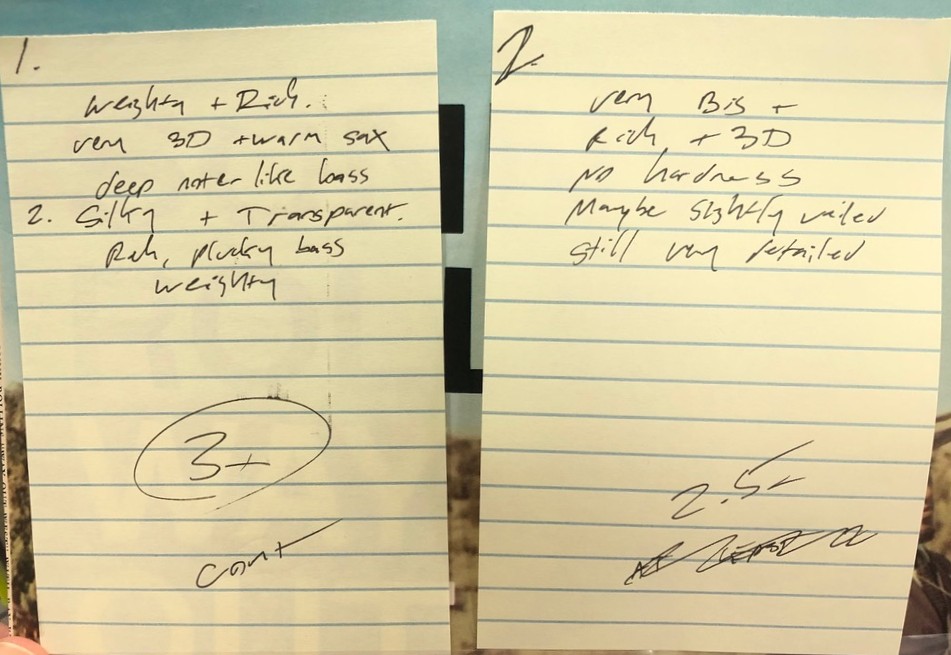
As you can see from the notes, side one of our most recent White Hot stamper Shootout Winner was doing everything right.
However, we had a side two that was slightly better than the side two you see here.
The Second Round
When we played the two best copies back to back, side one of this copy came out on top, earning a grade of 3+, but the side two of another pressing showed us the sound could be even more open than we thought the first time around.
As a consequence, we dropped side two’s grade a half plus, from 3 to 2.5+.
This is exactly why we do shootouts. If you really want to be able to recognize subtle (and sometimes not so subtle!) differences between pressings, you must learn to do them too.
And make sure to take notes about what you are hearing, good and bad.
One side falling short of the full Three Pluses happens more often than not. One out of five records that has one shootout winning side will have a matching shootout winning other side.
The math works like this. 3+/3+ records go in this section, which currently holds 29 titles as of 4/2025. Records with at least one 3+ side go in this section, and there are 145 of those as of the same date, about five times as many.
Getz Is the Man
Stan Getz is a truly great tenor saxophonist, the cool school’s most popular player. Over the years we have invested an insane amount of time and money in our search for Hot Stamper copies of this and other Getz albums.
We rarely have much to show for our efforts — certainly not in terms of quantity, as years can go by without a single record of his on the site.
(more…)

 Hot Stamper Pressings of Contemporary Jazz Albums Available Now