george-marino

Kansas – Leftoverture

  • An early Kirshner pressing that was doing everything right, with both sides earning INCREDIBLE Shootout Winning Triple Plus (A+++) grades – fairly quiet vinyl too
  • The best copy from our recent shootout – the sound is big, full and lively with real Prog Rock energy and a huge punchy bottom end
  • Kansas’s most consistent and engaging album, their true Masterpiece by our lights – a copy as good as this will show you the awesome energy the band brought to their music
  • “Undoubtedly their finest album, Leftoverture warrants Kansas a spot right alongside Boston and Styx as one of the fresh new American bands who combine hard-driving group instrumentation with short, tight melody lines…” – Rolling Stone
  • As is sometimes the case, there is one and only one set of stampers that consistently wins our shootouts for this album.  Click on this link to see other titles with one set of stamper numbers that always come out on top

On the hottest of our Hot Stampers the recording is a glorious example of the Big Rock Sound we love here at Better Records. Wall to wall and floor to ceiling barely begins to do it justice. Like so many of the great rock recordings we offer, when you play one of our Hot Stampers, the sound commands your attention.

(more…)

Letter of the Week – “It really beats the pants off of my George Marino remaster…”

Hot Stamper Pressings of the Music of AC/DC Available Now

One of our good customers had this to say about a Hot Stamper pressing of Back in Black he purchased a while back (emphasis added).

It must have been quite a long time ago, mostly because the Aurios he mentions have not been made for more than a decade. Not to worrry: The Seismic Platform we tout here on the blog will make an even more dramatic improvement to your playback and can be purchased directly from Townshend, eliminating the middleman, us.

Hey Tom,  

I’ve been spending time this week listening to the seven records that arrived from you last week, and have been having a fabulous time doing it. So I thought I’d write to say THANKS – you guys really know how to pick ‘em!

Top honors in the batch definitely goes to the AC/DC Back in Black Hot Stamper. Wow, does it ever ROCK! And it’s not even the best one you had – which makes me wonder just how amazing the best copies sound. It really beats the pants off of my George Marino remaster, to say nothing of my old Canadian pressing.

The sheer energy that leaps off the vinyl is incredible.

To me, this record supports again the hypothesis that I first tested when I bought my Joni Mitchell Hot Stamper from you last fall: That I don’t have to wait until I manage to put together a really top notch stereo system before I can enjoy at least some of what Hot Stampers have to offer.

Obviously, as my system gets better I imagine I’ll enjoy them even more; but even with my current budget-ish system, recently much improved with Aurios and an EAR 834p (both recommended by you – thank you!), the Back in Black Hot Stamper shines. There’s truly nothing finer than listening to a record that sounds that good!

Anyway, all in all, it’s a pleasure purchasing from you, so thanks again. I’ll be back for more once my budget allows.

Martin H.

Martin,

Happy to help. We’re convinced that the better your system sounds, the bigger the difference will be between our Hot Stampers and everything else out there in record land.

Sometimes the difference is so great that even a modest system makes it obvious just how much better a Hot Stamper LP is than anything being pressed these days on modern Heavy Vinyl, famous mastering engineer or no famous mastering engineer.


UPDATE 2025

After George Marino cut this pressing of Tea for the Tillerman, I lost all respect for him. He was undoubtedly a good mastering engineer back in his day, but he stayed too long at the party and lost whatever skills he might have possessed, judging from the single disc TFTT he cut as well as the 45 2 disc set.


Regarding the importance of energy in the pressings we audition, this commentary on Zuma may be of some interest.

There is an abundance of audiophile collector hype surrounding the hundreds of Heavy Vinyl pressings currently in print. I read a lot about how wonderful their sound is, but when I actually play them, I rarely find them to be any better than mediocre, and many of them are awful.

(more…)

Tea for the Tillerman – This Is Your Idea of Analog?

Dear Record Loving Audiophiles of Earth,

I’m afraid we have some bad news. [This was written back in 2011 when the record came out so it’s hard to imagine that what I am about to say is news to anyone after all these years.]

Regrettably we must inform you that the 2011 edition of Tea for the Tillerman pressed by Analogue Productions on Heavy Vinyl doesn’t sound very good. We know you were all hoping for the best. We also know that you must be very disappointed to hear this unwelcome news.

But the record is what it is, and what it is is not very good. Its specific shortcomings are many and will be considered at length in our review below.

Yes, we know, the folks over at Acoustic Sounds, in consultation with the late George Marino at Sterling Sound, supposedly with the real master tape in hand, and supposedly with access to the best mastering equipment money can buy, labored mightily, doing their level best to master and press the Definitive Audiophile Tea for the Tillerman on Vinyl of All Time.

It just didn’t come out very good, no matter what the reviewers say. And what do they say? Allow me to quote one.

…superbly dynamic, spacious and detailed…The attack of the pick on the guitar strings is astonishingly clean and detailed.

Depth is pronounced…

…the resolution of low level detail reveals a host of details that are either buried or glossed over on the other versions I’ve heard…

Uh-oh, wait a minute, here’s a blindingly red flag:

If you have the edition, you’ll find this similar in one way: there’s nothing “mellow” about the overall production and when the music gets loud (and Marino lets it get so) it can get a bit hard, but better that than to soften it and lose the clarity, focus and detail of this superb recording, especially in the quieter passages where the resolution of low level detail is astonishing.

More about that later.

(more…)

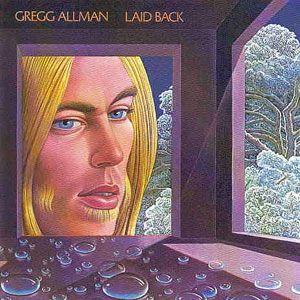
Gregg Allman – Laid Back

More Gregg Allman

More Southern Rock

  • A stunning 2-pack copy with Shootout Winning Triple Plus (A+++) sound on side one of the first disc and Nearly Triple Plus (A++ to A+++) sound on side two of the second disc – just shy of our Shootout Winner
  • Here are just a few of our notes for these incredible pressings: “tubey guitars” “very full bodied vox,” “very rich and relaxed.”
  • We were surprised at how well recorded the album is – dramatically better than the Allmans’ album from the same year, Brothers and Sisters
  • Full-bodied and Tubey Magical, with especially smooth, present vocals – this is the sound we love at Better Records
  • 4 1/2 stars: “Recorded in the same year as the Brothers and Sisters album, this solo debut release is a beautiful amalgam of R&B, folk, and gospel sounds, with the best singing on any of Gregg Allman’s solo releases.”
  • This is our pick for Gregg Allman’s best sounding album. Roughly 150 other listings for the best recording by an artist or group can be found here on the blog.

(more…)

If This Guy Isn’t on the Payroll…

Hot Stamper Pressings of the Music of The Cars Available Now

He sure ought to be!

Based on what I’ve just read, if Rhino Records is looking for a cheerleader, they could hardly do better than Mr. Youman.

I stumbled upon this fellow’s review of The Cars first album on Positive Feedback just a few days ago.

Not sure I would even call it a review. It comes across to me as more of a PR release.

I don’t think Positive Feedback cares either way. They need content, and apparently they consider this content.

The New Rhino High Fidelity Series – The Cars And John Coltrane Kick It Off in Grand Style!

One thing I have noticed about PF is that they do not seem to employ editors of any kind. My friend Robert Pincus writes for them — here is his review of a Dillards album that no one would be likely to buy from us at our prices but is probably worth picking up for the five or ten dollars a record store might charge. There are plenty of typos throughout his reviews and others I have read.

You’re on your own with PF. And they are good with however many exclamation marks you may want to use. Four in one paragraph? Bring it on they say!

The following paragraph from Youman’s review contains a ridiculous mistake that any knowledgeable editor should have noticed. Can you spot it? If so, email me at tom@better-records.com

Mastered by George Marino, the 1978 original would seem hard to beat, as the level of detail and attack is quite impressive. It absolutely rocks, and I would be very happy if this was my one and only copy. The 1980 Nautilus, which was half speed mastered by Jack Hunt, is surprisingly very much like the original with some minimal improvement in transparency and dynamic punch. Most would be hard pressed to hear the difference. Of course, the super quiet Japanese vinyl might be contributing to this. We also have the 2009 Mofi, which was half speed mastered by Shawn Britton. In my system, I found it to be dark and somewhat veiled. Bass was just too prominent to my ears. It was almost impossible to sit through the entire Mofi after hearing the OG and the Nautilus. I am a huge Mofi fan, so this was very disappointing.

When someone as clearly lacking in critical listening skills as this fellow has the temerity to compare “the” original and the Nautilus remaster (reviewed here) and declare “Most would be hard pressed to hear the difference,” it rubs me the wrong way.

I want to sit such a person down and say that it’s unlikely that anyone with two working ears and a halfway-decent stereo would not hear the difference.

You can hardly hear it, that seems clear, but why insult others of a Cars-loving persuasion?

The reference to Giant Steps below is yet more evidence of this fellow’s inability to recognize a bad record when he hears it:

Let’s return to that Rhino catalog and all that it could possibly offer to the audiophile enthusiast. We need to send our wish lists and raise our hands if not bring out the megaphones!  Of course we have the Led Zeppelin catalog, but that has been debated ad nauseum on several internet websites and forums. It seems that those in control will not allow it. Can you imagine a Kevin Gray mastering for Led Zeppelin II? There have been several very good reissues for the Black Sabbath catalog, but the original UK pressings are still the ones to beat based on my own comparisons with various other collectors. Lets [sic] get those original analog UK tapes and hand them over to Kevin!  I also have a copy of the 45 RPM John Coltrane, Giant Steps released by Rhino in 2008. Some argue that this is best pressing ever and by a wide margin! One of the top ten jazz releases of all time as ranked by many jazz experts. Bernie Grundman did a fantastic job on that reissue but there was only a limited production of 2500 copies. Lets [sic] take another shot at those tapes as part of the new Rhino High Fidelity series!

We make the case that Bernie’s recutting of Giant Steps for Rhino is possibly the worst sounding version of the album ever, and perhaps by a wide margin! He already had his shot, the patient did not survive the operation, what good would it do to put another bullet in the corpse?

Jazz experts may rank it one of the top releases of all time — I certainly would — but it is unlikely they have ever heard Rhino’s bloated, thick, dull, lifeless and altogether unsatisfactory pressing of the album. We gave it an a F and felt that we were being too kind. There is some consolation to be had though: The limited production meant that only 2500 people had to suffer through it upon release. (According to Discogs, these days the average price paid for a copy is $225. We may charge a lot for records, but we charge a lot for good sounding records, not bad sounding records, and that should count for something, shouldn’t it?)

And Kevin Gray already ruined the album once for Rhino, so why would anyone want to hand him the tapes to do it again? Is he now a better mastering engineer than he was in the mid-2000s? What evidence to support this proposition could you possibly supply to those of us who question his competence? The shockingly bad sounding records he’s cut recently — Stand Up, Moondance and Rickie Lee Jones are three that spring to mind — make a mockery of the very idea that this guy knows what he is doing.

More comments from the above paragraph of the exploding head variety:

There have been several very good reissues for the Black Sabbath catalog…

Have there? Would someone please name one? We would love to hear it.

but the original UK pressings are still the ones to beat based on my own comparisons with various other collectors.

Then you need to get out more. The UK pressings we have played are not competitive in the least with the best domestic originals. Maybe there are some new reissues that are comparable to the UK pressings, but that is clearly setting the bar much too low. For our last shootout, we noted:

(more…)

Cat Stevens Part 2 – Is This the Truest Tillerman of Them All?

If you haven’t read Part 1 of this story, please click here.

Back to our real story. I listened to my good original pressing. I call it White Hot at least!

Then I put the new pressing on the table, set the SDS for 45 RPM, and got the volume just right. I proceeded to carefully adjust the VTA by ear, going up and down with the arm until the sound was right, which is simply standard operating procedure for every record we audition.

These are my actual notes for But I Might Die Tonight.

This is what I heard as the song worked its way through the various sections, in real time.  The first thing I heard at the start was Zero Tubey Magic for the first verse. One of the last things I heard at the end was No Real Space. Space is what you hear at the end for the big piano and drums finish.

Let’s take it line by line. First up:

Zero Tubey Magic

I didn’t hear much Tubey Magic on the new pressing. The best early pressings — domestic A&M Browns, Pink or Sunray UK Islands — often have simply phenomenal amounts of the stuff. It’s a hallmark of the recording.

If a new pressing comes along without it, that’s a problem. I guess that George Marino‘s cutting system at Sterling could probably do some things well, but it sure doesn’t seem to be able get the sound of tubes right. His 33 RPM cutting had no Tubey Magic, and this one has no Tubey Magic. If I had hired him to cut a record for me and it came out sounding like this, I would find somebody else to cut records for me.

He’s dead now, rest in peace. I would doubt that anyone at Sterling has a better cutting system, and therefore no one should expect any records that have been mastered there to sound very good.

Vocal Is Clear, Clean and Dry

This is the sound you sometimes get with modern, super-clean transistor cutting equipment. It’s low distortion, like a CD is low distortion. We don’t think we should have to put up with dry vocals on records when the good pressings we have been playing all our lives have noticeably richer vocals.

Not rich like Dream With Dean, nothing is that rich, but rich and full-bodied the way the good pressings of this album always make them sound.

(more…)

Cat Stevens on 2 Heavy Vinyl 45 RPM Discs, Part 1 – Is This the Truest Tillerman of Them All?

About ten years ago we auditioned and reviewed the 2011 edition of Tea for the Tillerman pressed by Analogue Productions, the one that came on a single Heavy Vinyl 33 RPM LP.

I wrote a very long commentary about the sound of that record, taking it to task for its manifold shortcomings, at the end of which I came to the conclusion that the proper sonic grade for such a record is F as in Fail. My exhaustive review asked the not-very-subtle question, this is your idea of analog?

Our intro gave this short overview:

Yes, we know, the folks over at Acoustic Sounds, in consultation with the late George Marino at Sterling Sound, supposedly with the real master tape in hand, and supposedly with access to the best mastering equipment money can buy, labored mightily, doing their level best to master and press the Definitive Audiophile Tea for the Tillerman of All Time.

It just didn’t come out very well, no matter what anybody tells you.

Recently I was able to borrow a copy of the new 45 cutting from a customer who had rather liked it. I would never have shelled out my own money to hear a record put out on the Analogue Productions label, a label that has an unmitigated string of failures to its name. But for free? Count me in!

The offer of the new 45 could not have been more fortuitous. I had just spent a number of weeks playing a White Hot Stamper Pink Label original UK pressing in an attempt to get our new Playback Studio sounding right.

We had a lot of problems. We needed to work on electrical issues. We needed to work on our room treatments. We needed to work on speaker placement.

We initially thought the room was doing everything right, because our Go To setup disc, Bob and Ray, sounded super spacious and clear, bigger and more lively than we’d ever heard it. That’s what a 12 foot high ceiling can do for a large group of musicians playing live in a huge studio, in 1959, on an All Tube Chain Living Stereo recording. The sound just soared.

But Cat Stevens wasn’t sounding right, and if Cat Stevens isn’t sounding right, we knew we had a Very Big Problem. Some stereos play some kinds of records well and others not so well. Our stereo has to play every kind of record well because we sell every kind of record there is. You name the kind of music, we probably sell it. And if we offer it for sale, we had to have played it and liked the sound, because no record makes it to our site without being auditioned and found to have excellent sound.

But I Might Die Tonight

The one song we played over and over again, easily a hundred times or more, was But I Might Die Tonight, the leadoff track for side two. It’s short, less than two minutes long, but a lot happens in those two minutes. More importantly, getting everything that happens in those two minutes to sound not just right, but as good as you have ever heard it, turned out to be a tall order indeed.

I could write for days about what to listen for in the song, but for now let me just point the reader to one of the most difficult parts to reproduce correctly.

At about 50 seconds into the track, Cat repeats the first verse:

I don’t want to work away
Doing just what they all say
Work hard boy and you’ll find
One day you’ll have a job like mine, job like mine, a job like mine

Only this time he now has a multi-tracked harmony vocal singing along with him, his own of course, and he himself is also singing the lead part louder and more passionately. Getting the regular vocal, call it the “lower part,” to be in balance with the multi-tracked backing vocal, call it the “higher part,” turned out to be the key to getting the bottom, middle and top of the midrange right.

When doing this kind of critical listening we play our records very loud. Live Performance level loud. As loud as Cat could sing, that’s how loud it should be when he is singing his loudest toward the end of the song for the final “But I might die tonight!” If he is going to sing loudly, I want my stereo to be able to reproduce him singing as loud as he is actually singing on the record. No compression. No distortion. All the energy. That’s what I want to hear.

The last fifteen seconds or so of the song has the pianist (Cat himself) banging out some heavy chords on the piano. If you have your levels right it should sound like there is a real piano at the back of the room and that someone is really banging on it. It’s a powerful coda to the song. (more…)

Peter Frampton – I’m In You

This is the album that almost single handedly destroyed Peter Frampton’s career. To capitalize on the success of his amazing live album, this one was rushed into production with a lot of weak material. But there is a good reason to buy it. The song I’m In You has one of those perfect Frampton guitar breaks which is almost worth the price of the album. About half of this record is actually pretty good. This one won’t make you a fan, but if you are a fan you need this title in your collection, and this is about as nice a copy as can be found. 

Two Frampton albums are absolute Must Owns. Wind Of Change is a masterpiece — the greatest rock guitar album in the history of the world. And Where I Should Be is the last record Frampton made that was any good. I’ve listened to it countless times and never tire of it.

This is an Older Review.

Most of the older reviews you see are for records that did not go through the shootout process, the revolutionary approach to finding better sounding pressings we developed in the early 2000s and have since turned into a fine art.

We found the records you see in these older listings by cleaning and playing a pressing or two of the album, which we then described and priced based on how good the sound and surfaces were. (For out Hot Stamper listings, the Sonic Grades and Vinyl Playgrades are listed separately.)

We were often wrong back in those days, something we have no reason to hide. Audio equipment and record cleaning technologies have come a long way since those darker days, a subject we discuss here.

Currently, 99% (or more!) of the records we sell are cleaned, then auditioned under rigorously controlled conditions, up against a number of other pressings. We award them sonic grades, and then condition check them for surface noise.

As you may imagine, this approach requires a great deal of time, effort and skill, which is why we currently have a highly trained staff of about ten. No individual or business without the aid of such a committed group could possibly dig as deep into the sound of records as we have, and it is unlikely that anyone besides us could ever come along to do the kind of work we do.

The term “Hot Stampers” gets thrown around a lot these days, but to us it means only one thing: a record that has been through the shootout process and found to be of exceptionally high quality.

The result of our labor is the hundreds of titles seen here, every one of which is unique and guaranteed to be the best sounding copy of the album you have ever heard or you get your money back.

(more…)