bowiebest

David Bowie – Heroes

More David Bowie

More Art Rock

  • An excellent vintage UK pressing with Double Plus (A++) sound from start to finish
  • This copy has real depth to the soundfield, full-bodied, present vocals, plenty of bottom end weight, and lovely analog warmth
  • This reissue is the only way to fly – if you have an original, or any other pressing, you don’t know what you are missing!
  • These are the stampers that always win our shootouts, and when you hear them you will know why – the sound is big, rich and clear like no other
  • We’ve discovered a number of titles in which one stamper always wins, and here are some of the others
  • 5 stars: “Repeating the formula of Low’s half-vocal/half-instrumental structure, Heroes develops and strengthens the sonic innovations David Bowie and Brian Eno explored on their first collaboration. The vocal songs are fuller, boasting harder rhythms and deeper layers of sound.”

(more…)

David Bowie – David Live

More David Bowie

  • A David Live like you’ve never heard, with STUNNING Shootout Winning Triple Plus (A+++) sound or close to it on sides one and four, and excellent Double Plus (A++) sound on sides two and three
  • One of our favorite live recordings – a great overview of Bowie’s career through 1974
  • “1984,” “Rebel Rebel,” “Sweet Thing” and “Rock and Roll With Me” come ALIVE in performance like you have never heard before
  • A-List players of the day deliver sonic treats, including multiple horn players, multiple percussionists, all-male chorus background vocals, the searing fuzzed-out guitar leads of Earl Slick, piano and Mellotron by Mike Garson, and the amazing Herbie Flowers on bass
  • We’ve recently compiled a list of records we think every audiophile should get to know better, along the lines of “the 1001 records you need to hear before you die,” with an accent on the joy these amazing audiophile-quality recordings can bring to your life. David Live is a good example of a record audiophiles may not know well but we think might benefit from getting to know better
  • If I were to compile a list of Must Own rock and pop albums from 1974, this album would definitely be on it

When you listen to an outstanding copy of this Bowie classic, you will have no trouble picturing yourself in the audience with a front row center seat. And the great thing about a record like this is that you can be in the front row of this very concert whenever you want!

The other top live album is, of course, Waiting For Columbus, and the two have much in common. Most importantly, the songs played live on both albums are consistently better than their studio versions. (This is especially true on the Little Feat album. Little Feat was not a studio band and their live arrangements — with the Tower of Power horns — just murder the studio ones.)

For us audiophiles, the other reason to own a Hot Copy of David Live or Waiting For Columbus is that the sound is much improved over most of the studio albums in which the material was originally found. Have you ever heard a good sounding “Diamond Dogs”?

But David Live is full of great sounding material from the album. “1984” is much better here than on the original album. “Rebel Rebel,” “Sweet Thing” and “Rock & Roll With Me” also come alive in performance. They rock!

(more…)

David Bowie – Young Americans

More David Bowie

  • A seriously good copy of Bowie’s one and only soul album with Hot Stamper sound on both sides
  • This pressing was simply bigger and fuller than most of the competition, with plenty of funky energy and three-dimensional studio space
  • On an exceptionally transparent copy such as this one, it’s much easier to pick out all the background vocalists in the relatively dense mixes that Bowie tends to favor
  • One of our favorites by The Man, with so many killer tracks: “Young Americans,” “Win,” “Fascination,” “Somebody Up There Likes Me,” “Across the Universe” and, of course, “Fame”
  • We’ve recently compiled a list of records we think every audiophile should get to know better, along the lines of “the 1001 records you need to hear before you die,” with an accent on the joy these amazing audiophile-quality recordings can bring to your life. Young Americans is a good example of a record many audiophiles may not know well but would be well advised to get to know better.

The strings have amazing amounts of texture — you can really hear the sound of the rosin on the bow. The highs are silky sweet and the bottom end is punchy and powerful. You won’t believe how lively the cymbal crashes sound — you’re right there in the room with all these guys and gals.

This is one of our favorite Bowie albums. Nobody seems to care about it anymore. They dismiss it as disco junk, but it actually has some of his best music on it. I especially like the song Win. David Sanborn’s saxophone sounds like it’s coming from 60 feet behind Bowie, a nice effect. (more…)

David Bowie – Space Oddity

More David Bowie

More Art Rock Records

  • An outstanding copy of Bowie’s sophomore release with solid Double Plus (A++) sound or BETTER from start to finish
  • The sound here is huge, full-bodied, punchy and relatively smooth throughout, with real space and ambience around the vocals and instruments
  • “Abandoning both the mod and Anthony Newley fascinations that marked his earlier recordings, Bowie delves into a lightly psychedelic folk-rock, exemplified by the album’s soaring title track. . .”

One of the reasons the song “Space Oddity” sounds so amazing is that it was produced by none other than Gus Dudgeon, the man behind all the best Elton John records. It has Paul Buckmaster doing the string arrangements as well. His work on Elton’s self-titled album is awe-inspiring; we know of none better. (more…)

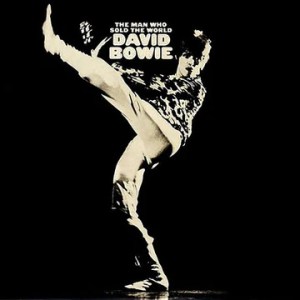
David Bowie – The Man Who Sold The World

More David Bowie

  • This outstanding pressing boasts solid Double Plus (A++) sound from first note to last
  • Big space, breathy vocals, grungy guitars and plenty of Ken Scott’s luscious Tubey Magic makes this album a true audiophile treat
  • As it says on the back of the jacket, “Many thanks to our engineer Ken (Scott, one of our favorites).”
  • 4 1/2 stars: “Working with guitarist Mick Ronson and producer Tony Visconti for the first time, Bowie developed a tight, twisted heavy guitar rock that appears simple on the surface but sounds more gnarled upon each listen.”

*NOTE: On side one, a mark makes 8 light ticks at the beginning of Track 1, The Width Of A Circle. On side two, a mark makes 16 light ticks at the beginning of Track 1, Running Gun Blues.

The sound is rich and full, just the way the Brits (and us audiophiles) like it. The tube compression that both Bowie and Scott favor works its magic at every turn, adding fatness and richness and lovely harmonics to the guitars and the drums.

Mick Ronson’s guitars are wonderfully rich and grungy. The vocals can get a bit hot on the first track on side one (as is often the case), but by track two the sound has settled in and is rich and smooth, just the way we like it. Very present and lively vocals are a strong point. Listen to the big bass, richness and Tubey Magic of the third track on side two — that is some Ken Scott studio wizardry at play.

Note that the second track on the second side seems to be where Alice Cooper found his “sound.” More power to him I say. You could get away with ripping off Bowie in 1970; nobody bought this album in the states, which is why it’s so damn rare and expensive. (more…)

David Bowie / The Man Who Sold The World – On the Real Mercury Pressing

More David Bowie

The sound is rich and full, just the way the Brits like it. The heavy compression that both Bowie and Scott favor works its magic at every turn, adding fatness and richness and lovely harmonics to the guitars and the drums.

Not many Bowie albums from his “classic” period sound good on domestic vinyl, nothing I know of before Diamond Dogs with the exception of this album and the occasional copy of Space Oddity. Strangely enough, from then on practically every one of Bowie’s albums sounds best on domestic vinyl, all the way through to Let’s Dance, after which we more or less check out — don’t know those albums well and don’t plan on finding out more.

Ah but here, here we have some truly prime period Bowie, recorded, mastered and pressed with Top Quality sound!

Side One

Mick Ronson’s guitars are wonderfully clear. The vocals can get a bit hot on the first track (as is often the case), but by track two the sound has settled in and is rich and smooth, just the way we like it. Very present and lively vocals are a strong point.

Side Two

Listen to the big bass, richness and Tubey Magic of the third track — that is some Ken Scott studio wizardry at play.

Note that the second track seems to be where Alice Cooper found his “sound.” More power to him I say. You could get away with ripping off Bowie in 1970; nobody bought this album in the states, which is why it’s so damn rare and expensive.

And that is the reason there are so many bootlegs. Practically every copy on ebay is a bootleg.  They sound terrible by the way.

How to Spot the Bootleg Copies, Courtesy of Discogs

This release has stamped matrix numbers in the dead wax. All other versions with this cover are counterfeits (with etched matrix numbers) and should not be listed here.

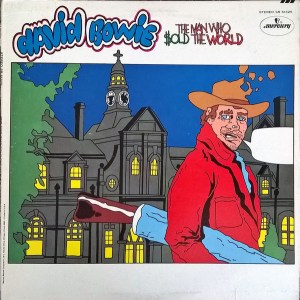
This US release is the first release on LP of The Man Who Sold the World. It was only released in two countries – US and Japan (SFX-7345) – with this original cover. The building in the background is the Cane Hill Hospital where David Bowie’s half-brother Terry was a patient.

The album was released in a further three countries on the Mercury label – Germany (David Bowie – The Man Who Sold The World) in a large circular fold-out cover and the United Kingdom and Australia with a picture of David reclining in a dress. This latter cover is the one used on contemporary releases.

The US Mercury album was counterfeited (see David Bowie – The Man Who Sold The World) in the early 1970s after Bowie became popular. It was possible for a potential buyer to choose between the official RCA reissue (in yet another cover, see David Bowie – The Man Who Sold The World) and the widely distributed counterfeit.

The following visual indicators can be used to confirm an original US Mercury LP:
• The matrices in the runout (the space between the label and the grooves) are machine stamped (the counterfeits are hand etched).
• The space between the final lyric line of The Supermen and the cartoon bubble “Oh By Jingo” on the back cover is approximately the height of a line of text, while on the counterfeits the space is notably wider.

There are other differences, though these can be more easily seen and described in a side-by-side comparison.
Rights Society: ASCAP

Matrix / Runout (Side A, Runout, Stamped): SR 61325-A- M2
Matrix / Runout (Side B, Runout, Stamped): SR 61325-B- M1

(more…)