7-2023

Boston’s First Album on MoFi Anadisq

Hot Stamper Pressings of the Music of Boston Available Now

Sonic Grade: F

The MoFi Anadisc of Boston’s first album has the same problems that seem to have plagued the whole of the Anadisq 200 series. The sound was:

  • thick,
  • opaque,
  • blurry, and
  • murky.

A real slogfest. Audiophile trash of the worst kind. If this isn’t the worst version of the album ever made, I cannot imagine what would be.

Many of the worst releases from MoFi in this era were mastered by Ken Lee. If you happen to come across a record in a store with his name in the credits, or his initials in the deadwax, you are best advised to drop it back in the bin and keep moving. Anything else is just asking for trouble.

Do people still pay good money for this kind of awful sound?

Yes they do!

Go to ebay and see the high prices these kinds of records are fetching. This is in equal parts both shocking and disgusting. 

Here is what is available for the MoFi pressing on Discogs today (2/2/2022). If you have $400 you can order one there.

Marketplace 3 For Sale from $399.99

And people complain about our prices? At least we send you a great sounding record for all the money we charge.

(more…)

The Dark Side of the Moon – An Overview

Hot Stamper Pressings of the Music of Pink Floyd Available Now

I admit to some bias when it comes to DSOTM. I must have played more than a hundred copies over the last forty-odd years. Whenever I was sure I understood exactly which copies had the best sound, again and again I would be proved wrong.

We only found out what the best sounding versions were about five ten years ago. We did that by doing shootout after shootout with every version we could lay our hands on, starting around 2005. We even did a shootout for two different Mobile Fidelity pressings many years ago, which we think still makes for some good reading twenty years later.

It’s especially good reading for those who don’t appreciate how dramatic pressing variations can be for even quality-controlled limited editions. The comparison of the two MoFi’s centers around the idea that midrange tonality is by far the most important quality on Dark Side, and that, surprisingly to some audiophiles, but obviously not to us, there are MoFi pressings with a correct midrange and there are those without.

Our Take on DSOTM Pressings

The domestic pressings we have auditioned over the years have never made it into a real shootout. They have always sounded far too flat and veiled to be taken seriously. There are some very good sounding Pink Floyd pressings on domestic vinyl — Wish You Were Here and The Wall can both sound amazing on domestic vinyl — but Dark Side is not one of them in our experience.

The Doug Sax-mastered Heavy Vinyl version from 2003 we played when it came out was way too bright and phony to these ears. We hated it and made that clear to our readers at the time.

We came across a very early British pressing about fifteen years ago, the one with the solid blue triangle label, but it was not as good as other pressings we were playing back then and we never bought another one.

We’ve liked a lot of later UK pressings over the years, but we don’t go out of our way to buy those anymore now that we have heard the really amazing pressings we like now.

As I said, we discovered the killer stampers about five ten years ago, and that showed us an out of this world Dark Side we had no idea could even exist.

We have a name for records like those. We call them breakthrough pressings, and we used to award them a sonic grade of more than Three Pluses in some cases.

(more…)

Robert Brook Can Help You Set Your Anti-Skate

Robert Brook writes a blog which he calls

A GUIDE FOR THE DEDICATED ANALOG AUDIOPHILE

Robert recently recounted a story that aligned very much with my own experience.

Way back in the dark ages of the 90s, I was afraid to mess with my turntable, arm and cartridge for fear of getting them “out of alignment.”

Of course, I had simply assumed at the time that they were in alignment. I had followed all the instructions to the best of my ability, but it would be many years later until I would learn just how crude an approximation that way of doing it turned out to be.

Robert writes:

For years, even decades, I was afraid to touch any of the settings on my turntable, only to discover that when I finally did, I wished I’d done it a lot sooner. Turntable setup has taught me a lot, and as I’ve gotten better at it and better informed about it, I now need to go back and revise the turntable setup guides I posted a few years ago, which are in need of revision and updating.

Here is the complete story. I hope to write more about anti-skate in depth down the road, but for now, check out Robert’s story and then return to this listing and scroll down to read what we’ve written about the subject to date.

System Sounding BRIGHT? 🕶 Might Be Time to ADJUST YOUR ANTI-SKATE

Dialing in the Anti-Skate with Massed Strings

Here we discuss one of our favorite test records. Strings are one of the hardest elements in any recording — including pop and jazz records — to get right. They also make it very easy to spot when something, somewhere, is off.

(more…)

Our 2016 Unplugged Shootout Winner Just Sounded More Like Live Music

Hot Stamper Pressings of the Music of Paul McCartney Available Now

Back in 2016 we had this to say about a copy of the album we had just played:

This copy will put you front and center for the single greatest Paul McCartney recorded concert of all time.

In the final round of shootouts on both sides, this copy showed itself as clearly superior in terms of transparency and three-dimensionality, as well as having the most rock solid bottom end. To sum it up, my notes read “so real,” which is exactly what makes this copy THE one to have. This is Paul and his mates LIVE in your listening room like you have never heard them before.

This copy gave us the feeling that we were right there in the audience for the taping of this amazing performance. It made other copies sound like records — good records, but records nonetheless. This one has the IMMEDIACY of a live show, one which just happened to be fronted by one of the greatest performers in the history of popular music, Sir Paul McCartney.

We shootout this album about once a year, which means that many changes will have occurred to the stereo in the meantime. One of the qualities that we noticed this time around was how much like live music this album can be when the pressings have one specific quality — tons of bass.

Live music, especially live music heard in a club, tends to have plenty of bass. It’s the sonic quality that’s by far the most difficult to recreate in the home.

When a record manages to capture that kind of “live” low end energy, it really helps make the connection between the sound of live music and the sound coming out of your speakers.

(more…)

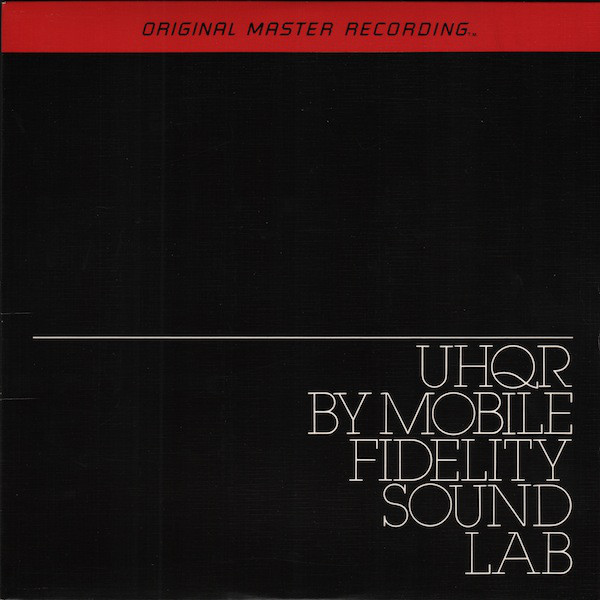
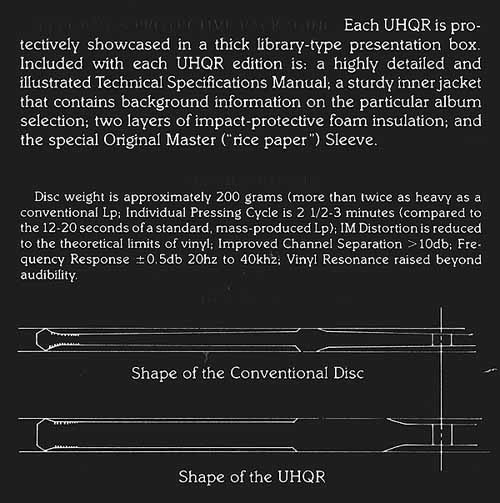
“Ultra High Quality Records” or “Lipstick on a Pig”?

Hot Stamper Pressings of Audiophile Recordings Available Now

Today’s vinyl-loving audiophile seems to be making the same mistakes I was making more than forty years ago. Heavy Vinyl, the 45 RPM 2 LP pressing, the Half-Speed Limited Edition — aren’t these all just audiophile fads, each with a track record of underperformance that seems to worsen with each passing year? Would you really want to defend this piece of junk in 2023?

In my formative years in audio, starting in the mid-70s, it would never have occurred to me to buy more than one copy of a record. I didn’t need to do a head-to-head comparison in order to find out which one sounded better. I approached the subject Platonically, not scientifically: the record that should sound better, would sound better.

uhqrb

Later on in the decade, a label by the name of Mobile Fidelity would come along claiming to actually make better sounding pressings than the ones the major labels put out, and cluelessly I bought into that nonsense too. (To be fair, sometimes they did — Waiting for Columbus and American Beauty come to mind if you don’t have properly-pressed, properly-mastered originals, but my god, Katy Lied, Year of the Cat and Sundown have to be three of the worst sounding records I’ve ever played in my life.)

And isn’t it every bit as true today as it was in the past that the audiophiles who buy these “special” pressings, like the ones I bought back in the 70s and 80s, rarely seem to notice that many of them don’t actually sound good? (Some of the worst can be found here, the worst of the worst here.)

CofAEasy Answers and Quick Fixes

Turns out there are no easy answers. There are no quick fixes. In audio there’s only hard work and more hard work. That’s what gives the learning curve its curvature — the more you do it, the better you can do it.

And if doing all that work is also your idea of fun, you just might get really good at it.

If you actually enjoy playing five or ten or even fifteen copies of the same album to find the few that really sound good, and the one that sounds amazing — because hearing your favorite music the way it was meant to be heard is a positive thrill — then you just might end up with one helluva record collection, worlds better than one filled with audiophile pressings from any era, most especially the present.


Further Reading

Compromised Recordings and the Rapture of the Purely Musical Experience

Hot Stamper Classical and Orchestral Pressings Available Now

The best classical recordings of the ’50s and ’60s, like the wonderful Mercury you see pictured, were compromised in every imaginable way.

Yet somehow they manage to stand head and shoulders above virtually anything that has come after them. How is that possible?

Well, having taken advantage of scores of revolutionary changes in audio that have come to pass since those days, finally we can hear them in all their glory on the kind of high quality playback equipment that exists today.

The music lives and breathes on those old LPs. Playing them you find yourself in the Living Presence of the musicians. You become lost in the performances captured in the grooves of these old records.

Whatever the limitations of the medium, they seem to fade quickly from consciousness. What remains is the rapture of the musical experience.

That’s what happens when a good record meets a good turntable.

We live for records like these. It’s the reason we all get up in the morning and come to work, to find and play good records. It’s what this site is all about — offering the audiophile music lover recordings that provide real musical satisfaction. It’s hard work — so hard that nobody else seems to want to do it — but the payoff makes it all worthwhile. To us anyway. Hope you feel the same.

The One Out of Ten Rule

If you have too many classical records taking up too much space and need to winnow them down to a more manageable size, pick a composer and play half a dozen of his works.

Most classical records display an irredeemable mediocrity right from the start; it doesn’t take a pair of golden ears to hear it.

(more…)

Deceptive Bends – An Overview

Hot Stamper Pressings of the Music of 10cc Available Now

We’ve long been huge fans of this album both musically and sonically. It’s the kind of recording where the sound JUMPS out of the speakers. In that way it most reminds me of Crime Of The Century, one of the most amazing recordings in the history of popular music. Both are real blockbusters, and we wouldn’t have it any other way.

Deceptive Bends is also one of the most DYNAMIC popular recordings I know of.

If this album doesn’t wake up your system, it’s time to scrap it and start over.

Played on big speakers at loud levels, this is Demo Disc quality sound of the highest order.

Musically it’s one of my all time favorite albums as well, a real Desert Island Disc for yours truly.

Incredible Stereo Separation

One of the many elements that combine to push this album well beyond the bounds of most popular recordings is the thought and care that went into the soundstaging. Listen to the stereo separation on any track — the sound of each instrument has been carefully considered within the context of the arrangement and placed in a specific location within the soundfield for a reason — usually that reason is for MAXIMUM EFFECT.

That’s why we LOVE 10cc. Their recordings from this era are an audiophile dream come true. Compare that to some of the stereo mixes for the Beatles albums, where an instrument or vocal seems to panned to one channel or another not because it SHOULD be, but because it COULD be. With 10cc those hard-left, hard-right effects make the songs JUMP. They call attention to themselves precisely because the band is having a blast in the studio, showing off all the tricks they have up their sleeves. They want you to get as big a kick out of hearing them as they did conjuring them up.


Here are some other records with Demo Disc sound in these same areas:

(more…)

An Experiment Apparently Not Worth the Trouble

Hot Stamper Pressings of the Music of Steely Dan Available Now

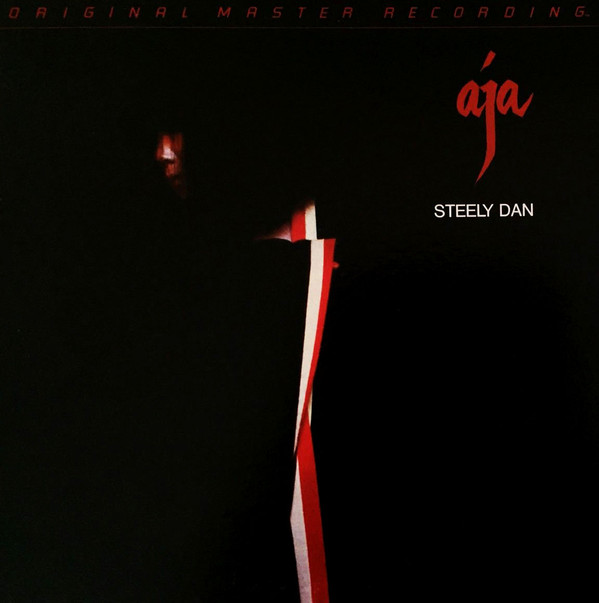
A couple of years ago, an interested party inquired about a Hot Stamper pressing of Aja he had seen on our site, specifically whether we were selling the AB first pressing or the AA reissue. You can find the discussion that ensued here.

As a kind of a postscript, we added:

By the way, [Joe] ended up not buying our Hot Stamper pressing. When you have to have an original, you have to have an original and that’s all there is to it.

If Joe was of a more scientific or skeptical bent — in other words, if he were more like me — he would have acquired an original, and then ordered our Hot Stamper in order to compare the two.

This is the subject I want to talk about today.

Audiophiles tend to subscribe to widely-held, conventional theories about what kinds of records are most likely to have the best sound. Outside of those of us who write for this blog, you will find very few audiophiles who believe that a substantial percentage of vintage reissues — not the modern ones, we’re talking about the ones from the 60s, 70s and even the 80s — are superior to their more original brethren.

Assuming Joe wanted the best sound — nobody who pays our prices could possibly be interested in anything else, right? — then he was simply making the point that since he wanted the best, and an original pressing absolutely had to be the best, nothing else would do, and that was that.

Joe could have done the experiment for himself easily enough. Had he asked us to send him our best AA pressing, we could have done that, and he could have compared that pressing to the original he no doubt owns, or, in the case that he had no original, acquiring one or more could have easily been arranged. They made them by the millions.

And that experiment might have resulted in an interesting learning experience, or not — who can say what the best pressing would have been on Joe’s stereo, with Joe’s ears doing the listening? It could have gone any which way, but something would have been gained in the act of sitting down to find out, for a fact, what pressing sounded better.

With all this in the back of my mind. just recently we did a shootout for Aja, and I checked the stampers for the two top copies.

Sure enough, the stampers found on the AB pressings won.

But those same stampers are found on the AA pressings for one of the titles, and one of the sides for the other title.

I could not even tell you for sure which pressings — AB or AA — actually won, because we rarely keep track of that information.

We only buy early pressings on the original labels because those are the only ones that sound good to us.

We don’t pay attention to the catalog number on the label because that doesn’t tell us anything of value. Playing the records is how we know what they sound like, and unless all the AB pressings beat all the AA pressings, or vice-versa, then that information is none of our concern.

Even if all the AB copies beat all the AA copies, we still have to buy, clean and play the AA copies in our shootouts because some of them are going to do well and can be offered to the customers who don’t want to spend the big bucks the top copies command.

We are generally opposed to having one-size-fits-all theories about the messy world of records, and you can find some of the commentaries we written about that subject here.

(more…)

Letter of the Week – “Insulting people is petty and makes you sound as though you are jealous of their success.”

Welcome to the Skeptical Audiophile

Click here to see more letters from fans and detractors alike.

A fellow sent me this email a while back. Normally when people find fault with what we do, or how we do it, or the prices we charge, or the things we say, we figure live and let live and just go about our business (you know, the one where we find the best sounding records ever made).

This fellow took me to task for speaking ill of “people in the record industry,” which is a common complaint their number one apologist, Michael Fremer, likes to make, rather foolishly in my opinion, so I thought I would write a few words addressing the topic.

Ray’s letter:

Everytime I am tempted to make a purchase I always read something where Mr. Port is insulting people in the record industry. I get it. Your records may sound better than an audiophile pressing but for the price, they better! I respect the fact that you put a lot of time and effort into what you do, but insulting people is petty and makes you sound as though you are jealous of their success, you can sell records by simple stating that they sound great and with your money back guarantee (which few people actually take advantage of, from what I have read) You should be able to continue doing what you do with great success.

Just my unsolicited opinion.

Ray

I replied as follows:

Ray,

Thanks you for your letter.

Part of the problem with our approach to vinyl is that we not only sell a product that directly competes with those produced by others in the industry, but we also review the products that these other companies make.

We see it as fundamental to our job — something we owe to our customers — that we compare their Heavy Vinyl remastered pressings to our vintage Hot Stampers.

When we do that, insults are hard to avoid.

Their records are mostly a disgrace, but they don’t seem to notice how bad they sound. Nor do the audiophile types who review them.

This used to confound us. It still confounds us, but over the years we have decided it is better to accept reality and just live with it.

We are of the opinion that the people making records today should be held to account for their substandard work. Who better to do that than us?

We can provide the physical records that, when played properly, prove just how second-rate theirs actually are.

Bernie Grundman cut many of the best sounding pop and rock records ever made. I wanted to pay tribute to his fine work, so I wrote this commentary and tagged many of his best records within it: Thriller is proof that Bernie Grundman was cutting great records in 1982

But the bad records he made are very bad indeed. Most of what he mastered for Classic Records is awful, a more recently he has been doing equally spotty work. Here is a link to a select group of his worst remasterings.

Since no one seems to want to write about just how bad these records are, we felt it was our duty, as experts in the world of records, to point out their specific shortcomings. We do this for the benefit of audiophiles who might actually want good sound and not just quiet vinyl.

(more…)

Are these Strauss Waltzes as Good as Some Say? As Good as We Thought?

The original, favorable review for this album you see further down is from at least ten years ago and probably more like fifteen.

When we revisited the copies we had of this title more recently, we felt the sound was badly lacking in many respects, with no real extension up top nor much weight to the bottom, the very definition of boxy sound.

Many of the vintage classical records we audition have sound that we liked well enough in the past but now no longer meet our standards. Those pressings might sound fine on an old school stereo (or its modern equivalent), but we have something very different to play our records on, courtesy of the many revolutionary changes in audio that have dramatically altered the quality of analog playback over the last twenty five years.

We much prefer Boskovsky’s performances for Decca for waltzes and the like, by Strauss or anyone else.

TAS List Thoughts

We wanted to like the record, it’s on the TAS List for cryin’ out loud, shouldn’t it at least be pretty good?

It very well may be amazingly good, we can’t say it is or it isn’t. In order to be more sure of our opinion, we would need a great deal more data to back it up. We would need to have a large number of copies on hand, clean them all and play them in order to make it possible to find the killer stamper that may be hiding in the pile, assuming one might be.

(more…)