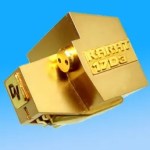
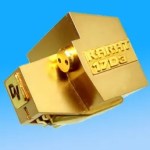
17dx

Our Playback System – And Why You Shouldn’t Care

Advice to Help You Make More Audio Progress

Below you will find a list of most of the equipment we have been using over the last twenty years or so to carry out our Hot Stamper pressing evaluations, or “shootouts” as we like to call them.

Naturally the reality of the 80/20 Rule comes into play here — 80% (probably more like 90 or 95%, truth be told) of the sound is what you do with your audio system, 20% (or 10 or 5%) of the sound is the result of the components you own.

We like to say it’s not about the audio you have, it’s about the audio you do: how you set up your system, what you’ve done to treat your room, how good your electricity is and all the rest of it.

  • Our VPI Aries (original, not the latest model) with 
  • Super Platter (no longer made) and
  • TTWeights Carbon Fiber Platter (a big upgrade, no longer made).
  • VPI Synchronous Drive System (as of 2016 now sitting on a Townshend Seismic Sink).
  • Triplanar tonearm.
  • Dynavector 17dx.
  • Aurios (no longer made), which sit on a
  • Townshend Seismic Sink (another big upgrade).
  • EAR 324p phono stage
  • We love our modified Legacy Focus speakers. Even more now that they have much improved high frequency extension courtesy of Townshend Super Tweeters.
  • Mix in extensive room treatments, aided inestimably by three pairs of Hallographs (as we like to say, there is practically no Hi-Fi without them), more than thirty years of experience and endless hours of experimentation and you have a system that can separate the winners from the losers like nobody’s business.
  • Exactly like nobody’s business, because nobody does it in this business but us. Having heard hundreds of systems over the years, it’s an open question as to whether anyone else could do what we do even if they tried.

(more…)

Letter of the Week – “…it is now a reference or demo if you wish, that lets me know how good my system really is.”

More of the Music of The B-52’s

One of our good customers had this to say about some Hot Stampers he purchased recently: 

Hey Tom, 

Hey guys, before I talk about my very first Hot Stamper let me say this. I have been going to your site for well over two years and was very reluctant to spend the kind of money that you charge for a used record. Come on! Are you kidding??

But I was very intrigued by the description of your system. I had felt that the weakest part of my system may be the cartridge. So I sprung for the 17d3.

WOW! A first class improvement. So I thought “Well if these guys are right about the cartridge, maybe there is something about these used records. After all I can always send it back, right?”

So I ordered the B-52’s first album and played it. And played it. No No No, get up off your knees and stop begging. You can’t have it back. It’s MINE. Although I do not have this album in any format, it is now a reference or demo if you wish, that lets me know how good my system really is. It has also revealed to me that I have records that sound pretty darned good. It has also given me a lesson on critical listening.

I have been listening to music for over 55 years, and you are never too old to learn. Last week I received my new VPI with Disc Doctor package, and it seems to have been a wise addition. I have found a few treasures that have been lurking in my collection. And I ordered a Peter Gabriel today. I am a happy camper.

Kevin B.

Kevin,

Thanks for your letter. Now you have the ideal cartridge to play back our Hot Stampers pressings and hear just how phenomenally good they really sound.

Playback accuracy is at the heart of everything we do. We want to hear our records naked and unadorned. That’s what the 17dx does for us, and of course it can do the same for you.

(more…)

This Is the Heart of Our System’s Accuracy

Thoughts on Playback Accuracy

If you have a rich sounding cartridge, perhaps with that little dip in the upper midrange, the one that so many moving coils have these days, you may not notice some tonality issues we discuss on the blog and in our Hot Stamper listings quite as easily as we do.

Our Dynavector 17Dx Karat is ruler flat and very unforgiving in this regard. It makes our shootouts much easier, but brings out the flaws in all but the best pressings, exactly the job we require it to do.

We discussed the issue in a commentary entitled Hi-Fi beats My-Fi. (If you are serious about audio this is a must read.)


Further Reading

(more…)

Turntable Tweaking Advice – Try This at Home, It Worked for Us

More Setup Advice for Turntables and Cartridges

UPDATE 2020

This commentary was written around 2010 or so. Mapleshade stopped sending me catalogs not long after this commentary, probably not because of anything I’d written. More likely it was because I never bought anything from them. And why would I? They give out some good advice, sure, but it’s mixed in with a lot of audiophile nonsense, the purest kind of nonsense that the audio world is currently drowning in.


The Mapleshade website has a piece of audio advice that caught the eye of one our customers, who sent me the excerpt below.  

Like most advice, especially audio advice, we find that some of it accords well with our own experience and some of it clearly does not. The relationship of good to bad is hard to determine without making a more careful study, but let’s just say that there is plenty of both and let that suffice.

That being the case, we thought it would be of service to our customers to break it down in more detail, separating the wheat from the chaff so to speak.

Here is the complete quote:

To get first rate sound and to get your money’s worth from any expensive cartridge, you MUST meticulously adjust VTA or tracking force every 3-4 months — that’s because stylus suspensions always sag with use. This lowers VTA and seriously kills dynamics and treble sparkle. Lots of people misinterpret this as a worn-out cartridge, an expensive error. Instead, raise VTA or lighten tracking force until your test record’s treble sounds too harsh, then drop VTA or lighten tracking force a hair. Your test record must not be thicker or thinner than the bulk of your record collection. Adjusting tracking force yields slightly better sonic results and longer cartridge life than adjusting VTA — and adjusting tracking force on most arms is WAY easier than adjusting VTA.

The basic idea here is that your cartridge sags over time, causing the VTA (Vertical Tracking Angle) to change, which results in less dynamics and “treble sparkle.”

(By the way, this is a term you will encounter on this blog as a criticism. Treble should never “sparkle,” but we get the point. We make fun of the sparkly sound Mobile Fidelity records are famous for, a sound which bugs the hell out of us, but which does not seem to bother some audiophiles. We assume their speakers or systems lack top end and could use a bit of a boost there. Our Townshend super tweeters allow us to hear all the top end there is on the records we play, unboosted, thank you very much.)

(more…)