Stephen Barncard, Engineer – rev/com

Mobile Fidelity Actually Produced a New and Improved Deja Vu in 1983

Hot Stamper Pressings of the Music of Crosby, Stills, Nash and (Sometimes) Young
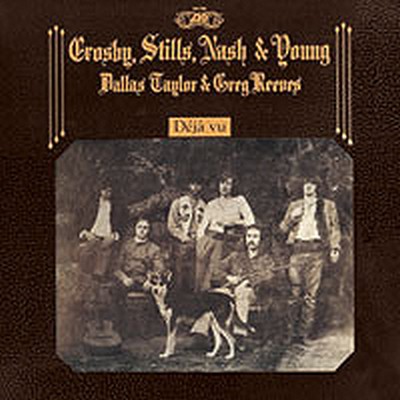
A letter came to us years ago with the comment “I had no idea that vinyl could produce this sound.”

As the time I made some of the following comments in reply and have added a few new ones since then.

Deja Vu is indeed a very special album, one I have been obsessed with since I first became an audiophile.

I was a big Crosby, Stills and Nash fan already — the first album being life-changing to a 15 year old music lover such as myself, playing over and over on 8-track tape in the car no less — so it was only natural that I would fall in love with Deja Vu when it came out in 1970.

13 Years Go By

Time went by and then, oddly enough, my love for the music was reignited by a pressing that came out 13 years after the album’s first release, on a label you may be familiar with, Mobile Fidelity Sound Labs.

I realized instantly that Mobile Fidelity had indeed improved upon the average original’s sound.

This is not a high bar considering how awful sounding most originals are, but let us give credit where credit is due. With the volume cranked good and loud,  I often played the first track, Carry On, using the MoFi pressing to demonstrate how smooth, rich, big, powerful and dynamic my system could sound.

“The CD may be taking over the world,” I would say, because by 1983 that was exactly what was happening, “but you”ll never hear a CD that sounds like this!”

13 More Years Go By

It would take me many years, at least another 13 or so, to come across the domestic reissues that trounced the MoFi and showed me how colored, compressed, thick, blurry and recessed their pressing was.

Here is the real shocker from that time: I actually thought that the extremely hard-to-find reissue I’d discovered was so flukishly good that it could never be beaten by any other pressing!

(To be fair, my long-time audiophile buddy Robert Pincus probaby deserves the credit for finding it. He found a great many special pressings for me back when I was buying records from him, reaching all the way back to 1987.)

Which is yet another example of everything being relative. I admit I had a poor understanding of that vitally important concept at the time. I really had no idea how good a recording Deja Vu was, and I didn’t really have a way to find out because many of the most important revolutions in audio had not been incorporated into my system, or had yet to be invented.

Within the last five years or so another domestic pressing, and now most recently an import (!), have come to be seen as clearly superior to all of these.

This is the result of having never given up the search for a better Deja Vu.

Record Collecting in My World

Anticipating the release of the newest Half-Speed remastered pressing that would deliver me from the evils of the garden-variety domestic or import LP I happened to own was the dominant feature of my record collecting world in the 70s and 80s.

No one reading this blog will be surprised to learn that almost none of those “new and improved” pressings would pass the test of time. This is an idea I first came to appreciate in the 90s and one that has become more true with each passing year.

With the increasing proliferation of one Heavy Vinyl mediocrity after another, in 2007 we finally recognized we had a duty to our customers to stand athwart audio history and yell “Stop.”

(more…)

Letter of the Week – “I think It’s a bargain at $800. It absolutely trashes my Mofi version…”

Hot Stamper Pressings of the Music of Crosby, Stills, Nash and (Sometimes) Young

One of our good customers had this to say about a Hot Stamper pressing he purchased recently:

Hey Tom,   

I couldn’t believe what I was hearing on the Crosby Still, Nash & Young Deja Vu White Hot stamper A+++ on both sides and absolutely dead quiet. I think It’s a bargain at $800.00. It absolutely trashes my Mofi version into bits and pieces. I don’t even want to mention the Classic records version because it’s painful to listen to. I’m writing up this record today and the Frank Sinatra and Count Basie Live at the Sands tomorrow.

Thanks,

Naz

Naz,

The Heavy Vinyl and Half-Speed Mastered pressings of Deja Vu are, as you say, practically unlistenable once you know what that record should really sound like, and now that you have a Hot Stamper pressing, you definitely know just how good the record can sound.

Demo Disc barely begins to do it justice.

Hey, I was fooled back in the mid-’80s – I used to demonstrate my system with the MoFi Deja Vu! How screwed up is that?

Let’s just say we have made a lot of progress in audio since then. We’ve learned a great deal about record collecting too, practically all of it derived from the thousands of shootouts we’ve conducted over the last twenty years, using tens of thousands of different pressings.

Before 2016 We Were Completely Wrong About Deja Vu

More Crosby / More Stills / More Nash / More Young

There are two areas in which we would like to amend some of the previous comments we’ve made about Deja Vu.

The first has to do with early pressings. Many years ago we wrote the following:

As we noted in previous commentary, the originals are uniformly awful. 

Although that’s mostly still true — Deja Vu is a very difficult album to find with good sound no matter what stampers you have. However, we now know that there are very good sounding copies — Shootout Winning copies in fact — with early stampers.

Deja Vu is in fact a title in which one stamper always wins, and that stamper can only be found on the early pressings.

Amazingly enough, there are more than 90 others (as of 2025) that we’ve discovered with one killer set of stampers that beat all comers as well. (There are surely many more hundreds that do, we just haven’t found them all yet. Please be patient; we are working on it.)

That’s area number one. Area number two is part of this old piece of advice:

If you bought the Classic Records pressing and you can’t tell what’s wrong with it, this may not be the right hobby for you. I highly recommend you buy the Joe Gastwirt mastered CD and either play it on your system or take it to a hi-fi store in your area. It’s tonally correct and undistorted. The Classic version is neither. Now when a stupid $15 CD is correct in a way that a $40 LP is not, something is very very wrong.

The part where we said this may not be the right hobby for you if you like Classic’s godawful remastering of Deja Vu is still true, depending on what exactly you’re trying to accomplish in the hobby.

If you’re not too picky about sound quality and just want to play new records, perhaps because old records are hard to find and often noisy, then fine, the Classic should get that job done for you.

We of course want nothing to do with it because we want exceptionally good sounding vinyl, and the Classic is definitely not very good sounding no matter how many nice things audiophile reviewers may have said about it.

No, the problem we see above is that we were recommending the currently available CD.

Yes, it’s mostly tonally correct and not distorted, but it has a bad a case of dead-as-a-doornail sound.

It’s as awful sounding as any remastered CD I have ever heard.

There is no top, there is no space, there is no life, there is no immediacy, there is no Tubey Magic — in short there is almost nothing left of what makes the best copies of Deja Vu so good.

We’ve known this for about five ten years, apologies for not getting around to correcting the record.

(more…)

Letter of the Week – “I thought I had done pretty good finding a copy on my own, but this copy is next-level”

Hot Stamper Pressings of the Music of David Crosby Available Now

One of our good customers wrote to tell us how much he liked his latest Hot Stamper pressing:

Hi Tom,

My White Hot Stamper of “if only I could remember my name” just arrived. It’s fantastic. I thought I had done pretty good finding a copy on my own, but this copy is next-level. As you said it would be, Laughing is a journey all its own.

Thanks, as always, for what you and the crew do.

Aaron

Aaron,

If I may be immodest for a moment, next-level is what we do best!

David Crosby’s debut is indeed a trip, and Laughing is the track to hear it at its best. Here is how we describe the experience:

When you drop the needle on this record, all barriers between you and the musicians are removed. You’ll feel as though you’re sitting at the studio console while Crosby and his no-doubt-stoned-out-of-their-minds Bay Area pals (mostly Jefferson Airplaners and Grateful Deads, see list below) are laying down this emotionally powerful, heartfelt music.

The overall sound is warm, sweet, rich, and full-bodied… that’s some real ANALOG Tubey Magic, baby! And the best part is, you don’t have to be high to hear it. You just need a good stereo and the right pressing.

Thanks for your letter,

Best, TP

(more…)

Letter of the Week – “The instruments fill my room like they would in a live performance.”

Hot Stamper Pressings of the Music of Crosby, Stills, Nash and (Sometimes) Young

One of our good customers had this to say about some Hot Stampers he purchased recently: 

Hey Tom, 

I have really been enjoying the Neil Young “After The Gold Rush” and CSN&Y “So Far.” They are like the “Workingman’s Dead” LP. Just a thrill to hear. The instruments on “After The Gold Rush” fill my room like they would in a live performance. Addictive.

AJ

Dear AJ,

Addiction is the name of the game!

If you’re an audiophile who is not addicted to good sound and good music, you may not be one for long.

And if you have been in this game for a very long time like I have, you have no doubt met self-identified audiophiles with systems that haven’t been improved in twenty years, and appear to be rarely used.

I like to think those are the audiophiles who own lots of audiophile records, the ones that are designed to show off stereo equipment and typically hold little interest from a musical standpoint.

The TAS Super Disc List is full of these records. We have no use for most of them and we suspect our customers don’t either.

Audiophiles with vintage pressings of real music rarely abandon the hobby in my experience.

And if you have Hot Stamper pressings, why would you ever give up on hearing music that sounds as good as our records sound?

Thanks for your letter.

TP

If Only I Could Remember My Name – Hand Claps Are Key

Hot Stamper Pressings of the Music of David Crosby Available Now

Note how Crosby’s voice is “chesty” on the better sounding copies. Some make him sound like he’s all mouth and no diaphragm. When his voice is full-bodied and solid, that’s when he sounds more like a real person and less like a pop recording of a person.

All credit must go to Stephen Barncard.

Harry Pearson put this record on his TAS List of Super Discs, not exactly a tough call if you ask us. Who can’t hear that this is an amazing sounding recording? 

Listening Test

One of our key test tracks for side one is Cowboy Movie, and one thing that separated the best pressings from the lesser ones was the sound of the hand claps. It’s a dense mix and they are not easy to hear, but on the best copies there is audible echo and ambience around them, with a richer “flesh on flesh” quality to their sound.

Not many pressings had it, and the ones that did tended to do most other things well also.

Which is what makes it a good test! (more…)

Helplessly Hoping to Get the VTA Right

Hot Stamper Pressings of the Music of C,S,N & (Sometimes) Young Available Now

UPDATE 2026

This listing from 2005 (!) contains commentary about VTA adjustment using the track Helplessly Hoping from a Hot Stamper pressing of CSN’s So Far. It would not be long before we started using the much more accurate and revealing 17D (first the 17D3, then the 17DX), which took us to another level, as documented here.


Helplessly Hoping is a wonderful song that has a lot of energy in the midrange and upper midrange which is difficult to reproduce properly. Just today (4/25/05) I was playing around with VTA, having recently installed a new Dynavector DV-20x on my playgrading table (a real sweetheart, by the way), and this song showed me EXACTLY how to get the VTA right.

VTA is all about balance.

The reason this song is so good for adjusting VTA is that the guitar at the opening is a little smooth and the harmony vocals that come in after the intro can be a little bright. Finding the balance between these two elements is key to getting the VTA adjusted properly.

When the arm is too far down in the back, the guitar at the opening will lose its transparency and become dull and thick. Too high in the back and the vocals sound thin and shrill, especially when the boys all really push their harmony. The slightest change in VTA will noticeably affect that balance and allow you to tune it in just right.

To be successful, however, there are also other conditions that need to be met. The system has to be sounding right, which in my world means good electricity, so make sure you do this in the evening or on a weekend when the electricity is better.

That’s the easy part. The hard part is that you need a good pressing that includes this song, and those don’t grow on trees.

The vast majority of CSN’s first album and the vast majority of So Far’s are junk.

Trying to get junk pressings to sound right is impossible, because they weren’t mastered right in the first place.

(more…)

Letter of the Week – “I had no idea that vinyl could produce this sound.”

Hot Stamper Pressings of the Music of Crosby, Stills, Nash and (Sometimes) Young

One of our good customers had this to say about some Hot Stampers he purchased recently:

Hey Tom, 

Tom, I just listened to the White Hot Stamper (A+++) CSNY album.

Amazing. I had no idea that vinyl could produce this sound. Worth every penny.

The sound at low volume is amazing. The sound at high volume is spectacular.

The clarity, the depth, the soundstage are very rich and alive with color and presence.

Thank you! I am now going to investigate your piece on the cleaning process.

Rocco

Rocco,

Glad you liked this copy as much as we did! Deja Vu is indeed a very special album, one I have been obsessed with since I first became an audiophile.

I was a big Crosby, Stills and Nash fan already — the first album being life-changing to a 15 year old music lover such as myself, on 8-track tape in the car no less — so it was only natural that I would fall in love with Deja Vu when it came out in 1970.

Years went by and then, oddly enough, my love for the music was reignited by a pressing that came out 13 years after the album’s first release, on a label you may have heard of, Mobile Fidelity.

I realized instantly that Mobile Fidelity had indeed improved upon the average original’s sound. (Not a high bar considering how awful sounding most originals are.)

It would take me and my staff many years, at least another 13 or so, to come across the domestic reissues that trounced the MoFi and showed me how colored, compressed, thick, blurry and limited it was.

(more…)

Can Chris Bellman Cut Records As Well As Artisan Used to?

Robert Brook has a blog which he calls

A GUIDE FOR THE DEDICATED ANALOG AUDIOPHILE

Robert’s story begins:

Recently a friend and a frequent reader of my website suggested I review the 50th Anniversary Edition of David Crosby’s debut. He’d read my article from a while back in which I made comparisons between two different Hot Stamper copies of the record, and he knew I was a fan the album.

I’m sure he also knew, as any of my regular readers would, that I’m extremely skeptical of modern reissues. You can find many examples on this site of reissues I’ve written about that have failed miserably to impress me. But this friend was pretty insistent that this one, remastered by long time engineer Chris Bellman, was different. He also told me it was on par with original Monarch pressing of If Only I Could Remember My Name he also owned.

Bellman was responsible for cutting one of the few heavy vinyl reissues that my friend Tom Port has liked and recommended – a European pressing from 2020 of the Dire Straits record Brothers In Arms. Tom likes precious few “audiophile” reissues. He’s mentioned maybe 4 or 5 over the years as being worthy of any consideration. Given that, and the fact that my friend was so insistent, I figured why not give Bellman’s recut of If Only I Could Remember My Name a shot?

Click on the link below to read the whole thing. I left some comments at the end you may enjoy reading.

IF ONLY I COULD REMEMBER MY NAME: 50th Anniversary Edition

If you are interested in picking up an amazing Hot Stamper pressing of the album, we currently (as of 2/24) have some in stock. Click on this link to see what is available.

On the website, we talk about just how much we love this album:

(more…)

Listening in Depth to Deja Vu

Hot Stamper Pressings of the Music of Crosby, Stills, Nash and (Sometimes) Young

DEJA VU is an album we admit to being obsessed with — just look at the number of commentaries we’ve written about it. It’s yet another in the long list of rock and pop records that really come alive on big speakers at loud levels .

One obvious reason that our turn up your volume is such a good test is that the louder the problem, the harder it is to ignore.

Presenting another entry in our extensive listening in depth series with advice on what to listen for as you critically evaluate your copy of Deja Vu. Here are some albums on our site you can buy with similar track by track breakdowns.

Side One

Carry On

This song is a great test for the quality of the vocals. If you can get through the first part of the song with little to no strain in the voices, you’re on the right track.

The bass on this track always lacks a measure of definition, but you’ll know by track three if your bass is solid enough to set the foundation this music requires to really get going. Carry On has a huge number of overdubs, so it will never have very high resolution, but on a Hot Stamper copy like this one it can sound wonderful.

Teach Your Children 
Almost Cut My Hair

One of the key test tracks we use for side one, this is the only time Crosby, Stills, Nash & Young actually sounds like a rock and roll band. According to Stephen Barncard this was recorded live in the studio. It sure sounds like it. The amount of energy the band generates on this track exceeds all the energy of the first album put together.

The reason this track presents such a tough test is that it has to be mastered perfectly in order to make you want to turn it up as loud as your stereo will play. This song is not for sipping wine and smoking cigars. It positively cries out to be played at serious volume levels on monstrously large speakers. Nothing else will do justice to the power of the band’s one and only live performance.

(more…)