Testing Harshness and Shrillness

Bashin’ – A Difficult to Reproduce Jazz Masterpiece

More of the Music of Jimmy Smith

Rudy Van Gelder Is One of Our Favorite Engineers

In the past we’ve complained about “Rudy Van Gelder’s somewhat over the top echo-drenched brass,” but on a copy such as this there is nothing to complain about!

All that reverb on the brass sounds RIGHT. If you have a top quality front end (and the system that goes with it), this recording will be amazingly spacious, three-dimensional, transparent, dynamic, and open.

Copies of this album are sometimes so sour or dull (or both) that they go right in the trade pile. Add to that the difficulty of finding copies that are scratch-free and not too noisy and you have one tough shootout. Inner Groove Distortion caused by the non-anti-skate-equipped turntables of the day is a chronic problem with vintage jazz records, and this title is typically no exception — except in this case! 

A Must Own Jazz Record

This Demo Disc Quality recording should be part of any serious Jazz Collection.

It also ranks fairly high on our Difficulty of Reproduction Scale. Do not attempt to play it using any but the best equipment.

Unless your system is firing on all cylinders, even our hottest Hot Stamper copies — the Super Hot and White Hot pressings with the biggest, most dynamic, clearest, and least distorted sound — can have problems .

Your system should be thoroughly warmed up, your electricity should be clean and cooking, you’ve got to be using the right room treatments, and we also highly recommend using a demagnetizer such as the Walker Talisman on the record, your cables (power, interconnect and speaker) as well as the individual drivers of your speakers.

This is a record that’s going to demand a lot from the audio enthusiast, and we want to make sure that you feel you’re up to the challenge. If you don’t mind putting in a little hard work, here’s a record that will reward your time and effort many times over, and probably teach you a thing or two about tweaking your gear in the process.

(more…)

Listening in Depth to Fragile

yes__fragi_depth_1392743863Hot Stamper Pressings of the Music of Yes Available Now

Eddie Offord took charge of Yes’s engineering starting with Time and a Word (1970) and we are very glad that he did.

Although his masterpiece is surely ELP’s first album, both The Yes Album and Fragile are so amazingly well recorded they clearly belong at the top of any list of All Time Great Sounding Rock Albums.

Side One

Roundabout

You can tell by the sound of the opening guitar whether you have a copy that is tonally correct, has its ambience intact, as well as the proper leading edge transients to the strings plucks. Most of the reissues will sound either thin and edgy, or dull and blunted. On the best copies, that guitar will just sound out of this world.

Cans and Brahms
We Have Heaven
South Side of the Sky

What really separates the amazing copies from the merely good copies is the WEIGHT of the sound. The lower midrange is key in this regard. When you hear the piano on this track, it should have tremendous body and sustain to the notes. If the piano comes across at all anemic, the sound will be unbearably harsh.

Side Two

Five Per Cent for Nothing
Long Distance Runaround

This is one of the best sounding Yes tracks of all time. Jon Anderson’s voice is so present; he sounds as if he’s standing right between the speakers.

Fish (Schindleria Praematurus)
Mood for a Day

The top pressings exhibit amazing transparency and sweetness on this track. We would rate this one of the best rock acoustic guitar recordings on the planet. I’ve recently come to realize that this is actually a key track for side two. The guitar can sound midrangy and hard; too fat; blunted; and I’m sure lots of other ways.

And I’m talking about ONLY the best early pressings (the four digit ones). None of the later pressings sound any good to me at all.

This is where the surface noise will be most audible. After playing a number of copies, I noticed that there was always surface noise on this track, but not necessarily others. And then it dawned on me: the surface noise has to be spread evenly throughout the record; it’s on this track that you can actually hear it. The other tracks tend to be loud and little surface noise will ever be audible.

Heart of the Sunrise

My second favorite track on the album. All those aggressive guitar parts can be very irritating if you do not have a copy that’s cut properly, which in this case means smooth and full-bodied. Any thinness or edginess will be all but unbearable on this track.

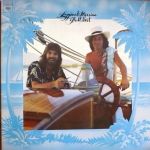
Breakaway Is Generally Grainy, Harsh and Shrill

Reviews and Commentaries for TAS Super Disc Recordings

The problem with this album is that, for whatever reason, practically every copy you find is, to some degree, grainy, harsh and shrill in the loudest passages of the music. When the music gets loud, the sound often becomes strained and unpleasant. A copy like this one that doesn’t do that is the exception, not the rule.

Listen to the song ‘Disney Girls’ on side one. If you own the average pressing – odds are your copy is in fact quite average unless you went through a pile of copies and played them in order to find a good one – parts of that song will sound painfully hard and shrill, assuming your playing the record at the kinds of levels we do.

Which is the main reason I’ve never understand what qualified this record to be on the TAS Super Disc list. Now, having heard the best of the best copies sounding so big, rich and tubey, I can certainly say I hear what impressed HP (he likes that sound, as do we). It may indeed be a very well recorded album, but we feel it falls a bit short for our own Rock and Pop Top 100 List. (To be fair, as you know we play a lot of amazing albums around here.)

The Best Songs

The late Harry Pearson knew little about popular music and may have been more impressed by this album than those of us who play pop and rock albums by the boatload.

Most of the pop albums on his Super Disc TAS list are a joke. Only the people who listen almost exclusively to classical or jazz seem to take them seriously, in my experience anyway. (Check out the 12″ pop singles for a good laugh.)

(more…)

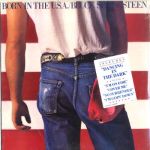
What to Listen For on Born In The U.S.A.

More Born in the U.S.A.

More Bruce Springsteen

Not many copies have this kind of full, solid lower midrange. When you hear the album this way, without the edgy, thin sound that plagues most pressings, it really works wonders for the music. The vocals and instruments are more real, and the improved low end lets the whole thing rock.

This copy has the kind of sound we look for in a top quality ’80s Rock record: immediacy in the vocals (so many copies are veiled and distant); natural tonal balance (most copies are at least slightly brighter or darker than ideal; ones with the right balance are the exception, not the rule); good solid weight (so the bass sounds full and powerful); spaciousness (the best copies have wonderful studio ambience and space); and last but not least, transparency, the quality of being able to see into the studio, where there is plenty of musical information to be revealed in this sophisticated recording.

Another Fine Entry for Our Hall of Shame (Now Nearly 300 Strong)

Hot Stamper Pressings of Pictures at an Exhibition Available Now

Classic Records Repress at 33, 45, or any other speed – they’re all terrible.

A Heavy Vinyl Disaster if there ever was one (and oh yes, there are plenty).

The shrillness, the hardness, the sourness, the loss of texture to the strings, the phony boosted deep bass — this is the kind of sound that makes my skin crawl. After a minute or two of listening to sound this bad, I have had it.

HP put this on his TAS List? Sad but true.

What do you get with Hot Stampers compared to the Classic Heavy Vinyl reissue? Dramatically more warmth, sweetness, delicacy, transparency, space, energy, size, naturalness (no boost on the top end or the bottom, a common failing of anything on Classic); in other words, the kind of difference you almost ALWAYS get comparing the best vintage pressings with their modern remastered counterparts, in our experience anyway.

Now if you’re a Classic Records fan, and you like that brighter, more detailed, more aggressive sound, our Hot Stampers are probably not for you. We don’t like that sound and we don’t like most Classic Records. They may be clean and clear but where is the RCA LIVING STEREO Magic that made people swoon over these recordings in the first place? Bernie manages to clean that sound right off the record, and that’s just not our idea of hi-fidelity.

Our Hot Stamper Classical Pressings will be dramatically more transparent, open, clear and just plain REAL sounding than practically any record Classic Records ever made, if only because these are all the areas in which heavy vinyl pressings tend to fall short in in our experience.