Pursuing Perfect Sound with ab_ba

One of our best customers has lots to say about his Hot Stampers, both the ones he likes and the ones he doesn’t. Which is fine by us. To each his own.

Letter of the Week – “Why don’t you talk about other cartridges on your blog?”

More Letters from Customers and Critics Alike

Hi Tom:

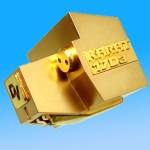
With my 17dx out of commission, [a friend] loaned me his [redacted], a cartridge that retails for a little more than the Dynavector. It only served to show me how truly special the 17dx is. The [redacted] is giving me some very nice sound, but there’s a sense of exaggerated detail, a lack of bass drive, a flatter soundfield, and for whatever reason, overall the music is simply less engaging. This mimics [my friend’s] experience with the [redacted] vs Dynavector comparison. He’d use different words, but we both agree that the Dyna is the considerably more satisfying cartridge.

Why is this? Why’s it so hard to make a great-sounding cartridge? And, how does price not serve as a reliable guide to sound performance? I’ve now had a chance to hear several high-priced and well-regarded cartridges: Clearaudio, Sound-Smith, Ortofon, etc. Since I’ve made further improvements to my system since I had any of those other cartridges installed, it was easy for me to believe that I had gotten things to where the cartridge would be less important in the overall sound I was getting. Instead, I think all I’ve done is to create a system that lets me hear very directly what the cartridge is saying.

My question for you is this: Why don’t you talk about other cartridges more often on your blog? Yes, you talk about the 17dx a lot, but I see only a passing mention to other carts. Over the years, what other cartridges have you tried? What impressions did you have of them? I mean, if you want to keep readers on the straight and narrow, then warning them against certain popular cartridges seems like it’d be an even more valuable service than warning them away from bad heavy vinyl pressings. Without the right cart, other changes to your system, and other choices of records to play, almost don’t matter. I guess there’s two ways to put this message to your readers: DO buy a 17dx. (You’ve said that plenty of times.) But also: DON’T bother with those other cartridges. (I think you should say that too!)

ab_ba

ab_ba,

The simplest answer to these questions is that I have very little experience with other cartridges.

Until maybe twenty years ago, I was not in a position to borrow expensive carts and try them out. I had a more forgiving Dynavector, then went to the 17d3 and that was that. It had the sound I was looking for.

Most equipment of any kind is nothing special. It’s mediocre by definition, since it is most likely average. Why would it not be average? Because the owners of said equipment spent so many years trying to find the best? As far as I know, that never happens.

As you say, money buys very little in audio, with the exception of big speakers, but then big speakers are mostly not very good because they often require lots of power, and high power amps never sound good to me.

If you want good sound, you will have to do a lot of work and spend a lot of money to find it.

Or you can buy what I own and save yourself all that time and trouble! As long as you are willing to live with some compromises, it’s hard to imagine you could find something better unless you devoted a huge amount of time and money to the search, and had the listening skills to choose wisely.

These are skills that audiophiles rarely have. They are much harder to come by than good equipment. I talk at length about how wrong I was about so many things for so long during my formative years for the simple reason that recognizing errors is how you learn to make fewer of them.

Who can say they know what they are talking about in audio and get anyone to believe them?

It is a hard road and few want to travel it.

Best, TP

Tom, this got me thinking.

I think of a mountain range. From one peak, you see others, and wonder, “gee maybe the view is even more magnificent from that peak!” But, for most of the peaks, it’s about the same, certainly no better, and could be a lot worse. Maybe just behind that other hill that looks so enticing from here there’s a parking lot! And also, climbing each peak takes time and energy, and for most of the journey between the peaks, you are down in a valley. And, is the view really actually better over there? Just because it is higher, doesn’t mean it will be more rewarding. Just because it is dazzling at first, maybe you grow sick of it after a while.

You have created a system that sounds demonstrably fantastic. And, it is a system that is not too finicky – other people can copy it and get amazing sound, even without any tweaking and fine-tuning. Are there other great-sounding systems? For sure. But, who, or what, on earth could be my guide to finding those other peaks? Certainly not the magazines. Certainly not other audiophiles. Certainly not the guys at my local hi-fi store. Certainly not the price tag.

As I’ve spent more time with the [cartridge] my friend loaned me, its sonic character is becoming more evident. It is quite lovely on jazz. I threw on a $5 copy of Art Pepper’s Straight Life (Galaxy label, fwiw) and it sounded just fantastic. Sparkly highs, and the lack of bass that cartridge has was not noticably absent. I wondered, “has it settled in a little? Are my ears getting used to it?” I put on a few different records and said, “nope. It’s just got a sound signature that’s favorable to Art Pepper.” So there’s a perfect example of a mountain peak I would not want to build my house on. Does the Dyna have no character? Probably not, but different records sound different, and different genres all reproduce well on it, and no part of the spectrum calls attention to itself. If there is a signature to it, it’s one I can live with.

Last question – why is it that audiophiles are so uncomfortable with the idea that they might be wrong? I mean, you can’t improve if you think you are already right. I think most of them are loners with disposable income, and most people who make some money in life get it by being supremely confident, perhaps overconfident. You look at guys like [redacted] and me, scientists where humility and knowledge of our own ignorance is in the very fiber of practicing our professions well, and even if we don’t have the disposable income of some audiophiles and some of your customers, we value quality, we value expertise, and we are happy to spend our available funds on things of enduring value.

Ab_ba

Ab_ba,

I was no different back when I started. For about my first ten years in high-end audio, roughly 1975-85, I bought the most expensive equipment that I could afford, as long as it was well-liked by those whose ears I trusted and sounded good to me.

Is the audiophile of today doing something different?

(more…)

Is It Possible to Find Out Who Mastered the Japanese Thrillers?

Hot Stamper Pressings of the Music of Michael Jackson Available Now
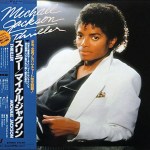
A letter we received not long ago made the point that the Japanese pressing of Thriller the owner had been listening to for years, even decades, fell well short of the mark set by the sound of the White Hot Stamper pressing he now owned.

To think, I spent all those years playing and re-playing a record that was bright and edgy, none the wiser to matrix numbers and pressing variations.

I agreed, saying that I myself learned the hard way, having wasted some of my own money on them. that Japanese pressings were almost always a crock, writing:

Most Japanese pressings cater to what a mid-fi system would need to sound good and a hi-fi system would find ruinous. They are almost always made from dubbed tapes, which are then brightened up in the mastering phase since that is the sound that appeals to the Japanese market for some reason unknown to me. Old school audio equipment — horn speakers and vintage tube electronics — would be my guess.

A fellow who saw an opening to set me straight and take me down a peg, all without having to learn how to use that pesky shift key on his computer, left the following comment in that post:

the japanese pressings were mastered by BG. the only difference being the quality of the material. nice try though, snakeoil salesman.

I immediately went to battle stations. I doubted whether Bernie Grundman has mastered any pressings for the Japanese market, but I couldn’t say for sure. It’s a question that had never come up. We ourselves had discovered a very good sounding pressing of Tusk that was mastered by Ken Perry and pressed in Japan, so I knew it was possible that the original mastering engineer could have sent metalwork to Japan for the Japanese to produce properly-mastered records for their market.

Fortunately, Discogs makes checking such things fairly easy. I went right up to the listing for Thriller and clicked on all the Japanese original pressings to see if there was any evidence to show that he had mastered them.

Bernie Grundman’s name was credited on the back cover as the mastering engineer, but I didn’t put much stock in that. I assumed that he did not master the album for their market, since that is hugely impractical. I surmised that removing his credit would have badly defaced the jacket, something I doubted the Japanese would have found acceptable. They seem to be very particular about these things.

Sure enough, here is what the stampers look like for the typical Japanese pressing that supposedly would have been mastered by BG:

There are about half a dozen original Japanese pressings for the album on Discogs and all the stamper listings look like the one above.

If you know anything about records, you know that these markings could not have been created by Bernie Grundman’s mastering operation here in the states.

(more…)

Letter of the Week – “You’ve created something really special here in Pittsburgh.”

More Letters from Customers and Critics Alike

Hi Tom,

I know you will be delighted to know that you’ve created something really special here in Pittsburgh.

Last night, Bill had us over for a listening session. Brisket tacos, Japanese whiskey, and his newest pile of White Hot Stampers. The official reason for the get-together (not that we needed any excuse) was because a work colleague of ours, David, had made an offhand remark a couple weeks ago that “vinyl doesn’t sound good.” Bill took that as a direct challenge!

The evening started with some Tidal streaming to Bill’s Chord DAC. David was selecting tracks off his iphone, and he put on The Chain. That was all Bill needed – he grabbed his White Hot Stamper of Rumours, and once the song ended, we switched over to vinyl.

Before the music even started, we could all hear the crackle and pop in the run-in groove. David commented, “see, that’s what I don’t like about vinyl.” We sat and listened to the rest of the song. The crackle of course vanished from our consciousness once the music started, or rather, it kind of hung out in a different space from where the music was. At the end, as if evaluating a fine whiskey, David offered that the bass was more clearly defined on the vinyl, less dominant and bloated, and that there were details he was hearing in the vinyl that he just hadn’t noticed in the digital. He characterized the vinyl/digital difference as, “I guess it depends on what you’re going for.”

I had brought my EAR with me. Bill swapped a few cables, and with the EAR in place, we listened to The Chain again, now utterly enraptured. I turned to David at the end, and all he said this time was, “that was fantastic.”

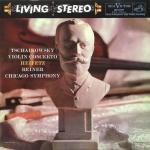
From there, there was no stopping us. We listened to Wish You Were Here. Tchaikovsky’s violin concerto. Rhapsody in Blue. Abraxas. All just mesmerising, room-filling sound. Once a record went on the table, it didn’t come off until the side was over.

David had brought along a stack of his dad’s records. In the pile was SRV’s Couldn’t Stand The Weather. Turns out Bill had just come across a super-clean copy in the used racks at one of our local shops. We played Tin Pan Alley back to back, first with David’s copy then Bill’s. David found out for himself that no two copies of a record sound the same. And Bill was reminded that he can’t just walk into a store, buy a Near Mint record, and expect to get something that sounds great.

(more…)

Letter of the Week – “Am I really paying for nothing when I buy a Hot Stamper? “

More of the Music of Carole King

One of our good customers had this to say about his recent experience on the Steve Hoffman forum.

We’ve added some headings and such like. Scroll down to read the many comments that have been left, most of which I have replied to at length.

Hi Tom,

When Fred emailed me to say that a copy of Tapestry was about to hit the site, I did not hesitate in buying it. I’m not writing today with one of my usual raves of your records. Suffice it to say, it’s always a joy to be hear an album I thought I knew by heart in a whole new way. Rather I’m writing because I still can’t fully square my enthusiasm for your records with the reaction I got when I talked about it on the Steve Hoffman Forum a couple months ago.

Hoffman’s Parting Words

As I purchased my 32nd (!) record from you without a moment’s hesitation, Steve Hoffman’s parting words to me sprang back into my mind. Could he possibly be right? Am I really paying for nothing when I buy a hot stamper? By posting my appreciation of Better Records on his forum, was I merely inducing other people to throw their money away too? Have I been fooling myself? Are there other ways to get records that sound as good as yours?

I never had a chance to respond to his view there because the whole thread was taken down a few minutes after he posted that, so if you don’t mind, I’d like to ask you to share my views with the readers of your blog, since people can’t find my views on the Steve Hoffman forum.

So here goes.

We’re all aware that there’s misinformation on the internet. We’ve learned by now how to spot the sins of commission – the obvious manipulations and falsehoods. What’s more pernicious are the sins of omission – accurate information that’s been removed because it does not fit a narrative.

Somebody interested in finding great sounding records would be blameless if they ended up with a pile of mediocrities, because they followed the advice and opinions readily available on the internet. It’s a frustration that there are so few voices like yours and Robert Brook’s offering a different view.

The biggest problem with a stack of mediocre records that you mistakenly believe are excellent is that if you ever notice they don’t sound very good, the only fix you can think of is to buy more expensive equipment.

And that’s where the real money gets wasted.

[Hear hear!]

A Roadmap for Finding “Pretty Good Records”?

There are tons of posts on the Steve Hoffman Forum, and tons of people are presumably following the advice there, but what’s on there is really nothing more than a roadmap to finding Pretty Good Records.

(more…)

Heretics and True Believers Clash on the Battlefield in Cyberspace, Part Two

More Letters from Customers and Critics Alike

Part one of this conversation can be found here. [Some bolding and such added.]

Hi, Tom,

Are there other great sounding stereos out there? I’m sure there are. Just as there are great sounding records still to be found out in the wild.

But, the stereo I’ve built by rapidly copying what you did painstakingly over decades is giving me better sound from recorded music than I’ve encountered almost anywhere else, including on far more expensive systems. It’s also more honest, direct, and revealing than stereos usually are.

First, I trusted you on records, and you were right. Then, I trusted you on stereos, and you were right again.

As for how people can find great sounding records. I expressed three pieces of the advice I’ve come to realize are true. All controversial enough, apparently, to get a thread shut down.

First, they can buy records from you.

If they don’t yield sound commensurate with price, just return the darned thing. A couple Better Records a year will probably build somebody a better-sounding vinyl collection than the same amount of money dumped in a shop or on Discogs. Tom, I have never encountered a disappointed *customer* of yours.

Second, don’t ascribe to hard and fast rules.

No, it is not true that all records from a given pressing house or mastering engineer are the definitive versions. There are better-sounding copies sitting in bins at used shops. Not all of them, but some, and they are often cheaper. This is a reality that is hard to find online, because it turns out it is hard to state it online.

Third, if you want to find great-sounding records on your own, plan to buy lots of copies of a particular title.

Avoid original pressings – those are not guaranteed to sound better, and they come at a premium.

[I take issue with this idea, see below.]

Play them all, pick your favorite (one, in my experience, is likely to stand out). Then, hope that your local shop takes returns, or that you are able to unload them on Discogs. Might somebody save themselves some money doing it this way, compared to buying a record from you? Maybe? But then, if they decide to “check their work” by buying a record from you, yours is going to sound better.

When I offered this advice on that forum, I got told I was wrong. Instead, those guys have a formula that works for them. I’d say it’s a formula for ending up with Pretty Good Records. First, you search the forums to find the deadwax for a copy that somebody has commented is THE one to have.

They usually don’t mention what type of equipment they have, or how many other copies of that record they’ve heard, or even what in particular about it sounds good. For me, going after pressings recommended online has never been a reliable way to find a great-sounding record.

And, when I get a Better Record, I check to see if it is a stamper that’s already known to sound good. Almost always, there’s no mention of it anywhere. Second piece of accepted wisdom on the forums: NM always sounds better than VG+. Here’s something I said that seemed to really piss people off: Good-sounding records got played a lot. Somebody really took me to task for suggesting that I had purchased from you a copy of a record I love that would probably grade VG+ based on the appearance of its surfaces, but that was delivering sound so good, I had zero desire to hunt for another copy, even the same deadwax in NM condition. Sure, I’d buy it if I ever came across it, but I would not expect it to sound better than the copy I already had. So, even among a group of seasoned vinyl listeners that understand certain truths they still seem to live by certain principles in collecting records that simply do not work consistently.

I’ve spent a lot of time blaming myself for the money and time I wasted on pretty-good records, played on a pretty-good stereo. I trusted the magazines and the salesmen. I don’t think they were being disingenuous; I just think they didn’t know any better. I trusted the splashy websites, the satisfied customer reviews, the youtube gushes, and the forum posters. This many people can’t all be wrong. They must know what they are talking about. And, I wasn’t hearing any other information.

Now I know why I wasn’t hearing any countervailing views – they get deleted. For somebody who wants to attain better sound, there’s your shop, and more importantly, your blog. I know the vast majority of people who come across either of these will dismiss them outright. Their loss. A few will return, and be better off for it – even, financially.

The most painful accusation I encountered on the forum was that I am doing people a disservice by leading them to spend their money and not get anything in return. It hurt to read that. Of course, I would never want to do that. To anybody who becomes your customer because I said they should give it a try, I’d give them the same advice you gave me early on: Take it slow. Once you discover how good these records can sound, there’s a real urge to start snapping them up. Instead, just take it slow. Enjoy each one. Better Records isn’t going anywhere.

(more…)

“Tom, what about the argument that the engineers had to make the records sound good on the equipment of the day?”

More Letters from Customers and Critics Alike

OK, what about it?

Let’s dig in.

One of our good customers had some questions about a commentary we wrote entitled a kinder, gentler approach to record reviewing.

Tom, what about the argument that the engineers had to make the records sound good on the equipment of the day? Now that we have better gear, these guys can make the record sound the way it was originally intended. I think Chad said this about Rudy Van Gelder at some point in the video.

For the benefit of the reader, the video in question can be found on youtube under the title “Michael Fremer, Chad Kassem, Geoff Edgers: A Journey Back to Vinyl.”

Edgers was invited, apparently under pretext as it turns out, to talk about his article, but instead he was pressed into defending me most of the time. Kassem and Fremer — two individuals whose talents, such as they are, could not be more ill-suited to the work they have chosen for themselves — beat up on Edgers for about two hours.

As an aside, Geoff is a good guy and he certainly didn’t deserve this kind of mistreatment. Fremer and Kassem won’t apologize to him — that’s not something they are known to do — so please allow me to apologize to Geoff on their behalf.

I’m sure he has trouble understanding to this day why he was forced into acting as a spokesman for Better Records. Regardless of how he feels about it, we thank him for his service to the cause. (To be clear, he didn’t exactly take my side, which is the right thing for a reporter to do. He wanted to know why our disagreements upset them so much.)

For those of you who like to watch bickering and sniping from a couple of thin-skinned egomaniacs who can’t stand the fact that someone doesn’t think the records they like — or in the case of Chad, produce and sell — are any good, have I got a video for you. If you want to undertand how seriously you should take these two guys, both at the top of their respective mountains, watch the video and make your own judgments.

Our letter writer continues:

Suppose, that the RL cut of Zeppelin 2 had never existed, because Ludwig knew better than to cut it that way, knowing that most stereos couldn’t play it? And then Chad released something that sounded like that. Or, the argument that albums were engineered for listening to on the AM radio.

I think these guys believe they are improving on the mastering, and giving it the sound it should have had all along.

Dear ab_ba,

Yes, you are correct, this is indeed their position. They think these newly remastered pressings are a big improvement over earlier editions, and on quieter vinyl to boot!

Allow me to quote Michael Fremer, a man who apparently cannot get enough of the new records, even though his shelves are stuffed.

(more…)

Heretics and Believers Clash on the Battlefield in Cyberspace

Seems like our friend ab_ba has something to get off his chest.

Hi Tom,

Suppose somebody wanted to know if your claims about the records you sell are true. How could they find out? They’d have to buy a record from you. There is very little independent commentary or reviews available online, and now I know why.

I started a forum thread, hoping to find some other Better Records enthusiasts, and just sort of have a place where I could share what I’ve discovered, in case anybody else found it of value.

After two weeks and 13 pages, the thread got shut down. This was after skepticism, hostility, and very little sincere curiosity.

They tried to explain to me how wrong I was. They told me I was gullible. They insisted I must work for you. One guy asserted I must *be* you. After all, who, other than you, would ever say the things I was saying?

They seemed particularly irked by two things:

First, the markups you charge.

Second, the fact that you are so vocal about the sound quality of modern pressings.

Regarding the first, what seems to particularly bother some people is that you used to go into used record shops in the LA area, pay the price they were asking for a record, and then for some of those records, you would come to the conclusion that based on its sound it was worth a lot more than they charged you for it.

Tom, they are still upset that you did this. Anybody could have done it. To this day, anybody could still do it. Nobody else is doing it.

People may resent you for now selling for $1000 a record that went for $2.98 40 years ago, but that’s simply how markets operate. I watched an old jazz record sell for $7000 on ebay last week, without a single comment on how it actually sounds.

Regarding the second source of ire, apparently you changed your mind about how some records sound, and you were willing to be very vocal about how you thought they sounded, even if those records were made by good friends of yours.

I get it that a lot of people who found themselves in your situation would have just kept their mouth shut about it, but this was all 20 years ago, and here we are today, and I’ve got a fantastic-sounding shelf of records and a great stereo to play them on, all because I decided to see if I could trust your advice.

ab_ba

ab_ba,

Thanks for writing.

I’m surprised you haven’t been excommunicated by now.

What you are doing, in the eyes of the members of the forum, is spreading a false gospel. They used to burn people like you at the stake. Now the powers that be just delete the threads the troublemakers start. Saves firewood.

You are an apostate. Nothing you say can change the fact that you don’t believe what other members of the Hoffman forum believe. Trying to convince them that there is a better way is a fool’s errand. All you end up doing is making enemies.

Welcome to my world. Everything we do and say irks the people who don’t buy records from us.

Those who actually buy records from us seem fairly pleased, if I do say so myself. They take the time to write us lots of nice letters for one thing.

To be fair, if someone were to post a comment on my blog along the lines that “everybody knows that digital is far superior to the outdated 75-year-old technology of the vinyl LP,” I would not feel the need to reply to it. I would simply delete it. Some folks can’t be saved. (The truth is they will never save themselves because it takes twenty years and many tens of thousands of dollars to build a good system, and for 99% of all the music lovers in the world, that is a journey they are not prepared to take.)

(more…)

Letter of the Week – “The WHS made the music sound more natural and more involving.”

More of the Music of Steely Dan

One of our good customers recently bought a Super Hot pressing of Aja, and wasn’t quite sure if he loved the music enough to keep it, so he wanted to try a White Hot Stamper pressing to see if that would win him over, the idea being that the better sound of the White Hot copy would communicate the music better. This is his story.

Dear Tom,

Probably my favorite thing to do in audio these days is putting on a record of yours for the first time. When the Aja White Hot Stamper came, I had to wait a few hours until after the kids were all tucked in. I listened with headphones for a change, and right away I could tell how clear and intricate this copy was. Knowing how my other copies sounded, I knew no shootout was going to be necessary.

I also really love doing mini-shootouts of my own. It’s a great way to really sink in to listening for a while. I don’t have 16 other copies of Aja, the way your other customer described, but I could still stack your WHS up against three other ABC pressings with identical-looking labels and nearly-identical deadwax, along with a MoFi and a Japanese pressing.

It proved to be the most beguiling shootout I’ve ever done. Each copy had merits, and among the ABC pressings, I was hearing clear similarities to the WHS. This is such delicate and full music, so obviously well-recorded, that I guess it’s hard for any pressing to completely muck it up.[1]

I’ve heard you say that a white hot stamper is a copy that just does everything right, and that was completely true in this case. The differences were subtler, but also more important, than they usually are in my mini-shootouts. The WHS made the music sound more natural and more involving. All those crazy details, present in the others if you really pay attention, came right up to the surface when the WHS played.

I really can’t claim it trounced the others, but I can certainly say that it had the best aspects of each of them, while in turn not being improved on in any aspect by any of the others. Sure, it would be fun to get to hear one of the sought-after pressings, like a Cisco, but with prices verging on hot stamper territory, it’s not like I’m going to go track that down. I’ll just content myself with your word that this one would beat one of those.[2] Since I’m not feeling anything lacking here, I have no reason to keep going.

After almost every purchase from you, I ask myself, “is it worth what I paid?” This was a funny one. I don’t love Steely Dan, even though all indications are that I should. I’ve always dug Aja, but not to the obsessive levels I know others to be (and that I am with other records). I was curious to own a WHS because I know it’s such a well-recorded album, I knew I’d love the sound, and as you suggested when I asked you about it, I wanted to see if a great-sounding copy could help me get into the music.

So far so good. I appreciate the virtuosity of the musicians, the touch they’ve got on their instruments, the clever wordplay (now that the vocals are so easy to make out), and the communication among them, like a great jazz session. Is it worth what I paid? Well, I’m not sending it back, even though I know you wouldn’t mind if I did. So, thanks for another gem in my collection.

Thank you,

Aaron

Aaron,

Thanks for your letter. A few thoughts:

[1] Yes, an early ABC pressing is unlikely to sound wrong or terrible in our experience. Of the hundred or more that we’ve played, a don’t remember one that did not at least sound good enough to sell, earning perhaps our lowest Hot Stamper grade.

You’ve recently upgraded your system quite a bit. If you keep going that way, in five or ten (or two!) years you may want to revisit the WHS copy relative to your other three ABC pressings (forget the others) and see what changes you have wrought, although I do not recommend you use Aja as a test disc, for the simple reason that extremely artificial recordings can often sound amazingly good, but when your system goes off the rails to some degree from a new tweak or change, they will sound different, but not necessarily better or worse, not more right or more wrong, and then you don’t know whether the change was a good one or a bad one.

Different means nothing. Things sound different all the time.

More right or more wrong should always be your test.

Test discs like the ones we recommend should make it easy to distinguish better from worse, right from wrong. Test discs that don’t are simply not good test discs and should not be used for that purpose.

[2] Don’t take my word for how bad the Cisco pressing is. We have letters from customers who say the same thing.

The Cisco is so bad we call it a pass/fail record.  We describe pass/fail records this way:

Some records are so wrong, or so lacking in qualities that are crucial to the sound — qualities typically found in abundance on the right vintage pressings — that the advocates for these records, reviewers and audiophiles alike, have clearly failed to judge them accurately.

Tea for the Tillerman on the new 45 may be substandard in almost every way, but it is not a Pass/Fail pressing. It lacks one thing above all others, Tubey Magic, so if your system has an abundance of that quality, the way many vintage tube systems do, the new pressing may be quite listenable and enjoyable. Those whose systems can play the record and not notice this important shortcoming are not exactly failing. Audiophiles of this persuasion most likely have a system that is heavily colored and not very revealing, but it is not a system that is hopeless.

(more…)

Letter of the Week – “I wonder if you’ve ever had another customer who doesn’t own a turntable buy a White Hot stamper from you?”

Hot Stamper Pressings of the Music of Fleetwood Mac Available Now

Aaron has been trying to help his audiophile friends learn the differences between good records and Heavy Vinyl records. This first story concerns Chuck, who sold Aaron the VPI table you see pictured.

Aaron writes:

Chuck’s a real record guy. I played him some hot stampers, alongside the same record in heavy vinyl format.

First up was Rumours – white hot up against the Hoffman 45 mastering. He wanted to hear “you make loving fun,” so we did.

The drums on the Hoffman are more prominent, and they grab you right away. Way out of balance to my taste.

He said, “Hoffman’s done a great job with the drums. But it comes at the expense of Christine’s voice. That’s okay, I never loved her as a singer anyway.”

Next I busted out my holy grail, and played him my Zep 2 WHS. Followed up by the Jimmy Page remastering. The latter is indeed a decent record, Tom, as you say. But the clarity on the drums is superior on the Ludwig. [Clarity is not the word I would have chosen, but that’s another story for another day.]

As Chuck put it, “I never thought of this as a vocal record.” Plant’s voice just has so much more emotion on the hot stamper than on the Page version. He said, “the Page version takes out some of the humanity.” I totally agreed with that. Chuck was amazed that you were able to find and sell me a RL copy with such clean vinyl. I took the record off the table and showed it to him – he was amazed to see how scuffed it looked. It’d grade VG at best visually, but man does it play clean.

So, record after record, Chuck could hear what the hot stampers were doing. And, no doubt, the VPI table is making the hot stampers sound better, and in comparison, the heavy vinyl sounds even duller.

That said, this turntable is so much more revealing than my Clearaudio was, that there is always something delightful to listen to on my heavy vinyl records. They don’t sound worse, they sound better than they used to. It’s just that the gap between them and the hot stampers is only continuing to grow wider.

So, my man Chuck, who sold me his VPI turntable, saw the light. But then he shielded his eyes from it. Even though Chuck’s got a stack of 25 benjamins in his hand right now, I don’t think any of that is headed your way, Tom.

(more…)

Letter of the Week – “The Triplanar is bringing out more of the life and energy in the music than any other change I’ve made.”

Check Out Our New Audio Advice Section

When our customers ask for audio advice, we never hesitate to give it to them. (We also give out plenty of advice that nobody asked for.)

We want to help our customers pursue the kind of equipment that we know through decades of experience is probably superior to most of what is available in audiophile salons, regardless of price.

(In 1976, at the tender age of 22, I heard something at an audio salon that rocked my world: tube equipment. Everything changed that year.)

Robert Brook has taken our advice and ended up with much of the same equipment we currently use. He seems very happy with the analog sound he is getting these days, especially from his Triplanar tonearm.

And now Aaron B. has made a great leap forward into better sound. He wrote to tell me all about the differences he is hearing now that he has a system that is designed to reveal what’s actually on his records. His previous system was better at hiding the imperfections and shortcomings of many of the albums he was playing, but he’s decided he doesn’t want to go down that road anymore, and we couldn’t be happier for him. His letter:

I’m feeling another huge dose of gratitude for you, Tom.

I installed the Tri-Planar arm on Friday, and I could tell right away that things are sounding just wonderfully better.

My whole setup is getting really close to your full recommendation. Dynavector 17dx mounted in a Tri-Planar tonearm, mounted on a VPI Aries 1 table, going into an EAR 324, out to a [redacted] amp, driving Legacy speakers.

I managed to buy everything except the cartridge used and in good shape. The total cost for my current system is a hair above $10K, and it is sounding nearly as good as I’ve ever heard vinyl sound, or any recorded music for that matter.

The Triplanar tonearm is a game-changer. This is the most dramatic improvement since I first replaced my B&W bookshelf speakers with the Legacys. I’m frankly stunned by what a difference it makes.

The difference the tonearm makes is evident in nearly every aspect of the sound.

First, the problems I was having previously have cleared up. This includes vocal sibilance, occasional graininess to the sound, and what I mistook for groove wear, even on some hot stampers that otherwise sounded great.

Some that I returned to you, I now wish I could have back.

Beyond fixing the last of my playback problems, the Triplanar is bringing out more of the life and energy in the music than any other change I’ve made since you started advising me.

The attack on instruments is arresting. I’ve come to believe that the aspect of live music that’s hardest for any recording to capture is the attack. That’s where the energy of live music is to be found.

I am hearing more details and overtones to the music that I ordinarily needed to turn up the volume to hear. Also, there’s greater depth to the soundstage, even in my small room.

I’ve said this to you before, but it bears repeating. I love the records you sell. I’ve got 15 hot stampers now, and they are the crown jewels of my collection. But, it’s the education you’ve given me that’s truly transformed my music listening experience.

Today, for that, you have my deep gratitude.

Aaron

Aaron,

Thanks for taking the time to write and say all those nice things about our records and the equipment we have recommended you play them with. As you can clearly see now, it takes the right stereo to really bring our records to life. Glad to hear yours is working so well.

I have long held that the best way to do audio is to find a system in someone’s home that sounds amazing and just buy all the same stuff that person has and set it up the same way he did. If a stereo is sounding good, much of it has to be working right. Start there, then make your own improvements based on a proven model of success.

I did this to the extent it was possible back in the 80s, copying my friend George Louis’s system, comprising four 140 watt per channel transistor amps (four times the power I have now), an electronic crossover, two sets of adjustable electrostatic tweeter arrays (RTR for one and Janzen for the other), a large number of woofers in the main cabinet and a couple of dual 10″ subs thrown in for good measure.

(more…)