Labels With Shortcomings – Analogue Productions

Cat Stevens on 2 Heavy Vinyl 45 RPM Discs, Part 1 – Is This the Truest Tillerman of Them All?

About ten years ago we auditioned and reviewed the 2011 edition of Tea for the Tillerman pressed by Analogue Productions, the one that came on a single Heavy Vinyl 33 RPM LP.

I wrote a very long commentary about the sound of that record, taking it to task for its manifold shortcomings, at the end of which I came to the conclusion that the proper sonic grade for such a record is F as in Fail. My exhaustive review asked the not-very-subtle question, this is your idea of analog?

Our intro gave this short overview:

Yes, we know, the folks over at Acoustic Sounds, in consultation with the late George Marino at Sterling Sound, supposedly with the real master tape in hand, and supposedly with access to the best mastering equipment money can buy, labored mightily, doing their level best to master and press the Definitive Audiophile Tea for the Tillerman of All Time.

It just didn’t come out very well, no matter what anybody tells you.

Recently I was able to borrow a copy of the new 45 cutting from a customer who had rather liked it. I would never have shelled out my own money to hear a record put out on the Analogue Productions label, a label that has an unmitigated string of failures to its name. But for free? Count me in!

The offer of the new 45 could not have been more fortuitous. I had just spent a number of weeks playing a White Hot Stamper Pink Label original UK pressing in an attempt to get our new Playback Studio sounding right.

We had a lot of problems. We needed to work on electrical issues. We needed to work on our room treatments. We needed to work on speaker placement.

We initially thought the room was doing everything right, because our Go To setup disc, Bob and Ray, sounded super spacious and clear, bigger and more lively than we’d ever heard it. That’s what a 12 foot high ceiling can do for a large group of musicians playing live in a huge studio, in 1959, on an All Tube Chain Living Stereo recording. The sound just soared.

But Cat Stevens wasn’t sounding right, and if Cat Stevens isn’t sounding right, we knew we had a Very Big Problem. Some stereos play some kinds of records well and others not so well. Our stereo has to play every kind of record well because we sell every kind of record there is. You name the kind of music, we probably sell it. And if we offer it for sale, we had to have played it and liked the sound, because no record makes it to our site without being auditioned and found to have excellent sound.

But I Might Die Tonight

The one song we played over and over again, easily a hundred times or more, was But I Might Die Tonight, the leadoff track for side two. It’s short, less than two minutes long, but a lot happens in those two minutes. More importantly, getting everything that happens in those two minutes to sound not just right, but as good as you have ever heard it, turned out to be a tall order indeed.

(more…)

Six Ways in Which Bad Sounding Remasters Get Approved

Hot Stamper Pressings of the Music of Jethro Tull Available Now

UPDATE 2026

The comments you see below for Stand Up were written in 2023.

Unfortunately, we rarely have any stock on Stand Up, or any of the other classic Tull releases for that matter. (There is a copy of Thick as a Brick on the site as of this writing, but it may have sold by the time you read this.)

In our commentary we discuss some of the reasons why a truly awful sounding Heavy Vinyl pressing — in this case Analogue Productions’ remaster of Stand Up — could possibly have gotten released.


Our Commentary from 2023

Here’s how we think it might have gone down.

On whatever crappy audiophile system they are using to play these records, the new pressing beat the original Pink Label Island. Drinks all around.

Not knowing that the original pressings do not sound very good — really, not knowing all that much about records period — made their job seem a lot easier than it actually was.

They didn’t produce a good sounding record. They produced a record that was (perhaps) better than a bad sounding record. They unknowingly set the bar very low.

But unknowingly is how this label has been operating from the very beginning.

I’ve written extensively about many of their bad sounding records, starting all the way back in 1995 with Way Out West.

Not much has changed. You may remember from the Washington Post video years back that Geoff Edgers blind-tested me with two copies of Quiet Kenny, one from The Electric Recording Company (“this guy makes mud pies!”) and the other from Analogue Productions (‘it’s the best record they ever made, because it’s not terrible”), or words to that effect.

If I’d had a good copy of Quiet Kenny on hand, a record I think I know much better now that we have done a couple of shootouts for it, I could have elucidated all the shortcomings of the AP pressing in great detail. Instead I was stuck comparing a very bad pressing of the album to a copy that was not as bad.

(more…)

Cat Stevens Part 2 – Is This the Truest Tillerman of Them All?

If you haven’t read Part 1 of this story, please click here.

Back to our real story. I listened to my good original pressing. I call it White Hot at least!

Then I put the new pressing on the table, set the SDS for 45 RPM, and got the volume just right. I proceeded to carefully adjust the VTA by ear, going up and down with the arm until the sound was right, which is simply standard operating procedure for every record we audition.

These are my actual notes for But I Might Die Tonight.

This is what I heard as the song worked its way through the various sections, in real time.  The first thing I heard at the start was Zero Tubey Magic for the first verse. One of the last things I heard at the end was No Real Space. Space is what you hear at the end for the big piano and drums finish.

Let’s take it line by line. First up:

Zero Tubey Magic

I didn’t hear much Tubey Magic on the new pressing. The best early pressings — domestic A&M Browns, Pink or Sunray UK Islands — often have simply phenomenal amounts of the stuff. It’s a hallmark of the recording.

If a new pressing comes along without it, that’s a problem. I guess that George Marino‘s cutting system at Sterling could probably do some things well, but it sure doesn’t seem to be able get the sound of tubes right. His 33 RPM cutting had no Tubey Magic, and this one has no Tubey Magic. If I had hired him to cut a record for me and it came out sounding like this, I would find somebody else to cut records for me.

He’s dead now, rest in peace. I would doubt that anyone at Sterling has a better cutting system, and therefore no one should expect any records that have been mastered there to sound very good.

Vocal Is Clear, Clean and Dry

This is the sound you sometimes get with modern, super-clean transistor cutting equipment. It’s low distortion, like a CD is low distortion. We don’t think we should have to put up with dry vocals on records when the good pressings we have been playing all our lives have noticeably richer vocals.

Not rich like Dream With Dean, nothing is that rich, but rich and full-bodied the way the good pressings of this album always make them sound.

(more…)

Good Digital Beats Bad Analog Any Day

Hot Stamper Pressings of the Music of Sonny Rollins Available Now

And this is some very bad analog indeed!

We here present our 2010 review of the Sonny Rollins Plus 4 album, the one remastered on two slabs of 45 RPM Analogue Productions Heavy Vinyl.

It has everything going for it, right?

Steve Hoffman, Kevin Gray, 45 RPMs, Heavy Virgin Vinyl, fancy packaging — clearly no expense was spared!

The ingredients may have been there, but the cake they baked was not only not delicious, it was positively unlistenable — I mean, inedible.

I cannot recall hearing a more ridiculously thick, opaque and unnatural sounding “audiophile” pressing than this Rollins record, and believe me, I’ve heard plenty. (And it seems the bad news will never stop.)

As I noted in another commentary “Today’s audiophile seems to be making the same mistakes I was making as a budding enthusiast more than thirty forty years ago. Heavy Vinyl, the 45 RPM 2 LP pressing, the Half-Speed limited edition — aren’t these all just the latest audiophile fads, each with a track record more dismal than the last one?”

It reminds me of the turgid muck that Doug Sax was cutting for Analogue Productions back in the 90s. The CD has to sound better than this. There’s no way could it sound worse.


CD Update:

I managed to track down a copy of the CD and it DOES sound better than this awful record, and by a long shot. It’s not a great sounding CD, but it sure isn’t the disaster this record is.

Buy the CD, and whatever you do, don’t waste money on this kind of crap vinyl.


This is a very bad sounding record, so bad that one minute’s play will have you up and out of your chair trying to figure out what the hell is wrong with your system. But don’t bother. It’s not your stereo, it’s this record.

It has the power to make your perfectly enjoyable speakers sound like someone wrapped them in four inches of cotton bunting while you weren’t looking.

(more…)

Analogue Productions Fails Spectacularly Right Out of the Gate with Jazz Giant

Hot Stamper Pressings of Contemporary Albums Available Now

You may remember what a disaster the Analogue Productions version of Jazz Giant from the 90s was.

Or maybe you agree with a certain writer that they were god’s gift to the record lovers of the world in need of higher quality pressings. We thought they were crap right from the get-go and were not the least bit shy about saying so,

I haven’t heard the new 45 RPM version and don’t intend to play one, but I seriously doubt that it sounds like our good Hot Stamper pressings. We have yet to hear a single Heavy Vinyl 45 that sounds any good to us, judged by the standards we set in our shootouts.

Actually, to run the risk of sounding even more pedantic than usual, the records themselves set the standards.

We simply grade them on the curve they establish for themselves.

We guarantee that none of their LPs can hold a candle to our vintage records or your money back. If you have one of the new pressings and don’t know what’s wrong with it, or don’t think that anything is wrong with it, try one of ours.

It will show you just how much better a real record can sound, with more space, more transparency, more energy, more presence, more drive, more ambience — more of everything that’s good about the sound of music on vinyl.

It is our contention that no one alive today makes records that sound as good as the vintage LPs we sell. Once you hear one of our Hot Stamper pressings, those Heavy Vinyl records you bought might not ever sound right to you again.

(more…)

Acoustic Sounds Hired Doug Sax to Ruin a Classic Chet Baker Album

Hot Stamper Pressings of Jazz Recordings Featuring the Trumpet

The less said about this awful mid-90s Doug Sax remastering for Analogue Productions the better. What a murky piece of crap it was.

Audiophile reviewers may have been impressed, but even way back then we knew a bad sounding record when we played one, and that pressing was very bad indeed.

One further note: the Heavy Vinyl pressings being made today, twenty-five thirty-one years later, have a similar suite of shortcomings, sounding every bit as bad if not worse, and fooling the same audiophile reviewers and their followers to this very day.

Nothing has changed, other than we have come along to offer the discriminating audiophile an alternative to the muddy messes these labels have been churning out for decades.

(more…)

Letter of the Week – “Oh my gosh, so much money wasted on magic buttons, secret sauce and dilithium crystals…”

Hot Stamper Pressings of Miles’s Albums Available Now

One of our good customers had this to say about some Hot Stampers he purchased a long time ago (emphasis added):

Hey Tom,

I imagine you get a little bored with audiophile negativity around the concept of Hot Stampers. I have to admit, they are expensive and I sometimes just can’t push myself to buy (even though I want to). As an alternative I have purchased some of the “new” remastered all analogue classics like Kind of Blue hoping to get great sound.

I listen for enjoyment, but like many folks I get caught up in the hype of technology hoping for better sound. Oh my gosh, so much money wasted on magic buttons, secret sauce and dilithium crystals for a different but really not better sound.

So, to the point, I purchased a copy of Kind of Blue from you about 2 years ago. It was graded by you as A++ – A+++ on both sides. I tell myself this story when I need an incentive and want to buy another Hot Stamper.

I played the newly remastered UHQR KOB. It was quiet, wonderful, excellent.

And so just for fun I decided to listen to the copy of KOB I bought from you.

My Hot Stamper is a re-press from Columbia probably from the ’70’s. The difference between both copies was startling.

My Hot Stamper copy of KOB had bigger dynamics, air, tonal awareness, spatial sense.

Bass, sax, piano and Miles – alive and vibrant. It sounded better. The only negative difference was the vinyl was not as quiet.

My experience with the albums I buy from you has always been satisfying because they sound so good. So thanks and screw all the naysayers .

Anyways, just felt like saying thanks and trying to push myself forward on my next purchase.

Best, Art

Art,

Thanks for your letter. You are our letter of the week!

This caught my eye:

“…so much money wasted on magic buttons, secrete sauce and dilithium crystals for a different but really not better sound.”

Ain’t it the truth. Lots of smoke and mirrors and fancy packaging, but when the record in question is at best mediocre, as you discovered for yourself, we describe such a record as putting lipstick on a pig.

Michael Fremer says it’s the best KOB ever, and will be for all time.

Why can’t you hear what he can?

Seriously, could there be a more absurd and ridiculous statement? When discusssing pressings, this kind of certainty is the unmistakable mark of shallow and misguided thinking.  Audiophiles as a group evince far too much credulity and not nearly enough skepticism about both records and audio, which is why they are always looking for easy answers and quick fixes.

They don’t want to do the work. They want someone to tell them they don’t have to do the work.

(more…)

The Dreadful Sound of the Heavy Vinyl Reissues Doug Sax Mastered in the 90s

Hot Stamper Pressings of the Music of Sonny Rollins Available Now

Longstanding customers know that we have been relentlessly critical of so-called “audiophile” LPs for years, especially in the case of these Analogue Productions releases from back in the early-90s. A well-known reviewer loved them, I hated them, and he and I haven’t seen eye to eye on much since.


(Old) Newflash!

Just dug up part of my old commentary discussing the faults with the original series that Doug Sax cut for Acoustic Sounds. Check it out.

In the listing for the OJC pressing of Way Out West we wrote:

Guaranteed better than any 33 rpm 180 gram version ever made, or your money back! (Of course I’m referring to a certain pressing from the early 90s mastered by Doug Sax, which is a textbook example of murky, tubby, flabby sound. Too many bad tubes in the chain? Who knows?

This OJC version also has its problems, but at least the shortcomings of the OJC are tolerable. Who can sit through a pressing that’s so thick and lifeless it communicates none of the player’s love for the music they’re making?

If you have midrangy transistor equipment, go with the 180 gram version (at twice the price).

If you have good equipment, go with this one.


UPDATE 2015

We are no longer fans of the OJC of Way Out West, and would never sell a record that sounds the way even the best copies do as a Hot Stamper. It’s not hopeless the way the Heavy Vinyl pressing is, but it’s not very good either. It’s yet another example of a record we was wrong about.

Live and learn, right?


(more…)

Judging the Sound of Heavy Vinyl We’ve Never Played

Hot Stamper Pressings of Pablo Recordings Available Now

We freely admit that we have never played the Heavy Vinyl pressing of The Alternate Blues on the Analogue Productions label. It started life in 1996 as APR 3010, part of the Analog Revival Series on 150 gram vinyl (average price on Discogs these days: $99), and now it seems to be in print on 180 gram vinyl, made from the same metalwork by the looks of it.

The mastering of the Analog Revival Series pressing may have been credited to Bruce Leek and Stan Ricker, but the stamper information is TML, The Mastering Lab all the way.

In case you, unlike us, are tempted to try one or both of the AP pressings, or perhaps already own one or both, here is our advice on how to recognize the fairly predictable shortcomings of Chad’s pressing, or any pressing mastered by Doug Sax in the 90s for that matter. Every one we’ve ever played has suffered from the same suite of sins.

The Best Part

And we expect that the AP pressing’s failures in some areas will be so obvious that you really don’t need any other copy of the album to be able to hear them.

Just focus on the two qualities that Analogue Productions’ records have always failed to deliver: transparency and freedom from smear.

In our 2011 shootout notes we drew the reader’s attention to both:

What to Listen For – Transparency

What typically separates the killer copies from the merely good ones are two qualities that we often look for in the records we play: transparency and lack of smear. Transparency allows you to hear into the recording, reproducing the ambience and subtle musical cues and details that high-resolution analog is known for.

Note that most Heavy Vinyl pressings being produced these days seem to be quite transparency challenged.

Lots of important musical information — the kind we hear on even second-rate regular pressings — is simply nowhere to be found. That audiophiles as a whole — including those that pass themselves off as the champions of analog in the audio press — do not notice these failings does not speak well for either their equipment or their critical listening skills.

What to Listen For – Lack of Smear

Lack of smear is also important, especially on a recording with this many horns, where the leading edge transients are so critical to their sound. If the horns smear together into an amorphous blob, as if the sound were being fed through ’50s vintage tube amps (for those of you who know that sound), half the fun goes right out of the music.

Richness is important — horns need to be full-bodied if they are to sound like the real thing — but so are speed and clarity, two qualities that insure that all the horns have the proper bite and timbre.

More on Smeary Sound

Smear, a blurring of the sharpness of the notes, refers to the loss of transient information which is most often associated with tube gear.

However, smear occurs with every kind of gear, especially high-powered amps, the kind typically required to power the inefficient speakers audiophiles often favor. We caution against the use of both.

When we finally got rid of our tube equipment and high-powered amps, a lot of smear in the playback of our records disappeared with them.

Once that happened, the smear that is commonly heard on most modern Heavy Vinyl repressings became much more noticeable and, over time, even more annoying.

Nobody else seems too bothered by smear, and one of our many theories about the stereo shortcomings of reviewers and audiophiles in general is that their systems are fairly smeary, so a extra smear — a little or a lot — becomes virtually inaudible to them.

(more…)

Jazz Impressions of Black Orpheus Is a Bloated Mess at 45 RPM from Hoffman, Gray and Kassem

Hot Stamper Pressings of Jazz Piano Recordings Available Now

We played an amazing Hot stamper copy that got the bottom end on this album as right as we’ve ever heard. The contribution of the bass player was clear and correctly balanced in the mix, which we soon learned to appreciate was fundamentally important to the rhythmic drive of the music.

The bass was so tight and note-like you could see right into the soundstage and practically picture Monte Budwig plucking and bowing away.

This is precisely where the 45 RPM pressing goes off the rails.

The bloated, much-too-heavy and poorly-defined bass of the Heavy Vinyl remaster makes a mess of the Brazilian and African rhythms inherent in the music. If you own that $50 waste of money, believe me, you will not be tapping your foot to Cast Your Fate to the Wind or Manha de Carnival.

Our rule of thumb: he better the system, the more second-rate Hoffman’s remastered records will sound when they aren’t just terrible.

Is this the worst version of the album ever made? That’s hard to say.

But it is the worst sounding version of the album we’ve ever played, and that should be good enough for any audiophile contemplating spending money on this kind of trash. Take our advice and don’t do it.

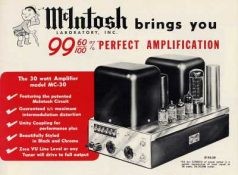
If you like the sound of old McIntosh tube equipment like the Mac 30s shown here, a sound Steve Hoffman apparently cannot get enough of, these remastered records have your name all over them.

We don’t sell junk like this, but every other audiophile record dealer does, because most of the current group of mastering engineers making records for audiophiles have somehow gotten into their heads that this is the way records should sound.

We’ve been telling them they are wrong about that for years now, that good records have never sounded this way, but the collectors and audiophiles of the world keep buying their wares, so why should they listen to us?

If you want to know what a properly-mastered, properly-pressed copy sounds like, we put the last one up in 2023.

(more…)