Labels We Love

Verdi, et al. / Ballet Music From The Opera

Hot Stamper Pressings of Living Stereo Recordings Available Now

UPDATE 2026

This review was written many, many years ago, so many years ago that I don’t think I knew that the Victrola reissue had consistently better sound than any Shaded Dog we had ever played.

But one thing I did know was that the sound had obvious and rather serious shortcomings, shortcomings that the fans of vintage vinyl never seemed to notice. The conventional wisdom by which so many record collectors and record reviewers operate, including those of the audiophile persuasion, may have blinded them to the reality of its defects.

It’s also rare and sells on the collector market for a lot of money. Those facts often blind record lovers too.

Someone with the original in his collection might pull it off the shelf where it has been sitting for years and show such a rare and valuable and therefore impressive record to you. I suspect that such a collector would be much less likely to play it for you.

Having to sit down and actually play the records we sell means that biases and prejudices of these kinds can have no effect on our judgments. The records get played against other pressings and we simply call them as we hear them.

Contrary to the conventional wisdom, the original is not that good of a record.

And the best news is that the reissue is a true Demo Disc of the highest order.

Our Old Review

This copy of LSC 2400 has vintage RCA Golden Age sound, for better and for worse. Even though the album was recorded by Decca, it’s got a healthy dose of Living Stereo Tubey Magic.

There will never be a reissue of this record that even remotely captures the richness of the sound found here.  

And the hall is HUGE — so spacious and three-dimensional it’s almost shocking, especially if you’ve been playing the kind of dry, multi-miked modern recordings that the 70s ushered in for London and RCA.

(more…)

Tell It Like It Is – Another A&M Half-Speed Mastered Disaster

More of the Music of George Benson

The Half-Speed is pretty — pretty lifeless if you ask me, in the way that so many Half-Speed mastered records are.

It’s cut very clean, but until you play a good A&M pressing, you don’t know how much meat has been stripped from the bones. The best A&M pressings sound like a Rudy Van Gelder recording, which, of course, they are.

These A&M Half-Speeds suffer from all the same shortcomings that other Half-Speeds suffer from: the kind of pretty but lifeless and oh-so-boring sound that we describe in listing after listing.

Reviews and Commentaries for the Music of George Benson

More Recordings Engineered by Rudy Van Gelder

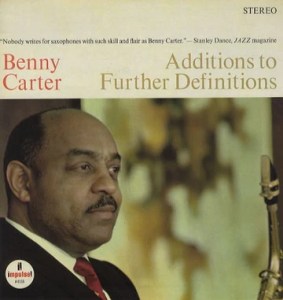
Benny Carter – Additions to Further Definitions

More of the Music of Benny Carter

  • Additions to Further Definitions appears on the site for only the second time ever, here with KILLER Shootout Winning Triple Plus (A+++) sound or close to it throughout this original Impulse stereo pressing
  • Here are just a few of the things we had to say about this stunning copy in our notes: “jumping out of the speakers”…”tubey and 3D”…”very full sax”…”present and open and relaxed”…”big and rich”
  • Both of these sides are exceptionally transparent, with superb immediacy and remarkably clarity – thanks, RVG!
  • The music comes alive on this copy, with space, size and richness that few other pressings can match

(more…)

Pin-Ups – Forget the Original British Pressings

Hot Stamper Pressings of the Music of David Bowie Available Now

UPDATE 2026

This commentary was written sometime in 2019 or just before.

Since that time we have done many shootouts for Pin-Ups and all of them were won by the reissues we discovered all those years ago.


We just finished our biggest-ever shootout for this fun Bowie album and this one was DRAMATICALLY better than most other copies. We played copies from all over the world — England, Germany, France, Canada, and the good ol’ USA — and heard all kinds of bad sound.

So what were the worst copies we heard? Hands down it was the British Originals, believe it or not. They tend to be dull, thick, and lifeless — not a good match for this punky, energetic material. [We have since found some very good sounding Brit originals but, that said, to date they have never won a shootout.]

On the other side, many of the other copies we heard were bright and grainy. It’s very tough to find a copy that strikes a balance, but we finally managed to dig up a handful that did the job. (more…)

Famous Overtures… Beethoven on London Didn’t Make the Grade

Hot Stamper Classical and Orchestral Imports on Decca & London

Our notes make mention of the fact that none of the copies of CS 6053 — Famous Overtures… Beethoven — that we had on hand in preparation for our now-abandoned shootout sounded good enough to make cleaning and playing them worthwhile.

The sound had plenty of Golden Age Tubey Magic — it’s rare that an early London pressing from 1959 doesn’t — but the strings were pinched in the louder parts of the music.

It sounded to us like an old record.

It has the kind of sound that makes it much more likely to be found sitting on a shelf and not a platter. Seriously, why would you bother?

The world is full of records that don’t sound especially good. As a matter of fact they make up the bulk of the world’s record collections. The average record is, by definition, mediocre, so it stands to reason that all those rooms full of shelves of vinyl you see on the internet are packed with mediocre sounding records.

(more…)

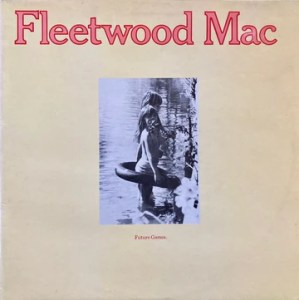
Fleetwood Mac – Future Games

More of the Music of Fleetwood Mac

  • With two STUNNING Shootout Winning Triple Plus (A+++) sides or close to them, this copy is guaranteed to blow the doors off any other Future Games you’ve heard
  • You’ll find huge sound on this copy – it’s big, bold and lively – this is clearly the right sound for Future Games
  • Fleetwood Mac practically invented Space Rock, which reached its apotheosis in 1973 on Mystery to Me (my favorite by the band)
  • A criminally underrated album unlike anything you’ve heard and a Better Records favorite for more than 40 years
  • It’s also a record that has disappeared off the face of the earth – we would love to do more shootouts for the album, but we just never see them anymore (more…)

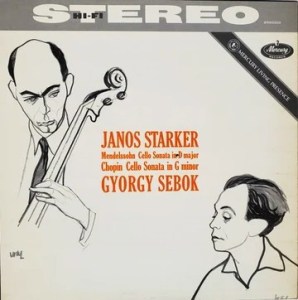
Mendelssohn / Chopin – Cello Sonatas / Starker / Sebok

Mercury Living Presence Records Available Now

  • Starker and Sebok’s virtuoso performances debut on the site with the rich, dynamic, and tubey sound we were hoping for, earning INSANELY GOOD Shootout Winning Triple Plus (A+++) grades throughout this original Plum Label Mercury pressing
  • Both of these sides are big, full-bodied, clean and clear, with a wonderfully present and solid piano, and plenty of 3D space around it
  • The cello is present and immediate, with sound that is remarkably textured, full and harmonically natural
  • Not only is this the best sounding copy we have to offer from our recent shootout, but we are happy to report that the vinyl is reasonably quiet for a vintage Plum Label Mercury stereo pressing, with no marks that play or problems with the inner grooves

(more…)

Cat Stevens on 2 Heavy Vinyl 45 RPM Discs, Part 1 – Is This the Truest Tillerman of Them All?

About ten years ago we auditioned and reviewed the 2011 edition of Tea for the Tillerman pressed by Analogue Productions, the one that came on a single Heavy Vinyl 33 RPM LP.

I wrote a very long commentary about the sound of that record, taking it to task for its manifold shortcomings, at the end of which I came to the conclusion that the proper sonic grade for such a record is F as in Fail. My exhaustive review asked the not-very-subtle question, this is your idea of analog?

Our intro gave this short overview:

Yes, we know, the folks over at Acoustic Sounds, in consultation with the late George Marino at Sterling Sound, supposedly with the real master tape in hand, and supposedly with access to the best mastering equipment money can buy, labored mightily, doing their level best to master and press the Definitive Audiophile Tea for the Tillerman of All Time.

It just didn’t come out very well, no matter what anybody tells you.

Recently I was able to borrow a copy of the new 45 cutting from a customer who had rather liked it. I would never have shelled out my own money to hear a record put out on the Analogue Productions label, a label that has an unmitigated string of failures to its name. But for free? Count me in!

The offer of the new 45 could not have been more fortuitous. I had just spent a number of weeks playing a White Hot Stamper Pink Label original UK pressing in an attempt to get our new Playback Studio sounding right.

We had a lot of problems. We needed to work on electrical issues. We needed to work on our room treatments. We needed to work on speaker placement.

We initially thought the room was doing everything right, because our Go To setup disc, Bob and Ray, sounded super spacious and clear, bigger and more lively than we’d ever heard it. That’s what a 12 foot high ceiling can do for a large group of musicians playing live in a huge studio, in 1959, on an All Tube Chain Living Stereo recording. The sound just soared.

But Cat Stevens wasn’t sounding right, and if Cat Stevens isn’t sounding right, we knew we had a Very Big Problem. Some stereos play some kinds of records well and others not so well. Our stereo has to play every kind of record well because we sell every kind of record there is. You name the kind of music, we probably sell it. And if we offer it for sale, we had to have played it and liked the sound, because no record makes it to our site without being auditioned and found to have excellent sound.

But I Might Die Tonight

The one song we played over and over again, easily a hundred times or more, was But I Might Die Tonight, the leadoff track for side two. It’s short, less than two minutes long, but a lot happens in those two minutes. More importantly, getting everything that happens in those two minutes to sound not just right, but as good as you have ever heard it, turned out to be a tall order indeed.

I could write for days about what to listen for in the song, but for now let me just point the reader to one of the most difficult parts to reproduce correctly.

At about 50 seconds into the track, Cat repeats the first verse:

I don’t want to work away
Doing just what they all say
Work hard boy and you’ll find
One day you’ll have a job like mine, job like mine, a job like mine

Only this time he now has a multi-tracked harmony vocal singing along with him, his own of course, and he himself is also singing the lead part louder and more passionately. Getting the regular vocal, call it the “lower part,” to be in balance with the multi-tracked backing vocal, call it the “higher part,” turned out to be the key to getting the bottom, middle and top of the midrange right.

When doing this kind of critical listening we play our records very loud. Live Performance level loud. As loud as Cat could sing, that’s how loud it should be when he is singing his loudest toward the end of the song for the final “But I might die tonight!” If he is going to sing loudly, I want my stereo to be able to reproduce him singing as loud as he is actually singing on the record. No compression. No distortion. All the energy. That’s what I want to hear.

The last fifteen seconds or so of the song has the pianist (Cat himself) banging out some heavy chords on the piano. If you have your levels right it should sound like there is a real piano at the back of the room and that someone is really banging on it. It’s a powerful coda to the song. (more…)

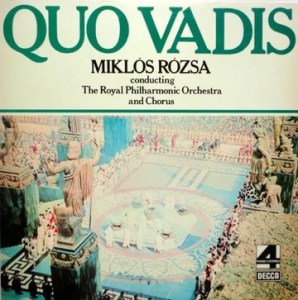
Miklós Rózsa – Quo Vadis (Music From the Film)

More Orchestral Spectaculars

  • This Decca Phase 4 Stereo pressing of Rózsa’s sweeping cinematic score boasts solid Double Plus (A++) sound or BETTER from start to finish
  • These TAS-approved sides are clear, full-bodied and present, with plenty of space around the players, the unmistakable sonic hallmark of the properly mastered, properly pressed vintage analog LP
  • This 1978 re-recording of Rózsa’s original work for the 1951 film, performed by the Royal Philharmonic, succeeds in achieving glorious Phase IV orchestral sound
  • 4 1/2 stars: “Rózsa gets spirited performances out of the orchestra and the chorus, but with the latter he also achieves a level of subtlety in their performance of his work which greatly enhances the finale to the piece.”

(more…)

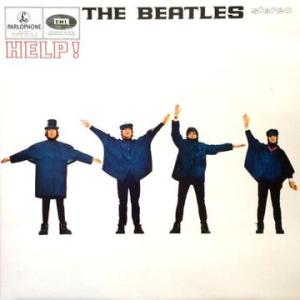
The Beatles – Help

More of the Music of The Beatles

  • With two outstanding Double Plus (A++) sides, this copy will be very hard to beat – exceptionally quiet vinyl too
  • Everything that’s great about Help is here on this UK pressing – jangly 12-string guitars, Tubey Magical electric pianos, harmonically rich tambourines and claves, and, the sine qua non of any Beatles album, breathy, present vocals
  • If you’re like us and think the new Beatles Heavy Vinyl reissues are boosted in the bass and way too smooth in the midrange, whether mono or stereo, take comfort in the fact that this pressing is neither of those things, because it sounds right
  • Side one alone boasts 7 classics: “Help!,” “The Night Before,” “You’ve Got to Hide Your Love Away,” “I Need You,” “Another Girl,” “You’re Gonna Lose That Girl” and “Ticket to Ride” – whew!

Want to hear The Beatles at their Tubey Magical best? Just play “You’ve Got to Hide Your Love Away” on this very copy.

One of the reasons this song stands out in a crowd of great tracks is that there are only acoustic instruments being played. There’s not an electric guitar to be found anywhere in the mix, one of the few tracks on side one for which that is true.

We flip out over the Tubey Magical acoustic guitars and harmony vocals found on early Beatles albums, and this song can be an exceptionally good example of both when you’re fortunate enough to have the right pressing playing.

Those of you with Hot Stamper pressings of the album can count themselves among the fortunate.

(more…)