Art Rock – Reviews and Commentaries

I Robot Is a Tough Nut to Crack, Even If You Have Plenty of Early British Pressings to Play

Hot Stamper Pressings of Prog Rock Albums Available Now

Here is how we described a Hot Stamper pressing of I Robot that went up recently, our first in five years:

An early UK pressing (and the first copy to hit the site in years) with seriously good sound throughout.

Many copies tend to be overly smooth, but this one has the kind of clarity that allows the natural textures of the instruments to come through.

Transparency is key to the sound of the better copies, and that is precisely where the dubby domestic pressings fall apart.

Even many of the early British pressings fell short. Good luck finding top quality sound on this one. At the very least you are going to need a big budget — these early UK pressings are not cheap to find in audiophile playing condition.

As you can see, we weren’t kidding about those UK pressings falling short. Here’s two that did, with their stamper numbers posted for all to see.

Side two of the first copy is being held back by sound that is smeary, dry and hard.

Side one of the second copy is murky and hot (bright).

Note that these are early UK stampers, which some in-the-know audiophile collectors will tell you are clearly the best.

(more…)

Letter of the Week – “I feel I own and can listen to something that a king or a millionaire would own…”

Hot Stamper Pressings of Pink Floyd Available Now

One of our good customers had this to say about some Hot Stampers he purchased recently: 

Hey Tom,  

Thank you so much for the Dark Side of the Moon White Hot Stamper. It is everything you said. I feel I own and can listen to something that a king or a millionaire would own, not an old codger like me!

Regards,
Peter D.

Peter,

You are very welcome. We like to say that a White Hot stamper pressing — of any album — is the one that takes the music to another level, typically beyond where the listener thought it could go, and it seems like that was the experience you had playing the record.

A king or a millionaire would have been very unlikely to get hold of the pressing of Dark Side that you played. It’s a pressing that is not well known in audiophile circles. Neither is it especially expensive.

It just happens to have the best sound for the album we’ve ever heard, and we’ve heard most of the expensive audiophile pressings, the ones that reviewers and posters will tell you will handily beat any and all comers, especially our humble import, and of course they never do.

If these audiophile pressings actually were better, why would anyone keep our Hot Stamper LP for ten times the money?

No, those who say these things about audiophile pressings are usually operating as a One Man Band, using a very small pool of data. It is very hard to do it that way.

I should know. I was a one man band for many years, and I was wrong a lot.

(more…)

Listening in Depth to Country Life

Hot Stamper Pressings of the Music of Roxy Music Available Now

The domestic, German, Japanese and Dutch pressings are not remotely competitive with the Brits on this album (which is not true for all Roxy’s albums but clearly true for this one, Siren being the obvious exception to the rule).

Now for those of you who are not big Roxy Music fans and don’t know this music, this album may take a bit of getting used to. We assure you it will be well worth your while. We think it’s brilliant.

And if you do consider yourself a fan of Art Rock, every Roxy album should be on your shelf, right up there with your Bowie, Pink Floyd, Supertramp, Eno, Peter Gabriel, 10cc and too many others to list. (Most are personal favorites of mine, albums I have played hundreds of times over the last 40 years and plan to keep playing until my ears give out.)

Side One

The Thrill of It All
Three and Nine

On the best copies this track is the very definition of Tubey Magical richness and smoothness.

All I Want Is You

A little thinner and brighter than the other tracks on this side as a rule.

Out of the Blue

The best guitar solo ever played on the violin. Go Eddie!

If It Takes All Night

Side Two

Bitter Sweet

The best copies have monstrous bass on this track, along with huge amounts of space. Again, the Tubey Magic can be off the charts here.

Triptych
Casanova

The vocals on this track will always spit to some degree. The cleanest, most tonally correct sibilance is what you are looking for on this track. That, and amazing rock energy!

A Really Good Time
Prairie Rose


Want to find your own top quality copy?

Consider taking our moderately helpful advice concerning the pressings that tend to win our shootouts.

(more…)

Letter of the Week – “Why can’t all records sound this good…?”

Hot Stamper Pressings of the Music of Ambrosia Available Now

One of our good customers wrote to tell us about a very Hot Stamper pressing he purchased recently:

Hey Tom,   

Question:

Does Tom Port have any clue as to what the hell he’s doing or selling to the public?

That is my question.

Hello Tom,

I’m the idiot who spent $399 on your White Hot Stamper of Ambrosia’s first album a few weeks ago. I did an A/B listening test with an A++/A++ copy I bought from you a few years ago. Your website waxes lyrical about the exceptional qualities of this recording; I always thought it was very, very good but not quite the recording you make it out to be!

To perform my listing test, I listened to my A++/A++ side one first. Then listened to the newly purchased A+++/A+++ next. The results? I almost had to call 911 because my jaw hit the floor! THIS was the recording you had written about in the records descriptive comments. This pressing is so holographic I swear I could have stepped into the recording.

Dare I say this is a better recording than Dark Side of the Moon; and yes, I can make such a claim, I purchased an A++/A+++ – A++/A+++ copy from you guys a few years ago. This is what I refer to as Master Tape sound quality. A Holy Grail for audiophiles.

It’s pressings like this that pose the questions: Why can’t all records sound this good and why can’t all recording engineers be as great as Alan Parsons?

So, back to my original question. Does Tom Port know what the hell he is doing or selling to the public?

Yes Tom, I’d say absolutely, 100% you know what you are doing and I’m the happiest idiot on this Earth. Keep up the great work, Tom, and thank you and your staff for the incredible service you provide.

Todd N.

Dear Todd,

Thanks for your letter. I’m positively blushing!

Seriously, the right vintage pressing — on the right stereo — can take the enjoyment of music to a level far beyond that of anything being experienced by the audiophile of today, at least those who are stuck in a rut due to their misguided devotion to the modern Heavy Vinyl reissue. (more…)

Letter of the Week – “For the next three hours, I spun disc after disc, to their delight.”

More Raves for the Phenomenal Sound of White Hot Stamper Pressings

One of our good customers had this to say about some Hot Stampers he played for friends recently:

Hey Tom, 

Story for you — last Saturday evening, a designer of a new world-famous tonearm, the owner of an elite high-end audio salon in California and I met for dinner with a well-known reviewer for one of the big audiophile rags, then went back to one of their houses to listen to records I had been asked to bring.

About 90% of the two dozen records I had selected were White Hot Stamper versions of classic rock staples.

For the next three hours, I spun disc after disc, to their delight.

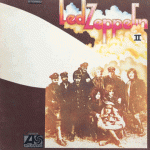
Particular faves included Elvis Costello’s “My Aim Is True,” Led Zeppelin II, 10CC’s “The Original Soundtrack,” CSNY’s “Deja Vu,” and Chicago’s first LP.

Bill

Bill,

That sounds like a great way to spend an evening, playing killer copies of world class Demo Disc recordings! I would loved to have been there.

Without exception, these are five of our most beloved records, records we have been obsessed with since I first heard them all those years ago.

And of course we will never read a word about pressings with Hot Stampers, from this or any other demonstration, in one of the big audiophile rags. We are bad for their business. Their Heavy Vinyl advertisers would throw a fit. They know what we have to say about their shoddy products.

I guess there might just be something attractive about having the best sounding pressings in the world and being able to keep it amongst the small number of music loving audiophiles who are “in the know.”

But it would be nice if everyone could hear it for themselves.

Thanks for making a good start.

TP

(more…)

Key Sonic Elements for My Life In The Bush Of Ghosts

Hot Stamper Pressings of the Music of Talking Heads Available Now

If you like Remain in Light as much as we do here at Better Records, you will surely have a blast with this record.

I’ve been a big fan of the album since the day it came out.

As a bonus, it’s a much better recording than Remain in Light — sweet and spacious, not hard and brittle the way that can album can be, especially on the first track.

Rick Wright of Pink Floyd noted that the album “knocked me sideways when I first heard it – full of drum loops, samples and soundscapes. The way the sounds were mixed in was so fresh, it was amazing.”

Four, Maybe Five Key Elements

Here is a comprehensive breakdown of what we were listening for when evaluating My Life in the Bush of Ghosts.

Clarity and Presence

Many copies are veiled in the midrange, partly because they may have shortcomings up top, but also because they suffer from blurry, smeary mids and upper mids. Dull, dead sounding pressings can’t begin to communicate the musical values in this excellent recording.

With a real Hot Stamper the sound is totally involving. There is breath in the voices, the picking of the strings on the guitars — these things allow us to suspend our disbelief, to forget it’s a recording we’re listening to and not living, breathing musicians.

Top End Extension

Most copies of this album have no extreme highs, which causes instrumental harmonics to sound blunted and dull. Without extreme highs the percussion can’t extend up and away from the other elements. Consequently these elements end up fighting for space in the midrange and getting lost in the mix.

Transparency

Although this quality is related to the above two, it’s not as important overall as the one below, but it sure is nice to have. When you can really “see” into the mix, it’s much easier to pick out each and every instrument in order to gain more insight into the way the songs were arranged and recorded.

Seeing into the mix is a way of seeing into the mind of the artist. To hear the hottest copies is to appreciate even more the talents of all the musicians and producers involved, not to mention the engineers.

This is an area where Heavy Vinyl fails completely more often than not. Modern remastered records are just so damn opaque. That sound drives us to distraction, when it doesn’t bore us to tears.

Bass

No rock or pop record without good bass can qualify as a top quality Hot Stamper. How could it? It’s the rhythmic foundation of the music, and who wants a pop record that lacks rhythm?


Want to find your own killer copy?

Consider taking our moderately helpful advice concerning the pressings that tend to win our shootouts.

As of 2024, shootouts for this album should be carried out:

Nothing else will do for a big, dynamic, powerful recording such as this.

(more…)

Peter Gabriel on Classic Records

Hot Stamper Pressings of the Music of Peter Gabriel Available Now

Sonic Grade: D (or worse!)

An audiophile hall of shame pressing and another Classic Records rock album badly mastered for the benefit of audiophiles looking for easy answers and quick fixes.

We have a special section for bad sounding records that are marketed to audiophiles, and you can find that section here.

It currently has 281 entries, but if someone wanted to audition more of them — that person is definitely not me, although I cannot imagine anyone more qualified — the number could easily hit 500.

If one were to do just the Music Matters and Analogue Productions albums released to date, a thousand would be no problem.

And if one were simply to include vintage Japanese pressings, the kind many audiophiles regularly bought in the 80s and 90s for their quieter vinyl and supposedly higher quality mastering, our bad audiophile record section would contain multitudes. Multitudes I tell you!

(more…)

Even In The Quietest Moments and Your 1977 Ears – There’s No Going Back

supereveni_1506_1x

Hot Stamper Pressings of the Music of Supertramp Available Now

By 1977 I was a huge fan of the band, having first discovered their music on Crisis (1975) and Crime (1974), in which order I honestly can’t remember.

I played their albums all the time, especially Crisis.

The first Supertramp album I bought on audiophile vinyl would have been Crime of the Century by Mobile Fidelity, which came out in 1978.

Every right-thinking audiophile had that one — MoFi sold over a hundred thousand of them (along with a hundred thousand of Aja, Touch and one or two others).

And why not? The sound was killer on the systems of the day. Lots of slam down low (but not really that low, although it seemed plenty low at the time), lots of extra top up high, lots of phony detail, just what the old school stereos of the day, like mine, needed.

Crisis? What Crisis? followed in 1975. It was the Supertramp album that sent me over the top. I played that album relentlessly. Before long Art Rock was at the top of my list anytime I wanted to have an immersive musical experience, and that, for an obsessive audiophile like myself, meant almost every day.

Supertramp, Yes, Roxy Music, 10cc, Eno, Crack the Sky, ELO, Bowie – it’s all I wanted to listen to back then, and it encouraged me to keep upgrading my equipment whenever I had the money, although I admit to being completely clueless about all of that at the time. More on that subject here.

A year and a half later EITQM followed. It too became a staple of my musical diet. Man, I played that record till the grooves were worn smooth.

I thought the sound of my domestic pressing was killer at the time, too. Crisis was a demo disc at my house and this was right up there with it. Now the obvious question is, did I have a good sounding copy, or did my stereo not reveal to me the shortcomings of my LP? Or maybe my ears were not well enough trained to hear what was wrong.

Those of you who have been doing this for a long time know the answer: any or all of the above, probably all, and nobody can know just how much of each.

And there is no way to find out because you are not that person anymore.

Your 1977 Ears… and Mine

Even if you could recreate your old stereo and room, and find your original copy, there’s one thing you can’t do, and that’s listen to it with your 1977 ears.

Every time you play a record and listen to it critically, your ears get better at their job.

(more…)

Three Tracks Are Key on Supertramp’s Fifth Album

Hot Stamper Pressings of the Music of Supertramp Available Now

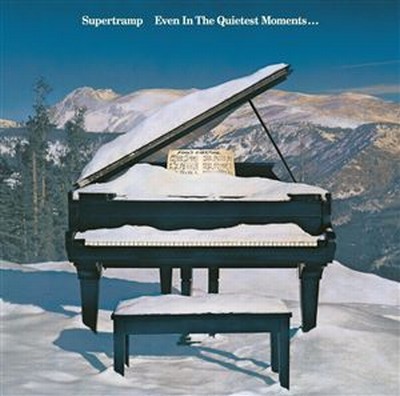
On the best copies of Even in the Quietest Moments the bottom end is big and punchy, the top end smooth and sweet, and the vocals are present and breathy.

If your copy sounds like that, you have the basic ingredients for a Hot Stamper pressing. Now all you need is half a dozen more cleaned copies and you are ready to do a shootout to find out just how good your copy may be.

On an exceptionally transparent copy the drums really punch through the dense mixes that Supertramp and Geoff Emerick favored for the album, giving the music more life and energy. (More of Geoff’s work can be found here.)

Also make sure that the piano sounds solid and clear with little to no smear, and that the sax is full and breathy. These are all critically important to getting the record to sound right, which of course is simply another way of saying getting the music to sound right.

In 2005 we wrote:

This is actually one of Supertramp’s best albums but it’s almost impossible to find a domestic copy that won’t tear your head off. The vast majority of them are unbelievably bright and grainy. I’ve been buying them lately because I found a copy or two that seemed to sound pretty good, but most of my money was wasted on aggressive, noisy vinyl.

Side one of this copy is no great shakes — it’s too bright — but side two is actually quite good. The highs are sweet and silky, there’s plenty of bass and the vocals are actually quite natural sounding. I can’t call this a Hot Stamper. The best way to look at it is to say it’s a Relatively Hot Stamper. The average copy is so bad that when a copy like this one sounds pretty good it really sticks out. We’re still in the hunt but haven’t got much to show for our efforts to date, I can tell you that.

The good news is that ten years later and more copies than we care to remember we think we’ve got EITQM’s ticket. We now know which stampers have the potential to sound good as well as the ones to avoid. Finding the right stampers (which are not the original ones for those of you who know what the original stampers for A&M records are) has been a positive boon.

Once we figured them out we were in a much better position to hear just how well recorded the album is. Now we know beyond all doubt that this recording — the first without Ken Scott producing and engineering for this iteration of the band — is of the highest quality, in league with the best. Until recently we would never have made such a bold statement. Now it’s nothing less than obvious.

Key Tracks for Critical Listening

Give a Little Bit

The piano can get buried in the dense mix. Side ones that are rich and tubey and smooth with a clear piano did very well in our shootout.

Lover Boy

A Demo Quality track on the best copies. It can be huge, spacious and lively.

Getting the strings to sound harmonically rich without sliding into shrillness is not easy but some copies manage it. The breakdown at about 2:20 is a lot of fun on the biggest, richest copies.

From Now On

On side two the recording quality of the solo piano at the start of this track is nothing short of breathtaking.

No piano on any Supertramp album sounds as good, and only the White Hot Stamper pressing will get it to sound its best.

It’s such a well-recorded piano that it will always sound at least good.

Shootouts are the only way to know when it actually sounds its best.

(more…)

Unlike the First Three Albums, on Security You Can Forget the Brits

Hot Stamper Pressings of the Music of Peter Gabriel Available Now

The basics notes here were written in 2009, about the time we finished our album by album auditions of his early catalog.

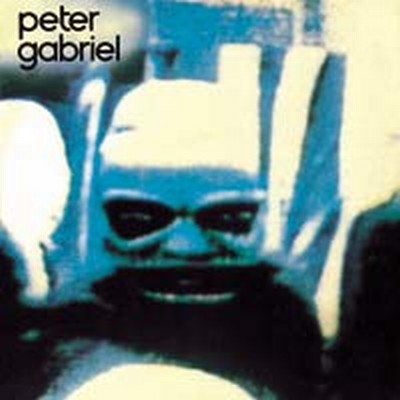
On this title, forget the Brits. Every British pressing we played was badly smeared and veiled.

This took us somewhat by surprise because we happen to like the British PG pressings, but remember, So on British vinyl is awful too, so it’s clear (to us anyway) that the later PG records are bad on British vinyl and the early ones are better.

We are limiting our comments here to albums up through So. Anything after that is more or less terra incognita for us simply because we don’t care for the music he was making after 1986.

Plays Live, from 1983, takes the dark, overly-rich, overly-thick and way-too-smooth sonics of Security and lathers it over the material he had previouly recorded up through then. Some of it works well enough I suppose, but in my experience it usually isn’t long before the monotony of this approach grows tiresome.

What We Listened For

The best copies have sonic qualities that are not the least bit difficult to recognize:

  • Presence, putting PG front and center;
  • Dynamics, both micro and macro;
  • Energy, allowing the rhythmic elements to bring out the life in the music;
  • Transparency, so that we hear all the way to the back of the studio (where some of the many musicians that play in the densest parts no doubt had to stand); and
  • Ambience, the air that surrounds all the players and what instruments they played.

And of course we played the album VERY LOUD, as loud as we could. It’s the only way to get the massive druming to sound right.

The Music

This is one of the most important records in the Peter Gabriel canon, groundbreaking and influential on so many levels. The entire album is a wonderful journey; anyone with a pop-prog bend will enjoy the ride. Just turn the volume up good and loud, turn off your mind, relax and float along with PG and the band. You’re in good hands.

I’ve listened to this one more than other PG albums with the only exception being his second release, the one produced by Robert Fripp. That one is still clearly my favorite of the lot. I play it to this day and have never tired of it since I bought it way back in 1978.

Naturally, I would have originally picked up the domestic pressing, which is clearly made from a dub tape, but in 1978 what did I know about master tapes and imported pressings?

I was still a big Mobile Fidelity fan at that time, which is a simple way of saying that it’s clear that I had a very long way to go in this hobby and a great deal left to learn!

Nothing Peter Gabriel released after So did much for me so I resigned myself to the first five albums. Five excellent albums from one artist is plenty in my book.

If you like the albums after So, to each his own and more power to you. It’s my opinion that their appeal is limited, such that doing a shootout for them is not likely to be in the cards.

(more…)